Quartzite countertops are a natural stone surface formed when sandstone is transformed by extreme heat and pressure deep within the earth. The result is one of the hardest countertop materials available, ranking harder than granite on the Mohs hardness scale, with exceptional scratch resistance, heat tolerance, and marble-like veining that makes every slab completely unique.
The pros of quartzite countertops include:
- Hardness greater than granite, making it highly scratch-resistant
- Natural heat resistance that outperforms most engineered surfaces
- Unique veining and color variation that cannot be replicated
- Long lifespan of decades with proper maintenance
- Strong resale value as a recognized premium natural stone
The cons of quartzite countertops include:
- Porous surface that requires sealing once or twice per year
- Susceptibility to etching from acidic substances like lemon juice or vinegar
- Higher upfront cost compared to quartz or entry-level granite
- More maintenance commitment than non-porous engineered surfaces
Quartzite countertops are best suited for homeowners who want authentic natural stone, can commit to periodic sealing, and are investing in a kitchen or bathroom remodel where long-term durability and design impact matter.
Our design consultants help Northern Nevada and Northern California homeowners compare quartzite alongside quartz, granite, and other natural stone options across our four showroom locations. Here is a complete breakdown of the pros, cons, and best applications for quartzite countertops.

What Is Quartzite?
Before diving into the advantages and disadvantages, it helps to understand what quartzite actually is. Quartzite is a naturally occurring metamorphic rock formed when sandstone is subjected to extreme heat and pressure deep within the earth over millions of years. During this transformation, the quartz crystals in sandstone fuse and interlock, producing one of the hardest and most durable natural stones available.
Quartzite is often confused with quartz countertops, but the two are entirely different materials. Quartz countertops are engineered, combining crushed quartz with polymer resins. Quartzite, by contrast, is 100% natural, quarried directly from the earth and fabricated into slabs. According to This Old House's guide to stone countertops, understanding the distinction between natural and engineered stone is one of the most important steps in the countertop selection process. This distinction matters significantly when comparing durability, maintenance needs, and aesthetic character.
The Pros of Quartzite Countertops
Quartzite countertops offer a compelling combination of strength, elegance, and lasting value. Here are the primary reasons homeowners choose quartzite for their kitchens and bathrooms.
Exceptional Durability
Quartzite ranks harder than granite on the Mohs hardness scale, making it one of the most scratch-resistant natural stones available for countertop use. In busy kitchens where knives, pans, and daily activity put surfaces to the test, quartzite holds up exceptionally well. Chips and surface damage are far less common with quartzite than with softer materials like marble, making it a smart investment for high-traffic households.
Superior Heat Tolerance
One of quartzite's standout advantages is its natural heat resistance. Unlike engineered surfaces that contain resin binders, which can scorch, discolor, or warp under direct heat, quartzite handles hot cookware with far greater resilience. While trivets and hot pads are always recommended to protect any countertop long-term, quartzite gives homeowners a meaningful buffer against accidental heat exposure during cooking.
Natural Beauty That Can't Be Replicated
Quartzite is prized for its striking visual character. Its natural veining and color variation closely resemble marble, but with far greater durability. Because every quartzite slab forms under unique geological conditions, no two slabs are identical. The one-of-a-kind patterns and color ranges, from soft whites and creamy taupes to dramatic grays and warm golds, give quartzite countertops a custom, irreplaceable appearance that engineered surfaces simply cannot replicate. This makes quartzite a particularly powerful design statement in both kitchens and bathroom vanities.
Long-Term Investment Value
When properly sealed and maintained, quartzite countertops can last for decades without losing their beauty or structural integrity. Beyond day-to-day enjoyment, quartzite adds measurable resale value to a home. Buyers recognize premium natural stone as a marker of quality craftsmanship, and quartzite's reputation as a luxury countertop material makes it an appealing feature on the real estate market. For homeowners who view their remodel as a long-term investment, quartzite consistently delivers strong returns.
Luxury Appeal
Quartzite occupies the upper tier of countertop materials, and the visual impression it creates reflects that status. The stone's natural elegance elevates any space, from a busy family kitchen to a spa-inspired primary bathroom. Choosing quartzite signals a commitment to quality, authenticity, and refined design that resonates with both homeowners and future buyers alike.

The Cons of Quartzite Countertops
Despite its many strengths, quartzite is not the ideal choice for every homeowner or every application. Understanding its limitations helps ensure you select the right surface for your specific lifestyle and budget.
Requires Regular Sealing
Quartzite is a porous natural stone, which means liquids can penetrate the surface without proper protection. Regular sealing is essential to prevent staining from everyday kitchen spills, including wine, coffee, oils, and juice. Most quartzite countertops benefit from sealing once or twice per year, depending on the specific stone's porosity and how heavily the surface is used. While sealing is straightforward and manageable, homeowners who prefer a truly set-and-forget surface may find this upkeep less appealing. Fine Homebuilding's guide to natural stone countertops offers a helpful breakdown of sealing schedules across different stone types for homeowners who want to plan their maintenance routine in detail.
Susceptible to Etching from Acidic Substances
Even sealed quartzite can develop etch marks, which are dull, slightly rough spots, when acidic substances like lemon juice, vinegar, or tomato sauce are left on the surface for extended periods. Unlike granite, which is generally more resistant to acid etching, quartzite shares some of marble's vulnerability in this area. Prompt cleanup of acidic spills is essential for keeping the surface in pristine condition. Using cutting boards and being mindful of food prep habits go a long way in protecting a quartzite countertop.
Higher Upfront Cost
Quartzite sits at the higher end of the countertop pricing spectrum. The stone's rarity, combined with the specialized fabrication skills required to cut and install such a dense material, contributes to a steeper upfront investment than quartz or granite in many cases. Premium slabs featuring dramatic veining or rare color variations command the highest prices. For homeowners working within a tighter renovation budget, quartzite may require careful prioritization, though many find the long-term durability and beauty well worth the initial investment.
Greater Maintenance Commitment Than Engineered Surfaces
Compared to engineered quartz, which is non-porous and requires no sealing, quartzite demands more consistent care. Routine maintenance includes gentle cleaning with pH-neutral soap and warm water, avoiding harsh chemical cleaners, and scheduling periodic resealing. It is also worth noting that NIOSH research has identified silica dust health concerns associated with engineered stone fabrication, a factor some homeowners and fabricators are increasingly weighing when evaluating natural versus engineered surfaces. Homeowners who prioritize a low-maintenance lifestyle may find that quartz or porcelain slab surfaces better match their day-to-day habits, even if quartzite's natural aesthetic is more appealing.
When Is Quartzite the Best Choice?
Quartzite is not a universal solution, but for the right homeowner and the right application, it delivers results that few other materials can match.
High-Use Kitchens and Bathrooms: Quartzite's hardness and heat tolerance make it particularly well-suited to spaces that see constant daily activity. Its scratch resistance holds up against the demands of heavy cooking, and its durability outlasts many softer natural stones in the long run.
Homeowners Who Value Natural, One-of-a-Kind Material: Quartzite appeals strongly to those who want genuine natural stone rather than a uniform, mass-produced look. The unique veining and color variation in every slab means your countertop is truly original, something no engineered surface can offer.
Those Ready to Commit to Proper Stone Care: Quartzite rewards homeowners who are willing to invest a modest amount of time in regular sealing and careful cleaning. For those who view proper maintenance as part of protecting a valuable investment, quartzite offers decades of beauty and performance in return.
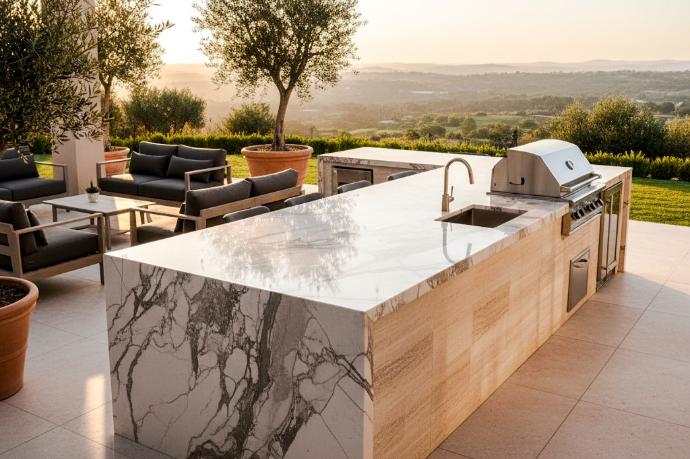
Design-Forward Spaces: Whether you're creating a dramatic kitchen island, an elegant primary bathroom vanity, or a statement wet bar, quartzite's visual richness makes it one of the most striking countertop options available at any price point.
Explore Quartzite Countertops at Nova Tile and Stone
Our team carries a curated selection of quartzite and natural stone slabs across a wide range of colors, veining patterns, and finishes. Whether you're drawn to soft, neutral tones or bold, dramatic movement, our design consultants can help you find the right slab to complement your space, your lifestyle, and your budget.
We offer free design consultations at all four of our tile and stone showroom locations, where our team can walk you through the differences between quartzite, quartz, granite, and other natural stone options side by side. When you shop local for your countertop materials, you gain access to hands-on expertise and the ability to view full-size slabs in person before making a decision, something online retailers simply cannot offer.
Conclusion
Quartzite countertops represent one of the most compelling options in the premium natural stone category, combining exceptional hardness, heat resistance, and stunning visual character in a way that few other materials can. The tradeoffs, including regular sealing, sensitivity to acidic spills, and a higher price point, are real, but for homeowners who value authenticity, durability, and long-term design impact, quartzite consistently delivers. Whether you're remodeling a busy family kitchen or designing a spa-inspired bathroom, quartzite is a surface worth serious consideration. Visit any of our showroom locations to explore our quartzite slab selection in person and get the expert guidance you need to make the right choice for your home.
Ready to explore quartzite in person? Visit our showroom locations in Reno, Minden, Sacramento, and Fernley. Schedule a free design consultation with one of our stone specialists today.
Frequently Asked Questions
Are quartzite countertops durable enough for everyday kitchen use?
Yes. Quartzite is one of the hardest natural stones used for countertops, harder than granite, making it highly resistant to scratches, chips, and the wear and tear of daily kitchen activity. It holds up well against knives, heavy pots, and frequent use without losing its surface integrity over time. For busy households, quartzite is an excellent long-term choice.
Do quartzite countertops stain or etch easily?
Quartzite can stain if it is not properly sealed, since it is a porous natural stone. Liquids like wine, coffee, and oils can penetrate an unsealed surface and leave permanent marks. Additionally, acidic substances such as lemon juice, vinegar, or tomato-based products can cause etching on the surface if left sitting too long. Routine sealing and prompt spill cleanup are the most effective ways to protect quartzite from both staining and etching.
How does quartzite compare to quartz countertops?
Quartzite and quartz are very different materials despite the similar names. Quartzite is a 100% natural metamorphic stone quarried from the earth, while quartz countertops are engineered from crushed quartz crystals bonded with polymer resin. Quartzite is generally more heat- and scratch-resistant than engineered quartz, but it requires regular sealing and more careful maintenance. Quartz is non-porous and requires no sealing, making it a lower-maintenance alternative. The right choice depends on whether you prioritize the authenticity of natural stone or the convenience of an engineered surface.
Is quartzite more expensive than granite?
Quartzite and granite pricing overlap considerably, and the cost of each depends on the specific slab, its grade, color, and the rarity of the veining. In general, quartzite tends to sit at the higher end of the natural stone pricing range, particularly for premium slabs with dramatic movement or unusual color. Some rare granite varieties can exceed the cost of entry-level quartzite, so the best approach is to compare actual slabs rather than relying on material category alone. Our team can walk you through options at multiple price points to find the right fit for your budget.
Is quartzite a good choice for bathroom countertops, or is it mainly for kitchens?
Quartzite performs very well in both kitchens and bathrooms. Its hardness makes it durable in high-traffic spaces, and its natural beauty is particularly well-suited to bathroom vanities where it can serve as a design focal point. With proper sealing, quartzite resists water and common bathroom products effectively. Many homeowners choose quartzite throughout their home, using it in the kitchen, primary bathroom, and powder room, for a cohesive, premium look that carries through every space.