Quartzite countertops are a natural stone surface option known for their exceptional hardness, heat resistance, and distinctive veining patterns. Formed when sandstone undergoes intense geological pressure and heat, quartzite ranks among the most durable countertop materials available, harder than granite in most cases and entirely free of synthetic resins or engineered additives.
Homeowners choosing between quartzite, granite, marble, quartz, and porcelain countertops will find that quartzite offers a strong combination of aesthetic appeal and functional performance. It handles daily kitchen and bathroom use well, resists scratching and chipping, and comes in a wide range of natural colors from soft whites and grays to bold blues and greens. However, it does require periodic sealing due to its porous nature, and acidic substances can cause etching if spills are not cleaned up promptly.
This guide covers everything you need to know about quartzite countertops, including their key benefits, potential drawbacks, maintenance requirements, how they compare to other countertop materials, and what to expect during installation, so you can make a fully informed decision for your kitchen or bathroom renovation.
What Is Quartzite?
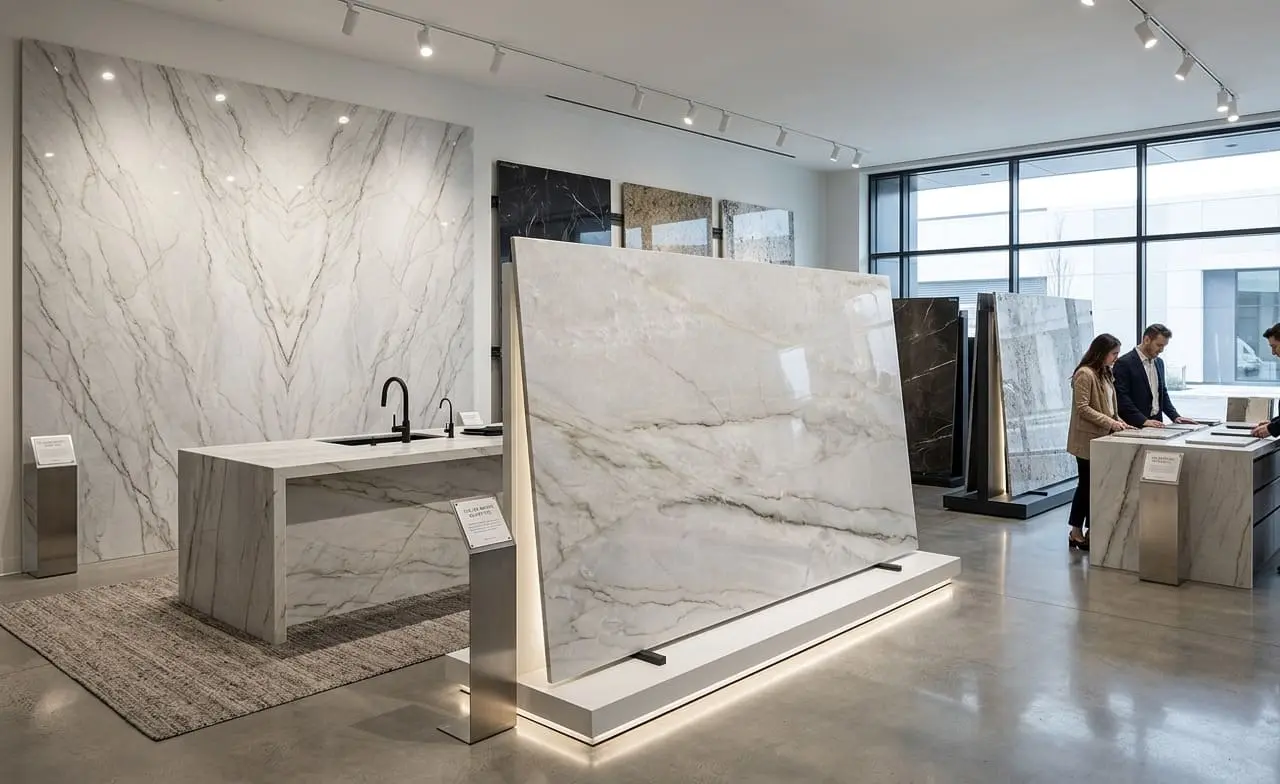
Quartzite is a naturally occurring stone formed when sandstone is subjected to intense heat and pressure deep beneath the Earth's surface. This geological process bonds the quartz grains together, producing an exceptionally hard and dense material. Unlike engineered quartz, which is manufactured using resins and synthetic pigments, quartzite is entirely natural, meaning every slab carries its own distinct character. For homeowners interested in understanding more about natural stone materials and industry standards, natural stone environmental and product information can provide helpful background.
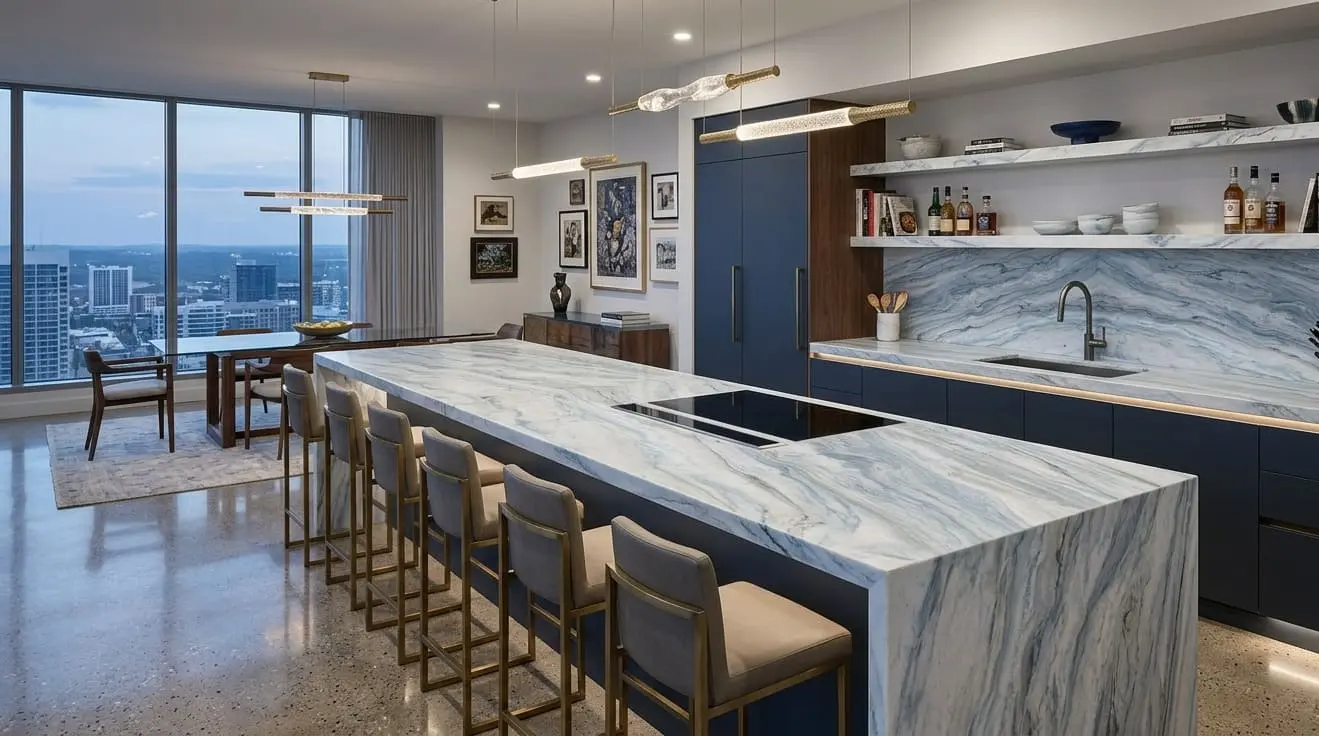
Each quartzite countertop showcases its own veining patterns, subtle shimmer, and color variation. Ranging from clean whites and cool grays to vivid blues and greens, quartzite's organic appearance makes it a go-to choice for homeowners seeking a luxury stone surface with truly unique visual impact. To explore premium selections for your next project, browse our natural stone slab collection for quartzite countertops and surfaces.
Benefits of Quartzite Countertops
Exceptional Durability
Among natural stone materials, quartzite ranks as one of the hardest available, making it well-suited for demanding kitchen and bathroom environments. It holds up against scratching, chipping, and cracking better than many competing surfaces, maintaining its appeal through years of regular use.
For homeowners looking to source premium materials with confidence, shop locally for high-quality natural stone and tile surfaces ensures access to trusted selections and expert guidance. Industry professionals managing larger-scale projects can also benefit from our trade account solutions for contractors, designers, and builders for streamlined purchasing and project support.
Natural Heat Resistance
One of quartzite's standout qualities is its natural resistance to heat. Unlike engineered surfaces, quartzite countertops can withstand hot cookware placed directly on them without scorching, though using trivets is still advisable to preserve the sealant and maximize the stone's longevity.
Easy, Low-Effort Maintenance
Quartzite demands very little upkeep, letting you appreciate its beauty without constant attention. Routine cleaning with mild dish soap and a soft cloth is typically all it takes to keep the surface looking sharp. Avoid harsh or abrasive cleaners and apply a proper sealant periodically to reinforce protection and extend the countertop's lifespan, making it a practical choice for those with busy lifestyles.
One-of-a-Kind Natural Aesthetics
What sets quartzite apart is its inherently distinctive character. No two slabs look alike, and its sophisticated textures and organic patterning bring a refined elegance to any room. For homeowners looking to elevate their space with a natural, high-end finish, quartzite delivers an aesthetic that engineered materials simply cannot replicate.
A Broad Spectrum of Colors
Quartzite comes in a wide variety of natural hues, each enhanced by its signature veining. Whether your design calls for warm earth tones or bold, dramatic colors, there is a quartzite variety to complement virtually any interior palette, making it easy to find a slab that ties your entire space together.
Considerations Before Choosing Quartzite
Protecting the Surface from Scratches
Although quartzite is highly resistant to scratching, applying excessive force with sharp tools can still damage its protective coating or the stone beneath. Direct contact with knives or other pointed kitchen utensils poses a risk. The straightforward fix is to always use a cutting board to keep the surface in pristine condition.
The Risk of Etching and How to Prevent It
Etching occurs when acidic substances such as lemon juice, vinegar, or acidic cleaning products chemically react with certain minerals in the stone. If your quartzite contains calcium or dolomite, contact with acids can leave dull marks on the surface. The key preventive measure is wiping up acidic spills immediately before they have a chance to react.
Minimizing Scuff Marks
Scuffing typically results from dragging heavy appliances or cookware across the countertop surface. Rough handling and abrasive cleaning tools are also common culprits. Handling items with care and sticking to non-abrasive cleaning cloths will go a long way in keeping the surface scuff-free.
Sealing Is Essential
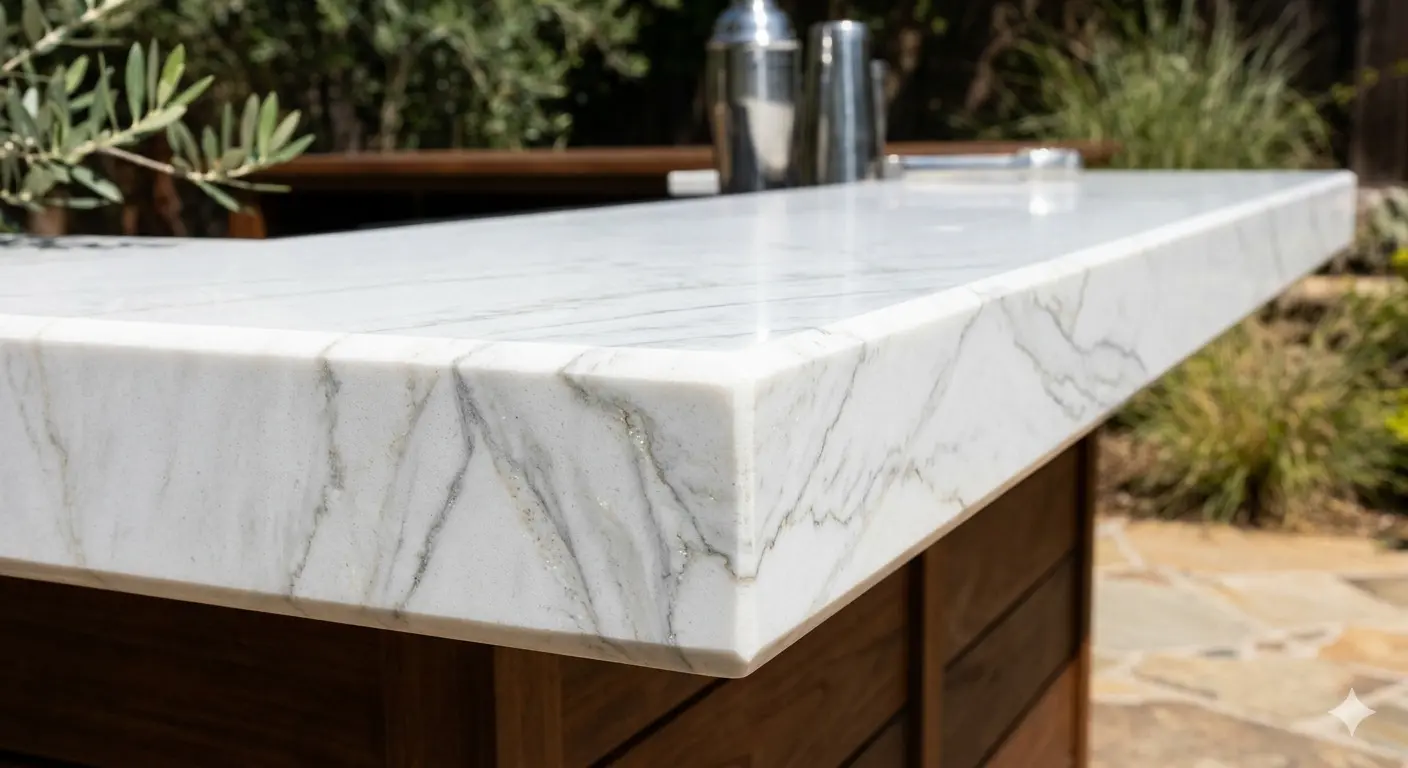
Because quartzite is a porous material, it contains microscopic openings that can absorb liquids if left unprotected. Sealing the surface on a regular basis is the most effective way to prevent staining and guard against bacterial buildup. A properly sealed quartzite countertop is far easier to clean and significantly more resistant to everyday spills.
Installation Requires Professional Handling
Quartzite's density makes it a heavy material to work with, and installation is not a DIY-friendly task. Larger countertop areas may require additional structural support to bear the weight safely. Vertical applications such as full-height backsplashes are especially demanding and should always be handled by experienced installers.
Conclusion
Quartzite countertops are a worthy investment for homeowners who want the best of both worlds: stunning natural beauty and long-lasting durability. From its heat resistance and scratch-tough surface to its one-of-a-kind veining and broad color range, quartzite brings undeniable value to any kitchen or bathroom renovation. Like any natural stone, it does require some routine care, particularly when it comes to sealing and avoiding acidic spills, but the payoff is a surface that holds its elegance for decades. For anyone seeking a countertop material that combines luxury aesthetics with real-world functionality, quartzite is a choice worth making. Explore more premium selections with Nova Tile and Stone, a trusted supplier for natural stone slabs and surface materials, or conveniently schedule a showroom appointment for personalized slab selection and design guidance to find the right fit for your space.
Frequently Asked Questions
How often should quartzite countertops be sealed?
Quartzite countertops should generally be sealed once a year, though this can vary depending on the specific stone and how heavily the surface is used. A simple water test can help you determine when it is time to reseal. If water no longer beads on the surface and instead absorbs into the stone, that is a clear sign that a fresh coat of sealant is needed. Regular sealing keeps the porous surface protected against stains and bacterial buildup.
Is quartzite harder than granite?
Yes, in most cases quartzite is harder than granite. Quartzite typically scores higher on the Mohs hardness scale, making it one of the toughest natural stone countertop options available. This exceptional hardness is what gives quartzite its strong resistance to scratching and chipping, making it particularly well-suited for busy kitchens that see a lot of daily activity.
Can quartzite countertops be used in bathrooms as well as kitchens?
Absolutely. Quartzite is an excellent choice for both kitchens and bathrooms. Its natural durability and moisture resistance, when properly sealed, make it ideal for bathroom vanities, shower surrounds, and even full-height backsplashes. Its wide range of colors and elegant veining also makes it a popular design choice for creating a spa-like aesthetic in bathroom spaces.
What is the difference between quartzite and quartz countertops?
Despite the similar names, quartzite and quartz are very different materials. Quartzite is a 100% natural stone formed through geological processes, while quartz countertops are engineered surfaces made from ground quartz mixed with resins, pigments, and binders. Quartzite offers a unique, organic appearance that cannot be replicated, whereas engineered quartz provides more consistency in color and pattern. In terms of heat resistance, quartzite generally has the edge, while quartz tends to be more uniformly non-porous.
How do you clean quartzite countertops on a daily basis?
Daily cleaning of quartzite countertops is straightforward. Use a soft cloth or microfiber towel with warm water and a small amount of mild dish soap to wipe down the surface. Avoid harsh chemicals, bleach, or abrasive scrubbing pads, as these can damage the sealant and dull the stone's natural finish over time. For spills, especially acidic ones like citrus juice or vinegar, clean them up promptly to prevent etching and surface damage.