Quartz and quartzite are two completely different countertop materials. Quartz is an engineered surface made from crushed stone particles and resin binders, while quartzite is a 100% natural stone quarried directly from the earth. Despite the similar names, they differ in composition, performance, maintenance requirements, and how they look in a finished space.
Key differences at a glance:
- Origin: Quartz is manufactured; quartzite is natural
- Composition: Quartz is roughly 90% ground stone plus resin; quartzite is compressed sandstone transformed by heat and pressure
- Porosity: Quartz is non-porous and never needs sealing; quartzite is porous and requires periodic sealing
- Heat resistance: Quartzite handles heat well; quartz can be damaged by prolonged heat exposure
- Appearance: Quartz offers consistent, uniform patterning; quartzite varies in color, veining, and movement from slab to slab
- UV stability: Quartzite performs well outdoors; quartz can yellow or fade in direct sunlight
Why the Confusion Exists
The names sound nearly identical, which leads to one of the most common misunderstandings in countertop shopping. Adding to the confusion, some fabricators and retailers use the terms loosely, and certain stones sold as one material turn out to be the other. Homeowners who walk into a showroom asking for quartzite sometimes leave with quartz, or vice versa.
Understanding what you are actually buying matters for long-term satisfaction. A homeowner who wants a natural stone surface with visible variation will not get that from an engineered product. A homeowner who wants low-maintenance, consistent patterning will struggle with the care demands of natural quartzite. Getting clear on the distinction before you start shopping saves time, money, and frustration.
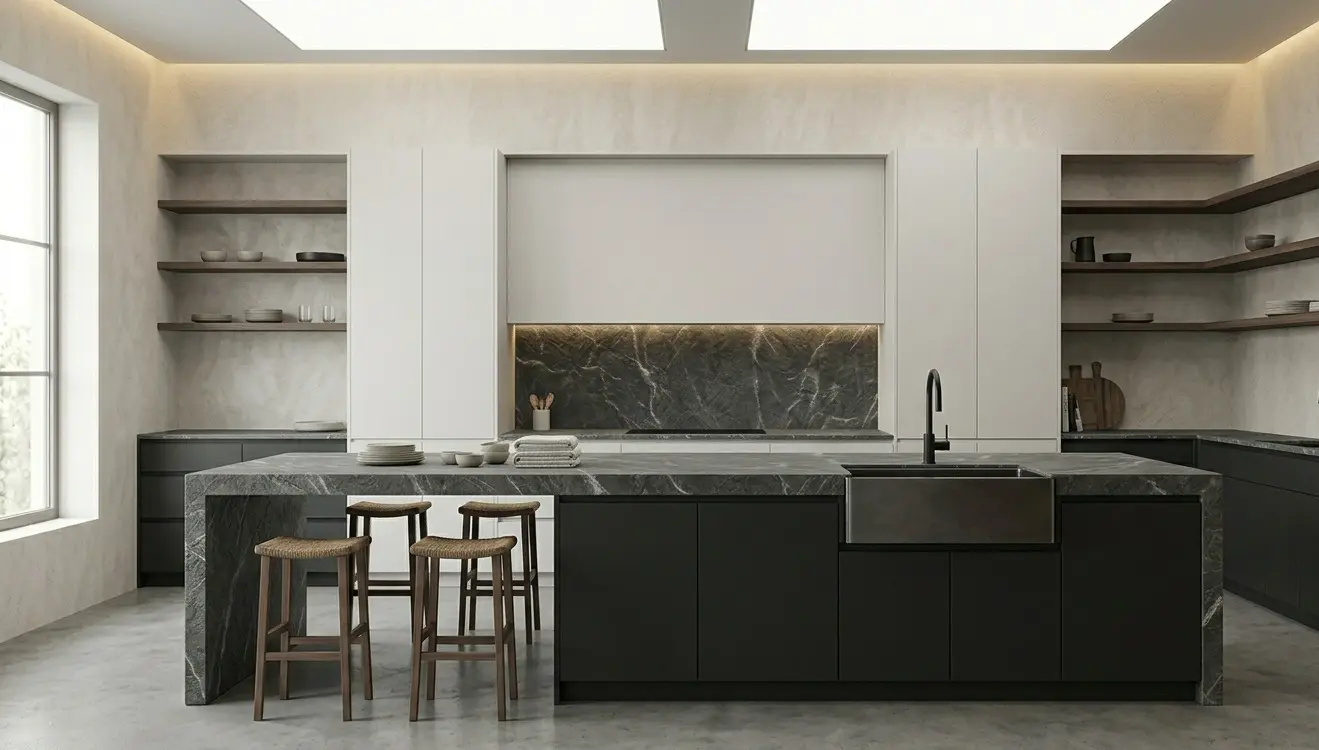
What Is Quartzite?
Quartzite is a naturally occurring metamorphic rock. It begins as quartz-rich sandstone and is transformed over millions of years by intense heat and pressure deep within the earth. That process causes individual sand grains to fuse together into an extremely dense, interlocking crystalline structure. The result is one of the hardest natural stones used in residential surfaces.
Because quartzite forms naturally, each slab varies in color, veining, translucence, and movement. Slabs from the same bundle can differ noticeably from one another. White and light gray quartzite varieties are the most common, but the stone also occurs in soft golds, warm creams, and, less frequently, blue or green hues depending on the mineral content of the source deposit.
Quartzite is often compared to marble in appearance, and some varieties are difficult to distinguish from high-end marble at a glance. The difference in performance, however, is significant. Quartzite is harder than marble, more resistant to scratching, and does not etch from acidic foods and liquids the way marble does. For homeowners who love the veined look of marble but want a more durable surface for daily kitchen use, quartzite is frequently the preferred choice.
You can explore the full range of available natural stone slabs to see how quartzite varieties compare in person.
According to This Old House, quartzite typically costs between $55 and $75 per square foot installed, though exotic varieties and larger slabs can run higher depending on the source.
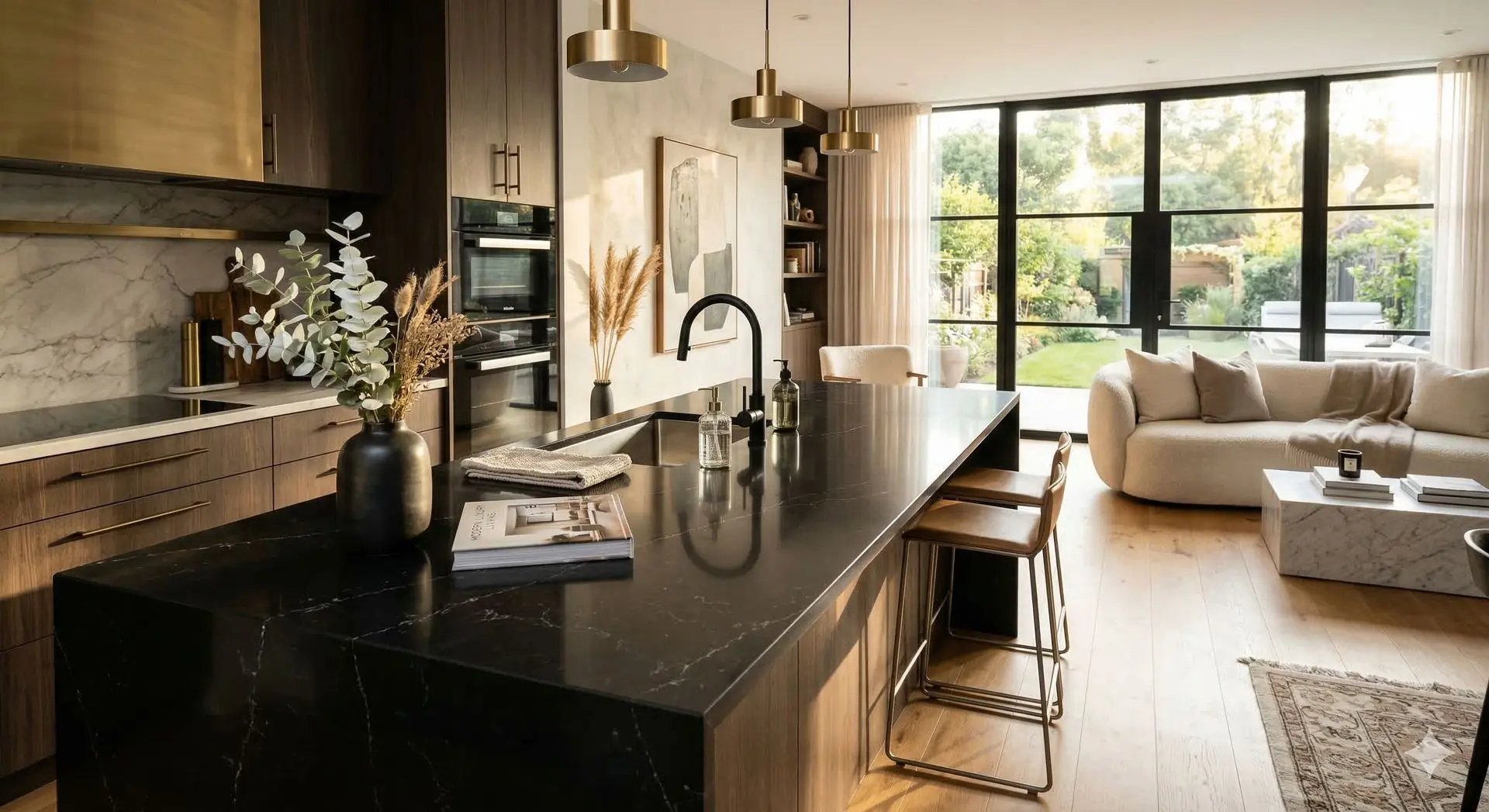
What Is Quartz?
Quartz countertops are an engineered product. Manufacturers combine ground quartz crystals, typically around 90 to 95 percent of the total composition, with polymer resins, pigments, and binding agents. The mixture is compressed under high pressure and heat to produce a dense, uniform slab.
Because the manufacturing process allows for precise control over color and pattern, quartz countertops are available in a wide range of appearances, including options designed to closely mimic natural marble, granite, or quartzite. The uniformity that makes quartz appealing for matching multiple slabs across a large kitchen is also what distinguishes it from natural stone: the pattern repeats in ways that natural stone never does.
Quartz is non-porous by design, which means spills cannot penetrate the surface and sealing is never required. This makes it a practical choice for households where countertop maintenance is a low priority. The trade-off is heat sensitivity. The resin component in quartz can be damaged by sustained high heat, meaning trivets and hot pads are necessary near the cooktop and oven. Quartz is also not recommended for outdoor kitchens, as UV exposure can cause discoloration over time.
The CDC/NIOSH has published guidance on silica dust exposure during the cutting and fabrication of engineered quartz products, which is a relevant consideration for fabricators and renovation professionals working with the material.
Comparing Performance Side by Side
Hardness and Scratch Resistance
Quartzite ranks at approximately 7 on the Mohs hardness scale, making it one of the hardest natural stones available for residential use. It is harder than marble and comparable to granite in scratch resistance. Quartz also rates around 7 on the Mohs scale, but the resin component can make it slightly more susceptible to surface marks from sharp objects than the rating alone suggests. Both materials hold up well to everyday use when treated appropriately.
Heat Resistance
Quartzite, formed under extreme geological heat, can withstand hot pots and pans placed directly on the surface without damage. Quartz is vulnerable to heat because the resin binders used in manufacturing can discolor, crack, or warp under sustained temperatures above roughly 150 degrees Celsius. Using trivets is strongly recommended with quartz regardless of the brand.
Porosity and Sealing
Quartz is non-porous and requires no sealing at any point. Quartzite is a porous natural stone and should be sealed upon installation and resealed periodically, typically once a year for kitchen applications. Some denser quartzite varieties, such as Taj Mahal and Cristallo, may need less frequent sealing, but the maintenance requirement remains part of owning a natural stone surface.
UV and Outdoor Performance
Quartzite is well suited for outdoor kitchen countertops, poolside surfaces, and other exterior applications. Its natural composition is stable under UV exposure and temperature fluctuation. Quartz is not recommended outdoors, as prolonged sun exposure causes the resin to yellow and the surface to fade.
For guidance on designing an outdoor or indoor stone surface, Fine Homebuilding offers detailed resources on natural stone selection and installation best practices.
How to Tell Them Apart in a Showroom
When you are standing in front of two slabs and unsure which material you are looking at, a few observations can help.
Pattern variation: A slab with natural movement, unique veining, and color variation that shifts across the surface is almost certainly natural quartzite. A slab with a clean, consistent pattern that repeats at regular intervals is likely an engineered quartz product.
Depth and translucence: Natural quartzite, when held to light, often shows a crystalline depth and translucence that engineered quartz does not replicate. The surface appears to have layers rather than sitting flat.
Edge texture: On a cut edge, quartzite shows the interlocking grain structure of compressed stone. Quartz edges tend to appear more uniform and homogeneous in cross-section.
Ask directly: If you are shopping for natural stone, the most reliable approach is to ask the showroom to confirm the material type and whether the product requires sealing. Any surface that requires no sealing is almost certainly engineered.
As a direct stone importer, we carry full natural stone slabs and can walk you through the distinctions between materials at any of our four showroom locations. If you prefer to shop local before committing, seeing the slabs in person remains the most reliable way to make a confident selection.
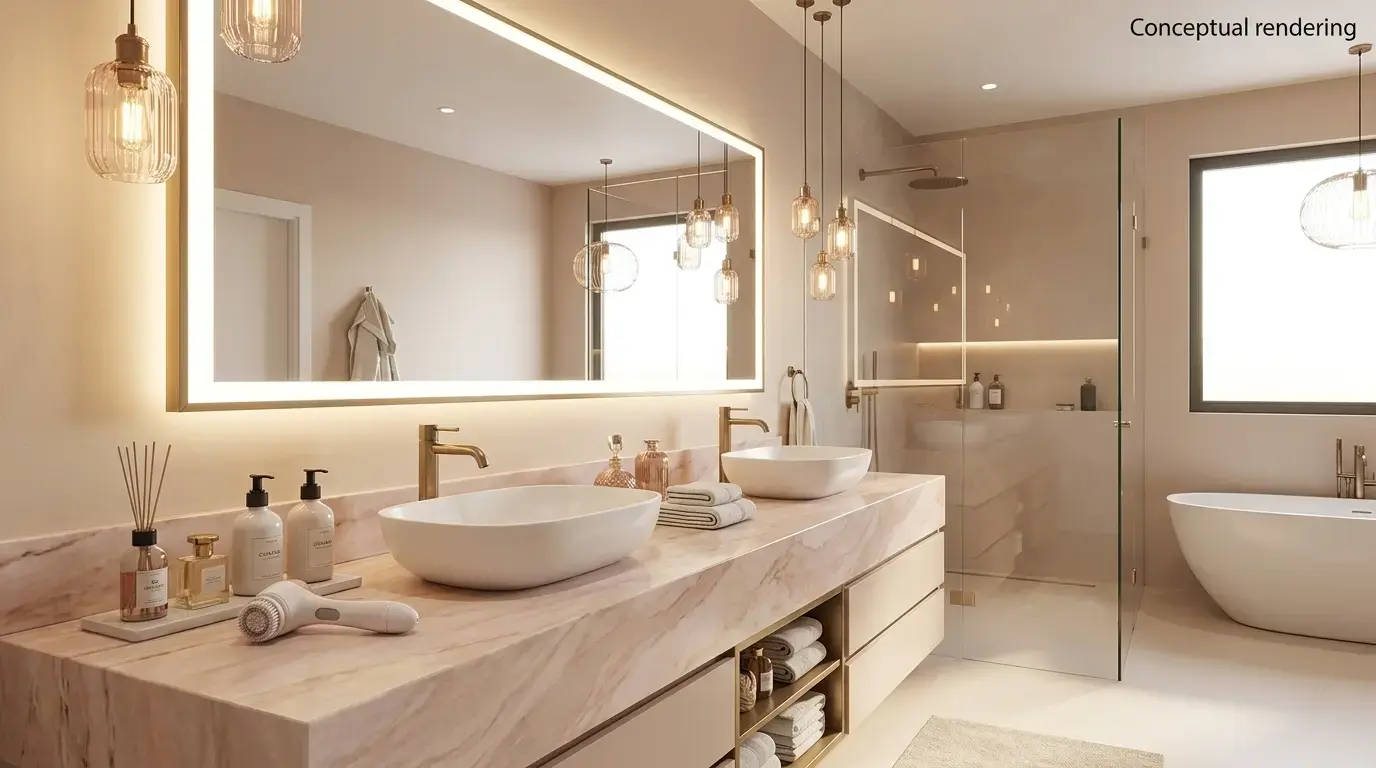
Which Material Is Right for Your Project?
Neither material is objectively better. The right choice depends on how you use your space, what level of maintenance you are comfortable with, and whether the character of natural stone matters to you.
Choose quartzite if:
- You want a 100% natural surface where each slab differs in appearance
- Your kitchen sees heavy use and you want strong heat resistance
- You are considering an outdoor kitchen or exterior application
- You want a natural stone surface that changes in appearance as it wears over time
Choose quartz if:
- Low maintenance is the primary priority
- You need consistent patterning across a large surface or multiple matching slabs
- You prefer a non-porous surface that requires no sealing
- Heat exposure near the countertop can be managed with trivets
For projects where you want to discuss options with someone familiar with both, you can schedule an appointment at any of our showroom locations in Reno, Minden, Sacramento, or Fernley. Design team members are available without commission pressure to help you work through material choices.
If you are ready to explore slab pricing and availability, you can also request a slab quote directly.
Design and architecture professionals working on client projects can apply for a trade account to access trade pricing and additional project support.
Conclusion
Quartz and quartzite share a name but little else. One is a manufactured product built for consistency and low maintenance; the other is a natural stone with surface variation that reflects how it formed geologically. Knowing the difference before you shop means you can focus your showroom visits on materials that match your priorities, rather than discovering mid-project that you chose the wrong one. If you are drawn to natural stone and want something with the veined appearance of marble and the hardness to handle daily kitchen use, quartzite is worth evaluating. If predictability and ease of care matter most, quartz is a practical option.
Frequently Asked Questions
Is quartzite the same as quartz?
No. Quartzite is a natural metamorphic stone quarried from the earth and formed from compressed sandstone. Quartz is an engineered product made from ground stone particles combined with resins and pigments. The two materials differ in origin, maintenance requirements, heat resistance, and overall performance.
Does quartzite need to be sealed?
Yes. Quartzite is a porous natural stone and should be sealed at installation and resealed periodically to protect against staining. Quartz countertops do not require sealing because the manufacturing process produces a non-porous surface.
Can quartz countertops be used outdoors?
Quartz is not recommended for outdoor applications. The resin component in engineered quartz is sensitive to UV exposure and can yellow, fade, or degrade over time in direct sunlight. Quartzite, as a natural stone, is stable outdoors and suitable for exterior countertops, outdoor kitchens, and poolside surfaces.
Which is more heat resistant, quartz or quartzite?
Quartzite is significantly more heat resistant. Formed under intense geological heat, quartzite can handle hot cookware placed directly on the surface. Quartz countertops can be damaged by sustained heat above moderate temperatures because the resin binders are heat-sensitive. Trivets are strongly recommended with quartz near cooking areas.
How do I know if a slab is natural quartzite or engineered quartz?
Natural quartzite shows variation in veining, color, and depth across the slab surface. Engineered quartz tends to have more consistent, repeating patterns. You can also ask the supplier whether the material requires sealing. Any countertop that requires no sealing is almost certainly an engineered product rather than natural stone.