Quick Answer: Porcelain slabs and porcelain tiles are not the same. While both are made from the same fired clay material, slabs are large-format surfaces (up to 10.5 x 5 feet) designed for seamless, grout-free installations like countertops, whereas tiles are smaller pieces (typically up to 24x24 inches) installed with grout lines between them. The main differences are:
- Size: Slabs are significantly larger than tiles
- Grout lines: Slabs create seamless surfaces; tiles require grout
- Installation: Slabs need specialized equipment and labor; tiles use standard installation methods
- Best uses: Slabs for countertops and feature walls; tiles for floors and backsplashes
- Cost: Slab installation is considerably more expensive due to specialized requirements
You're gearing up for a remodel, and porcelain has caught your attention for its strength and visual appeal. But during your research, you notice two different terms appearing: porcelain slabs and porcelain tiles. Since they're both made from the same material, are they essentially identical?
Not quite.
Although they originate from the same source material, the distinction between a slab and a tile resembles the difference between bespoke tailoring and off-the-rack clothing. Their manufacturing processes differ, and each serves distinct applications. Grasping this difference will help you select the appropriate product for your space.
What Are Porcelain Tiles?
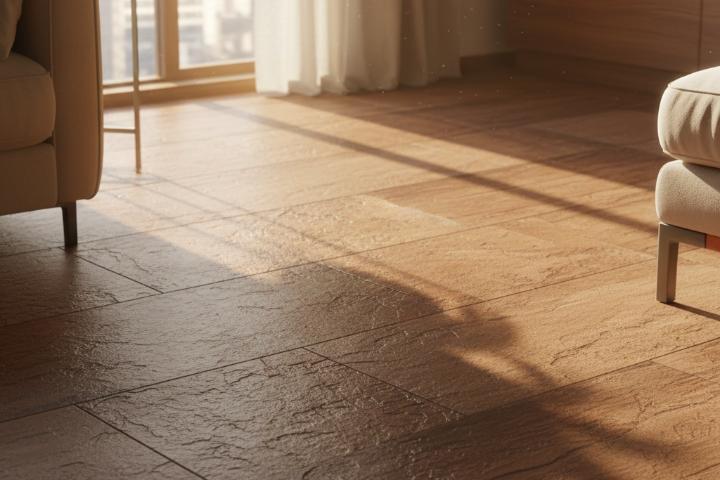
Porcelain tiles are the format most people recognize. These ceramic pieces are crafted from compacted clay that's kiln-fired at elevated temperatures. Tiles are available in standard, moderately compact dimensions, ranging from small mosaic pieces to larger formats such as 24x24 inches. During installation, they're positioned adjacent to one another with gaps between them that get filled with grout.
What Are Porcelain Slabs?
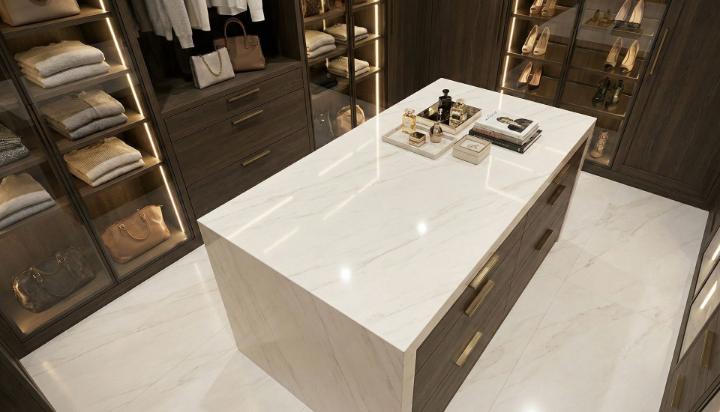
A porcelain slab represents an expansive, large-scale ceramic surface designed for modern architectural and interior applications. Think of it as an extra-large tile, frequently reaching dimensions of 10.5 x 5 feet (3200mm x 1600mm) or beyond. Manufacturers produce these slabs to function as singular, uninterrupted surfaces, reducing grout lines and creating a seamless appearance.
Made from refined natural minerals that are compacted and fired at high temperatures, porcelain slabs are dense, durable, and resistant to moisture, stains, and heat. They are commonly used for kitchen countertops, accent walls, shower surrounds, and expansive floor installations. Within the broader conversation about stone countertops, porcelain slabs are often considered an alternative surface material due to their strength, large format, and contemporary aesthetic.
Why This Distinction Is Important
1. Visual Impact: Continuous vs. Segmented
This is the most noticeable difference between porcelain slabs and porcelain tiles.
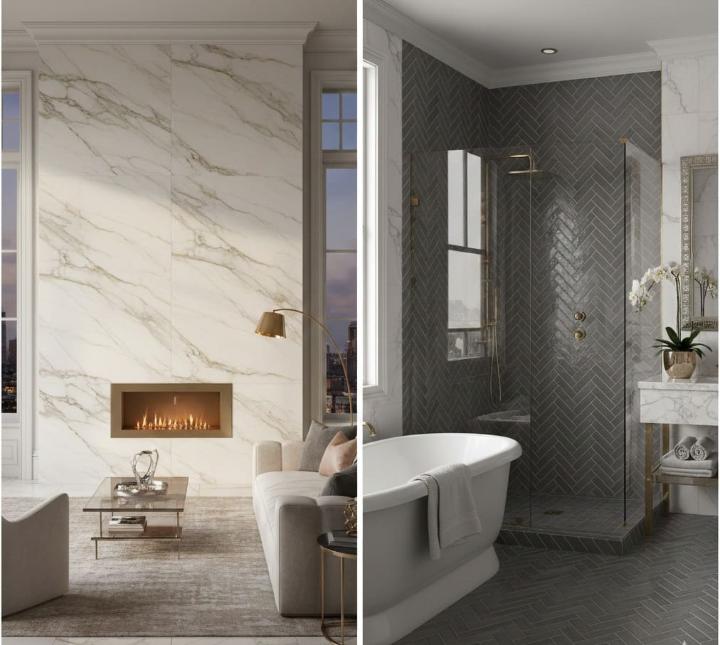
- Porcelain slabs create a bold, unified, and nearly grout-free surface. When installed on a kitchen island, waterfall edge, or entertainment wall, they deliver a seamless, uninterrupted look. The result is a refined, high-end aesthetic that standard tile layouts simply cannot replicate.
- Porcelain tiles, by contrast, require grout joints between each piece. These joints form a visible grid pattern that becomes part of the overall design. While this segmented look works well for flooring and traditional backsplashes, it can feel visually busy on large vertical surfaces and may be less practical for kitchen countertops where a smooth, continuous workspace is preferred.
If you're comparing options for your project, it’s always wise to shop local and view full slab displays or tile installations in person. Seeing the scale and finish firsthand makes the difference between continuous and segmented surfaces much clearer.
2. Upkeep and Sanitation
Grout lines are not just a visual element, they directly affect maintenance and long-term cleanliness.
- With porcelain tiles, the grout joints between each tile are typically more porous than the tile surface itself. Over time, grout can absorb moisture, collect dirt and debris, and become prone to staining or discoloration. In damp environments, improperly sealed or poorly maintained grout may also contribute to mold or mildew development. This means grout often requires periodic sealing and more detailed cleaning.
- In contrast, porcelain slabs have few to no grout lines, especially when used for countertops or large wall applications. The surface itself is dense and non-porous, making it resistant to staining and moisture penetration. As a result, upkeep is generally simpler, routine wiping with mild cleaner is usually sufficient.
From a stone care perspective, this makes porcelain slabs a practical and hygienic choice for high-use areas such as kitchen countertops and food preparation spaces.
3. Professional Installation and Investment
- Porcelain Tiles are straightforward to install for qualified tile setters. Installation costs follow industry standards.
- Porcelain Slabs present a completely different scenario. Their substantial dimensions and weight demand specialized expertise, equipment (such as suction lift systems), and multiple professionals to move and position them properly without damage. This specialized labor drives the installation investment for slabs considerably higher than for tiles.

Making the Right Selection
Although porcelain slabs and porcelain tiles are made from similar raw materials, they are designed to serve different functions. The scale of your project, your design goals, and your budget will ultimately determine the best option.
- Select Porcelain Slabs when:
You want a seamless, grout-minimized, premium surface with strong visual impact. Porcelain slabs are especially well suited for kitchen countertops, large kitchen islands with waterfall edges, shower walls, and statement feature walls where a continuous look is desired. - Select Porcelain Tiles when:
You’re working within a tighter budget, designing a smaller space, or prefer the classic, structured look of a tiled layout. Tiles are ideal for flooring, bathroom walls, and kitchen backsplashes where grout lines can complement the design and provide layout flexibility.
Understanding this distinction helps ensure you achieve both the aesthetic appeal and functional performance you expect from your surface material. If you're exploring a seamless, high-performance option for your next project, connect with our team at Nova Tile and Stone to view our collection of large-format porcelain slabs, and apply for a trade account to access exclusive professional pricing and resources.
Conclusion
Choosing between porcelain slabs and porcelain tiles isn’t about determining which material is superior, it’s about selecting the right solution for your specific application. While both are manufactured from durable porcelain, their size, installation methods, maintenance considerations, and overall visual impact differ significantly.
Porcelain tiles provide a versatile, cost-effective option with a traditional grid layout that works beautifully for floors, backsplashes, and bathroom walls. Porcelain slabs, on the other hand, deliver expansive, grout-minimized surfaces ideal for countertops, feature walls, and contemporary spaces seeking a seamless aesthetic.
By understanding these core differences, you can confidently choose a surface that aligns with your design goals, budget, and functional requirements. Whether you prefer the continuous sophistication of large-format slabs or the timeless appeal of tile installations, explore our tile and stone offerings at Nova Tile and Stone to find the right fit for your project. For more guidance on selecting the ideal surface, view this guide to countertops to compare materials and make an informed decision.
Frequently Asked Questions
Can porcelain slabs be cut to fit smaller spaces?
Yes, porcelain slabs can be professionally cut and fabricated to fit your exact dimensions. This flexibility allows you to achieve a seamless look even in uniquely sized spaces. However, cutting and fabrication require specialized tools and expertise, which factors into the overall installation cost. The ability to customize slab sizes makes them adaptable for various applications while maintaining their grout-free advantage.
Are porcelain slabs more durable than porcelain tiles?
Both porcelain slabs and tiles offer comparable durability since they're manufactured from the same dense, kiln-fired material. The difference lies in their application rather than inherent strength. Slabs may appear more robust due to their size and thickness, but properly installed tiles perform equally well in their intended applications. Your choice should be based on design preferences and project requirements rather than durability concerns.
Do porcelain slabs require sealing like natural stone?
No, porcelain slabs do not require sealing. Unlike natural stone materials such as granite or marble, porcelain is naturally non-porous and stain-resistant right from the factory. This makes it highly durable and virtually maintenance-free. Routine cleaning with mild soap and water is generally all that’s needed to keep the surface looking pristine for years.
For custom sizing, finishes, or project-specific requirements, request a slab quote to see how porcelain slabs can fit your design and budget.
Can I use porcelain tiles for a kitchen countertop instead of slabs?
While technically possible, porcelain tiles aren't recommended for kitchen countertops. The numerous grout lines create hygiene challenges in food preparation areas, as grout can harbor bacteria and stains despite regular cleaning. Additionally, the grout lines create an uneven surface that's less practical for kitchen tasks. Porcelain slabs are specifically engineered for countertop applications and deliver superior performance in these high-use areas.
What’s the Typical Lifespan of Porcelain Slabs Compared to Tiles?
Both porcelain slabs and porcelain tiles can last for decades, often 50 years or more when properly installed and maintained. Since they are made from the same durable material, their inherent longevity is virtually identical.
The main difference over time lies in maintenance: tiles may require periodic grout cleaning, resealing, or replacement of damaged grout lines, whereas slabs, with minimal or no grout, generally maintain their seamless appearance with very little intervention.
To explore your options and see samples in person, schedule an appointment with our team to discuss the best solution for your project.