Porcelain slab countertops are better for heat resistance, UV stability, and outdoor use, while quartz countertops offer better edge durability, consistent patterning, and wider fabricator availability. Both are non-porous, require no sealing, and perform exceptionally well in kitchens and bathrooms.
Key differences at a glance:
- Heat resistance: Porcelain withstands direct contact with hot pans; quartz does not
- UV resistance: Porcelain is safe for outdoor kitchens; quartz fades in sunlight
- Surface hardness: Porcelain rates 7 to 8 on the Mohs scale; quartz rates 7
- Edge durability: Quartz is less prone to chipping at edges due to its resin binders
- Maintenance: Both require no sealing; porcelain tolerates a wider range of cleaners
- Cost: Both fall within a comparable price range with strong long-term value
This guide breaks down every major difference between porcelain slab and quartz countertops so you can choose the right surface for your lifestyle, design goals, and budget.
What Is a Porcelain Slab Countertop?
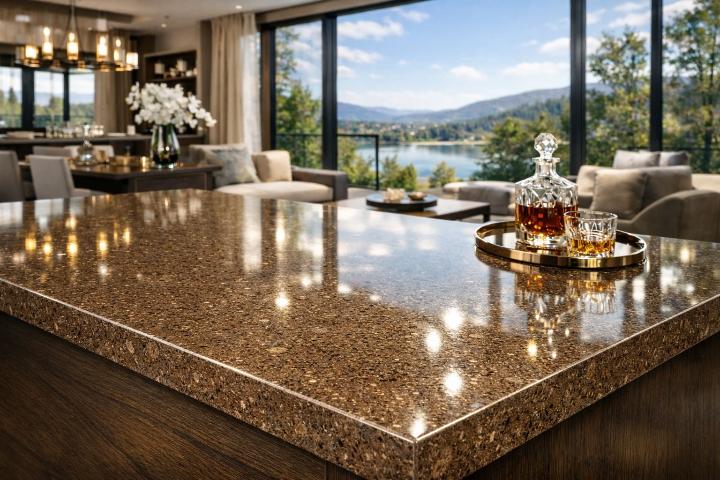
Porcelain slab countertops are large-format surfaces made from a refined mixture of kaolin clay, feldspar, quartz, and mineral oxides. These raw materials are compressed under extreme pressure and fired in a kiln at temperatures exceeding 2,300°F, producing a dense, non-porous, and exceptionally hard surface.
Unlike standard ceramic tile, porcelain slabs are manufactured in large panels, often up to 126 inches long, allowing for seamless countertop installations with minimal or no visible grout lines. Advanced digital printing technology allows manufacturers to replicate the look of natural marble, granite, quartzite, and concrete with remarkable precision.
Porcelain countertops typically range from 6mm to 20mm in thickness. The most popular residential option is 12mm, which offers an ideal balance of durability and weight. At 8 to 12 pounds per square foot, porcelain is significantly lighter than natural stone, making it a practical choice for kitchen islands, floating vanities, and outdoor kitchen applications.
What Are Quartz Countertops?
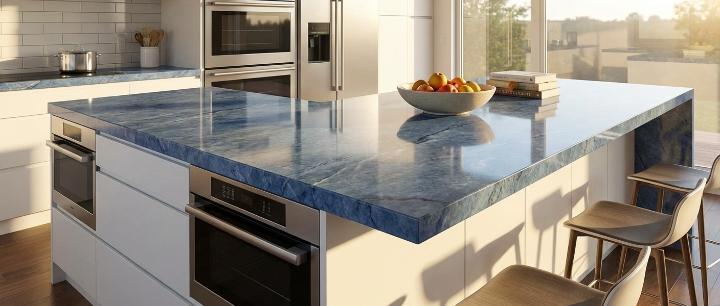
Quartz countertops are engineered stone surfaces composed of approximately 90 to 95 percent ground natural quartz crystals bound together with polymer resins, pigments, and binders. Unlike quartzite, which is a natural stone, quartz countertops are a manufactured product, giving designers and homeowners precise control over color, pattern, and consistency.
The resin binding agent is what gives quartz its non-porous surface, making it highly resistant to staining and bacterial growth. It is worth noting that the fabrication of engineered stone surfaces involves silica dust exposure, which is an important health and safety consideration for fabricators and installers working with the material. Quartz is available in a wide range of colors and patterns, including realistic marble looks, solid tones, and concrete finishes. Standard quartz slabs are typically 2cm (¾ inch) or 3cm (1¼ inch) thick, which gives them a more substantial, solid appearance compared to thinner porcelain options.
Quartz has long been a top-selling countertop material in North America due to its consistent appearance, durability, and ease of maintenance.
Porcelain Slab vs. Quartz: A Head-to-Head Comparison
Durability and Hardness
Porcelain rates 7 to 8 on the Mohs hardness scale, making it one of the hardest countertop surfaces available. It is highly resistant to scratches, abrasion, and surface wear from daily kitchen activity. Quartz rates slightly lower at 7 on the Mohs scale, though it is less brittle than porcelain due to the flexibility introduced by its resin binders.
Porcelain's primary vulnerability is edge chipping. The material's density makes it strong across its face but more susceptible to damage along corners and edges if struck by a heavy object. Quartz, with its resin content, absorbs minor impacts more effectively and is generally less prone to chipping at the edges. For a broader look at how these materials compare to natural stone options, This Old House offers a helpful overview of stone countertop materials worth reviewing during your planning process.
Winner: Porcelain for surface hardness; Quartz for edge durability
Heat Resistance
This is one of the most significant differences between the two materials. Porcelain is fired at temperatures above 2,300°F during manufacturing, which means it can withstand direct contact with hot cookware without scorching, discoloring, or cracking. You can set a hot skillet or baking dish directly on a porcelain slab countertop without concern.
Quartz, by contrast, contains polymer resins that are sensitive to high heat. Placing a hot pan directly on a quartz countertop can cause thermal shock, resulting in discoloration, surface damage, or even cracking. Trivets and hot pads are strongly recommended for quartz surfaces.
For avid home cooks who frequently move hot items between the stove and countertop, this distinction matters considerably.
Winner: Porcelain
Stain Resistance
Both porcelain and quartz are non-porous, meaning neither material absorbs liquids, oils, or food particles that cause staining. Coffee, wine, tomato sauce, and acidic foods wipe away cleanly from both surfaces with minimal effort.
Quartz, however, can be vulnerable to staining from prolonged exposure to certain harsh chemicals, particularly those containing bleach or highly alkaline cleaning agents, which can break down the resin binders over time and dull the surface. Porcelain is inert and impervious to most household chemicals, including acidic cleaners that would etch natural stone.
Winner: Porcelain for chemical resistance; essentially tied for everyday stain resistance
UV and Outdoor Resistance
Quartz countertops are not suitable for outdoor use. The resin binders used in quartz are sensitive to prolonged UV exposure, causing the surface to fade, yellow, or discolor over time when installed in sunlit areas or outdoor kitchens.
Porcelain is UV-stable, weather-resistant, and unaffected by temperature fluctuations, making it an excellent choice for outdoor kitchen countertops, alfresco dining areas, and spaces with significant natural light. If you are designing an outdoor kitchen or a kitchen with large south-facing windows, porcelain is the clear choice.
Winner: Porcelain
Maintenance and Cleaning
Both materials require no sealing, a significant advantage over natural stone options like granite, marble, or quartzite. Day-to-day cleaning for both porcelain and quartz is simple: warm water and a mild dish soap applied with a soft cloth is all that is needed.
The key difference is in what to avoid. Quartz requires more careful selection of cleaning products due to its resin content. Bleach-based cleaners, highly abrasive scrubbing pads, and prolonged chemical exposure can degrade quartz surfaces over time. Porcelain is more tolerant of a wider range of cleaning products, including mild acids like diluted white vinegar.
Winner: Tie. Both are low maintenance, but porcelain is more forgiving with cleaning products
Design Options and Aesthetics
Modern manufacturing has elevated both materials to impressive levels of visual realism. Quartz has long set the standard for consistent, predictable patterns, ideal for homeowners who want a uniform appearance across large installations. Book-matching, which creates mirror-image veining across slabs, is more easily achieved with porcelain due to its repeatable digital print technology.
Porcelain offers an edge in large-format design flexibility. Slabs can be produced at sizes that virtually eliminate seams, and the same design can extend from countertop to backsplash to feature wall for a cohesive, continuous look. Quartz is typically limited to standard slab sizes and is less suited for non-countertop applications like wall cladding. Fine Homebuilding's guide to natural stone countertops is a useful resource if you are also weighing natural stone as part of your design decision.
Winner: Porcelain for large-format and multi-surface installations; Quartz for consistent patterning
Weight and Installation
At 8 to 12 pounds per square foot, porcelain slabs are considerably lighter than quartz, which typically weighs 20 to 25 pounds per square foot. This weight difference has real implications for installation. Lighter porcelain slabs are easier to transport, require less structural support, and open up applications like floating vanities and wall-mounted surfaces that would be impractical with heavier materials.
That said, porcelain requires highly skilled fabricators with specialized diamond blades and waterjet cutting equipment. The material's density and thinness make precise cuts technically demanding. Quartz fabrication is more widely available, and finding an experienced installer is generally easier regardless of location. If you prefer to work with a local tile and stone specialist who can guide you through material selection and fabrication, working with a regional showroom is a smart first step.
Winner: Porcelain for weight and versatility; Quartz for fabricator availability
Cost
Porcelain and quartz countertops fall within a comparable price range, though final costs vary based on slab size, thickness, edge profiles, and installation complexity. Premium designer collections in either material can push costs higher, while standard options remain more accessible.
Both materials carry a higher upfront cost than laminate or entry-level granite, but their durability and zero-maintenance requirements translate to strong long-term value. Neither requires periodic sealing, polishing, or special treatments that add to the lifetime cost of ownership.
Winner: Tie. Both are comparably priced with strong long-term value
Which Is Better for Your Application?
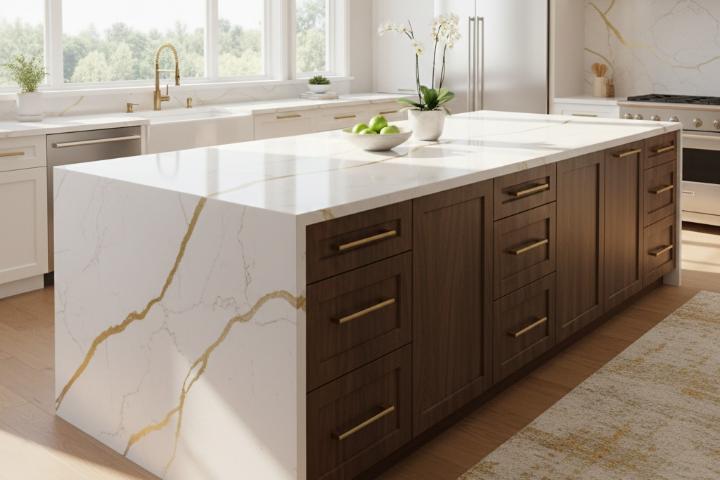
Choose porcelain slab if you:
- Do high-heat cooking and want to skip the trivet
- Are designing an outdoor kitchen or a space with heavy natural light
- Want a seamless countertop-to-backsplash look using one material
- Prefer a thinner, more lightweight profile
- Value maximum chemical and UV resistance
Choose quartz if you:
- Want a thicker, more traditional countertop profile
- Prefer a consistent, uniform pattern across large surfaces
- Are working with a broader selection of local fabricators
- Want slightly better edge impact resistance
Both materials perform exceptionally well in kitchen and bathroom environments. The decision ultimately comes down to how you use your kitchen, where the countertop is installed, and which aesthetic speaks to your design vision.
Conclusion
Porcelain slab and quartz countertops are both excellent choices, but they serve different priorities. Porcelain edges ahead in heat resistance, UV stability, chemical tolerance, and design flexibility, making it the stronger performer in demanding kitchen environments and outdoor applications. Quartz counters with better edge durability, wider fabricator availability, and a consistent aesthetic that many homeowners prefer.
Our countertop and tile design experts can walk you through both options in person. Visit us in Reno, Minden, Sacramento, or Fernley to see porcelain slabs and quartz surfaces side by side and get expert guidance tailored to your project.
Frequently Asked Questions
Can you put hot pans directly on a porcelain slab countertop?
Yes. Porcelain is fired at temperatures exceeding 2,300°F during manufacturing, giving it exceptional heat tolerance. You can place hot cookware directly on the surface without risk of scorching or damage. Quartz, by contrast, contains resin binders that are sensitive to high heat and can be damaged by direct contact with hot pans.
Do porcelain slab countertops need to be sealed?
No. Porcelain is a non-porous material, which means it does not absorb liquids, bacteria, or staining agents. Unlike granite, marble, or quartzite, porcelain countertops never require sealing before or after installation.
Is quartz or porcelain better for an outdoor kitchen?
Porcelain is the clear choice for outdoor kitchens. It is UV-stable, weather-resistant, and unaffected by temperature fluctuations. Quartz contains polymer resins that degrade under prolonged sun exposure, causing fading and discoloration over time.
Which is easier to clean, porcelain or quartz?
Both are easy to clean with warm water and mild soap. The key difference is that porcelain is more tolerant of a wider range of cleaning products, including mild acids. Quartz requires more careful product selection, as bleach-based or highly alkaline cleaners can break down its resin binders and dull the surface.
What thickness should I choose for a porcelain slab countertop?
For most residential kitchen countertops, 12mm (½ inch) is the recommended thickness. It provides excellent durability while keeping installation weight manageable. For heavy-use areas like large kitchen islands or commercial applications, 20mm (¾ inch) offers maximum strength. Your fabricator can advise on the best option based on your specific cabinet structure and design goals.