Porcelain bathroom countertops are large-format slabs made from kiln-fired kaolin clay that deliver the luxurious appearance of natural marble or granite with superior moisture resistance, scratch protection, and virtually zero maintenance. With a water absorption rate below 0.5%, porcelain is one of the most practical and stylish surface materials available for bathroom vanities today.
Homeowners choosing porcelain slab countertops for their bathrooms benefit from:
- Exceptional durability — resistant to scratches, heat, and daily wear
- Near-zero porosity — repels water, prevents mold and mildew growth
- Stain resistance — cosmetics, hair dye, and cleaning products wipe away easily
- No sealing required — unlike marble and granite, porcelain never needs resealing
- Versatile design options — available in finishes that replicate marble, concrete, wood, and more
Whether you are planning a full bathroom renovation or upgrading your vanity, this guide covers everything you need to know about porcelain bathroom countertops, from material benefits and design ideas to maintenance tips.
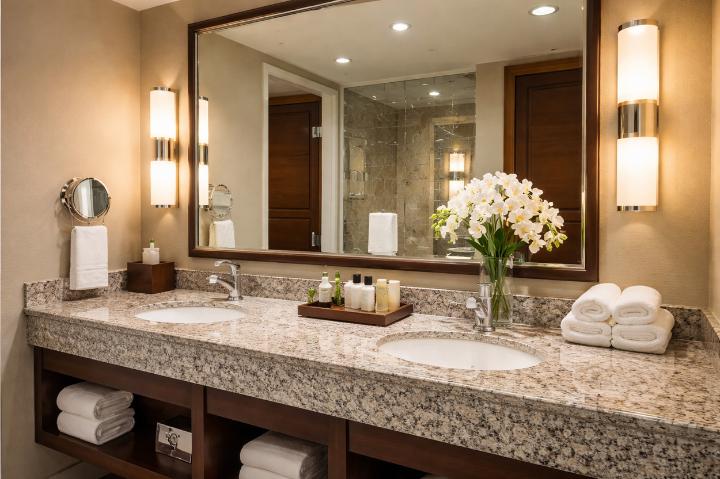
What Are Porcelain Bathroom Countertops?
Porcelain is a dense, refined material crafted primarily from kaolin clay blended with minerals such as quartz, feldspar, and silica. While it belongs to the broader ceramics family, porcelain stands apart from standard ceramic tile in several important ways, most notably its extremely low water absorption rate and superior hardness.
During manufacturing, porcelain is fired at temperatures exceeding 2,200°F, which produces an incredibly compact and non-porous surface. This firing process gives porcelain its signature strength and makes it naturally resistant to moisture penetration, a quality that is especially valuable in bathroom environments.
Today, porcelain countertops are available as large-format porcelain slabs that create a seamless, continuous surface on bathroom vanities. Unlike traditional tile countertops with visible grout lines, porcelain slabs deliver a sleek, unified appearance that elevates the entire room. Advanced digital printing technology also allows manufacturers to replicate the look of natural marble, granite, concrete, and wood with stunning realism, giving homeowners access to luxury aesthetics without the demanding upkeep of natural stone countertop materials.
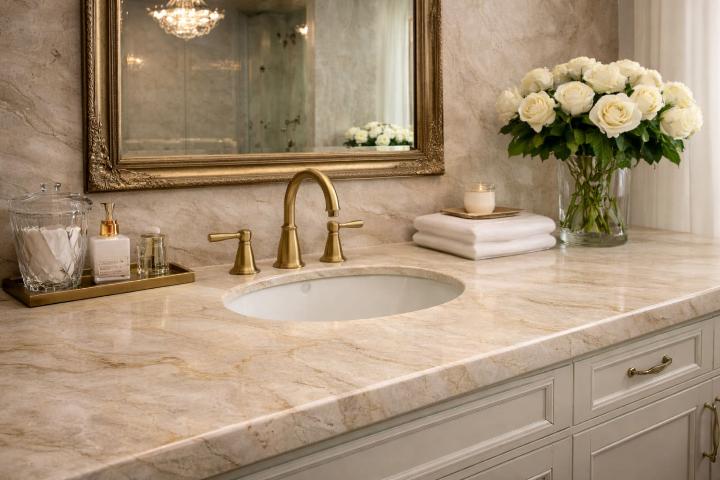
Why Porcelain Is an Ideal Choice for Bathroom Countertops
Bathrooms present unique challenges for countertop materials. Constant exposure to water, humidity, heat from styling tools, and daily contact with cosmetics and cleaning products demands a surface that can handle it all. Porcelain checks every box.
Outstanding Durability
Porcelain ranks among the most durable countertop materials available today. Its dense composition makes it highly resistant to scratches, ensuring the surface maintains its smooth, polished texture through years of daily use. Hot styling tools, curling irons, and hairdryers will not warp or damage the surface, though placing extremely hot items on a trivet or heat mat is always a smart precaution.
While porcelain is remarkably tough, it is worth noting that sharp impacts to edges or corners can occasionally cause small chips. However, because the color and pattern typically run through the material consistently, minor chips are far less noticeable than they would be on other surfaces.
Superior Moisture and Stain Resistance
One of the most compelling advantages of porcelain for bathroom applications is its near-zero water absorption rate. At less than 0.5%, porcelain effectively repels water, preventing the mold, mildew, and staining issues that plague more porous materials like natural marble or unsealed granite. Spills from makeup, lotions, hair dye, and cleaning products wipe away effortlessly without leaving behind permanent marks.
Effortless Maintenance
Unlike natural stone surfaces that require periodic sealing and specialized cleaning products, porcelain demands almost nothing in the way of upkeep. A quick wipe with a damp cloth and a mild all-purpose cleaner is all it takes to keep the surface looking pristine. There is no need for annual resealing, professional polishing, or expensive stone-safe cleaners, making porcelain a practical choice for busy households.
Versatile Design Options
Porcelain countertops are available in an impressive range of colors, patterns, and finishes. Whether you prefer the dramatic veining of Calacatta marble, the understated elegance of concrete, or the warmth of natural wood grain, there is a porcelain slab that can bring your vision to life. Matte, polished, and textured finishes add another layer of customization, allowing homeowners to fine-tune every detail of their bathroom design.
A Safer Fabrication Process
Another advantage worth noting is the safety profile of porcelain compared to engineered stone countertops. Engineered quartz surfaces contain over 90% crystalline silica, and the fabrication process of cutting and polishing these materials has been linked to serious respiratory health concerns among workers. Research from the NIOSH has documented silicosis cases among engineered stone fabrication workers across multiple states. Porcelain, by contrast, is manufactured through a kiln-firing process that produces a finished slab requiring less intensive cutting and generating significantly lower silica dust exposure during fabrication and installation.
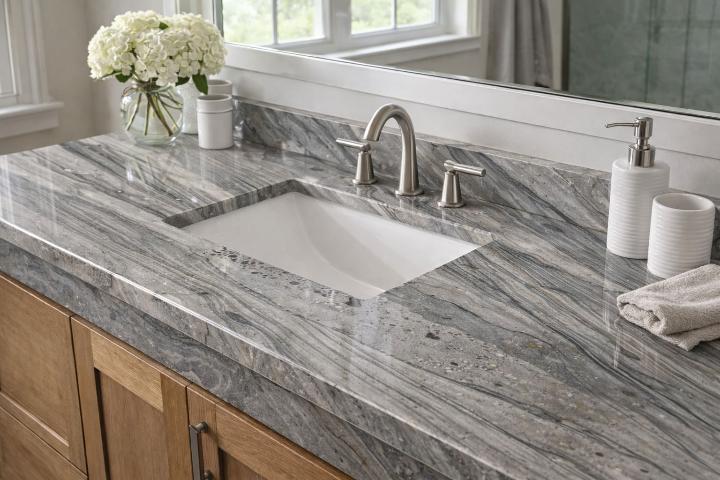
Porcelain Bathroom Countertop Design Ideas
Selecting the right porcelain countertop for your bathroom starts with understanding your personal style and the overall aesthetic you want to achieve. Here are several design approaches to inspire your next renovation.
Embrace a Dark and Moody Color Palette
Dark porcelain vanity tops create a striking, sophisticated atmosphere that works beautifully in modern and contemporary bathroom designs. Deep charcoal, rich black, and smoky gray tones with subtle marble-like veining deliver a clean and dramatic focal point that pairs perfectly with minimalist interiors.
This look shines when combined with black or dark-stained bathroom cabinets, gray or slate-colored walls, and metallic accent hardware in brass, gold, or matte black. The contrast between dark countertops and lighter wall tones creates depth and visual interest that makes even compact bathrooms feel intentionally designed.
Go Minimalist with Light Neutrals
For homeowners who want their bathroom to feel like a calm, spa-like sanctuary, a minimalist approach with light-colored porcelain countertops is the way to go. Soft whites, warm beiges, and pale grays create an open and airy atmosphere that promotes relaxation.
Light porcelain vanity tops with delicate veining pair effortlessly with white shaker cabinets, frameless mirrors, and simple brushed-nickel or chrome fixtures. To keep the space from feeling too sterile, introduce texture through woven baskets, natural wood accents, or a potted plant. A few well-chosen decor pieces in soft greens, blush, or gold can add just enough warmth without disrupting the serene vibe.
Add Vintage Charm with Warm Tones
Farmhouse, cottage-core, and vintage-inspired bathrooms call for warmer color palettes that evoke a sense of timeless comfort. Porcelain countertops in shades of cream, taupe, warm brown, and soft beige with natural stone-like veining bring an organic, lived-in quality to the space.
For a softer, feminine country-style bathroom, opt for a porcelain slab with a light beige base and subtle cream veining. Pair it with distressed wood cabinets, antique brass fixtures, and vintage-style wall sconces. If you prefer a bolder rustic statement, choose a deeper brown porcelain with pronounced veining that mimics the appearance of travertine or warm-toned marble. The natural stone aesthetic adds authenticity to rustic designs without the maintenance headaches of actual stone.
Make a Statement with Bold Veining
For those who love the look of natural marble but want a surface that is easier to care for, porcelain slabs with bold, dramatic veining offer the best of both worlds. Large-format porcelain slabs with sweeping gray, gold, or black veins across a white or cream base create a stunning centerpiece in any bathroom.
This design approach works especially well for larger vanities, double-sink configurations, and master bathrooms where the countertop has room to showcase the full beauty of the veining pattern. Keep surrounding elements simple and let the countertop be the star of the show.
Create Continuity with Coordinated Surfaces
One of the unique advantages of porcelain slabs is the ability to use the same material across multiple surfaces for a cohesive, high-end look. Consider extending your porcelain countertop material to the bathroom backsplash, shower walls, or even flooring to create a seamless visual flow throughout the space.
This coordinated approach minimizes visual clutter and makes bathrooms feel larger and more luxurious. It is a technique commonly used in upscale hotel and spa designs that translates beautifully into residential settings. You can explore our complete tile and stone collection to find matching materials for walls, floors, and countertops that create a unified bathroom design.
Conclusion
Porcelain bathroom countertops offer an unbeatable combination of beauty, durability, and everyday practicality that makes them one of the smartest investments for any bathroom renovation. With virtually zero water absorption, exceptional scratch and stain resistance, and maintenance requirements that amount to little more than a quick wipe-down, porcelain delivers long-lasting performance without the constant upkeep that natural stone demands.
The design possibilities are equally impressive. From dramatic dark tones and minimalist neutrals to warm vintage palettes and bold marble-look veining, porcelain countertops adapt to virtually any bathroom style. The availability of large-format slabs means fewer grout lines, cleaner aesthetics, and a more polished finished product.
If you are ready to explore porcelain countertop options for your bathroom project, we invite you to visit one of our showrooms in Reno, Minden, Sacramento, or Fernley to see and feel the difference in person.
At Nova Tile and Stone, we carry a curated selection of premium porcelain slabs designed for countertop, vanity, and wall applications, and our team offers free design consultations to help you select the perfect material for your space. Contractors, designers, and trade professionals can also apply for a trade account to access exclusive pricing and dedicated project support.
Frequently Asked Questions
Are porcelain countertops durable enough for everyday bathroom use?
Absolutely. Porcelain is one of the most resilient countertop materials on the market. It resists scratches, heat, and stains exceptionally well, making it perfectly suited for the daily demands of a bathroom environment. Its dense, non-porous composition also means it will not harbor bacteria or develop mold, even in high-humidity conditions.
Do porcelain bathroom countertops require sealing?
No. Unlike natural stone materials such as marble, granite, and travertine, porcelain countertops do not require any sealing. The manufacturing process creates a naturally non-porous surface that repels moisture and resists staining on its own. This eliminates the ongoing cost and effort of periodic resealing.
Can porcelain countertops replicate the look of natural marble?
Yes. Modern porcelain manufacturing uses advanced digital printing and texturing technology to recreate the appearance of natural marble, granite, concrete, and other premium materials with remarkable accuracy. Homeowners can achieve the luxurious veining and depth of Calacatta or Carrara marble without the softness, staining risk, or maintenance demands associated with real marble.
How do porcelain countertops compare to quartz for bathroom vanities?
Both porcelain and quartz are excellent low-maintenance options for bathroom countertops. Porcelain offers superior heat resistance and UV stability, which means it will not yellow or discolor over time with sun exposure. Porcelain slabs are also thinner and lighter, making installation easier in some configurations. Quartz offers slightly better impact resistance at edges and corners. The best choice depends on your design preferences, budget, and specific project requirements.
How should I clean and maintain my porcelain bathroom countertop?
Caring for porcelain countertops is simple. For daily cleaning, wipe the surface with a soft, damp cloth and a mild all-purpose cleaner or warm soapy water. Avoid abrasive scrubbing pads or harsh chemical cleaners, as these are unnecessary and could dull the finish over time. For stubborn spots, a non-abrasive bathroom cleaner will do the job. No sealing, polishing, or specialized products are needed to keep porcelain looking like new for years.