Few materials in interior design command as much attention as onyx. Its luminous depth and bold, one-of-a-kind veining make natural stone slabs a standout choice for luxury spaces. Onyx is available in a striking range of colors, from deep black and warm amber to soft white and earthy green. Each shade sets a distinct tone in any room.
In this guide, you will discover the most popular onyx colors, their ideal applications, and practical tips for incorporating them into kitchens, bathrooms, and beyond. Quick Answer for Google: Onyx slabs come in popular colors including black, white, honey, green, and red. Each works beautifully on bathroom vanities, kitchen islands, countertops, and accent walls to create a high-end, dramatic effect.
Why Onyx Stone Surfaces Are Worth Every Penny
Onyx is among the most visually captivating materials available for both residential and commercial interiors. Its depth and translucency separate it from virtually every other stone option. Homeowners and designers choose onyx for its dramatic personality. When backlit, onyx countertops glow with a jewel-like radiance that no manufactured surface can replicate.
Beyond aesthetics, onyx adds tangible property value. A well-chosen onyx kitchen island or bathroom vanity instantly becomes a focal point that elevates the entire room's appeal.
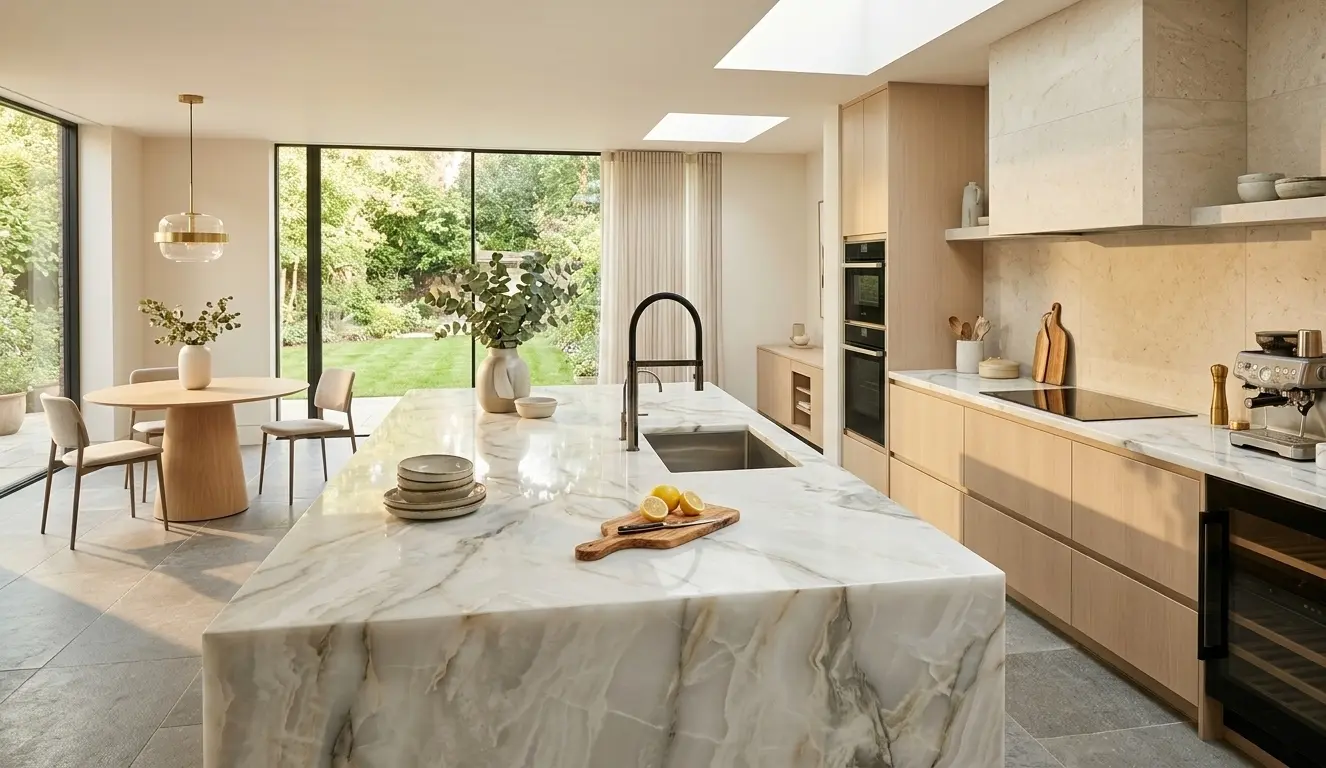 Conceptual rendering
Key benefits of adding onyx to your home:
- Unique veining ensures no two slabs are identical
- Available in bold and neutral tones to suit any palette
- Ideal for countertops, vanities, kitchen islands, and wall cladding
- A polished finish adds glamour, depth, and visual warmth
- Backlit panels create a dramatic, gallery-worthy effect
- Compatible with both contemporary and classical design styles
Onyx Slabs: Pros and Cons at a Glance
Feature | Pros | Cons |
Appearance | Unmatched translucency and visual depth | Can overwhelm a space if overused |
Durability | Beautiful when sealed and maintained properly | Softer than granite; susceptible to scratching |
Maintenance | Responds well to professional sealing | Requires more upkeep than granite or quartzite |
Cost | Adds high resale and aesthetic value | Premium pricing compared to standard stones |
Versatility | Suits walls, vanities, islands, and floors | Not ideal for heavy-use outdoor applications |
For anyone considering a high-end renovation, resources like how to clean marble countertops and how to care for granite countertops offer practical maintenance guidance that applies broadly to natural stone care as well.
Design Ideas Using Natural Stone Slabs in Every Room
Choosing the right onyx color is only part of the equation. Placement, pairing, and lighting all influence how the stone reads in a finished space.
Explore the full slab collection to review available colors, vein patterns, and sizing options before committing to a direction.
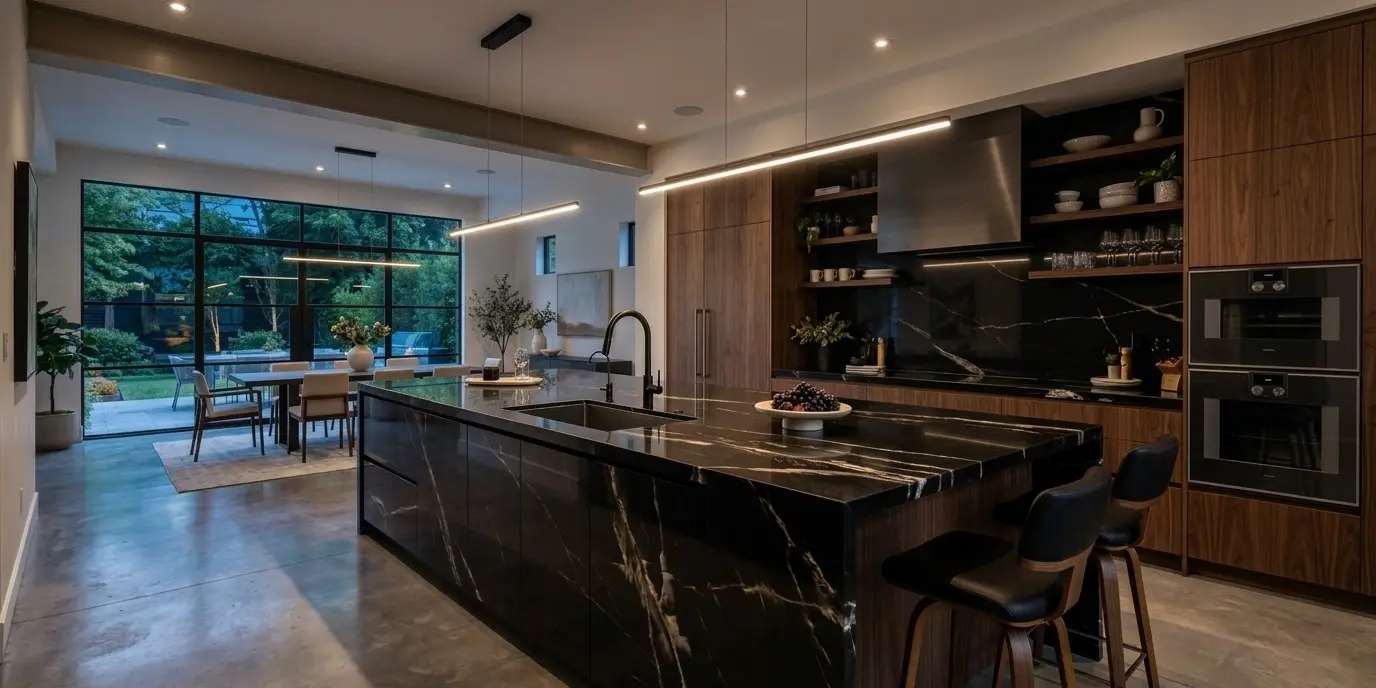 Conceptual rendering
Black Onyx: Bold Kitchen Islands and Statement Walls
Black onyx brings depth, drama, and sophistication wherever it appears, instantly elevating interiors with its near‑mirror surface. In kitchens, it pairs beautifully with gold or brass hardware on an island, creating a luxurious centerpiece that feels both modern and timeless. Within open‑plan layouts, a black onyx island anchors the space visually, adding bold contrast while balancing against white cabinetry and warm wood flooring.
Beyond kitchens, black onyx excels as a feature wall in living rooms or dining areas, where its dark, reflective surface provides a gallery‑quality backdrop. The interplay between black onyx and lighter finishes enhances dimension, making it a compelling choice for homeowners and designers seeking a statement material that embodies elegance and enduring style.
Honey and Amber Onyx: Warm Bathroom Vanity Surfaces
Honey‑toned onyx remains one of the most requested colors for bathroom vanity projects, thanks to its golden warmth that feels welcoming, spa‑like, and timeless. The stone’s natural glow creates a soothing atmosphere, making it ideal for spaces designed to encourage relaxation. When backlit, amber onyx radiates a soft, luminous effect that instantly elevates an ordinary vanity into a luxury focal point without requiring structural changes.
Designers often pair honey onyx with brushed gold fixtures, warm‑toned floor tiles, and layered lighting to achieve a cohesive, high‑end look. Its versatility ensures the design remains current for years, blending classic appeal with modern sophistication. Honey and amber onyx together embody warmth, elegance, and enduring style in bathroom applications.
White and Cream Onyx: Versatile Countertops for Any Style
White onyx brings a clean, luminous quality to countertops and surfaces throughout the home, offering a refined backdrop that enhances both modern and traditional interiors. Soft grey or gold veining introduces subtle movement, adding depth without overwhelming the palette. In kitchens, white onyx pairs seamlessly with dark cabinetry for contrast or light cabinetry for a cohesive, airy feel, balancing freshness with luxury.
Its translucent nature also allows for dramatic backlit applications, elevating focal points with glowing warmth. In bathrooms, white onyx complements chrome, matte black, or brushed nickel fixtures, adapting easily to different design themes. With its neutral base and timeless appeal, white onyx remains one of the most flexible and versatile options for countertops and feature surfaces.
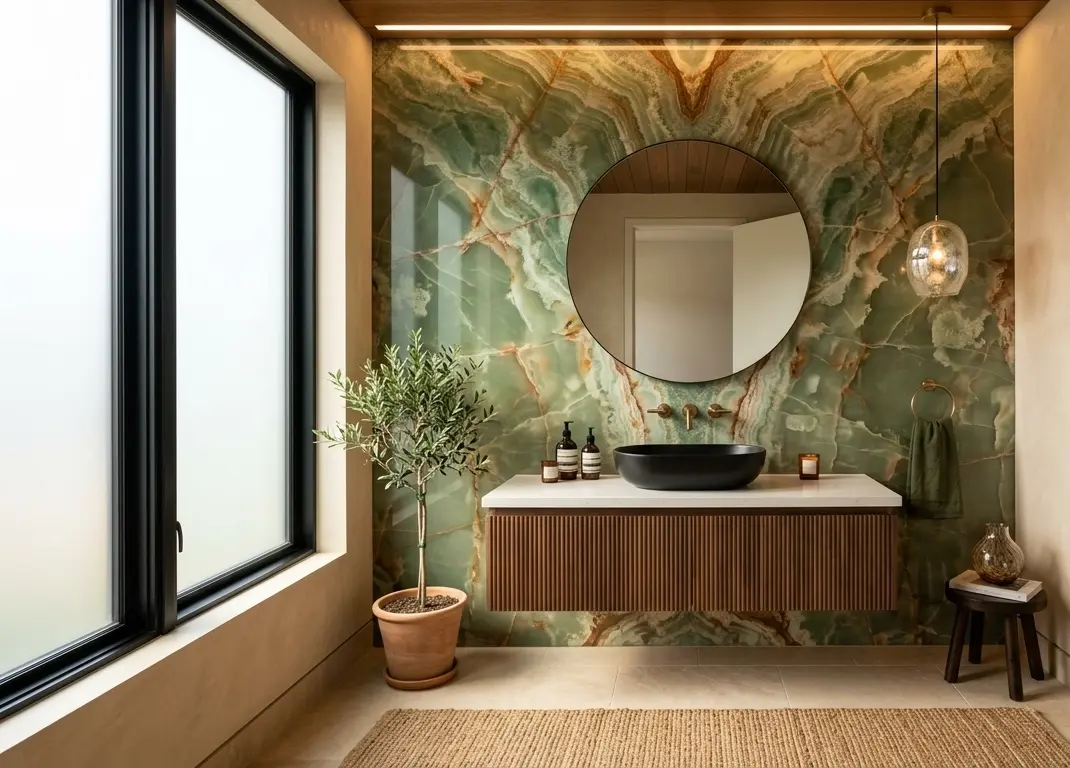 Conceptual rendering
Green Onyx: Unexpected Color for Feature Applications
Green onyx is bold, earthy, and surprisingly versatile when used with intention. Its rich tones shine in powder rooms, accent walls, and bar countertops, where a single surface can transform the atmosphere.
Designers often highlight green onyx as a focal point rather than repeating it throughout a space, allowing one carefully placed panel to define the mood and elevate the design.
The stone’s translucent quality also makes it ideal for backlit installations, adding depth and drama. For those drawn to biophilic design, green onyx bridges natural materiality with bold color expression, creating a connection to the outdoors while maintaining a refined, luxurious feel. Few other surfaces achieve this balance of organic presence and striking visual impact.
How to Choose the Right Onyx Slabs for Your Project
Selecting an onyx slab goes well beyond choosing a color. Slab size, veining direction, finish type, and intended use all shape the outcome significantly.
Step-by-Step Guide to Choosing Your Onyx Slab:
- Define your application. Decide whether the slab will be used for countertops, a kitchen island, a bathroom vanity, a feature wall, or flooring.
- Choose your color direction. Consider the existing tones in your space and whether you want contrast or harmony with surrounding materials.
- Review full slabs in person. Visiting a showroom allows you to see the complete veining pattern, something photos cannot fully convey.
- Ask about backlit capability. If you want a glowing effect, confirm the slab's translucency and request a backlit sample demonstration.
- Confirm sealing and maintenance requirements. Understanding long-term care expectations before purchasing helps you plan appropriately.
Whether you are based in Northern Nevada or California, viewing slabs in person makes a meaningful difference in your final decision. You can explore options at the Reno showroom, the Minden location, in Fernley outlet, or the Sacramento store.
Design professionals can access exclusive pricing, dedicated support, and priority services by opening a trade account for ongoing project needs.
Prefer to start your search online? Browse available stone locally to see what is in stock near you before visiting in person.
For those interested in staying current with industry trends and stone design events, the Natural Stone Institute events calendar is an excellent resource to bookmark throughout the year.
Our latest content
Check out what's new in our company !
Conclusion
Natural stone slabs like onyx deliver a level of individuality that manufactured surfaces simply cannot replicate. Every vein, tone, and slab tells its own unique story, shaped by nature over centuries. This authenticity ensures no two installations are ever identical, giving each project a signature character. Whether you are drawn to the drama of black, the warmth of honey, the clarity of white, or the personality of green, there is an onyx color to match your vision. Its versatility allows designers and homeowners alike to create spaces that feel both luxurious and deeply personal.
Start exploring your options today and let expert guidance transform your design ideas into a finished space you will enjoy for years.
Frequently Asked Questions
The most sought-after colors include black, white, honey/amber, green, and red. Black and honey tones are particularly popular for kitchen and bathroom applications due to their visual impact.
Yes, onyx works well for kitchen countertops when sealed properly and maintained with care. It is best suited to lower-traffic or decorative surface areas rather than heavy-use prep zones.
Onyx is typically priced comparably to or higher than premium marble. Its rarity, translucency, and one-of-a-kind visual character contribute to its elevated cost.
Seal the surface regularly and clean with a pH-neutral stone cleaner. Avoid acidic products and abrasive materials. Wipe up spills immediately to prevent staining or etching.
Visiting a local showroom is the most effective approach. Seeing a full slab in person reveals veining, color variation, and translucency that online images cannot fully capture.