Polished vs. honed countertops differ in finish, maintenance, and appearance. A polished countertop has a high-gloss, reflective surface that resists staining and is easy to clean, while a honed countertop has a matte, non-reflective surface that hides scratches better and offers more slip resistance. Polished countertops require resealing every five years; honed countertops need resealing every one to two years. The best choice depends on your lifestyle, design preference, and maintenance commitment.
Choosing the right countertop finish can transform the entire look and feel of your space, but with so many options available, it is easy to get overwhelmed. Polished and honed are the two most widely used stone countertop finishes today, and while they may seem similar on the surface, they perform very differently in real-world conditions. Whether you are renovating a kitchen, upgrading a bathroom, or selecting stone for a fireplace surround, understanding the key differences between polished and honed finishes will help you make a confident, informed decision that you will not regret down the line. This is especially true when working with Nova Tile and Stone, your trusted stone company for premium countertop materials and expert guidance.
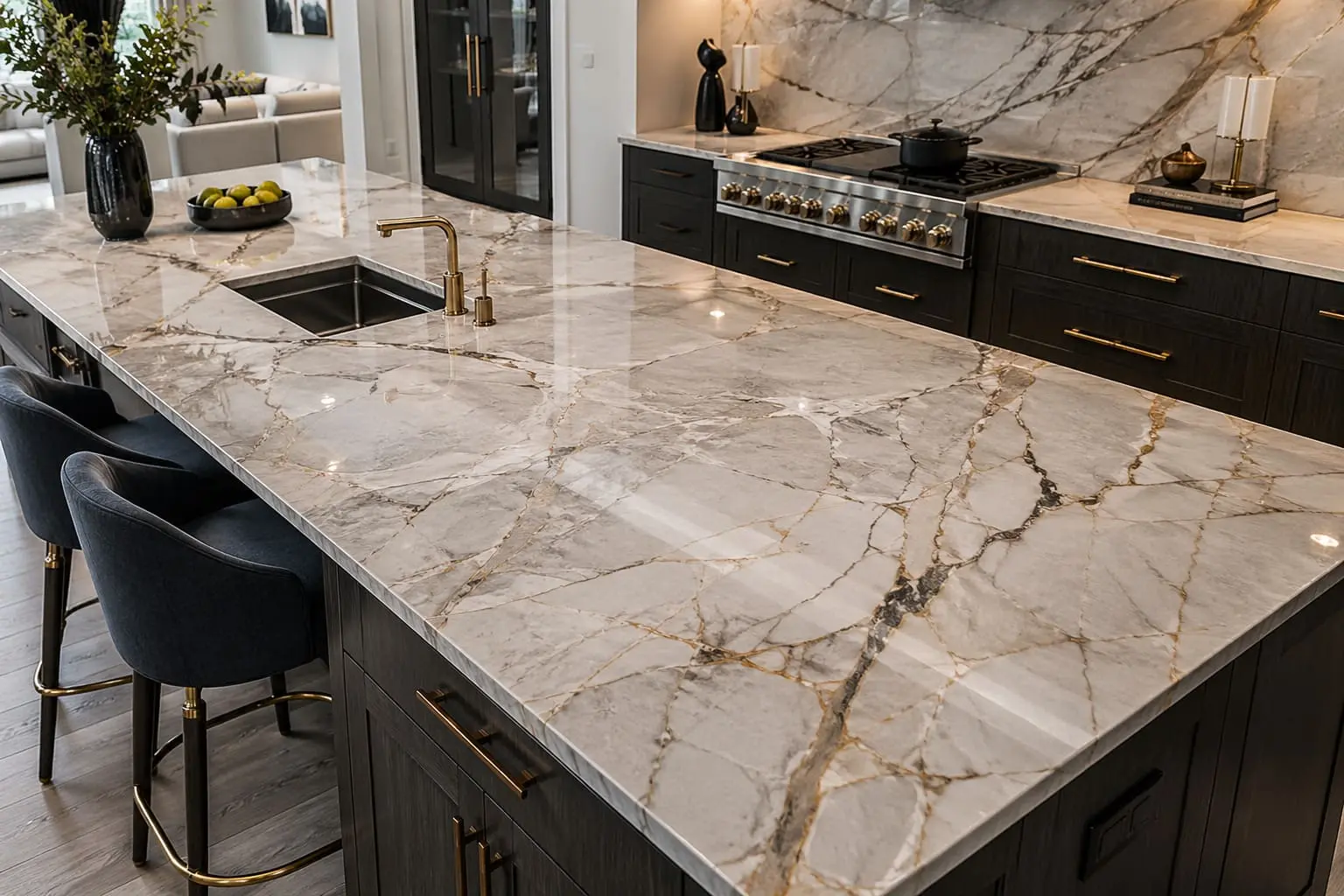
What Is a Polished Countertop?
A polished countertop is buffed to a high-gloss finish, resulting in a sleek, reflective surface that instantly elevates the look of any space. This intensive buffing process works by closing the stone's surface pores, which not only creates that mirror-like shine but also brings out the stone's natural color depth, intricate veining, and overall visual character in a way no other finish can replicate. The result is a surface that feels luxurious and looks sharp under both natural and artificial lighting.
Beyond aesthetics, the polishing process also works in your favor when it comes to practicality. When sealed properly, polished countertops become highly resistant to staining and remarkably easy to wipe clean, making them a popular choice for kitchens and bathrooms where spills and daily messes are part of the routine.
To explore premium countertop materials in polished finishes, browse our wide selection of natural stone and engineered slab surfaces for kitchens and bathrooms.

What Is a Honed Countertop?
A honed countertop is created by stopping the polishing process midway, before the stone reaches its full reflective potential, leaving behind a smooth yet distinctly matte surface. While it carries a slightly softer texture than polished stone, it still feels refined and pleasant to the touch, with none of the roughness you might expect from an unfinished surface.
What sets a honed finish apart is its ability to wear everyday life gracefully. Minor scratches and surface scuffs blend naturally into the matte texture, keeping the countertop looking well-maintained even in high-use areas. Its non-glossy surface also reduces slipperiness, making it a practical and safer option in moisture-prone spaces. Beyond function, honed stone brings a warm, organic quality to any room, grounding the space with an understated elegance that feels both timeless and inviting.
To explore honed countertop materials in person, browse our locally available selection of natural stone and engineered slab surfaces.
Which Finish Hides Seams Better?
The high-gloss nature of a polished finish tends to draw attention to countertop seams. Because light reflects directly off the surface, even a well-executed seam can catch the eye and become more noticeable than you would like. This is especially true on stones with bold veining or strong color variation, where the reflective quality of a polished surface makes any slight misalignment stand out even more.
A honed finish, with its matte appearance, does a much better job of minimizing seam visibility. The way light diffuses across a non-reflective surface works in your favor here, as it softens the transition between slabs and makes the overall surface read as one cohesive piece rather than two separate sections joined together.
That said, the finish alone does not guarantee a flawless result. To achieve the most seamless outcome regardless of which finish you choose, start by selecting slabs with consistent colors and patterns. The closer the two pieces match in tone and veining direction, the less noticeable the seam will be. Beyond material selection, it is equally important to work with a skilled and experienced fabricator. A professional who knows how to carefully align, cut, and finish stone seams can make a significant difference in the final appearance, turning what could be an obvious joint into something that is nearly invisible to the untrained eye.
For personalized guidance, you can schedule a showroom appointment with our stone specialists to compare countertop finishes in person or submit a request through our slab quote request form for custom countertop projects and material pricing.

Durability and Maintenance: Polished vs. Honed
Both finishes hold up equally well in terms of structural durability. Where they differ is in day-to-day maintenance requirements. Here is how they compare:
Feature | Polished Countertops | Honed Countertops |
Stain Resistance | Sealing closes the stone's pores, making the surface stain-resistant | More susceptible to staining since honing opens micro-pores in the stone |
Scratch Resistance | Glossy surfaces can show scratches if not handled carefully | Scratches blend into the matte surface and stay far less visible |
Cleaning | Simple soap-and-water cleaning; wipe spills right away to prevent stains | Requires more frequent cleaning; spills must be addressed immediately to avoid permanent absorption |
Sealing Frequency | Reseal every five years | Reseal every one to two years |
Finish Appearance | High-gloss surface that intensifies the stone's color and beauty | Matte surface that delivers a warm, natural aesthetic |
Slip Resistance | Can become slippery when wet due to the glossy surface | Less slippery, making it the safer choice in moisture-prone areas |
Selecting the right countertop finish is more than just a design decision. It is a practical one that directly affects how you use and maintain your space every day. Polished countertops deliver that bold, high-gloss look that amplifies the stone's natural beauty while keeping maintenance relatively straightforward. Honed countertops, on the other hand, bring a grounded, matte elegance that feels warm and organic, making them ideal for spaces where a more natural aesthetic takes priority.
Neither finish is objectively better than the other. The right choice depends on how your space is used, how much time you are willing to dedicate to upkeep, and the overall design direction you are going for. Take your lifestyle into account, weigh the maintenance demands of each finish, and you will land on the surface that truly fits your home.
At Nova Tile and Stone, our dolomite collection is available in polished, honed, leathered, and specialty finishes, giving you a full range of options for walls, floors, and fireplaces. Explore our selections and let our team help you find the finish that brings your vision to life.
Frequently Asked Questions
Yes, it is possible to convert a polished countertop to a honed finish. A professional stone fabricator can grind and refinish the surface to achieve the matte look. However, keep in mind that this process is irreversible. Once a surface is honed, restoring it back to a full polish requires significantly more work and cost. It is always best to decide on your preferred finish before installation.
For high-traffic kitchens, a polished finish is generally the more practical choice. Its sealed surface resists staining more effectively and requires less frequent resealing compared to honed stone. However, if scratch concealment is a bigger concern for you, a honed finish naturally hides surface marks far better, making it a strong contender for busy households as well.
Yes. In fact, honed finishes are often the preferred option for wet areas. Because the matte surface is less slippery than a polished one, it provides better traction when exposed to water. Just make sure to stay diligent about sealing honed stone regularly, since its open micro-pores make it more vulnerable to moisture absorption and staining over time.
The finish directly impacts how frequently you need to reseal your countertop. Polished countertops typically require resealing every five years, thanks to the protective layer that the buffing process creates. Honed countertops, with their more porous surface, need resealing every one to two years to maintain adequate stain and moisture resistance. Staying on schedule with sealing is key to preserving the look and longevity of either finish.
Dolomite performs beautifully in both polished and honed finishes. A polished dolomite countertop highlights the stone's intricate veining and rich color depth, making it a stunning focal point in any space. A honed dolomite surface softens those same characteristics into a more understated, natural look that works especially well for walls, floors, and fireplaces. At Nova Tile and Stone, dolomite is also available in leathered and specialty finishes, giving you even more ways to tailor the stone to your specific design goals.
Note: Some images on this page may be conceptual renderings created to illustrate design possibilities and may not depict actual installations.