Onyx is a semi-precious natural stone formed at the Earth's surface when mineral-rich water deposits layers of calcite over thousands of years. It is widely used in luxury residential and commercial interiors for its dramatic veining, wide color range, from white and gold to blue, green, and purple, and its rare translucency, which allows light to pass through the stone. Unlike granite or marble, onyx has a microcrystalline structure and is classified as a sedimentary rock. Because it is softer and more porous than most natural stones, onyx requires professional installation, annual resealing, and pH-balanced cleaning products to maintain its appearance. It performs best in low-traffic applications such as backlit wall panels, bathroom vanities, bar tops, backsplashes, and fireplace surrounds.
For homeowners and designers exploring premium natural stone options for interior projects, browsing a curated stone slab collection can help identify the right material, finish, and color variation before finalizing a design.
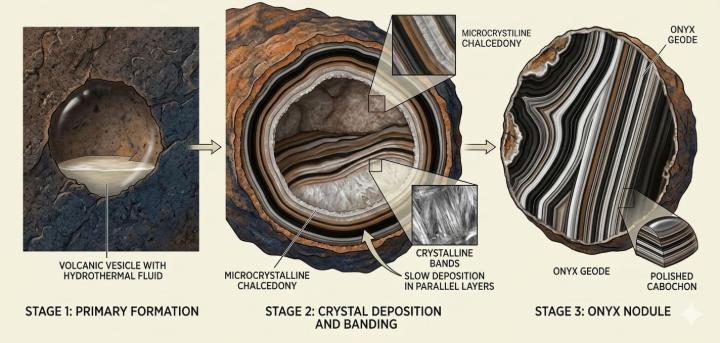
How Onyx Forms
Onyx sets itself apart from natural stones like granite, marble, and quartzite through a fundamentally different formation process. Where most stones develop under intense heat and pressure deep within the Earth, onyx forms right at the surface. Mineral-laden spring water or groundwater seeps outward, depositing layer upon layer of calcite over thousands of years. Those accumulated deposits eventually crystallize into the extraordinary stone you see in luxury interiors today.
You'll find onyx occurring naturally in caves and bedrock fissures. It has a microcrystalline structure, meaning its crystals are too fine to be detected with the naked eye.
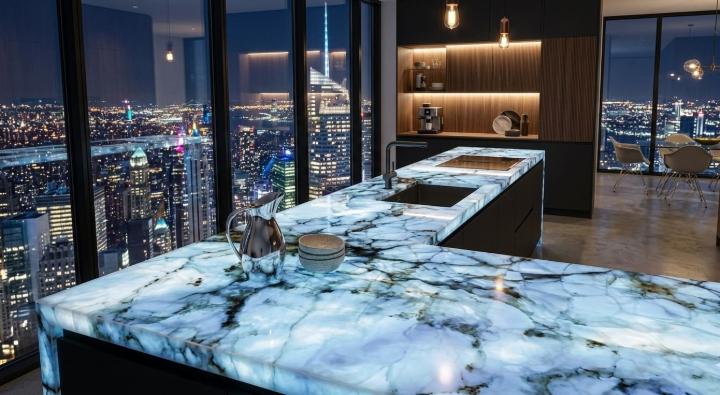
A Spectrum of Color and Light
The wide range of hues onyx displays is a direct result of the minerals and calcite present during its formation. The common yellow-brown variety, for instance, draws its warm tone from iron oxide. Beyond that, onyx appears in whites, golds, beiges, and ambers, as well as bold shades of blue, pink, green, red, and purple, making it a versatile fit for virtually any design aesthetic.
No two slabs are alike. The stone's veins, swirls, and bubble-like inclusions give each piece an almost painterly character. Its translucent quality allows light to travel through the stone, making it a standout option for ambient lighting applications. Backlit or otherwise illuminated, onyx puts its veining on full display in a genuinely luminous effect that transforms any room.
For those specifically seeking a translucent material, Green Onyx and Velluto Onyx are worth exploring. Velluto Onyx, in particular, is prized for its distinctly velvety surface texture and deeply luxurious feel. Designers and homeowners who want to stay updated on industry insights, sourcing practices, and natural stone design trends can also explore resources from the Natural Stone Institute events calendar.
Clearing Up the "Marble Onyx" Confusion
The term "Marble Onyx" causes frequent confusion because it actually refers to two distinct types of rock. One is a black-and-white veined siliceous rock made up of cryptocrystalline quartz, also known as chalcedony. The other, true marble onyx, is a calcareous stone with marble-like veining and a pronounced translucency.
Although both marble and marble onyx share a calcite base, marble onyx commands a higher price point, largely due to its superior translucency relative to standard marble. It's also worth noting that marble onyx is classified as a sedimentary rock, while marble itself is metamorphic, a meaningful geological distinction.
Understanding Onyx's Durability
Onyx is a visually stunning material, but it demands a higher level of care than harder stones. It is susceptible to chipping, which makes professional installation essential. To reinforce structural integrity, slabs are frequently backed with fiberglass mesh or resin.
The surface is also vulnerable to etching and staining, particularly when it comes into contact with acidic substances like vinegar or lemon juice. Keeping onyx in prime condition means resealing countertops once or twice annually. For day-to-day cleaning, stick to mild, pH-balanced soaps and soft brushes, and always avoid cutting directly on the surface.
Homeowners and designers who want a deeper understanding of product transparency, safety standards, and sustainability in the stone industry can also review guidance on environmental and health product labels for natural stone.
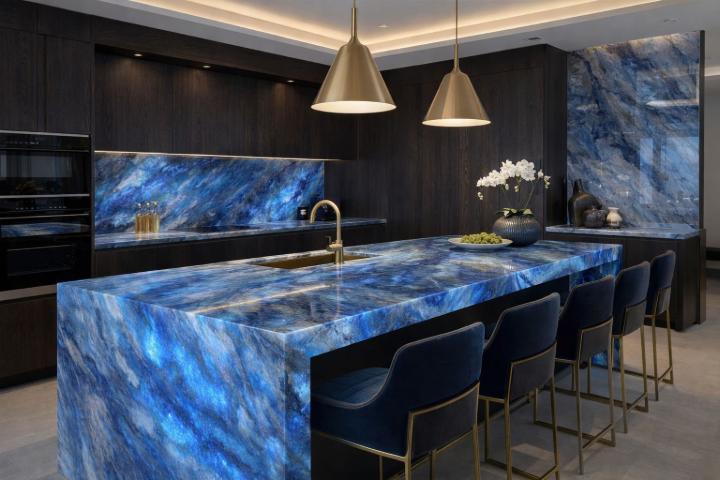
Elevate Your Space with Onyx
Contemporary designers continue to gravitate toward onyx for its unmatched glamour and versatility. Whether incorporated into a living room, bathroom, or entryway, a backlit onyx installation creates an undeniable dramatic focal point.
Common applications include bar tops, vanity surfaces, backsplashes, wall cladding, and fireplace surrounds. Onyx slabs are available in both vein-cut and cross-cut formats, each producing a distinctly different visual effect. Vein-cut slabs emphasize the stone's flowing linear patterns, while cross-cut surfaces yield mesmerizing, abstract compositions. Given its delicate nature, onyx performs best in low-traffic areas where its beauty can be showcased without excessive wear risk.
For those ready to incorporate this striking material into a project, you can shop locally or apply for a trade account if you are a designer, architect, or contractor looking for professional sourcing options.
Find Your Onyx at Nova Tile and Stone
Ready to bring this natural marvel into your home? Nova Tile and Stone carries an extensive selection of onyx surfaces to suit a wide range of design visions. Visit one of our showrooms to explore our live inventory and discover the onyx that's right for your project, and let nature's artistry speak for itself.
If you already have a specific slab or project in mind, you can also request a slab quote to receive pricing and availability directly from our team. As a trusted tile and stone company, Nova Tile and Stone is dedicated to helping homeowners, designers, and contractors select the perfect natural stone for their spaces.
Conclusion
Onyx is more than a design trend, it's a geological masterpiece that has earned its place among the most sought-after natural stones in the world. From its surface-level formation through mineral-rich water deposits to its unmatched translucency and kaleidoscopic color range, every slab of onyx tells a story that no manufactured material can replicate. While it requires more attentive care than harder stones, the visual payoff is undeniable.
When used thoughtfully in low-traffic applications, backlit wall panels, vanity surfaces, bar tops, or fireplace surrounds, onyx transforms an ordinary space into something genuinely extraordinary. Understanding elements like surface texture and polish can also make a difference in the final look, which is why many designers take time selecting the ideal stone finish before installation.
If you're ready to introduce that level of artistry into your home or commercial project, you can schedule an appointment with the Nova Tile and Stone team to explore available slabs and discuss the best options for your space.
Frequently Asked Questions
Is onyx a good choice for kitchen countertops?
Onyx can be used in kitchens, but it requires careful consideration. Because it is prone to etching, staining, and chipping, it is not the most practical option for high-use kitchen countertops. It performs far better in lower-traffic surfaces such as a decorative island, bar top, or backsplash where it receives less daily wear. If you're set on onyx in the kitchen, consistent sealing and mindful maintenance are non-negotiable.
How often does onyx need to be sealed?
Onyx countertops and surfaces should be resealed once or twice a year to protect against staining and etching. The frequency may vary depending on how heavily the surface is used and the specific products in your space. A simple water bead test, if water absorbs into the stone rather than beading up, is a reliable indicator that it's time to reseal.
What makes onyx translucent, and can all onyx be backlit?
Onyx's translucency comes from its microcrystalline calcite structure, which allows light to pass through the stone rather than simply reflecting off its surface. Not all onyx varieties offer the same degree of translucency, some slabs are thicker or denser and transmit less light. Green Onyx and Velluto Onyx are among the varieties particularly known for their light-transmitting qualities, making them popular choices for backlit wall panels and feature installations.
What is the difference between onyx and marble?
While both onyx and marble contain calcite, they differ significantly in origin and character. Marble is a metamorphic rock formed deep within the Earth under extreme heat and pressure. Onyx, by contrast, is a sedimentary stone that forms at the surface through the gradual deposit of calcite from mineral-rich water. Onyx is also notably more translucent than marble and generally more delicate, requiring extra care during handling, installation, and daily use.
What cleaning products are safe to use on onyx?
Always use mild, pH-balanced soaps and soft cloths or brushes when cleaning onyx. Avoid any acidic cleaners, including vinegar, lemon-based products, or harsh chemical sprays, as these will etch the surface and cause permanent dull spots. Abrasive scrubbing pads should also be avoided. When in doubt, products specifically formulated for natural stone are the safest choice for preserving onyx's finish long-term.