Off-white quartzite is a natural metamorphic stone that adds warmth, depth, and lasting visual sophistication to floors, walls, fireplaces, and living spaces. Its pale crystalline surface sits between stark white and warm ivory, making it one of the most versatile and light-responsive stone tones available for both indoor and outdoor residential surfaces. Unlike engineered alternatives, the color in quartzite is formed through geological processes involving heat, pressure, and mineral composition, which means no two slabs are identical and the tone never fades or peels over time.
What makes this stone tone particularly effective in interior design is how it functions as a connector material. It integrates with wood cabinetry, cool metals, matte porcelain tiles, and warm stone accents without competing for visual dominance. Whether used on a floor, a shower wall, or a fireplace surround, this pale natural stone consistently elevates a space through quiet authority rather than dramatic contrast.
The Geology Behind the Color
Quartzite does not begin as a pale stone. It begins as sandstone, rich with silica, buried deep beneath the earth's surface where tectonic pressure and heat compress it over millions of years into something denser, harder, and entirely different in character. That metamorphic process recrystallizes the silica grains into an interlocking matrix, giving it its remarkable hardness and a distinctive ability to catch light from within.
The off-white coloration comes from the mineral composition of the original sandstone and the specific conditions of its transformation. Iron oxide present in trace amounts creates warm ivory and cream undertones. Mica deposits contribute flashes of soft shimmer. Feldspar introduces cloudy, milky passages within the slab. The result is a stone that reads as pale from across a room but rewards closer inspection with remarkable complexity.
That internal complexity is exactly what separates this material from any surface that merely imitates it. No porcelain reproduction captures the random distribution of minerals, the depth of the crystalline structure, or the way a surface responds differently to morning light versus late afternoon sun. If you want to see how that geological variation translates in person, exploring our live slab inventory is one of the most effective first steps.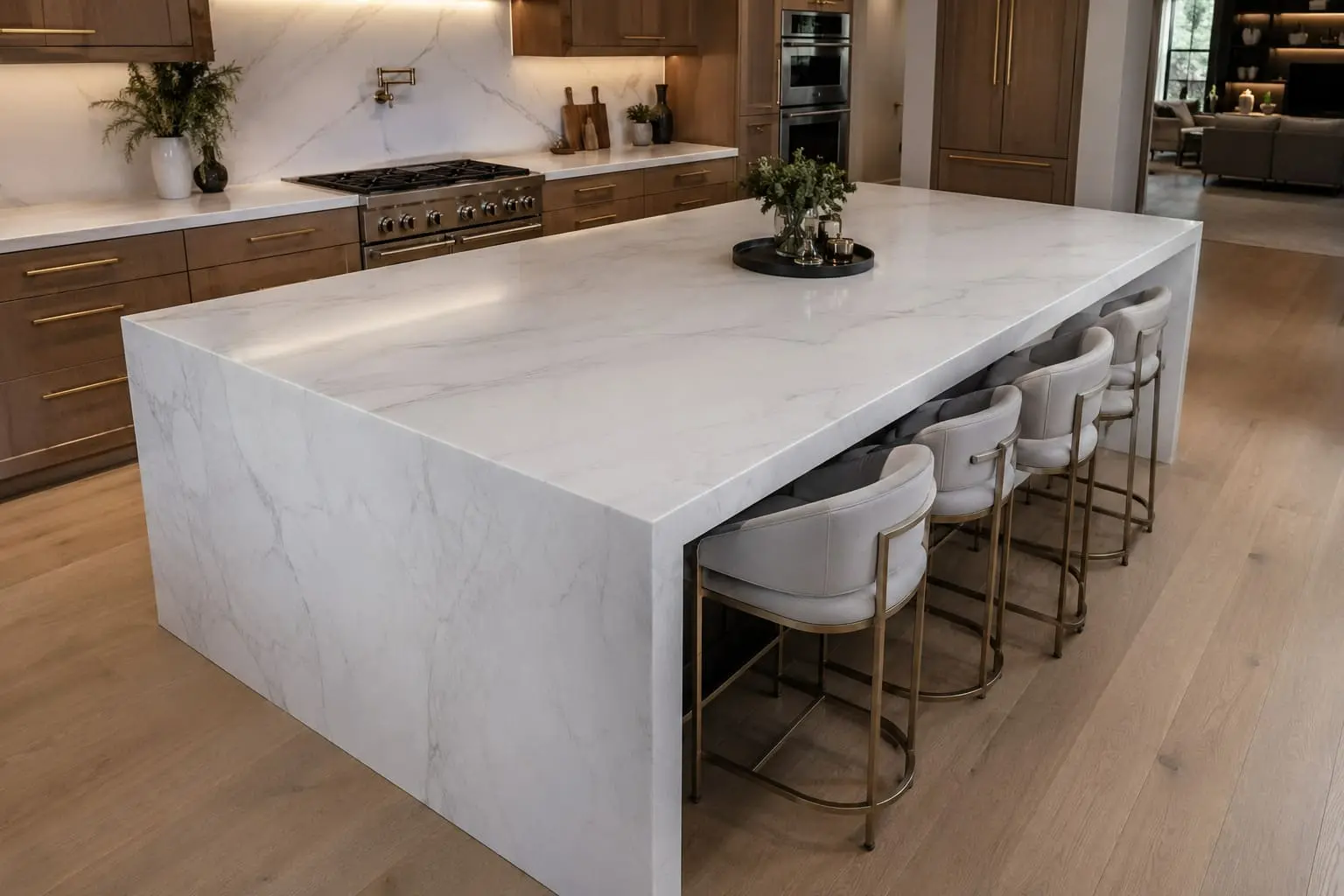
Why This Tone Behaves Differently Than True White
Pure white in any material is a blunt instrument. It maximizes brightness but flattens a room, reflecting light so completely that there is no sense of depth or warmth. Pale ivory stone operates on an entirely different principle. The subtle presence of cream, taupe, or warm gray undertones means it absorbs just enough light to feel present in a room rather than invisible.
This distinction matters enormously in spaces where stone occupies large surface areas. A floor, wall plane, or vertical feature in pure white competes with everything around it for visual dominance. The same surface in a warm off-white tone integrates instead. It picks up the undertones of nearby cabinetry, pulls warmth from wood floors, and softens the edge of darker accent materials. It makes surrounding elements look more intentional simply by being present.
Designers who work extensively with natural stone often describe this tonal range as a connector material. It links disparate elements in a room without imposing its own personality too forcefully. For anyone still weighing options, this comparison of quartz vs. quartzite breaks down the material differences clearly and helps clarify why natural quartzite behaves so distinctly from engineered alternatives.
Floors: Where Off-White Quartzite Grounds a Space
Flooring is the surface that sets the tonal foundation for everything above it. A pale quartzite floor does something that very few other materials can: it reflects light upward into the room rather than absorbing it downward. That quality makes spaces feel larger, brighter, and more open without requiring structural changes or additional lighting.
The UV resistance of quartzite makes it particularly well-suited to sunlit interiors and spaces with large window exposure. Unlike some natural stones that shift in tone or develop surface irregularities under sustained ultraviolet exposure, quartzite maintains its pale, luminous quality over time. This stability is one reason it performs so consistently across both indoor and outdoor floor applications.
Off-white quartzite floors pair especially well with dark grout in thin joint widths, where the contrast between pale stone and darker grout lines creates a refined grid that emphasizes the scale of the individual slabs. Alternatively, a tone-on-tone grout approach, matching the grout closely to the stone, produces a seamless expanse that maximizes the sense of visual continuity across a floor plane. Homeowners near our Reno showroom can view quartzite flooring options in person to assess how slab scale and grout interaction read under real light conditions.
Walls: Creating Depth on Vertical Surfaces
Wall applications are where off-white quartzite reveals a side of its character that horizontal installations cannot fully express. On a vertical plane, the veining within the stone appears to flow rather than rest, creating a sense of movement and energy that transforms a flat surface into something architectural.
In bathrooms, large-format pale quartzite tiles used floor to ceiling in a shower enclosure create material continuity that ranks among the most refined expressions of contemporary design. The stone wraps the space rather than simply lining it, and the light tonal range keeps the enclosure feeling open and luminous even in compact footprints. For a personalized walkthrough of wall tile options, booking a free design consultation connects you with a specialist who can assess your specific space and layout.
Beyond wet areas, off-white quartzite wall cladding in living rooms, entryways, and dining spaces brings a sense of geological permanence to rooms that typically rely on paint or wallpaper for surface character. The physical weight and texture of natural stone communicates something about a space that no applied finish can replicate. According to This Old House's guide to stone surfaces, natural stone wall applications consistently rank among the highest-impact upgrades in residential renovation for precisely that reason.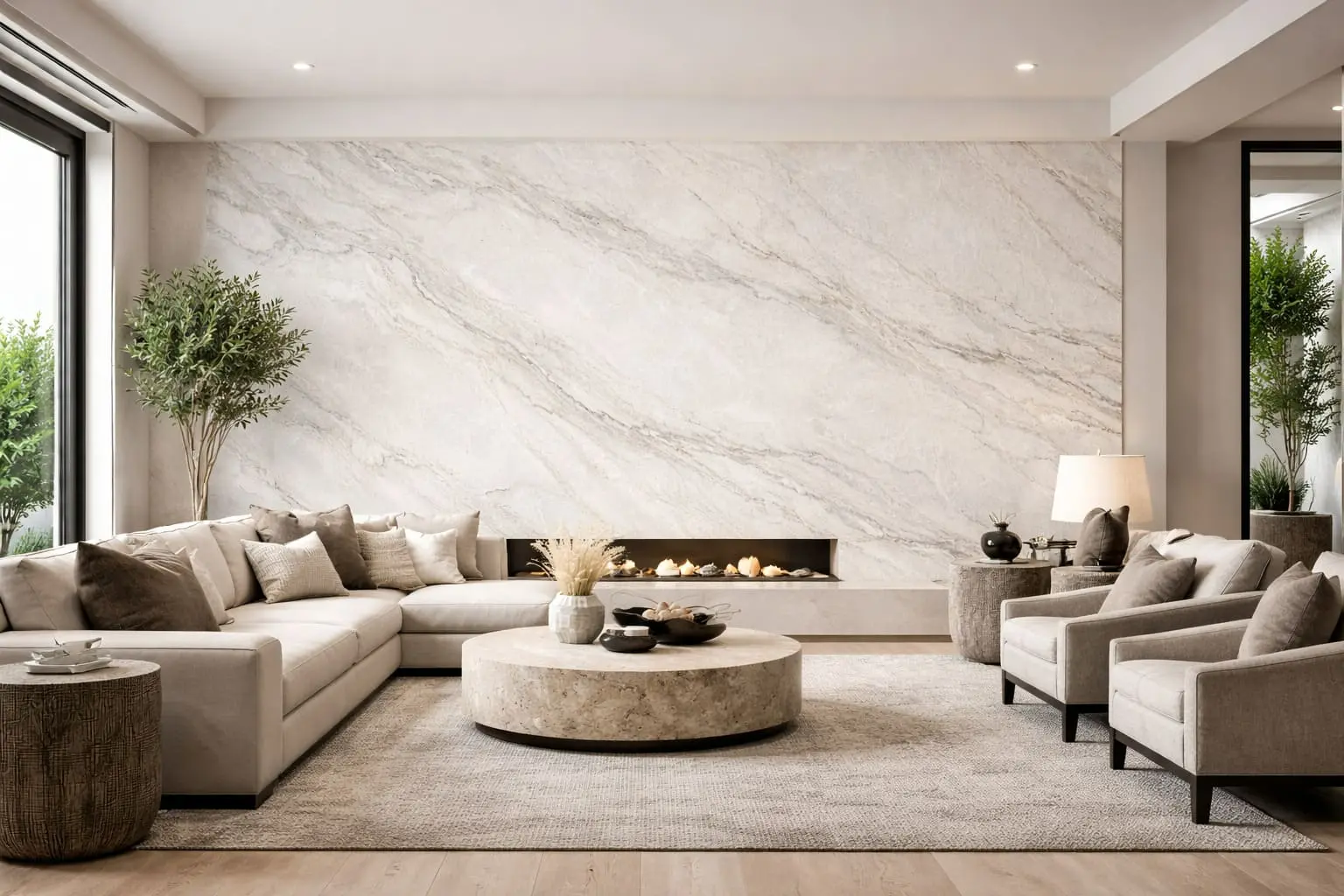
Fireplaces: The Most Commanding Application
A fireplace surround in off-white quartzite is one of the most visually commanding uses of natural stone in residential design. The hearth is already the architectural focal point of any room it occupies, and the material chosen to frame it either amplifies or diminishes that presence.
Pale quartzite around a fireplace does something particularly effective: it softens the visual mass of the surround while simultaneously giving it geological credibility. The stone reads as substantial and permanent without feeling heavy or dark. The natural veining, often in soft gray, gold, or taupe, creates movement across the face of the surround that draws the eye without demanding it.
Full-height fireplace surrounds that extend from the floor to the ceiling in off-white quartzite are among the most striking applications of this stone. The vertical continuity of the material, uninterrupted by ledges or transitions, creates a clean architectural statement that works equally well in contemporary, transitional, and traditional interiors. Customers near our Sacramento location can view fireplace surround material options in person with guidance from our design team.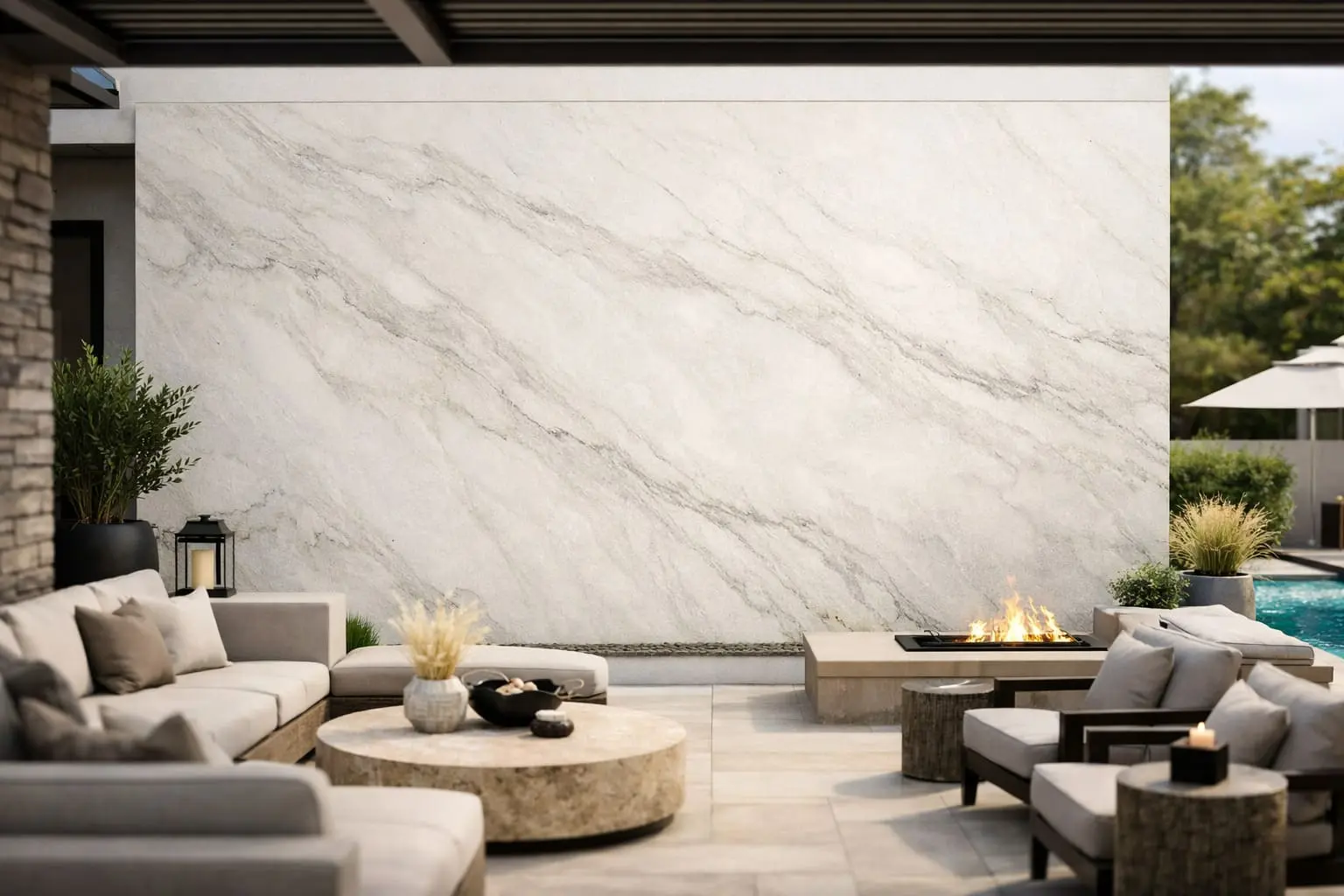
Outdoor Applications: UV Resistance in Practice
One of the less frequently discussed qualities of quartzite is its suitability for exterior applications. Many natural stones that perform well indoors struggle outdoors because of their sensitivity to freeze-thaw cycles, UV exposure, and moisture infiltration. Quartzite's dense crystalline structure and UV resistance make it a genuinely viable option for outdoor floors, wall cladding, and exterior feature surfaces.
Off-white quartzite in outdoor settings functions as a visual bridge between the interior and the landscape. Its pale, warm tone reads naturally in sunlight in a way that cooler or more saturated stones do not, making it particularly effective for covered outdoor living areas, terrace floors, and exterior wall cladding that wraps around a building's facade.
For outdoor fireplace surrounds and exterior feature walls, the combination of quartzite's UV stability and its natural stone character produces results that age beautifully rather than deteriorating. The stone weathers gracefully, developing a slightly more textured surface patina over time that, in most exterior design contexts, only adds to its character.
Pairing Pale Quartzite with Complementary Materials
The real design strength of this stone tone emerges in combination with other materials. Its tonal flexibility allows it to pair productively across a wide range of palettes without requiring a single specific aesthetic direction.
With warm wood tones, whether in cabinetry, flooring, or furniture, pale quartzite acts as a brightening agent. It prevents wood warmth from reading as heavy or dated while contributing its own natural character to the overall composition. With cool metals such as brushed nickel, matte black hardware, or unlacquered brass, the stone provides tonal relief that prevents those finishes from feeling harsh or clinical.
With matte porcelain floor tiles in concrete or linen tones, off-white quartzite creates a layered palette that feels textural and sophisticated. The contrast between the stone's crystalline surface and the porcelain's flat finish is subtle but perceptible, producing the kind of material relationship that makes a room feel genuinely considered. Customers near our Minden showroom can view these pairings side by side in person, which is the most reliable way to assess tonal compatibility before committing.
Selecting the Right Finish
The finish applied to a quartzite slab significantly affects how it reads in a completed space. A polished finish deepens the apparent color of the stone and amplifies its crystalline shimmer, making the surface appear slightly richer and more saturated. This works particularly well in formal interiors where refinement is the primary design goal.
A honed finish produces a matte, velvety surface that gives the same stone a softer, more understated character, suited to transitional and casual spaces where warmth matters more than dramatic impact. A leathered finish introduces tactile texture while retaining some natural depth, performing especially well in spaces where fingerprints and water marks would be more visible on a polished surface. Specialty finishes offer additional variation for projects with specific aesthetic or technical requirements. For a thorough breakdown of how each option affects appearance and longevity, this guide to selecting the ideal stone finish is a valuable reference. Our Fernley showroom carries quartzite samples across all finish types so you can compare the tactile and visual difference directly.
Conclusion
Off-white quartzite earns its standing not through dramatic gestures but through quiet, sustained performance across floors, walls, fireplaces, and exterior surfaces. It ages without dating, adapts without compromising, and brings geological depth to spaces that no manufactured surface can replicate in quite the same way. Nova Tile and Stone carries a curated selection of natural quartzite slabs across a range of tonal profiles and finishes, and our free design consultation is available to help you find the right stone for your specific project.
Frequently Asked Questions
Is off-white quartzite suitable for outdoor use?
Yes. Quartzite's dense crystalline structure and UV resistance make it appropriate for exterior floors, wall cladding, and outdoor fireplace surrounds. It maintains its pale tone under sustained sunlight exposure and weathers gracefully over time.
What finishes are available for quartzite slabs?
Quartzite is available in polished, honed, leathered, and specialty finishes. Each produces a distinctly different visual and tactile result from the same stone. Polished finishes amplify color depth and shimmer, honed finishes create a matte softness, leathered finishes add texture and depth, and specialty finishes address specific design or technical requirements.
What undertones should someone look for in an off-white quartzite slab?
The most common undertones are warm ivory, soft cream, cool gray, and pale taupe. Warm undertones complement wood tones and brass fixtures, while cooler undertones pair more naturally with gray cabinetry and matte metal hardware. Viewing slabs in person under your space's actual lighting conditions is the most reliable way to assess undertone compatibility.
Can off-white quartzite be used on both floors and walls in the same space?
Yes. Using the same quartzite material across floor and wall planes is one of the most cohesive approaches in contemporary stone design. It creates a continuous material narrative that makes a space feel architecturally intentional and visually seamless.
How does UV resistance affect quartzite's performance over time?
Quartzite's UV resistance means the stone maintains its color and surface integrity under prolonged sunlight exposure. This makes it particularly well-suited to sun-facing interiors, spaces with large window expanses, and exterior applications where other natural stones might shift in tone or develop surface instability over time.