Marble is a metamorphic rock prized for its unique veining and polished surface. Common varieties include Carrara, Calacatta, and Statuario, each suited to different interior and exterior applications. With proper sealing and routine maintenance, marble surfaces can remain beautiful for decades.
Whether you are refreshing a kitchen, redesigning a bathroom, or upgrading your patio, marble brings character and permanence to every surface. This guide walks through the major types, practical uses, and care habits that keep marble performing at its best.
Why Marble Slabs Add Lasting Value to Any Space
Marble earns its premium reputation through a combination of natural beauty and functional resilience. No two slabs share the same pattern, which means every installation is genuinely one of a kind.
Beyond aesthetics, marble holds real investment value. Stone surfaces consistently rank among the top features that elevate home resale prices, making them a wise long-term decision for homeowners.
Marble also performs well across a surprising range of environments. When sealed correctly, it handles moisture, heat, and daily wear in kitchens, bathrooms, and select outdoor settings.
Key advantages worth noting:
- Unique veining patterns that cannot be replicated in manufactured materials
- Naturally cool surface temperature, ideal for kitchen prep and bathroom use
- Available in tones ranging from crisp white to deep charcoal and forest green
- Compatible with both classic and timeless color palettes that suit any design era
- Suitable for patios, pool decks, exterior walls, kitchen counters, and bathroom surfaces
- Adds measurable curb appeal and interior elegance
Marble vs. Other Stone Materials: Quick Comparison
Feature | Marble | Granite | Quartzite |
Appearance | Soft, flowing veins | Speckled, bold | Quartz-like clarity |
Durability | Moderate | High | High |
Heat Resistance | Moderate | High | High |
Porosity | High (seal required) | Low | Low to Moderate |
Best Application | Interiors, low-traffic outdoor | Heavy-use kitchens | Countertops, floors |
Maintenance Level | Regular sealing | Occasional sealing | Periodic sealing |
For a broader breakdown of how stone materials compare in real kitchens and living spaces, This Old House offers a thorough countertop guide with practical installation context.
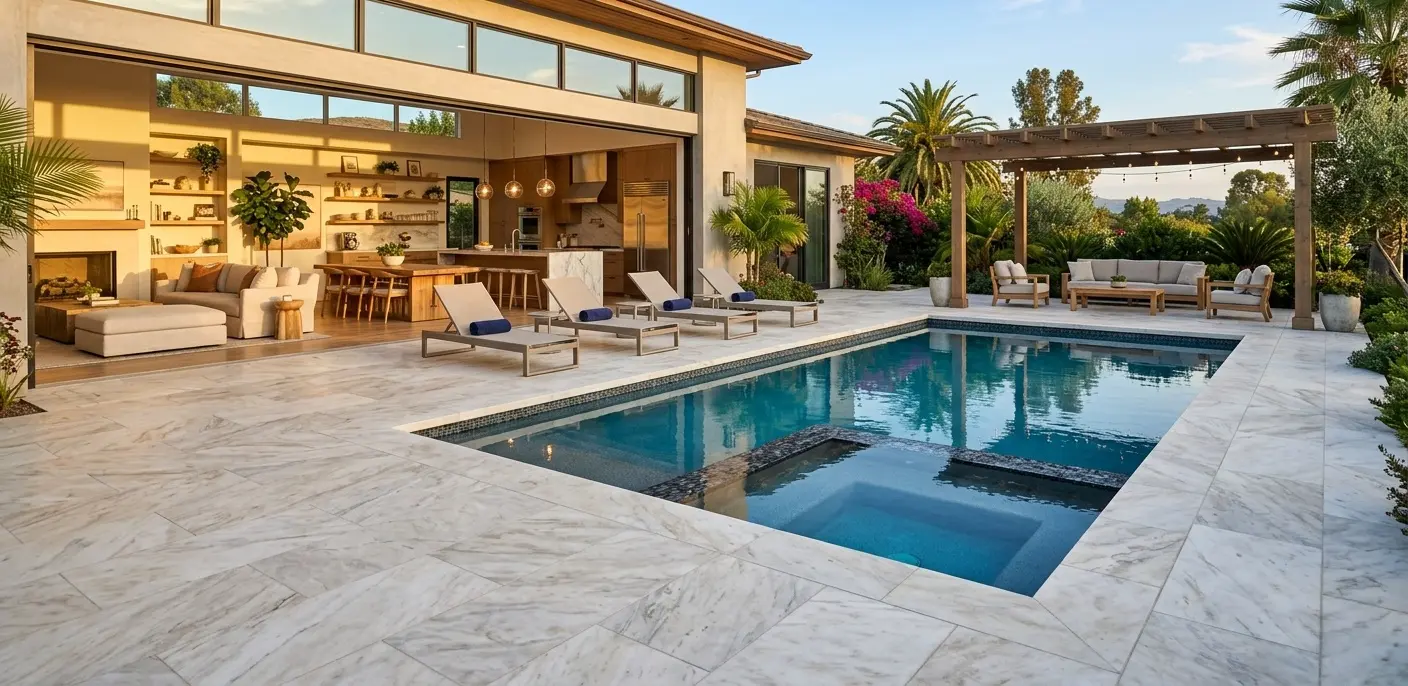
Marble in Action: Design Ideas From Kitchen to Pool Deck
Marble adapts to nearly every surface and setting. The key is matching the right variety and finish to the demands of each space.
Kitchen Countertops and Backsplashes
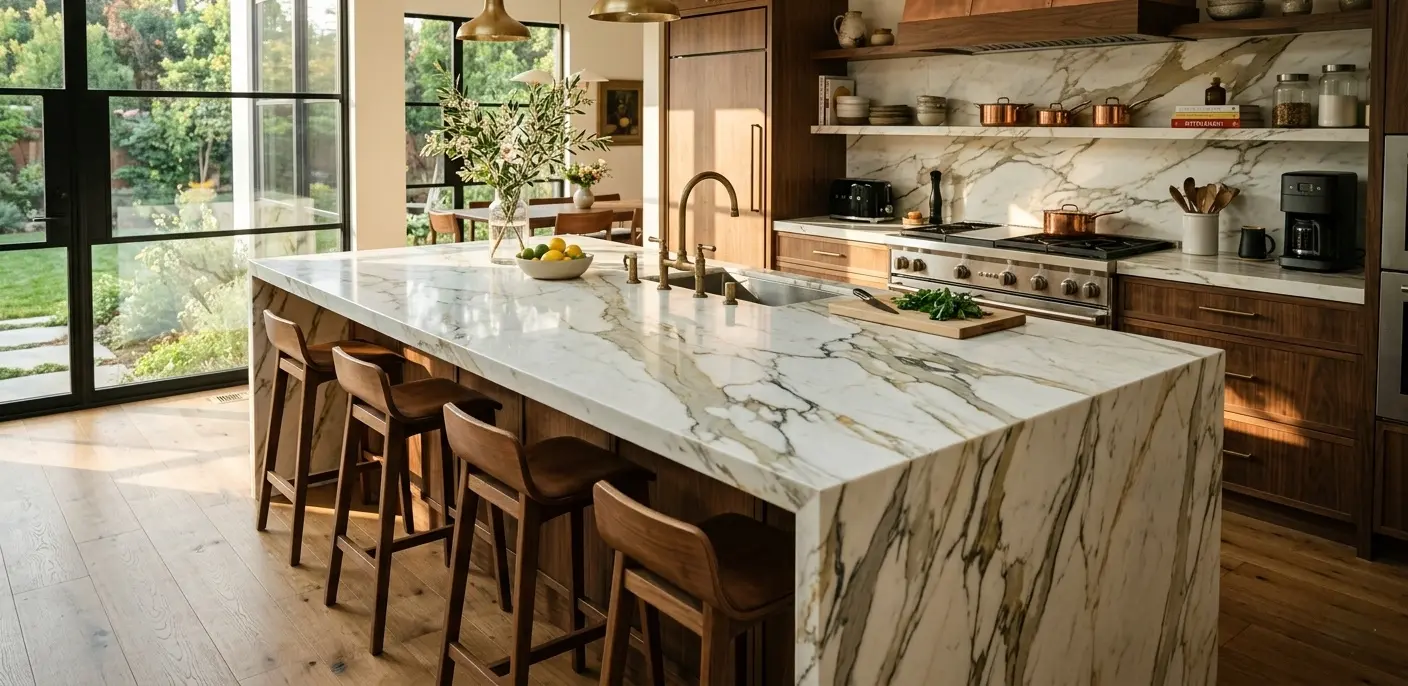
The kitchen is where marble makes its strongest impression. Carrara marble, with its soft grey veins on a bright white background, complements both modern and traditional cabinetry styles.
Pair it with warm wood tones for contrast, or keep everything white for a clean, airy kitchen aesthetic. Sealing kitchen marble every six to twelve months is standard practice, as acidic foods and everyday spills can etch the surface quickly.
For reliable cleaning techniques, Bob Vila's marble countertop care guide provides step-by-step instructions suited to homeowners of every experience level.
Bathroom Vanities and Shower Surrounds
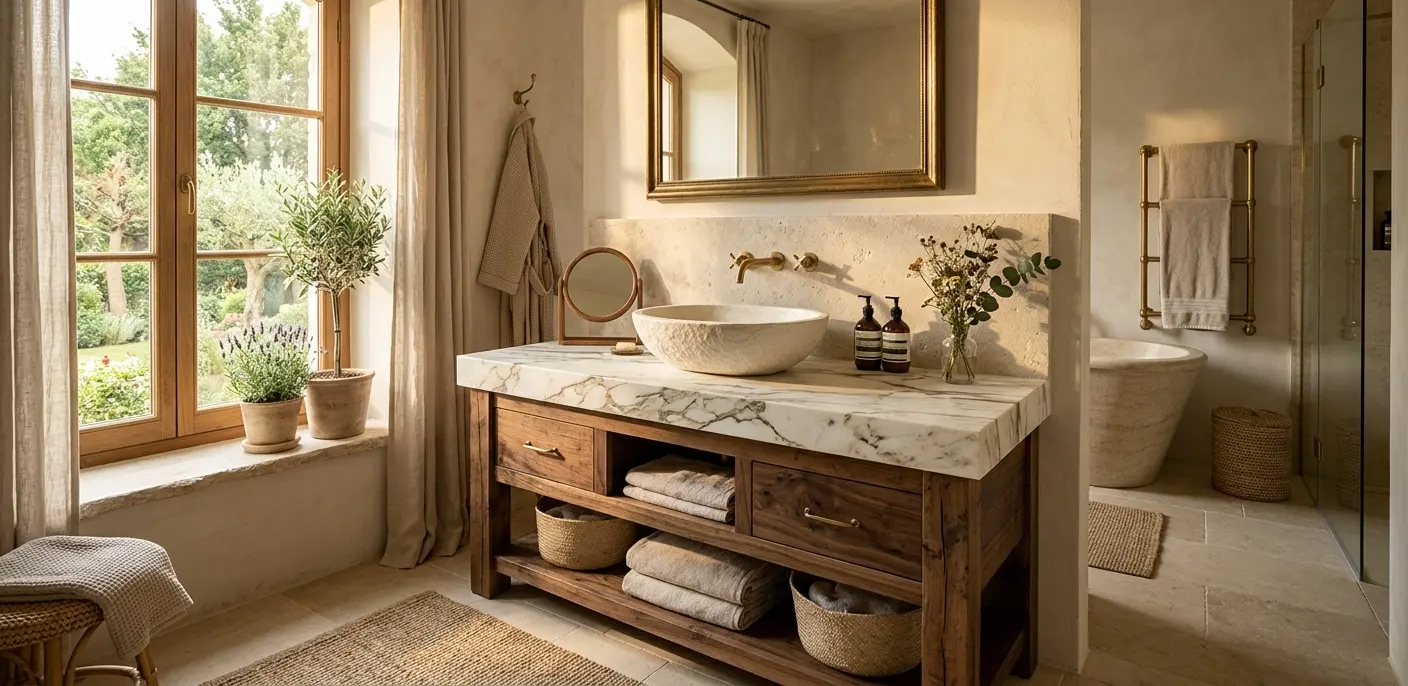
Bathrooms benefit from marble's moisture-tolerant character when sealed correctly. Calacatta marble, known for its dramatic, wide veining, is a popular choice for vanity tops and full-height shower walls.
A honed finish is often preferred in bathrooms over a polished one. It reduces surface glare, handles humidity better, and provides safer traction underfoot in wet areas.
Patios, Pool Decks, and Exterior Walls
Outdoor marble applications have grown steadily as homeowners invest more in exterior living areas. Lighter varieties such as Bianco Sivec stay noticeably cooler underfoot, making them especially practical around pool decks.
For exterior walls, marble cladding introduces architectural texture while contributing natural insulation. Always choose frost-resistant stone for colder climates, and apply a penetrating sealer before the first exposure to outdoor elements.
Pros and Cons of Marble Slabs
Pros:
- Visually distinct with natural, non-repeating patterns
- Boosts resale value when professionally installed
- Cool surface temperature ideal for food prep and bathrooms
- Broad range of finishes: polished, honed, brushed, and leathered
- Suitable for both interior and exterior design projects
Cons:
- Prone to etching from wine, citrus, and acidic cleaners
- Requires consistent sealing to prevent staining
- Higher upfront cost than ceramic or porcelain tile
- Can scratch under heavy or abrasive contact
- Weight requires professional handling and installation
How to Maintain Marble Surfaces: A Step-by-Step Routine
Consistent care is what separates a marble surface that looks stunning at ten years from one that looks tired at two. The routine is straightforward once it becomes habit.
Step 1: Seal before first use. Apply a penetrating stone sealer immediately after installation. This is the single most important step for protecting against moisture and stains.
Step 2: Blot spills without delay. Acidic liquids, including red wine, coffee, and citrus juice, can etch marble within minutes. A soft cloth and quick action prevent most damage.
Step 3: Clean with pH-neutral products only. Harsh chemicals strip the sealer and damage the stone surface over time. Use a diluted, stone-safe cleaner for daily wiping.
Step 4: Re-seal on a consistent schedule. Kitchen countertops and bathroom surfaces should be resealed every six to twelve months. Decorative wall panels and low-traffic areas can go longer between treatments.
Step 5: Polish periodically to restore sheen. Use a marble-specific polishing powder or cream to revive the surface gloss. Avoid abrasive pads that can introduce micro-scratches across the finish.
Where to Find Quality Natural Stone Slabs Near You
The supplier you choose shapes the entire experience, from selection to installation. Access to a curated inventory, in-person viewing, and knowledgeable guidance makes a meaningful difference.
The full slab collection at Nova Tile and Stone includes marble in dozens of finishes and origin varieties, from soft Carrara whites to richly veined Emperador browns. Viewing slabs in person before purchasing is always recommended.
Physical showrooms are available in Reno, Fernley, Minden, and Sacramento for customers who want to see how a slab reads under real lighting conditions. Each location carries an updated selection of current inventory.
Homeowners looking for nearby purchasing options can explore the shop local page for convenient access. Design professionals and contractors can apply for a trade account to access exclusive pricing, priority fulfillment, and dedicated support.
Bringing It All Together: Your Natural Stone Decision
Marble has proven itself across centuries of architecture and interior design. Whether applied to a kitchen countertop, bathroom vanity, patio, pool deck, or exterior wall, natural stone slabs deliver authenticity and visual depth that engineered surfaces cannot match.
The right marble type, finish, and maintenance routine are all that stand between a good installation and a great one. Use this guide as a foundation, and when you are ready to move forward, explore the range of stone surface collections available to find the slab that fits your vision.
Frequently Asked Questions
What are the most popular marble types for residential use?
Carrara, Calacatta, and Statuario are the top choices. Carrara is more budget-friendly with subtle grey veining. Calacatta and Statuario offer bolder veining and are considered premium options.
Is marble suitable for outdoor patios and pool decks?
Yes, with the right selection and preparation. Choose frost-resistant varieties for colder climates. Use a honed finish for outdoor surfaces and apply a penetrating sealer before exposure to the elements.
How often should marble countertops be resealed?
Kitchen countertops typically need resealing every six to twelve months. Bathroom surfaces follow a similar schedule. Low-traffic decorative applications may only require sealing once a year or less.
Can marble be installed in bathroom floors?
Yes. Honed marble is the preferred finish for bathroom floors because it offers better traction than polished marble in wet conditions. Proper sealing is still essential.
What is the safest way to remove stains from marble?
Use a pH-neutral stone cleaner for surface stains. For deeper discoloration, apply a poultice made from baking soda mixed with water, leave it overnight, and remove gently. Never use bleach or vinegar on marble.