A natural stone slab fireplace surround is a decorative and structural facing built around a firebox using full slabs of material such as marble, granite, quartzite, limestone, or travertine. The right stone choice depends on several factors, including the type of fireplace, the level of heat exposure, the indoor or outdoor setting, and the overall design style of the space.
For indoor fireplaces, marble and quartzite are among the most commonly specified options due to their visual range and finish versatility. For outdoor applications, granite and quartzite tend to be preferred for their density and resistance to moisture and temperature variation. Regardless of the setting, natural stone fireplace surrounds are valued for their durability, heat resistance, and the visual permanence they bring to a space. Understanding the differences between available stone types, surface finishes, and design approaches helps homeowners and design professionals make selections that perform well and age gracefully over time. Browsing the available natural stone slabs is a practical first step toward identifying materials that align with both the design vision and the functional requirements of the project.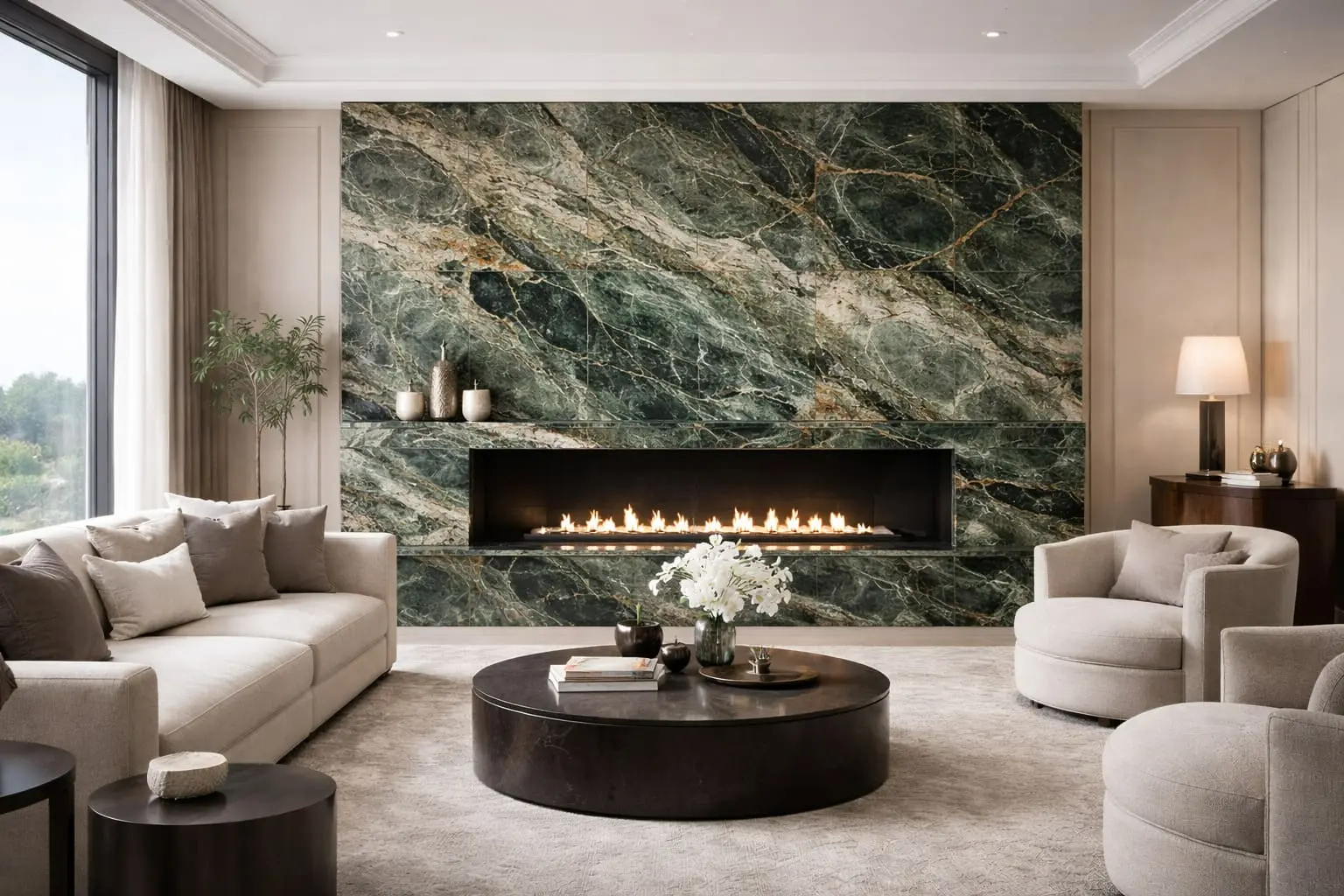
Why Natural Stone Works Well for Fireplace Surrounds
Natural stone has been used in fireplace construction for centuries. It is a material that responds well to heat, ages gracefully, and carries a visual depth that tends to improve the longer it is in place. Unlike manufactured surfaces, natural stone can develop a subtle patina over time that adds to rather than detracts from its appearance.
From a practical standpoint, natural stone is non-combustible, meaning it does not ignite or release harmful compounds when exposed to heat. This makes it a structurally sound choice for areas in close proximity to an open flame. Stone types do vary in their heat tolerance and thermal behavior, which is worth considering when selecting a material for a surround that will see regular use.
Aesthetically, the range of options within natural stone is broad enough to suit a wide variety of design directions. A bookmatched marble slab can anchor a formal, high-contrast interior. A rough-hewn limestone panel can give an outdoor fireplace a rustic, organic quality. A sleek, honed quartzite surround can complement a contemporary space with understated precision. According to the Natural Stone Institute, natural stone used in architectural applications benefits from proper sealing and routine care to maintain its appearance and structural integrity over time.
Choosing the Right Stone for an Indoor Fireplace Surround
Indoor fireplace surrounds allow for a wider range of stone choices because they are not exposed to the same environmental variables as outdoor applications. The primary considerations for interior surrounds tend to be visual impact, surface finish, and how well the material complements the surrounding design elements.
Marble is one of the most popular choices for indoor fireplace surrounds, particularly in formal living rooms, primary bedrooms, and high-end residential interiors. Its veining patterns, which range from subtle to dramatic, can create a striking focal point when a full slab is used for the surround. White and gray marble varieties are commonly specified for their ability to complement a wide range of interior palettes. Marble is relatively sensitive to prolonged heat exposure, so it is generally more suitable for decorative gas or electric fireplaces than for wood-burning applications where the surround surface has direct or sustained contact with radiant heat.
Quartzite offers a harder and generally more heat-tolerant alternative to marble while retaining a similarly elegant appearance. Its natural variation in color and veining makes it a strong visual choice, and its density means it tends to hold up well in surrounds that see more frequent or intense use. Quartzite works particularly well in transitional and contemporary interiors where a refined but durable surface is a priority.
Limestone brings a softer, more muted aesthetic that suits rustic, Mediterranean, and organic modern design styles. Its naturally textured surface and warm tonal range make it a suitable choice for surrounds intended to feel grounded and understated. Limestone is more porous than quartzite or granite and benefits from careful sealing, particularly in surrounds that are used regularly.
Granite is among the more heat-resistant natural stone options available, making it a practical choice for wood-burning fireplace surrounds where direct or radiant heat is a more consistent factor. Its density and relatively low porosity also make it less demanding to maintain compared to softer stone types. Granite is available in a wide range of colors and patterns, from subtle earth tones to bold, high-contrast slabs.
For design professionals working on residential or commercial projects, this resource on selecting the ideal stone finish covers the practical and visual differences between polished, honed, and other surface treatments in useful detail. You can also apply for a trade account to access dedicated support when sourcing slab materials for client fireplace project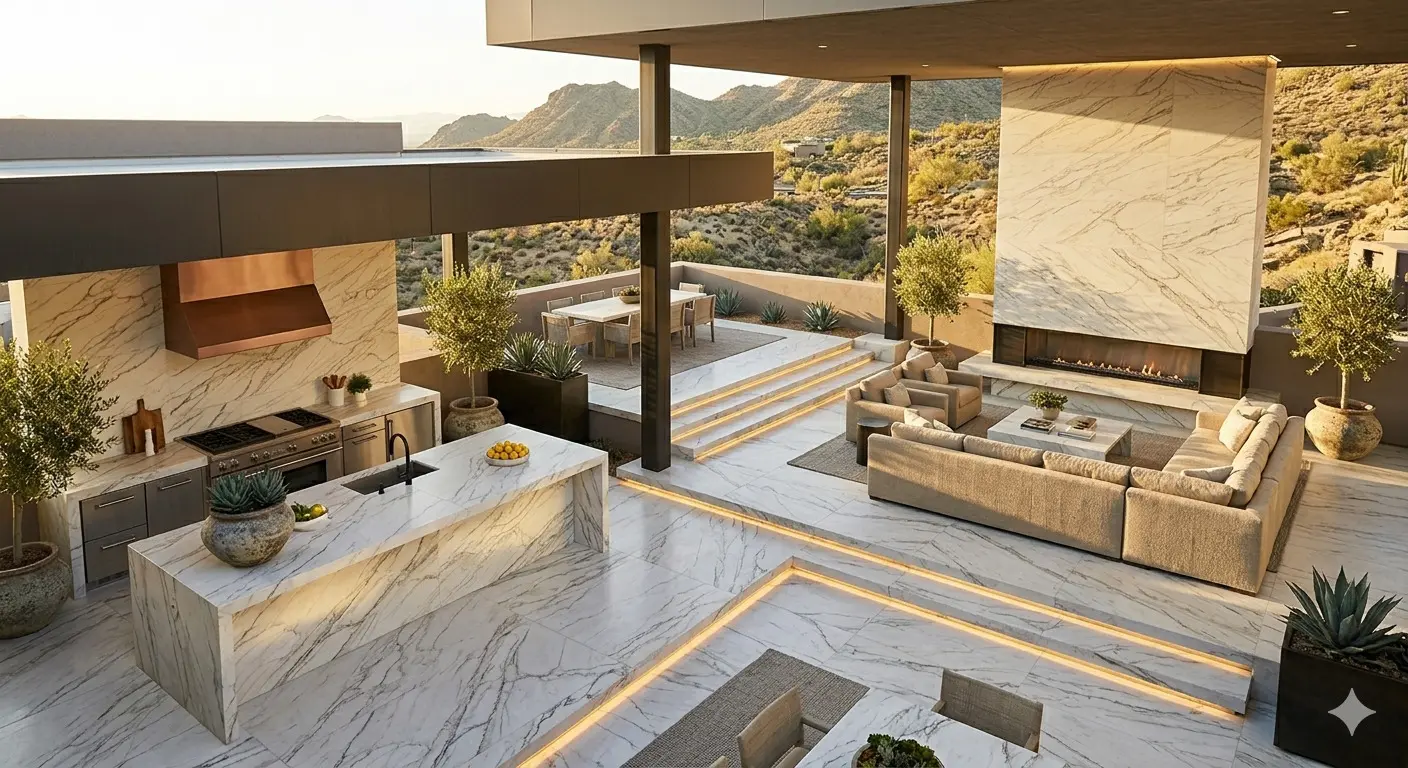
Choosing the Right Stone for an Outdoor Fireplace Surround
Outdoor fireplace surrounds face a different set of demands than their interior counterparts. Exposure to rain, temperature fluctuations, UV light, and freeze-thaw cycles means that material selection needs to account for durability and weather resistance alongside aesthetic considerations.
Granite is widely considered one of the more reliable choices for outdoor fireplace surrounds due to its density, low water absorption rate, and resistance to surface wear. Its ability to withstand both heat and cold without significant degradation makes it a practical option across a range of outdoor climates.
Quartzite also performs well in outdoor settings. Its hardness and relatively low porosity give it good resistance to moisture and temperature variation. A honed or brushed finish is often preferred over polished in outdoor applications because it tends to be less slippery when wet and shows weathering less noticeably over time.
Travertine is a popular choice for outdoor fireplace surrounds in warmer, drier climates. Its natural texture and warm tonal range complement outdoor living spaces well. In climates with significant freeze-thaw activity, travertine requires more careful sealing and maintenance to prevent moisture from entering its natural pores and causing surface damage.
Bluestone and slate are also worth considering for outdoor applications. Both materials have a naturally rugged appearance that suits casual outdoor entertaining spaces and tend to handle weathering reasonably well when properly sealed and maintained. For a broader look at outdoor fireplace options and how material choice affects long-term performance, this guide to outdoor fireplace types provides helpful context for homeowners and design professionals planning an outdoor project.
If you are based in the region and want to view outdoor-suitable stone options in person, visiting one of our showroom locations gives you the opportunity to assess materials directly and speak with specialists who can help identify the right choice for your climate and design goals.
Design Considerations for Stone Slab Fireplace Surrounds
Beyond material selection, the way a stone slab is detailed and presented has a significant effect on the final result. A few key decisions tend to define the overall character of the surround.
Slab orientation and bookmatching can substantially change the visual impact of a stone surround. Bookmatching involves mirroring two sequential slabs cut from the same block so that their veining patterns create a symmetrical composition. This approach is particularly effective with marble and quartzite and can elevate a surround from a straightforward material application to a considered design statement.
Surface finish affects both the appearance and the maintenance requirements of the surround. Polished finishes reflect light and emphasize the depth of color and veining in the stone, making them well suited to formal or contemporary interiors. Honed finishes offer a softer, more matte appearance that works well in casual and transitional spaces. Brushed and leathered finishes add tactile texture and tend to show minor marks less readily, which can be a practical advantage in frequently used areas.
Surround profile and detailing ranges from minimal and flush to more architecturally layered designs with a mantel, legs, and a defined hearth. Simpler profiles tend to suit contemporary and minimalist spaces. More structured designs with visible framing and layering work well in traditional and transitional interiors. The thickness and edge profile of the slab also contribute to the overall visual weight of the surround.
Scale and proportion matter significantly in fireplace design. A surround that is appropriately scaled can anchor an entire room. Full-height stone surrounds that extend from the hearth to the ceiling are increasingly common in contemporary residential design and can create a dramatic focal point when the right slab is selected. If you are working through design decisions and want expert input, scheduling an appointment with our team can help you move forward with confidence.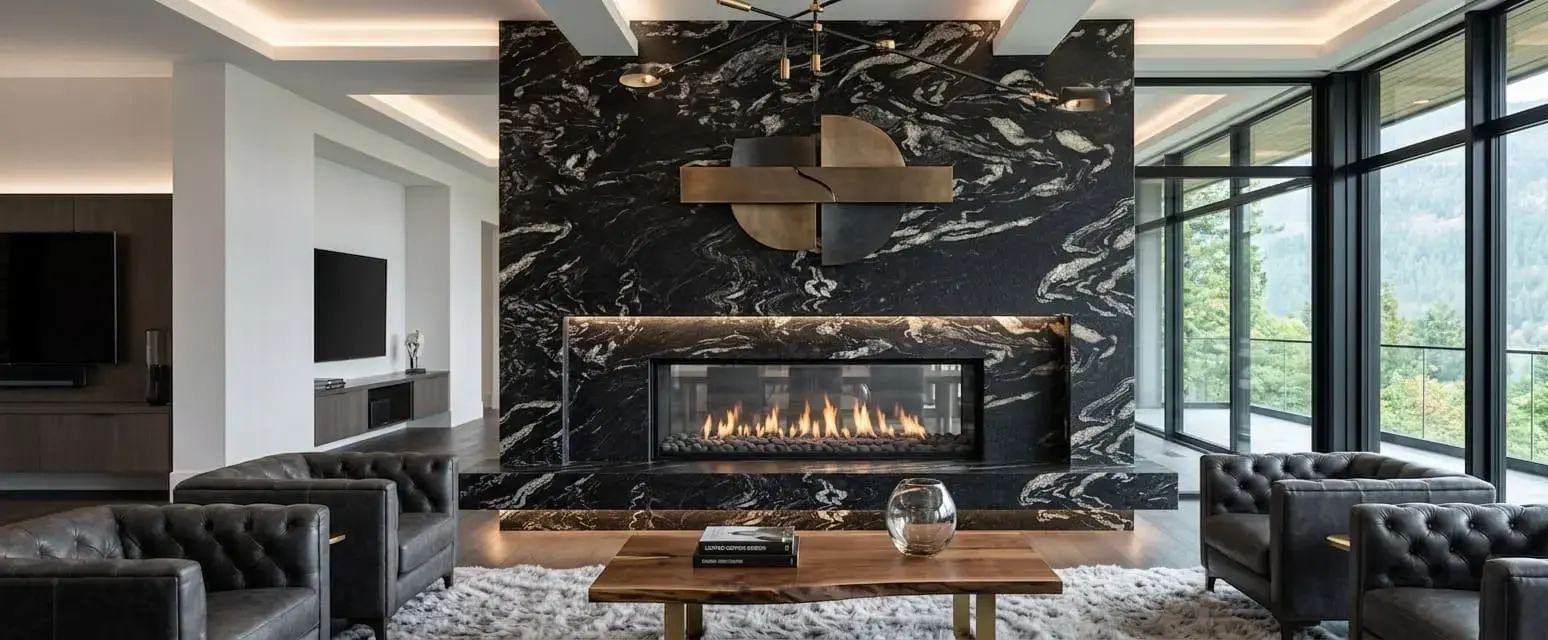
Caring for a Natural Stone Fireplace Surround
Regardless of the stone type selected, routine care helps preserve the appearance and condition of a fireplace surround over time. Sealing is an important first step and should be repeated periodically depending on the porosity of the material and how frequently the fireplace is used.
For indoor surrounds near gas or wood-burning fireplaces, periodic cleaning with a pH-neutral, stone-safe product helps remove soot residue and airborne grease without compromising the surface finish or the protective sealer. Avoiding acidic or abrasive products is particularly important for marble and limestone, which are more chemically sensitive than harder stone types.
Outdoor surrounds benefit from more frequent sealing due to their exposure to moisture and environmental debris. Checking the surface condition at the start and end of each season is a practical habit that can catch early signs of sealer degradation before they develop into more significant issues. If you are ready to begin planning your fireplace surround project, you can request a slab quote and our team can help guide you toward the right material for your specific application.
Conclusion
A natural stone slab fireplace surround is one of the more enduring design investments available for both interior and exterior spaces. The right material, selected with both aesthetic and functional priorities in mind, can define the character of a room or outdoor living area for many years. Whether the project calls for the refined elegance of marble, the durability of granite, the warmth of limestone, or the versatility of quartzite, each stone type brings distinct qualities that make it well suited to specific design contexts and environments.
Taking the time to understand those qualities before committing to a material is the foundation of a successful outcome. If you are exploring options for an upcoming project, check for available selections through our overstock sale to find quality stone that fits your fireplace surround vision and budget.
Frequently Asked Questions
What is the best natural stone for a fireplace surround?
The most suitable stone depends on the type of fireplace and the design context. Granite is generally considered one of the more heat-tolerant options and tends to work well for wood-burning applications. Marble and quartzite are popular choices for gas or decorative fireplaces where visual impact is a primary consideration. Limestone suits rustic and organic design styles, while quartzite offers a balance of durability and refined appearance across a range of settings.
Can natural stone crack from fireplace heat?
Some natural stones can develop stress fractures if exposed to sudden or extreme temperature changes, a phenomenon known as thermal shock. Denser stones like granite and quartzite tend to be more resistant to this than softer varieties like marble or limestone. Proper installation with appropriate clearance from direct flame contact can help reduce this risk across all stone types.
Is natural stone suitable for outdoor fireplace surrounds?
Yes, several natural stone types perform well in outdoor settings. Granite, quartzite, and properly sealed travertine are among the more commonly used options for outdoor fireplace surrounds. Material selection for outdoor applications should account for local climate conditions, particularly in regions with significant rainfall or freeze-thaw cycles.
How often does a stone fireplace surround need to be sealed?
Sealing frequency depends on the stone type and how frequently the fireplace is used. More porous materials like limestone and travertine may benefit from resealing once or twice a year, while denser options like granite may only need attention every one to two years. A simple water absorption test can help indicate when resealing may be needed.
Does the surface finish of a stone surround affect its heat performance?
The surface finish primarily affects the appearance and maintenance requirements of the stone rather than its thermal properties. Polished finishes tend to show soot and fingerprints more readily near a fireplace, which is why honed, brushed, or leathered finishes are often preferred for surround applications. The underlying stone type is the more significant factor when it comes to heat tolerance and durability.