The right natural stone slab color depends on four factors working together: the stone's undertone, your cabinet palette, the light in your space, and the surface finish you choose. Natural stone countertops come in a full spectrum of colors including white, cream, gray, warm gold, green, and black, available in marble, quartzite, granite, and travertine. Each stone family carries its own undertone, ranging from cool blue-grays in white marble to warm golds in cream quartzite to deep jewel greens in green marble. Finish options including polished, honed, and leathered further shift how a color reads once installed. Because natural stone is a fixed surface element, evaluating undertone, finish, and cabinet pairing together before ordering is the single most important step in the selection process.
Why Slab Color Sets the Tone for the Entire Room
A countertop covers more horizontal surface than almost any other element in a kitchen or bathroom. It sits at eye level, reflects light, and connects cabinets, flooring, backsplash, and hardware into a single visual story. Get the color right and every other finish in the room falls into place.
Natural stone gives you more color range than most homeowners expect. Marble alone spans from pure white to deep charcoal. Quartzite stretches from bleached cream through warm gold to steel blue. Understanding how those colors behave in your specific space is what separates a confident selection from buyer's remorse.
Understand Undertones Before Choosing a Color Family
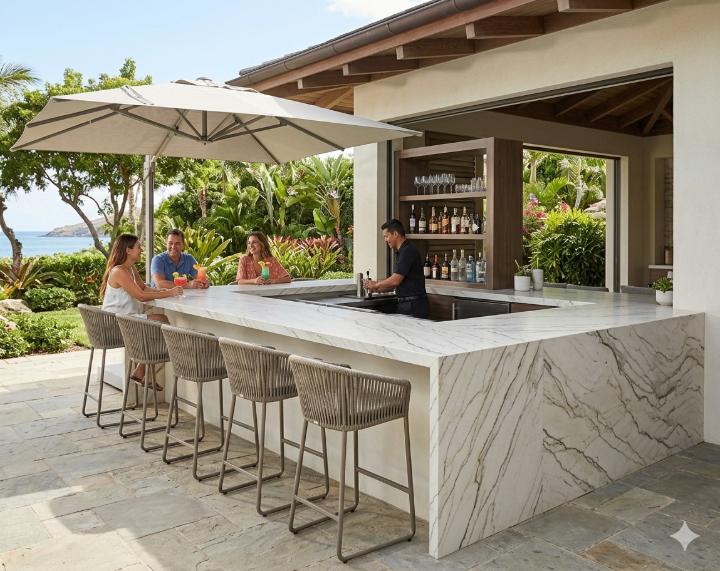
Every slab has an undertone, a secondary hue that becomes visible once the stone is installed and reacting to your lighting. Missing the undertone is one of the most common reasons a slab that looked perfect in the showroom feels slightly wrong at home.
Cool undertones (blue, green, gray) read as crisp and contemporary and pair well with white, gray, and navy cabinetry. Warm undertones (gold, beige, brown) feel inviting and grounded and complement wood-tone cabinets and cream millwork. Neutral undertones are the most versatile but also the hardest to predict without seeing a large sample in your actual space.
Always evaluate a slab sample in your kitchen or bathroom at different times of day before ordering. Morning light, midday light, and evening artificial light will each read differently on the same stone. Fine Homebuilding's guide to natural stone countertops covers how stone properties vary by material family and is a useful reference when narrowing down your options.
Slab Colors by Stone Family
White and Cream
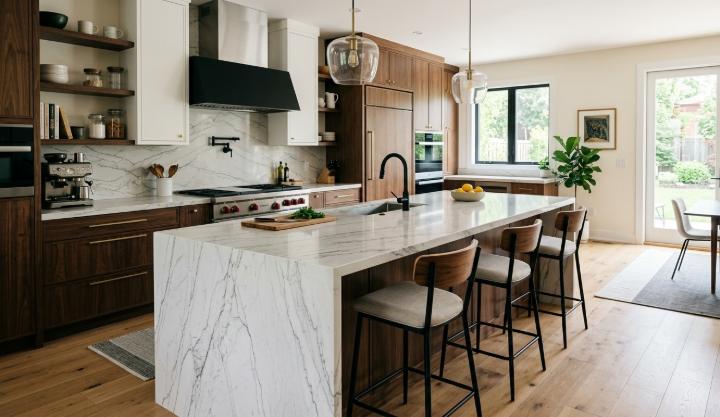
White is the most searched natural stone color and the most versatile starting point for any kitchen or bathroom design. Bright white marbles suit modern and transitional spaces and pair well with white or light gray cabinetry. Cream quartzites feel warmer and work equally well with wood-tone, sage, and navy cabinets.
Cream quartzite is one of the more practical choices in this category. It delivers marble aesthetics with greater hardness and lower porosity, making it a practical option for high-use kitchens. For homeowners weighing natural quartzite against engineered stone alternatives, recent occupational health research from NIOSH on engineered stone fabrication is worth reviewing as part of your decision. White marble requires consistent sealing and benefits from a honed finish to minimize visible etching over time.
Gray
Gray remains a strong foundational neutral, but buyer preference has shifted from flat, uniform gray toward slabs with movement and tonal variation. Gray marbles and gray quartzites deliver a cooler contemporary look that pairs well with white cabinetry, matte black hardware, and wood floors.
Mid-tone grays are also the most forgiving color family for heavy kitchen use. They mask both light mineral deposits and darker food stains better than either bright white or deep black surfaces, making them a practical choice for households that cook frequently.
Warm Earth (Beige, Gold, and Taupe)
Warm neutrals are the fastest-growing color category in natural stone, reflecting the broader design shift toward organic, nature-inspired interiors. Cream quartzite with gold veining anchors this category and is among the most searched stone types in the market today. A warm cream base with subtle gold veining suits white oak cabinetry, brass hardware, and linen-toned walls.
Gold-toned granites offer a more economical entry point into warm territory with higher-variation patterns well suited to traditional kitchens.
Green
Green is the strongest trending color in natural stone right now, moving from a niche designer choice to a mainstream showroom request. Soft green marble with white veining works well as an island accent against white perimeter counters. Deep green granite with fine crystalline sparkle suits contemporary and transitional kitchens alike.
Green slabs pair best with white, cream, and natural wood cabinetry. They are harder to execute against gray or navy but can work with the right undertone match.
Black and Dark
Black slabs add drama and depth that lighter stones cannot achieve. Black granite is among the harder options in this category. For a more dynamic dark surface, black marble with white veining reads as much like artwork as it does a countertop.
The practical reality: dark polished surfaces show water spots and fingerprints more readily than lighter stones. A honed or leathered finish reduces these visibility issues significantly for everyday household use.
How Lighting Changes Slab Color
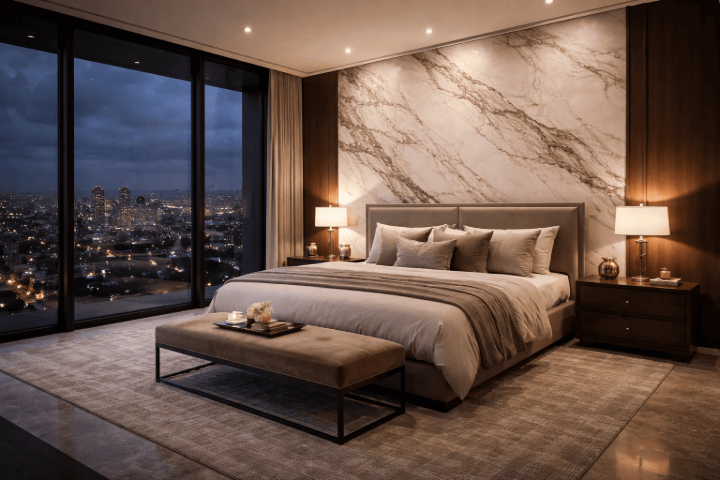
Lighting is the most underestimated factor in slab color selection. A cream quartzite with warm undertones under warm-white pendant lights will glow. The same slab under cool daylight fluorescents may pull gray and feel flat.
North-facing kitchens receive cool, indirect light all day. Warm-toned slabs help counterbalance this and keep the space from feeling cold. South-facing kitchens are flooded with warm light, where both cool and warm slabs perform well. East and west-facing kitchens shift throughout the day, making neutral slabs the safest choice for consistent results.
Artificial light color temperature also matters. Warm white bulbs (2700K to 3000K) enhance gold, cream, and beige tones. Cool white bulbs (4000K to 5000K) support gray, white, and blue-green stones. Aligning your lighting to the stone's undertone produces the most coherent finished result. For a practical overview of how different stone types behave under real kitchen conditions, This Old House's guide to stone countertops is a reliable starting point.
Pairing Slab Color With Cabinet Color
The cabinet-to-countertop relationship is the central color decision in any kitchen remodel. The two most successful approaches are contrast and harmony.
Contrast pairings place a light slab against dark cabinets or a dark slab against white or cream cabinetry. High contrast reads as modern and photographs well. The key is ensuring undertones align between the stone and the cabinet finish. A cool gray slab against warm espresso cabinets will create unresolved visual tension regardless of how good each element looks on its own.
Harmony pairings keep slab and cabinet in the same tonal family. Cream quartzite over cream cabinetry, warm gray marble over dove-gray cabinets. This approach is softer and easier to execute, though it requires enough veining variation in the stone to prevent the overall palette from reading as flat.
How Finish Affects Color Perception
The same slab in different finishes can read like two different stones, making finish selection a color decision as much as a texture preference.
Polished finishes intensify color. A polished black granite reads deeper and more saturated than the same stone honed. Polished white marbles appear brighter and more reflective but show etching and fingerprints more visibly over time.
Honed finishes soften and slightly lighten stone color. Honed marble minimizes the appearance of etching, making it a more practical daily-use finish in kitchens despite requiring slightly more consistent sealing.
Leathered finishes produce the most dramatic color shift. The texturing process opens and darkens the stone surface, pulling deeper, richer tones from within the slab. A cream quartzite can read almost golden when leathered.
Conclusion
Choosing the right slab color comes down to four variables working together: the stone's undertone, your cabinet and hardware palette, the light in your specific space, and the finish you select. Each of those factors shifts the final result, which is why no online photo or small sample chip fully replicates what a full slab will look like once it is installed in your home.
The best way to make a confident decision is to view full slabs in person and bring your cabinet samples along for comparison. Browse our current slab inventory to see what is available, then visit our design team at our showrooms in Reno, Minden, Sacramento, or Fernley to evaluate undertones, finish options, and cabinet pairings in person.
As a direct stone importer serving Northern Nevada and Northern California, we carry slabs you will not find at big-box retailers, and our design team is available at no charge to help you make a confident choice. Stop by any location for a complimentary consultation, or explore our full range of natural stone options to get started.
Frequently Asked Questions
What is the most popular natural stone slab color?
White and cream remain the most consistently searched natural stone colors. Within that range, white quartzite and cream quartzite varieties are among the most requested slabs in showrooms today.
Does slab color affect how easy the stone is to maintain?
Color itself does not affect durability, but it does affect how wear and staining appear over time. Mid-tone grays and warm beiges are the most forgiving color families because their natural pattern variation conceals both minor staining and surface marks more effectively than bright white or deep black surfaces.
What slab color works best with white cabinets?
White cabinets support nearly every slab color. Bright white quartzites and marbles create a clean, seamless look. Warm creams and gold-veined stones add contrast and warmth. Gray and charcoal slabs produce a modern high-contrast pairing, while green-veined stones work as a bold accent choice for homeowners who want personality in the space.
How does lighting affect slab color?
Lighting has a significant effect on how slab color reads in a finished space. Warm-white bulbs (2700K to 3000K) enhance gold and beige tones. Cool-white bulbs (4000K to 5000K) suit gray and white stones. Always evaluate a large slab sample in your actual kitchen lighting before ordering, ideally at multiple times of day.
Should I choose a slab color before or after selecting cabinets?
Choosing the slab first often leads to a more successful result. Natural stone has a fixed color range determined by geology, while cabinet colors can be custom-ordered in virtually any hue. Starting with the stone gives you a fixed reference point to build the rest of the design around, which reduces the risk of undertone mismatches later in the process.