Few surfaces deliver the staying power of a natural stone slab. From serene bathroom retreats to sun-drenched pool decks, granite offers beauty that engineered alternatives simply cannot replicate.
Every slab forms over millions of years, making each installation genuinely one of a kind. No two surfaces carry the same veining, tone, or character, which means your space gains something truly exclusive.
In this guide, you will learn how granite performs across bathrooms, patios, pool decks, and exterior walls. You will also find finish comparisons, practical planning steps, and tips for choosing the right material confidently.
Why a Natural Stone Slab Is a Long-Term Investment Worth Making
Choosing the right surface goes beyond aesthetics. It shapes how a space functions, how it ages, and what it communicates to anyone who walks through it.
According to natural stone environmental and health product standards, granite is a low-emission, responsibly sourced material. That matters especially in bathrooms, where air quality and material safety are ongoing household concerns.
Beyond health benefits, granite resists heat, moisture, and sustained foot traffic. That performance profile makes it a reliable choice whether you are designing a private bathroom sanctuary or a high-use outdoor entertaining area.
Key reasons homeowners and designers choose granite:
- Exceptional durability in both wet and dry environments
- Heat and scratch resistance suited for patios and pool decks
- Natural variation that enhances bathrooms, exterior walls, and living areas
- Low ongoing maintenance with proper periodic sealing
- Strong return on investment when the property is resold
- Responsibly sourced options that support healthier interiors
Granite also ages with integrity. Unlike vinyl or composite panels that show wear within a decade, a well-maintained slab holds its character far longer. That longevity turns upfront installation costs into a genuinely worthwhile expenditure.
Design Inspiration for Bathrooms, Patios, Pool Decks, and Exterior Walls
Stone transforms every corner of a home. Understanding how granite performs in each setting helps you make confident, well-informed decisions before committing to a full installation.
Browse the complete slab collection to explore the full range of colors, finishes, and sizes available for your specific project.

Spa-Quality Bathroom Upgrades
Granite elevates any bathroom from functional to exceptional. Applied across vanity surfaces, shower walls, and flooring, it creates a cohesive and refined atmosphere.
For a striking contrast, pair a deep charcoal granite vanity top with brushed nickel fixtures and soft white walls. This approach draws on timeless color combinations that feel both current and enduring.
Honed finishes are particularly well suited to bathrooms. They reduce glare from overhead lighting and deliver a soft, matte surface that reads as understated luxury.

Patios Built for Lasting Impressions
A granite patio integrates naturally into outdoor landscapes while adding undeniable sophistication. The material handles temperature swings with ease, performing reliably through both intense summer heat and frost.
Textured or flamed finishes add slip resistance where rainfall and morning dew are ongoing factors. Pair stone with warm timber accents and layered planting to create an outdoor space that feels as considered as any interior room.

Pool Decks That Combine Beauty with Function
Pool decks endure constant moisture, foot traffic, and chemical exposure. Granite manages all three without compromising its visual appeal.
A brushed or leathered finish provides reliable traction around wet areas. Light-toned granite also stays noticeably cooler underfoot on hot days compared to dark concrete alternatives. For a broader perspective on pairing stone with high-use applications, this in-depth countertop and stone reference provides useful context.
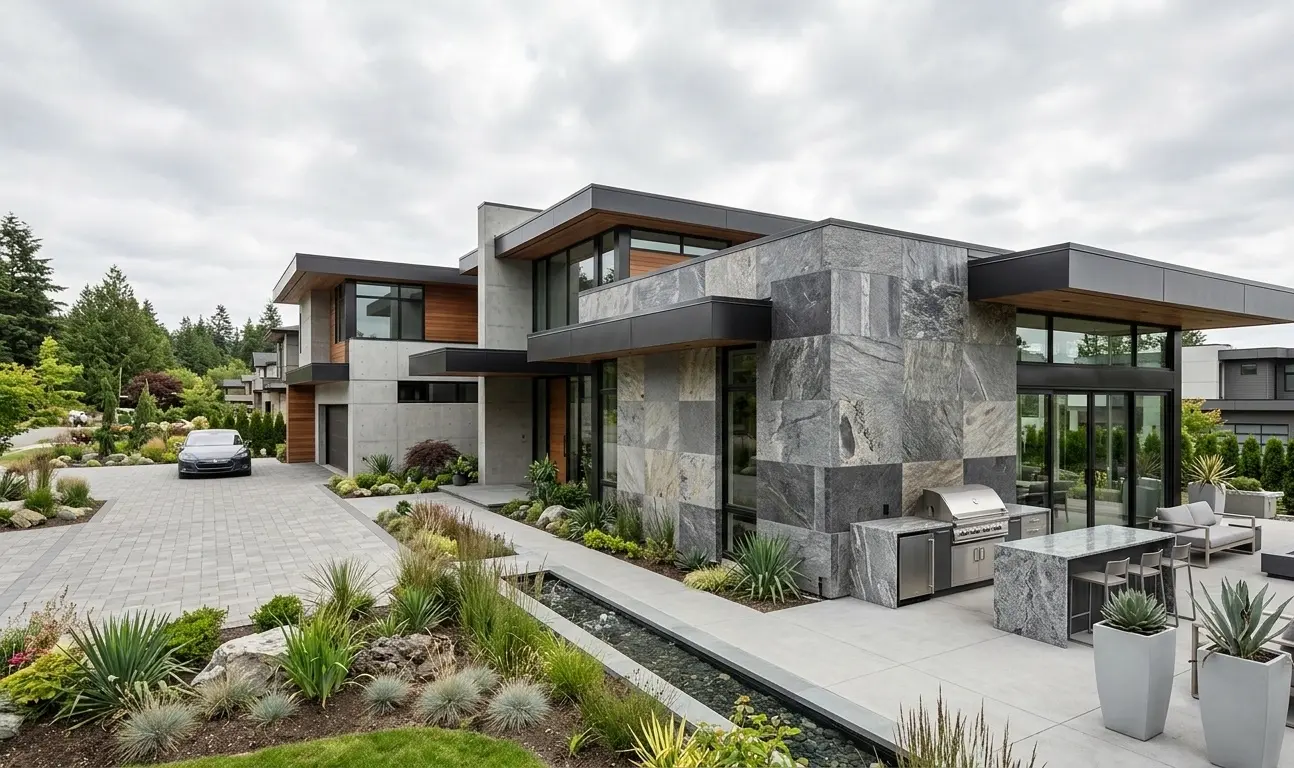
Exterior Walls That Command Attention
Granite cladding on exterior walls makes an immediate and lasting statement. Whether used on entryways, garden retaining walls, or as a full facade treatment, it signals permanence and refined design sensibility.
Stack bond patterns produce a clean, contemporary appearance. Irregular ashlar layouts lean into a more organic, textural character. Both approaches weather beautifully over time, unlike painted surfaces that require repeated upkeep.

Granite Finish Comparison: Which One Fits Your Project?
| Finish | Best Application | Surface Texture | Slip Resistance |
| Polished | Bathroom vanities, feature walls | Smooth, high gloss | Low |
| Honed | Bathroom floors, shower surrounds | Matte, refined | Medium |
| Flamed | Patios, exterior walls | Rough, tactile | High |
| Brushed | Pool decks, outdoor areas | Lightly textured | Medium-High |
| Leathered | Pool surrounds, countertops | Organic, tactile | Medium-High |
Pros and Cons of Granite for Indoor and Outdoor Use
Pros:
- Withstands heavy foot traffic, weather, and UV exposure
- Resists heat, moisture, and chemical contact
- Every slab is visually distinct and unrepeatable
- Adds measurable property value over time
- Available in a broad range of tones and finishes
Cons:
- Higher upfront cost compared to manufactured surfaces
- Requires periodic resealing to sustain peak performance
- Significant weight demands structural consideration for certain installations
- Rare stone varieties may have limited regional availability
How to Plan a Granite Installation: Five Key Steps
- Define the application. Identify whether the surface is indoors (bathroom) or outdoors (patio, pool deck, exterior wall) and note any finish requirements specific to that environment.
- Select the right finish. Use the comparison table above to match finish type to the functional and aesthetic demands of your space.
- Request physical samples. View stone samples in your actual environment under both natural and artificial light before finalizing any selection.
- Confirm measurements. Work with your contractor to calculate the full installation area, factoring in a standard waste allowance for cuts and edges.
- Schedule professional installation. Granite slabs require trained handling, precision cutting, and expert sealing to achieve results that hold up over time.
Where to Source Premium Granite Slabs for Your Project
The quality of your supplier shapes the outcome of the entire project. Slab dimensions, material grading, and expert guidance all make a meaningful difference.
Explore a curated selection of premium stone options with showrooms in Reno, Fernley, Minden, and Sacramento. Viewing slabs in person before purchasing removes the guesswork and builds confidence in your final choice.
Design professionals and contractors can apply for a dedicated trade account to access project pricing, priority support, and streamlined ordering. Homeowners looking to connect with trusted local vendors can use the shop local resource directory to find qualified professionals in their area.
What separates an excellent supplier from an average one is not just inventory breadth. It is the quality of guidance provided throughout the selection and planning process. Prioritize access to knowledgeable staff, hands-on sample availability, and transparent project support from the start.
Conclusion
Granite is more than a surface choice. It is a commitment to quality, character, and design that holds its value over time. Whether you are finishing a bathroom with a honed feature wall or framing a pool deck with a flamed outdoor surface, a natural stone slab delivers something no manufactured alternative can match: authentic material beauty built to last.
The right stone, the right finish, and the right supplier come together to create spaces that are as durable as they are stunning. Take the first step toward your next project and discover what premium granite can do for your home.
Frequently Asked Questions
Is granite suitable for outdoor use in all climates?
Yes. Granite handles freeze-thaw cycles, heat, and UV exposure reliably. Selecting a flamed or brushed finish adds the traction needed for outdoor surfaces exposed to rain or moisture.
How often does a granite slab need to be sealed?
Most installations benefit from resealing every one to three years, depending on use and exposure. High-traffic outdoor applications such as patios and pool decks may require more frequent care.
Can granite pool decks get uncomfortably hot in summer?
Light-colored granite absorbs less heat than darker materials, keeping surface temperatures more manageable. A honed or brushed finish also contributes to a cooler underfoot experience on warm days.
Why is granite a practical choice for bathroom walls?
Granite naturally resists moisture and humidity. Properly sealed, it prevents water penetration and maintains its appearance in shower surrounds, accent walls, and flooring for years without issue.
Does granite perform differently when used outdoors versus indoors?
The material itself is identical. The primary difference is the finish selected for each environment. Outdoor applications call for textured finishes that provide grip, while indoor surfaces typically use polished or honed options for visual refinement.