Natural stone countertops do not harbor unsafe bacteria, emit dangerous radon, or require constant upkeep. Most concerns about granite, marble, quartzite, and other natural stones are based on outdated claims that do not reflect how these materials actually perform.
Several myths have accumulated around natural stone that lead buyers to dismiss materials that may suit their kitchens and bathrooms well, or to choose alternatives based on assumptions that are not accurate. The most common include:
- That natural stone surfaces breed bacteria at higher rates than synthetic countertops
- That marble is too fragile or high-maintenance for a working kitchen
- That all natural stone requires the same care routine regardless of material type
- That granite countertops emit harmful levels of radon gas
- That quartzite and quartz are two names for the same product
- That sealing once provides permanent protection
- That engineered stone is always the safer or simpler choice
Understanding the facts behind each claim makes material selection a cleaner process built on accurate information rather than assumption.
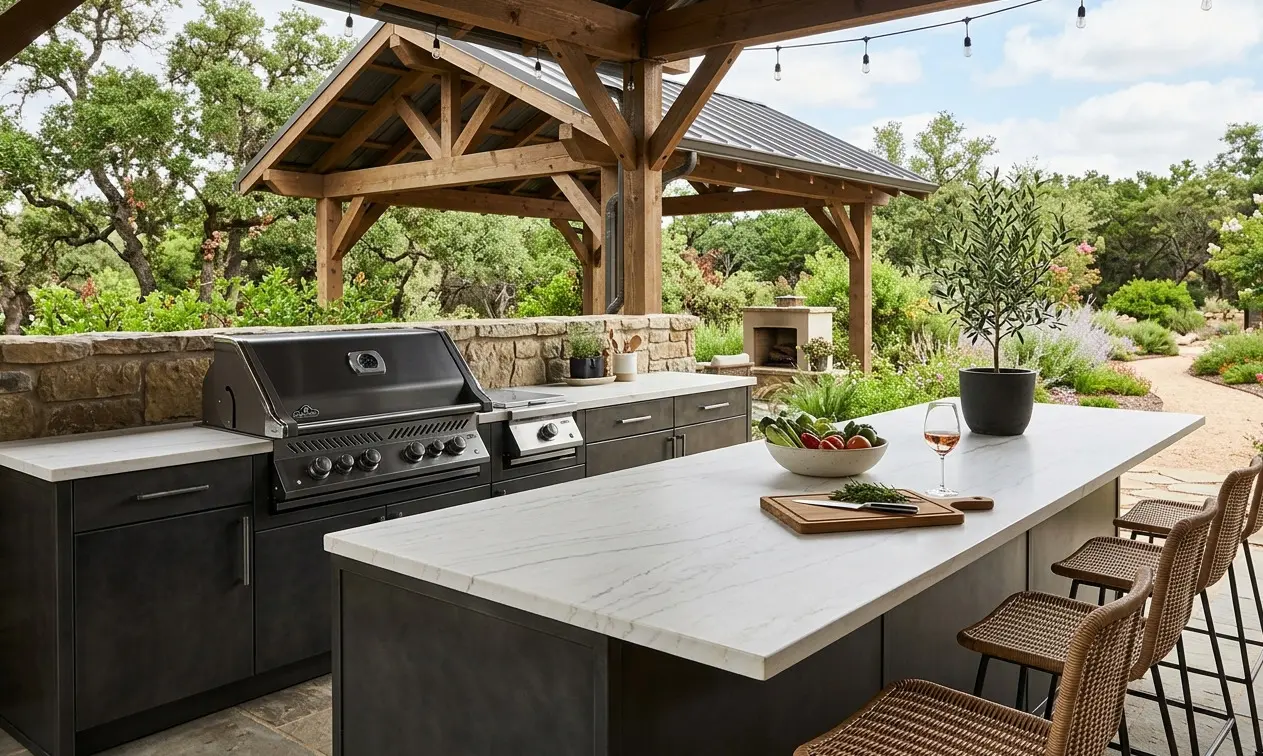
Myth 1: Natural Stone Harbors Bacteria and Is Unsafe for Food Preparation
This is one of the most frequently repeated concerns about stone countertops, and the evidence does not support it. Research cited by the Centers for Disease Control and Prevention found that properly sealed granite does not harbor bacteria at higher rates than other countertop materials, including synthetic options. The National Sanitation Foundation certifies granite for use in food contact environments.
The concern stems from the fact that natural stone is porous. Porosity in properly sealed stone, however, does not translate to bacterial growth. A penetrating sealer fills the microscopic pores in the stone's surface, preventing liquids from absorbing in. When cleaned regularly with a pH-neutral soap and water, sealed natural stone is safe for food preparation.
Slate and soapstone go further: both are naturally non-porous and require no sealing at all. Both are part of our stone slab inventory, alongside granite, marble, quartzite, and other materials that suit a range of needs.
Myth 2: Marble Is Too Fragile for a Working Kitchen
Marble has been used in professional kitchens, restaurants, and bakeries for generations. Pastry chefs specifically choose marble working surfaces because the stone stays cool, which is practical for handling dough. Calling it too fragile for a kitchen overstates the challenge.
The real consideration is acid sensitivity, not fragility. Marble is a calcareous stone that reacts to acidic liquids. Lemon juice, vinegar, and wine can etch the surface if left in contact without being wiped up. Etching dulls the polished finish in the affected area. It does not compromise the stone structurally.
A honed finish shows etch marks far less noticeably than a polished surface, which is why many buyers specify honed marble for kitchen countertops. Others use marble on the island or lower-contact surfaces and choose a harder stone near the sink and stove. According to This Old House, marble is particularly well suited to bathrooms, vanities, and lower-use kitchen applications where daily acid exposure is limited.
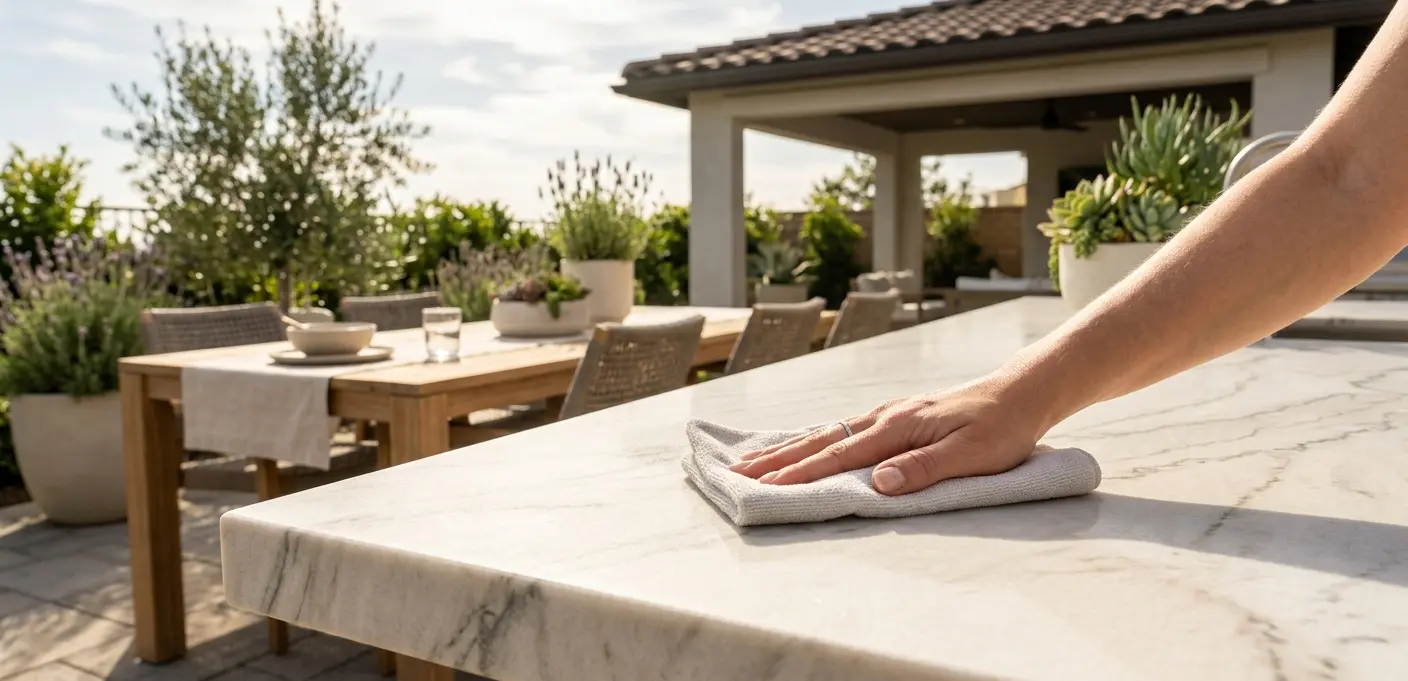
Myth 3: All Natural Stone Requires the Same Maintenance Routine
This assumption causes problems in both directions. Buyers sometimes over-maintain dense stones that rarely need sealing, and under-maintain softer stones that benefit from more frequent attention.
Maintenance requirements differ significantly by material. Granite varies by slab: dense, dark varieties may hold a seal for several years, while lighter, more porous granites benefit from annual resealing. Quartzite also varies by variety. Some, including Taj Mahal, are very dense and absorb very little. Others benefit from sealing once a year. True quartzite does not etch from acids. Marble and dolomite are more porous and acid-sensitive, benefiting from resealing every six to twelve months in kitchen settings. Slate and soapstone are naturally non-porous and require no sealing at all. Porcelain slab and sintered stone are engineered surfaces that also require no sealing.
The simplest way to check whether a stone needs resealing is the water test. Leave a small amount of water on the surface for 15 minutes. If the stone darkens where the water sat, absorption is occurring and resealing is due. If water beads on the surface, the seal is still intact.
Myth 4: Granite Countertops Emit Dangerous Levels of Radon
This claim circulated widely in the early 2000s and continues to appear online. The concern is that granite, as a naturally occurring igneous rock, contains trace radioactive elements that emit radon gas at unsafe levels inside the home.
The scientific and regulatory consensus does not support this. The Environmental Protection Agency has found no evidence that granite countertops contribute radon at levels hazardous to residents. Studies from the Marble Institute of America and independent research institutions have reached similar conclusions. The radon attributable to granite countertops is negligible compared to radon produced by soil beneath a home, which is the primary source of residential radon exposure.
For homeowners concerned about radon in general, the EPA recommends whole-home radon testing, which addresses soil-derived radon regardless of what countertop material is installed. Guidance on radon and occupational stone safety is available through the CDC and NIOSH.

Myth 5: Quartzite and Quartz Are the Same Material
These two materials share part of a name and almost nothing else. The confusion is widespread and leads to genuine problems when buyers expect one material's performance from the other.
Quartzite is a natural metamorphic rock formed when sandstone is subjected to extreme heat and pressure underground. It is quarried directly from the earth, cut into slabs, and sold without modification beyond cutting and surface finishing. It scores between 7 and 8 on the Mohs hardness scale, does not etch from acids, tolerates direct heat, and is suitable for outdoor use in most climates.
Quartz countertops are manufactured surfaces combining approximately 90 percent crushed quartz crystals with polymer resins and pigments. The resin component makes quartz non-porous and stain-resistant, but also makes it sensitive to sustained heat and UV exposure. It cannot be used outdoors because UV light degrades the resin over time.
The fabrication of high-silica engineered quartz generates crystalline silica dust, which the CDC and NIOSH have identified as a serious occupational lung hazard for fabrication workers. Australia banned the fabrication of high-silica engineered stone in 2024. California is currently considering similar regulation. This is a supply-chain concern rather than a risk for the installed countertop in a home, but it is a distinction some buyers are now weighing. Fine Homebuilding has covered the structural and performance differences between natural quartzite and engineered quartz in detail.
Myth 6: One Sealing Provides Permanent Protection
A penetrating sealer applied at installation fills the microscopic pores in porous stone and slows liquid absorption. But sealers wear down over time through regular cleaning, heat exposure, and daily use. Assuming one application lasts indefinitely means a countertop will eventually absorb spills it should be repelling.
The water test monitors sealer condition: leave water on the surface for 15 minutes. If the stone darkens, absorption is occurring and resealing is due. If water beads, the seal is still working.
Resealing is a process most homeowners can complete in under an hour using a penetrating silicone-based stone sealer. It does not require professional assistance in most cases. How often it is needed depends on the specific stone, daily use, and the cleaning products used on the surface.
If you are evaluating materials for an upcoming project, our design team offers a free design consultation at each of our showroom locations, where we can walk through the care requirements of specific stones side by side.
Myth 7: Engineered Stone Is Always the Safer or Lower-Maintenance Choice
Installed quartz countertops perform reliably in most household applications. They resist staining, require no sealing, and hold up well to daily kitchen use. However, framing quartz as uniformly safer or simpler than natural stone across all dimensions deserves a closer look.
The fabrication of high-silica engineered stone generates crystalline silica dust at concentrations significantly higher than those produced when cutting natural stone. Engineered quartz typically contains over 90 percent crystalline silica, while granite generally contains 25 to 30 percent. The resin binders in engineered stone appear to compound the inhalation risk for fabrication workers. This is not a concern for homeowners using an installed countertop, but it is a supply-chain consideration some buyers are now weighing.
Low-fabrication-risk options include porcelain slab, sintered stone, soapstone, and slate, each worth evaluating based on the application and how a household weighs performance, maintenance, and production profile. You can request a slab quote to compare available materials before your visit.
Conclusion
The concerns that follow natural stone around, that it is unhygienic, too fragile for real use, high-maintenance, or radioactive, do not hold up against the evidence. The more useful framework is a direct comparison of what each material actually requires and delivers in the context of your specific home.
Granite is dense, heat-tolerant, and benefits from periodic sealing. Marble is acid-sensitive and holds up over time when cared for appropriately. Quartzite is hard, non-etching, and performs well in heavy-use kitchens. Slate and soapstone need no sealing and develop a natural surface character over time. Porcelain slab and sintered stone require no sealing and can handle outdoor conditions.
We carry full slab inventory for in-person viewing at our showrooms in Reno, Minden, Sacramento, and Fernley. You can also explore our current slab selection online before your visit. Viewing slabs in person under natural light is the most reliable way to evaluate how a material looks, feels, and compares before making a decision. Trade professionals are welcome to apply for a trade account for access to our full selection and direct importer pricing.
Frequently asked questions
Research cited by the Centers for Disease Control and Prevention found that properly sealed granite does not harbor bacteria at higher rates than other countertop materials, including synthetic surfaces. The National Sanitation Foundation certifies granite for use in food contact environments. Regular cleaning with a pH-neutral soap and water is sufficient for daily hygiene.
Marble etches when acidic substances such as lemon juice, vinegar, or wine make contact with the surface and are not wiped up promptly. Etching removes the polished finish in the affected area but does not damage the structural integrity of the stone. Minor etch marks can be reduced with a marble polishing powder. More significant etching can be addressed by a professional through honing and repolishing. Many homeowners specify a honed finish from the start, which makes etch marks far less noticeable than on a polished surface.
The water test is the most reliable method. Place a small amount of water, roughly the size of a quarter, on the countertop and leave it for 15 minutes. If the stone darkens where the water sat, the sealer has worn and resealing is needed. If water beads on the surface without absorbing in, the seal is still intact. Frequency varies by material: dense granites may go several years between sealings, while marble and lighter quartzites benefit from annual resealing.
No. Quartzite is a natural metamorphic rock quarried from the earth. Quartz countertops are manufactured products made from approximately 90 percent crushed quartz crystals combined with polymer resins. Quartzite does not etch from acids, tolerates direct heat, and can be used outdoors. Engineered quartz countertops are sensitive to sustained heat, cannot be used outdoors because UV light degrades the resin, and require no sealing because the surface is non-porous.
Soapstone and slate are naturally non-porous and require no sealing. Porcelain slab and sintered stone are engineered surfaces that also require no sealing. Among porous natural stones, some dense dark granites perform well without sealing, though a sealer still provides added protection. Marble, dolomite, travertine, and limestone all benefit from regular sealing due to their higher porosity. Calcareous stones in this group are also acid-sensitive, which is a separate care consideration from sealing frequency alone.