Walking into a finished room clad in natural stone slabs is an experience unlike any other. Yet many homeowners feel blindsided when the installed slab looks different from the sample card they approved.
Natural stone color variation is driven by mineral composition, geological age, and regional quarrying conditions. No two slabs are ever truly identical, which is why evaluating the actual piece before purchase is essential.
Color inconsistency can derail an entire renovation when it is not anticipated. Whether you are planning a kitchen island refresh, a new bathroom vanity, or replacing worn countertops, the tone and movement of your stone anchor every other design decision in the room.
This guide breaks down what drives those color shifts, how different stone types behave across real applications, and which slabs perform best in specific spaces.
How Natural Stone Color Variations Affect Your Countertops and Design Choices
The Mineral Story Behind Every Tone
Every color shift in stone begins underground. Granite gets its speckled pattern from feldspar, quartz, and mica. Marble earns its signature veining from mineral impurities pressed into limestone over millions of years.
Quartzite carries whites and grays from its silica-rich structure. These distinctions are not cosmetic flaws. They are the defining traits that make stone irreplaceable as a premium surface material.
Understanding the mineral base of your chosen stone also sets realistic maintenance expectations. High iron content in certain granites, for example, can cause rust-like spots when exposed to prolonged moisture without proper sealing.
Why This Matters Before You Buy
Color variation has real consequences beyond aesthetics. Here is what deserves attention before installation:
- Batch inconsistency: Slabs sourced from different quarry pulls can vary significantly even under the same product name.
- Lighting sensitivity: Warm-toned stones appear golden in natural light and can read as gray under artificial sources.
- Seam visibility: High-contrast patterns make cuts and seams more visible across large countertop runs.
- Resale perception: Well-chosen stone in kitchens and bathrooms adds measurable perceived value to a home.
- Long-term satisfaction: Mismatched expectations account for a significant share of renovation regret in stone projects.
Seeing slabs in person, ideally under lighting conditions similar to your home, remains the most reliable way to avoid surprises. Many designers recommend visiting a local showroom before committing to any slab.
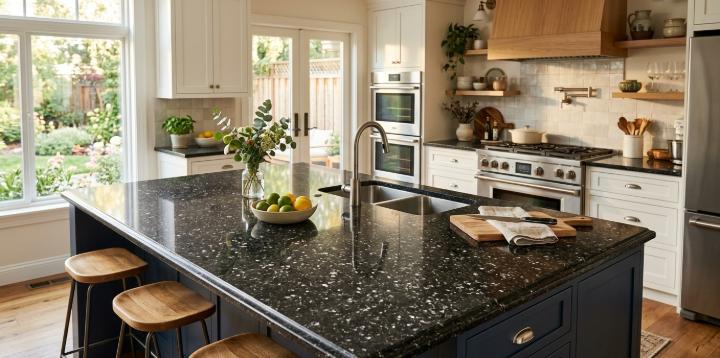
Design Ideas: Matching Stone Colors to Your Kitchen Island and Bathroom Vanity
Choosing Stone for a Kitchen Island
A kitchen island functions as a visual anchor for the entire cooking space. The stone you choose should complement cabinetry and flooring without competing for attention.
Lighter quartzite and cream-toned marble open up compact kitchens and pair well with darker lower cabinets. If your cabinetry is already pale, a richer veined stone on the island creates contrast that draws the eye naturally.
When reviewing options, look at the full slab rather than a small sample chip. Movement patterns in marble and quartzite can shift dramatically from one end to the other. For high-traffic islands, leathered granite or honed quartzite hides fingerprints better than polished finishes. The Natural Stone Institute recommends reviewing finish options early in the planning process to align aesthetics with function.
Selecting Stone for a Bathroom Vanity
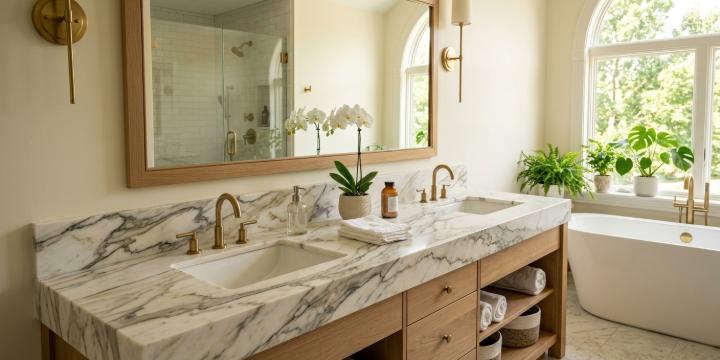
The bathroom vanity is where bold, dramatic stone choices come into their own. Because vanity surfaces are smaller than kitchen countertops, intense veining and deeper color work without overwhelming the room.
Calacatta marble with thick gold and gray veins reads as art on a vanity rather than background noise. Emerald quartzite and deep sodalite are increasingly common in contemporary bathrooms seeking a statement finish.
Bathroom environments introduce consistent moisture and cleaning products. Learning how to clean marble countertops properly extends the surface lifespan and preserves its tone and sheen for years to come.
How Lighting Transforms Stone Color in Real Spaces
The same slab can appear to shift tone depending on the direction and quality of light. South-facing rooms amplify warm undertones in beige or gold-veined stones. North-facing rooms with cooler daylight tend to flatter gray, white, and blue-toned slabs.
Before finalizing any selection, bring a physical sample home and observe it during morning, midday, and evening light. This single step prevents the most common cause of post-installation disappointment.
Stone Comparison: Choosing the Right Slab for Your Space
Stone Type | Color Range | Veining | Best Application | Maintenance Level |
Marble | White, beige, gray | Dramatic, bold | Bathroom vanity, low-traffic countertops | High |
Granite | Black, brown, pink, white | Speckled, subtle | Kitchen island, outdoor countertops | Low |
Quartzite | White, gray, taupe | Subtle to moderate | All countertop applications | Medium |
Soapstone | Dark gray, charcoal | Minimal | Kitchen countertops, farmhouse styles | Low |
Onyx | Gold, green, rust | Translucent, dramatic | Feature walls, luxury vanities | High |
Pros and Cons of High-Variation Stone Slabs
Pros:
- Each slab is entirely unique, delivering a one-of-a-kind finished installation
- Dramatic veining adds visual interest without additional decor layers
- Higher variation tends to conceal minor scratches and everyday wear
- Strong resale appeal in the premium residential market
Cons:
- Matching multiple slabs across a large countertop run is more demanding
- Noticeable color shifts can occur across a single surface
- Seam placement requires more careful planning and skilled installation
- Samples rarely represent the full character of the actual slab
Step-by-Step Guide: How to Select the Right Stone Color for Your Space
Step 1: Define Your Design Direction Before viewing any slabs, identify the dominant tones in the room. Note cabinetry finishes, flooring tones, and wall colors to establish a workable color framework.
Step 2: Narrow by Stone Type Decide whether your application prioritizes durability (granite, quartzite) or elevated aesthetics (marble, onyx). Reference the comparison table above to match function with form.
Step 3: Review Full Slabs in Person Browse the complete slab inventory and evaluate the entire surface area, not just one corner. Request slabs from the same quarry lot if the project requires more than one piece.
Step 4: Test the Sample at Home Take a physical sample to your space and observe it at different times of day. Note how it reads against your actual floors, cabinets, and wall tones before committing.
Step 5: Consult a Design Specialist Work with a stone specialist who can walk you through edge profiles, finish options, and layout considerations. Expert input at this stage prevents costly revisions later.
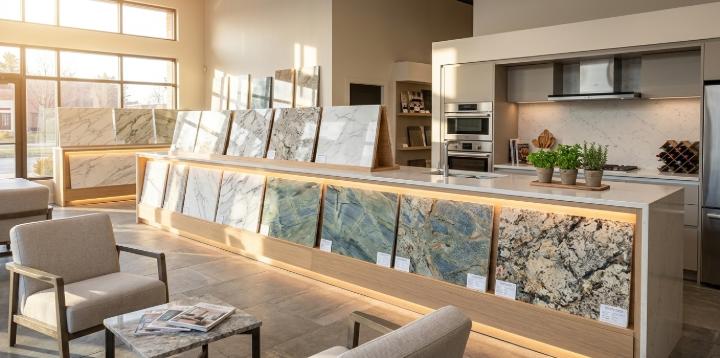
Finding the Right Natural Stone Slabs Through a Trusted Source
Why Your Supplier Matters as Much as the Stone
Purchasing from a reputable supplier ensures that what you evaluate is what gets installed. Reliable dealers maintain full slab inventory rather than relying on approximations from small sample cards.
This curated stone destination serves homeowners and design professionals across Northern Nevada and Northern California with a carefully selected inventory of premium stone. Whether you are located near Reno, Minden, Fernley, or Sacramento, in-person viewing appointments allow you to evaluate slabs under real showroom conditions before making any final decisions.
What to Look for When Selecting a Stone Partner
A reliable supplier offers far more than product. Prioritize these qualities when choosing where to buy:
- Full slab visibility and the ability to reserve a specific piece before purchase
- Staff who can explain quarry origin, finish options, and batch consistency
- Local showroom access to reduce lead time and freight risk
- Trade account options for contractors managing multiple projects
Design professionals handling larger installations can apply for a trade account to unlock preferred pricing and streamlined ordering. Knowing how to clean granite countertops and other stone surfaces is a topic that a knowledgeable supplier should be ready to address, ensuring your investment performs well long after installation day.
Conclusion
Natural stone slabs carry inherent variation that no manufactured surface can replicate. That variation is not a liability. When you understand what drives it and how to evaluate pieces with an informed eye, it becomes one of the most compelling reasons to choose stone over engineered alternatives.
A well-selected slab transforms a kitchen island, bathroom vanity, or set of countertops from functional surfaces into defining design features. The key takeaways from this guide are clear: understand your stone's mineral base, evaluate full slabs in person, test samples under your actual home lighting, and work with a supplier who values transparency.
Ready to explore what is available? Schedule a free design consultation and find a stone with a story worth living with every day.
Frequently Asked Questions
Why does marble color vary between slabs?
Natural minerals create unique tones and veining, so each slab shows its own shade and character.
Can two slabs with the same stone name look completely different?
Yes. Slabs sold under the same commercial name can come from different quarry pulls or entirely different regions. Mineral concentration varies across a quarry face, which produces noticeable differences between production batches.
Which natural stone shows the least color variation?
Absolute black granite and soapstone tend to show the least variation. Honed finishes on these stones deliver a consistent, muted tone that remains predictable across large surface areas.
Does sealing change the visible color of a stone slab?
Penetrating sealers generally do not alter visible color. Topical or enhancing sealers, however, can deepen tones and saturate the surface noticeably. Always test any sealer on a small area before full application.
How many slabs should I purchase to ensure color consistency?
For large projects, order all slabs from the same quarry lot at once. Ask your supplier to pull from the same production batch and number the slabs so the installer can sequence them for the most cohesive surface transition.