A natural stone slab backsplash is a continuous section of stone mounted directly behind a kitchen range, sink, or bathroom vanity to protect the wall while serving as a primary design feature. Unlike smaller segmented formats, a full slab reduces the number of grout lines across the surface, allowing the stone's natural veining to flow with greater continuity from edge to edge.
Homeowners and designers choose natural stone slab backsplashes for three core reasons: visual continuity, material authenticity, and long-term durability. Stone types commonly used for this application include marble, quartzite, travertine, and slate, each offering a distinct range of color, texture, and veining character that is difficult to replicate with manufactured alternatives. Exploring the full range of available natural stone slabs is a strong starting point for understanding what each material can bring to a space.
The right slab backsplash depends on several factors, including the existing countertop material, cabinet finish, lighting conditions, and the overall design direction of the space. Understanding how each stone type performs in a kitchen or bathroom environment, and how surface finish choices affect both appearance and maintenance, helps homeowners make a confident, lasting selection.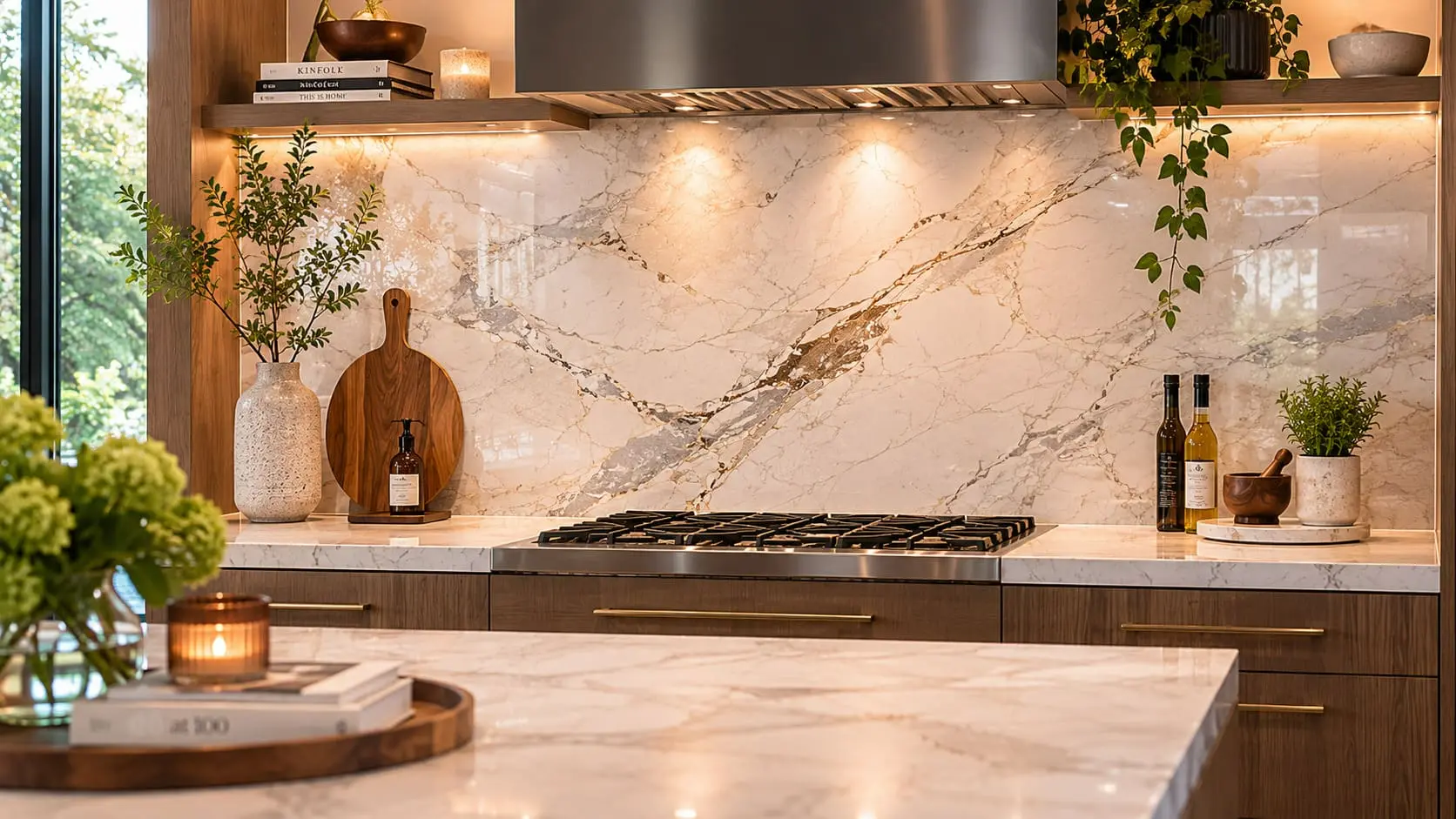
Why Natural Stone Draws Attention in Any Room
There is something almost magnetic about a well-executed stone wall. Unlike uniform surfaces that repeat the same pattern, natural stone carries its own character. The veining shifts, the tones vary, and the mineral detail catches light differently depending on the time of day. Each slab has natural variation in tone, veining, and movement, which means your backsplash carries a quality that is genuinely its own.
That individuality is what makes materials like marble, travertine, slate, and quartzite so compelling for backsplash applications. Beyond the visual appeal, stone is built for the demands of a kitchen or bathroom. When properly sealed and cared for by professionals, it can perform well over time with appropriate maintenance. With the right care routine, it holds its character in ways that many other materials do not.
The key lies in choosing the right stone and understanding how it will interact with everything around it. According to the Natural Stone Institute, proper sealing and routine maintenance are among the most important factors in preserving the appearance and integrity of natural stone surfaces over time.
Marble Backsplash: A Classic That Holds Its Place
Few materials earn the kind of sustained attention that marble does. Its veining moves across the surface with a quality that feels both structured and organic, creating a composition that reads as considered without being rigid.
A marble slab backsplash behind a kitchen range can serve as a strong focal point. Behind a bathroom vanity, it brings a refined quality to the space that feels deliberate and curated. Calacatta varieties offer higher-contrast veining against a lighter base, while Carrara presents softer movement and cooler undertones, making it well suited for spaces where subtlety is the goal.
Marble's versatility is part of what makes it such a dependable design choice. Paired with warm wood cabinetry, it reads as grounded and organic. Against lacquered white cabinets, it becomes clean and editorial. It adapts without losing its identity.
Marble is a softer stone and benefits from consistent professional sealing to help protect its surface. Guidance on an appropriate care routine can make a meaningful difference in how well it holds up over years of use.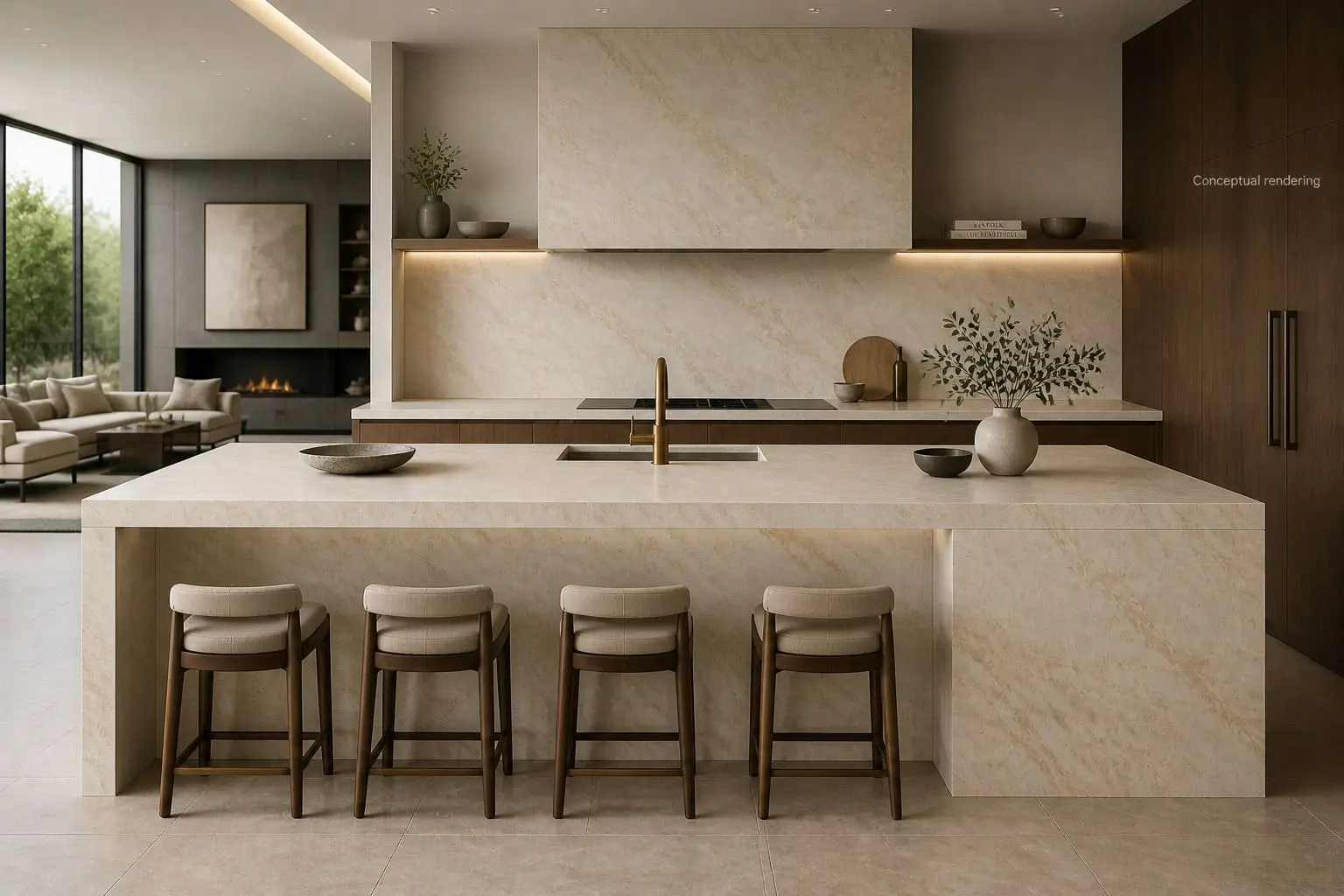
Travertine: Warmth Built Into the Stone Itself
Not every space calls for drama. Some rooms are better served by a material that brings ease and warmth into the environment, something that makes the space feel settled rather than showstopping. Travertine is that material.
Its naturally porous surface, with subtle voids and organic variation, gives it a handcrafted quality that resonates well in Mediterranean, Tuscan, and transitional interiors. The color range, spanning creamy ivories, warm beiges, honey golds, and soft rusts, works harmoniously alongside natural wood, terracotta flooring, and earthy countertop materials. It does not compete with surrounding elements. It supports them.
In a backsplash application, travertine slab is generally finished to a honed or polished surface, creating a result that is practical for a cooking environment without sacrificing the material's warmth. As HGTV notes, stone backsplashes serve both functional and decorative purposes, which makes thoughtful material selection an important part of any kitchen or bathroom project.
Slate and Quartzite: Character for Bolder Interiors
Some interiors are built around contrast and texture rather than softness and light. For spaces with dark cabinetry, industrial hardware, or strong material layering, slate and quartzite bring a level of visual weight that suits the direction.
Slate arrives in deep tones of charcoal, forest green, plum, and rust. Its naturally cleft surface adds dimension to a wall in a way that feels grounded and considered. It can work well alongside stainless steel appliances and matte black fixtures, giving contemporary kitchens a material-forward quality.
Quartzite is a metamorphic stone known for its hardness and visual movement. It is generally considered one of the more durable natural stone options, and its surface patterns range from quiet silver and white to more dramatic gold and blue-toned compositions. Each slab has natural variation in tone and veining, so the character of the finished result is shaped by the specific material selected. A quartzite slab backsplash can bring a level of presence to a modern kitchen that is difficult to achieve with other materials.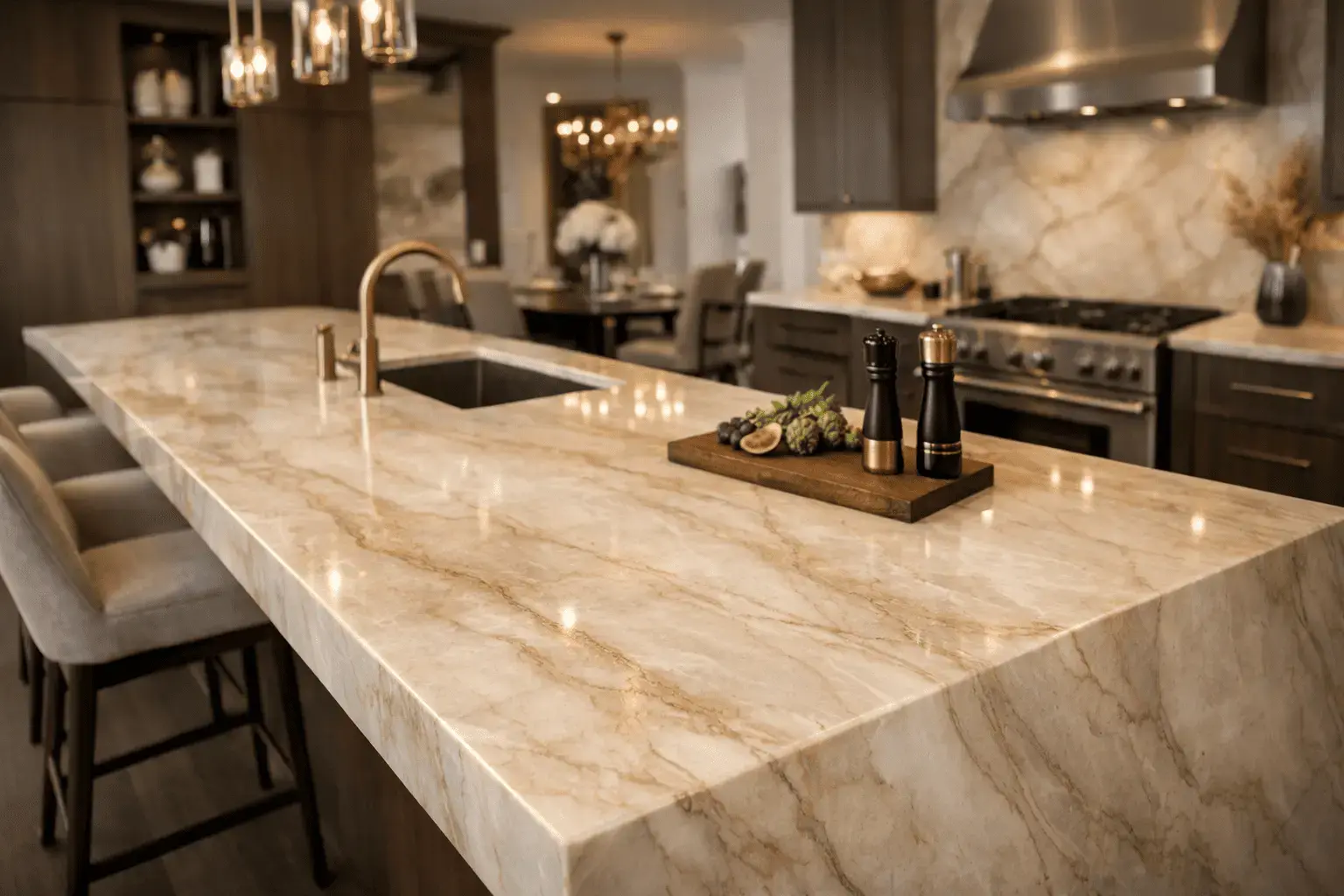
How Surface Finish Shapes the Final Result
Choosing a stone is only part of the process. The finish applied to it shapes how the material reads in the space, and the difference between finish options is more significant than many homeowners initially expect.
A polished finish deepens color, sharpens veining, and reflects light in a way that can make a room feel more open. It is a strong choice when the goal is richness and visual clarity.
A honed finish produces a matte surface that reads as quieter and more contemporary. It brings out the stone's natural warmth without the reflectivity of a polished result. Honed marble and honed travertine have become increasingly common in current interior design, partly because of how well they read in spaces with layered natural materials.
Leathered and brushed finishes occupy a middle position, offering a subtle sheen and a tactile surface quality that can be more forgiving in daily use. For a closer look at how each finish affects both appearance and long-term practicality, this guide to selecting the ideal stone finish offers helpful context worth reviewing before making a final decision.
Finish selection also affects how the stone responds to moisture, cleaning products, and daily contact, so discussing the practical implications with a design specialist beforehand is worthwhile.
Building a Cohesive Material Palette
Natural stone works best when considered alongside the other surfaces in the room rather than in isolation. The backsplash shares visual space with the countertop, cabinetry, flooring, hardware, and lighting, and each of those elements influences how the stone reads in context.
In kitchen settings, the countertop relationship tends to carry the most weight. A marble slab backsplash alongside a contrasting honed limestone counter can create layered depth without visual noise. Slate against a quartzite surface introduces a textural conversation that feels intentional. Travertine with warm wood cabinetry produces a palette that reads as cohesive and natural.
Grout selection, even in slab applications where grout lines are minimal, still plays a role. A tone-matching grout allows the stone's pattern to carry the wall. A contrasting choice draws attention to the geometry of the layout. Both are valid directions depending on the overall design intent. For trade professionals coordinating larger projects, a trade account can provide more streamlined access to slab selections and project support.
Why Slab Format Changes the Experience of a Space
One of the more significant advantages of using a slab format for a backsplash is the visual continuity it creates. A full slab behind a kitchen range allows the stone's veining to move across the wall as a single composition, without interruption from grout lines or seams.
This quality is especially relevant with stones that have strong, directional veining. With Calacatta marble or a bold quartzite variety, the veining pattern itself becomes the focal element of the wall. The result tends to read as more architectural than decorative, which suits a wide range of interior directions. For those working within a budget, checking the current overstock sale selection can surface strong slab options at accessible price points without compromising on material quality.
For spaces where a full slab is not practical, sections cut to fit specific dimensions can still deliver a cleaner, more open result than smaller segmented formats while working within the proportions and structure of the space.
The Role of Expert Guidance in the Selection Process
With stone type, finish, grout, slab orientation, and surrounding material compatibility all in play, the selection process involves more variables than most homeowners anticipate. Working through those decisions with an experienced design specialist helps ensure the final result reflects both the visual goals and the practical needs of the space.
Nova Tile and Stone offers free consultations that give clients access to professional guidance in a setting where the stone can be evaluated alongside real lighting and existing materials. The Reno showroom is one convenient option for seeing the slab collection in person, and those who prefer to start remotely can submit a slab quote request or schedule an appointment online to get the process started.
That kind of direct comparison tends to produce more confident decisions than browsing digital references alone.
Conclusion
A natural stone slab backsplash brings a level of visual continuity, material character, and long-term appeal that is difficult to achieve with other surface options. Whether the space calls for the refined movement of marble, the grounded warmth of travertine, or the bold presence of slate and quartzite, natural stone offers a range of directions worth exploring seriously.
The finish, the slab orientation, the surrounding palette, and the specific stone selected all shape the final result in meaningful ways. When those decisions are made with care and the right guidance, a stone slab backsplash can become one of the most defining features of a well-considered interior.
Frequently Asked Questions
Marble, travertine, quartzite, and slate are among the most frequently selected options. Each brings a distinct range of color, texture, and surface movement, and the right choice depends on the surrounding materials, lighting, and overall design direction of the space.
When professionally sealed and maintained with appropriate cleaning products, natural stone can perform well in kitchen settings over time. The specific stone type, sealing frequency, and daily care routine all play a role in how well the surface holds up.
Stone is well suited for bathroom applications, particularly around vanity areas and wet walls. When properly selected and sealed for the environment, it can handle moisture while adding a refined quality to the space.
Even where grout lines are minimal, color selection still matters. A tone-matching grout creates a more seamless visual flow across the wall, while a contrasting choice draws attention to the geometry and format of the layout.
A consultation gives you access to tile samples, the opportunity to view available full slabs in person, and professional design input tailored to your project. Seeing how different stones read in your actual space under real lighting conditions tends to support more informed and confident decisions than digital references alone.
Note: Some images on this page may be conceptual renderings created to illustrate design possibilities and may not depict actual installations.