What Is Natural Quartzite Stone and Why Homeowners Love It
If you want a surface that pairs striking visual depth with real-world durability, quartzite deserves your full attention. Natural Stone Slabs cut from quartzite deliver the veined elegance of marble alongside hardness that rivals granite, making them a top pick for high-traffic spaces.
In this guide you will learn which finishes suit each room, how quartzite stacks up against competing materials, and which design directions are trending right now. From dramatic kitchen focal points to serene spa-like bathrooms, quartzite adapts to virtually every aesthetic. Walk away with the knowledge needed to choose, specify, and care for this remarkable metamorphic stone.
The Lasting Advantages of Quartzite Countertops in Modern Homes
Quartzite forms when sandstone undergoes intense heat and pressure deep within the earth, producing a surface that is denser and harder than most natural stones. That geological journey translates directly into performance benefits homeowners appreciate for decades.
A Material Built for Real Life
Quartzite scores between 7 and 8 on the Mohs hardness scale, meaning everyday knives and cookware will not easily scratch the surface. Unlike softer calcite-based stones, quartzite resists etching from mild acids such as citrus juice and vinegar. That resilience makes it a practical upgrade over marble, especially in active households.
Quartzite also tolerates heat well, so brief contact with warm pots on a kitchen island will not leave permanent marks. When sealed correctly, the stone repels moisture effectively, keeping a bathroom vanity looking pristine for years. Understanding environmental and health product labels for natural stone can also help you select slabs with verified sustainability credentials.
At-a-glance benefits:
- Exceptional scratch resistance for busy countertops
- Low porosity reduces staining risk when properly sealed
- Heat tolerance suits both cooking and entertaining zones
- Unique veining patterns mean no two slabs are identical
- Longevity adds measurable value to a home's resale appeal
- Compatible with a wide range of cabinet and flooring finishes
Quartzite vs. Competing Surfaces
Feature | Quartzite | Marble | Quartz (Engineered) |
Hardness (Mohs) | 7-8 | 3-4 | 6-7 |
Heat Resistance | High | Moderate | Low-Moderate |
Etch Resistance | High | Low | High |
Natural Veining | Yes | Yes | Simulated |
Requires Sealing | Yes (annually) | Yes (frequently) | No |
Price Range | Mid to High | Mid to High | Mid |
Quartzite Design Ideas for Kitchens, Baths, and Beyond
The natural variation found in quartzite slabs makes each installation a one-of-a-kind statement. Whether you prefer a minimalist palette or a bold, expressive look, there is a quartzite variety to match.
Quartzite as a Kitchen Island Centerpiece
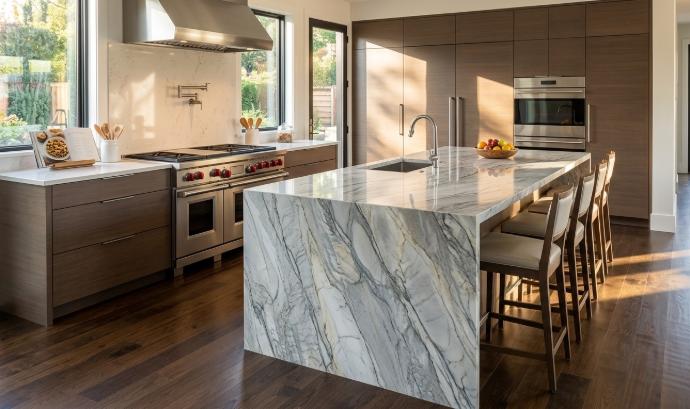
A waterfall-edge kitchen island in Super White quartzite instantly becomes the architectural anchor of an open-plan space. The crisp white background with soft grey veins complements both warm-toned wood cabinetry and sleek, handle-free contemporary kitchens.
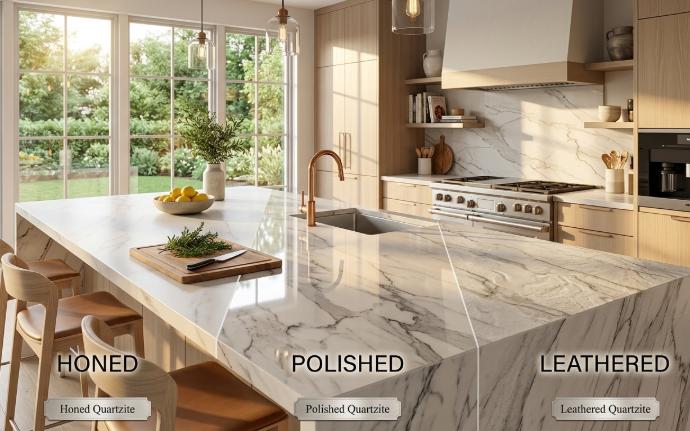
Leathered or honed finishes are especially popular on island surfaces because they soften the sheen and hide minor smudges during busy meal prep. Pairing a leathered quartzite island with polished perimeter countertops in the same stone creates a layered, designer-curated look. Explore the full range of available stone slabs to compare vein patterns before committing to a slab.
Quartzite Bathroom Vanity Statements
A bathroom vanity topped with Taj Mahal quartzite brings warm gold and cream tones that make even a compact powder room feel luxurious. The subtle movement in the stone pairs beautifully with matte black fixtures and warm-white wall tile.
For master bathroom suites, consider extending the quartzite from the vanity top onto a feature wall or shower niche surround. This continuous material story unifies the space and reduces visual noise. Keeping the stone properly sealed is straightforward; routine cleaning guidance from Bob Vila offers solid maintenance principles that apply equally to quartzite surfaces.
Finishes That Define the Mood
Quartzite is available in several surface treatments, each producing a distinct character:
- Polished: Reflective sheen that amplifies veining; ideal for formal dining areas and statement vanities.
- Honed: Matte, velvety appearance with a softer, more casual feel; popular for family kitchens.
- Leathered: Textured surface with slight sheen; conceals fingerprints and water spots effectively.
- Brushed: Lightly abraded finish that adds tactile depth; suits rustic or transitional interiors.
Pros and Cons of Natural Quartzite
Pros | Cons |
Unmatched natural beauty | Requires annual sealing |
Superior hardness and durability | Higher cost than engineered surfaces |
Each slab is genuinely unique | Limited availability of some exotic colours |
Heat and scratch resistant | Heavier than quartz panels; needs structural support |
Eco-friendly, natural material | Professional installation strongly recommended |
How to Select and Specify Quartzite: A Step-by-Step Process
Choosing the right slab involves more than picking a colour online. Follow these five steps to make a confident, informed decision.
- Define the space and use case. Consider traffic level, exposure to moisture, and lighting conditions before browsing options.
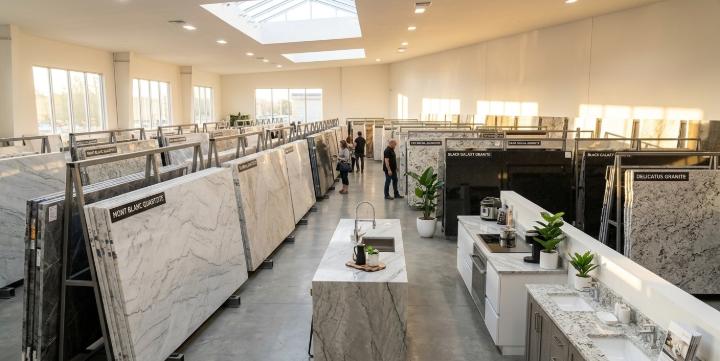
- Visit a showroom and view full slabs. Small samples rarely capture the full movement and colour range; seeing the complete slab is essential.
- Request a finish sample for your shortlist. Touch and observe honed, polished, and leathered versions of your top choices under the room's actual lighting.
- Confirm slab thickness and edge profile options. Standard thicknesses are 2 cm and 3 cm; the edge profile significantly affects the overall aesthetic.
- Schedule a professional template and fabrication appointment. Precise templating ensures seams align with the stone's natural veining pattern for a seamless result.
Sourcing Premium Natural Stone Slabs With Confidence
Finding a supplier that stocks full-slab inventory and provides knowledgeable guidance makes a significant difference in the final outcome. This trusted stone destination offers curated selections of quartzite and other premium stones for both residential and commercial projects.
Trade professionals can streamline their procurement process by setting up a dedicated trade account, which provides access to preferential pricing, project support, and priority inventory updates. Homeowners and designers alike benefit from the ability to browse in person at multiple locations.
If you are based in northern Nevada, the Reno showroom and Minden location both carry extensive slab displays. Clients closer to California's capital can visit the Sacramento showroom for hands-on slab selection with expert assistance. You can also visit Fernley showroom, Lyon County, and the surrounding Northern Nevada communities. You can also discover locally available stone options through the shop local directory, which makes it easy to find nearby inventory without extensive travel.
The Natural Stone Institute event calendar is another excellent resource for staying current with industry trends, continuing education, and trade events that connect fabricators and designers.
Conclusion
Quartzite stands out as one of the most versatile and rewarding choices in the world of natural stone slabs. Its combination of visual richness, structural integrity, and adaptable finishes satisfies both practical requirements and aesthetic ambitions.
Whether the goal is a commanding kitchen island, a refined bathroom vanity, or flowing countertops throughout a full home renovation, quartzite delivers results that age gracefully. The investment in a genuine natural stone surface consistently outperforms synthetic alternatives when measured across a full property lifetime.
Take the next step by browsing curated slab options, booking a showroom visit, or connecting with a stone specialist who can guide your selection from concept to completed installation.
Frequently Asked Questions
Is quartzite harder than granite?
Yes. Quartzite typically scores 7 to 8 on the Mohs scale compared to granite's 6 to 7, making quartzite slightly more resistant to surface scratching.
Does quartzite require sealing? Yes.
Quartzite is a porous natural stone and should be sealed upon installation and resealed approximately once per year, depending on usage and the specific stone variety.
Can quartzite be used in a bathroom shower?
Quartzite can be used in shower surrounds when properly sealed and maintained. Its density and low porosity make it more suitable for wet environments than softer stone options.
What is the difference between quartzite and quartz?
Quartzite is a natural metamorphic rock mined from the earth. Quartz countertops are engineered products composed of ground stone bound with resin. Quartzite offers authentic natural veining; engineered quartz provides more consistent patterning.
How do I maintain quartzite countertops day to day?
Wipe surfaces with a soft cloth and a pH-neutral cleaner. Avoid abrasive scrubbing pads and harsh chemical cleaners. Reseal annually to maintain stain resistance and protect the stone's surface integrity.