Mont Blanc Quartzite is a natural quartzite stone formed through the metamorphic transformation of quartz-rich sandstone, producing one of the hardest and most visually distinctive countertop materials available. It is characterized by white and gray tones with intricate, flowing veining, and because each slab forms under unique geological conditions, no two countertops are identical. Mont Blanc Quartzite resists scratches, heat, and stains, making it a high-performance surface for both kitchen countertops and bathroom vanity tops. Compared to marble, it is harder and requires less maintenance. Compared to engineered quartz, it offers natural variation and depth that manufactured products cannot replicate.
Homeowners choose Mont Blanc Quartzite for its combination of durability, timeless aesthetics, versatility across interior design styles, and long-term property value. To see how each piece varies in tone and veining, explore our handpicked natural stone slab collection available for viewing, and for more information on responsible sourcing and safety standards, read the guide to understanding environmental and health product labels for natural stone.
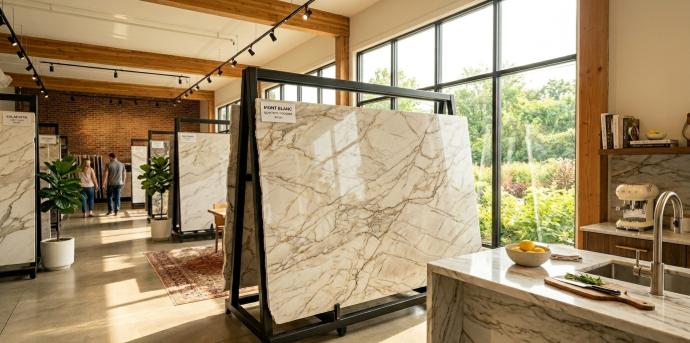
What Is Mont Blanc Quartzite?
Mont Blanc Quartzite is a natural stone prized for its strength and visual appeal. It forms through the metamorphic transformation of quartz-rich sandstone over thousands of years, producing a stone that resists scratches, heat, and stains with exceptional consistency. Intricate veining, vibrant color movement, and natural variation give each slab a distinct character, making every countertop entirely its own.
For additional industry insights and educational resources, you can refer to the Natural Stone Institute’s events and educational calendar.
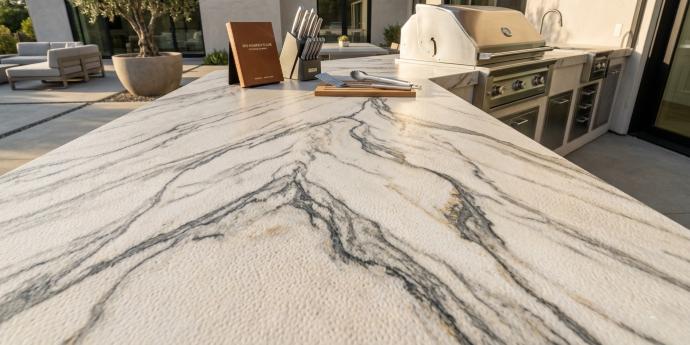
Advantages of Mont Blanc Quartzite
Durability. Mont Blanc Quartzite ranks among the hardest natural stone countertop materials available. It handles the demands of daily kitchen and bathroom use without losing its surface integrity, standing up to scratches, heat exposure, and staining.
Aesthetics. White and gray tones with delicate, flowing veining give Mont Blanc Quartzite a sophisticated presence. These countertops function as visual anchors in any space, bringing a refined, artistic quality to both kitchens and bathrooms.
Versatility. Mont Blanc Quartzite adapts to a wide range of interior styles. It pairs equally well with modern, minimalist design and traditional, classic spaces, making it one of the more flexible natural stone options on the market. Choosing the right surface texture can further enhance its adaptability, so you can review the guide to selecting the ideal stone finish for your space.
Longevity. Beyond its immediate visual impact, Mont Blanc Quartzite is a long-term investment. Its enduring appeal keeps countertops looking intentional and polished for years without falling out of style. To experience the material in person and compare slabs, we recommend visiting our local showroom to explore available stone options.
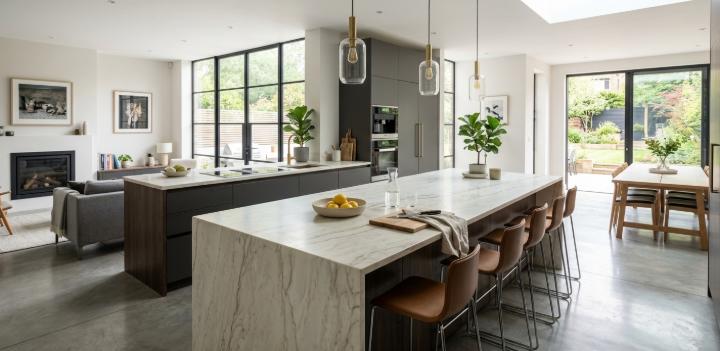
Applications for Mont Blanc Quartzite Countertops
Kitchen Countertops. Mont Blanc Quartzite brings immediate impact to kitchen spaces. Its bold veining and distinctive coloration turn countertop surfaces into focal points that leave a strong impression.
Bathroom Vanity Tops. The stone's luxurious appearance translates naturally into bathroom environments. Its moisture resistance and durability make it a practical and elegant solution for vanity tops that need to perform as well as they look. Professionals sourcing materials for multiple projects can also apply for a trade account to access exclusive benefits and streamlined ordering.
Care and Maintenance
Daily Cleaning. Wipe down Mont Blanc Quartzite countertops regularly using a soft cloth and a mild, non-abrasive cleaner. Acidic or harsh cleaning products can damage the surface and should be avoided entirely.
Sealing. Seal the stone at installation and reseal periodically to guard against stains and moisture penetration. Consult a stone professional to determine the appropriate sealing product and schedule for your specific slab.
Preventing Damage. Despite its hardness, Mont Blanc Quartzite benefits from basic precautions. Use a cutting board rather than cutting directly on the surface, avoid placing hot cookware directly on the stone, and clean up spills promptly to reduce staining risk.
Mont Blanc Quartzite vs. Other Countertop Materials
Comparing countertop materials helps clarify which option best fits your priorities. Mont Blanc Quartzite matches granite in durability while offering a distinct aesthetic character of its own. Marble brings elegance but stains more readily and demands more intensive upkeep. Engineered quartz provides consistency in color and pattern but lacks the natural variation and depth that define a stone like Mont Blanc Quartzite.
Understanding these differences allows homeowners to choose the material that aligns with both their lifestyle and design goals. Once you’ve identified the right material, you can request a personalized slab quote based on your preferred stone and project details.
Conclusion
Mont Blanc Quartzite is more than a countertop material. It is a long-term design decision that brings natural beauty, proven durability, and lasting value to any kitchen or bathroom. Its resistance to scratches, heat, and stains makes it a practical choice for active households, while its distinctive veining and white-and-gray palette give it a visual presence that holds up across interior styles and design trends.
Whether you are selecting a surface for a kitchen renovation or a bathroom refresh, Mont Blanc Quartzite delivers a combination of performance and elegance that few natural stones can match. Invest in a slab that works as hard as it looks good by choosing Nova Tile and Stone, your trusted tile and stone supplier for premium natural stone selections and schedule an appointment to view available slabs in person.
Frequently Asked Questions
Is Mont Blanc Quartzite harder than marble?
Yes. Mont Blanc Quartzite is significantly harder than marble. It forms through metamorphic pressure applied to quartz-rich sandstone, resulting in a dense, tightly bonded stone that resists scratching and surface wear far more effectively than marble. Marble, by contrast, is composed primarily of calcite, which is softer and more vulnerable to etching from acidic substances.
Does Mont Blanc Quartzite require sealing?
Yes, sealing is recommended. Although Mont Blanc Quartzite is denser and less porous than marble, it is still a natural stone and benefits from periodic sealing to protect against staining and moisture absorption. Seal the surface at installation and reseal as needed based on use and the recommendations of your stone professional.
Can Mont Blanc Quartzite handle heat from pots and pans?
Mont Blanc Quartzite is heat-resistant by nature, but direct contact with extremely hot cookware is still not recommended. Prolonged or repeated heat exposure can stress the stone or affect the sealant layer over time. Using trivets or heat pads is a simple precaution that preserves both the surface and the seal.
How does Mont Blanc Quartzite compare to engineered quartz?
The key difference lies in origin and appearance. Mont Blanc Quartzite is a natural stone, meaning no two slabs are identical. Its veining, color depth, and surface movement are products of geological processes that cannot be replicated. Engineered quartz is a manufactured product designed for consistency and uniformity, which some homeowners prefer but which lacks the organic variation that defines natural quartzite.
Is Mont Blanc Quartzite a good investment for resale value?
Natural stone countertops consistently rank among the features that appeal to homebuyers, and Mont Blanc Quartzite is no exception. Its durability means it holds up well over time without needing replacement, and its timeless aesthetic does not date the way trend-driven finishes can. For homeowners considering long-term property value, Mont Blanc Quartzite is a material that supports both livability and market appeal.