Polished, honed, and leathered are the three primary marble slab finishes, and each one produces a distinct result in terms of sheen, texture, porosity, and daily performance. Polished marble has a high-gloss, reflective surface. Honed marble has a smooth, flat, matte appearance. Leathered marble has a tactile, dimpled texture with a low sheen. The finish applied during fabrication shapes not only how the stone looks but also how it responds to everyday use, how often it needs sealing, and how visible wear and etching become over time. Exploring our natural stone slab collection is a practical first step before committing to a finish.
What a Marble Slab Finish Refers To
A marble slab finish describes the surface treatment applied to the stone after it has been cut and fabricated. The treatment changes the physical character of the stone without altering the material itself. Two slabs from the same block can look and behave quite differently depending on which finish they receive. It affects how light interacts with the stone, how open the pores are, and how resistant the slab is to everyday wear, staining, and etching. According to Use Natural Stone, selecting the right finish is as important as choosing the stone itself, as it directly influences both functional performance and appearance over time.
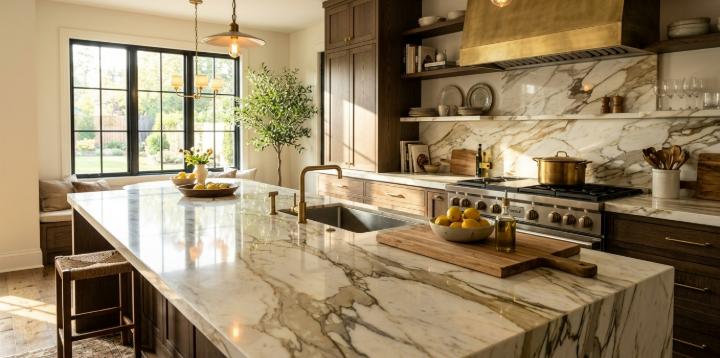
Polished Marble: Reflective and Formal
Polished marble undergoes an extended grinding process using progressively finer abrasives until the stone reaches a high-gloss, mirror-like sheen. The result amplifies the depth of the veining and produces a smooth, cool surface that is closely associated with formal, high-contrast interior spaces.
From a performance standpoint, the polishing process partially closes the stone's pores, which can make it marginally easier to seal. However, the high gloss makes etching considerably more visible. Marble is composed of calcium carbonate, which reacts to acidic substances such as citrus juice, wine, and vinegar. When this reaction occurs, the resulting dull spots contrast sharply against the bright finish. Water marks and fingerprints also tend to show more clearly on a reflective stone.
This treatment tends to perform best in lower-traffic areas such as bathroom vanities, fireplace surrounds, and decorative accent walls, where the stone is less likely to encounter frequent contact with acidic substances. To see polished marble options up close, our Reno showroom carries a wide selection of natural stone slabs available in multiple finishes.
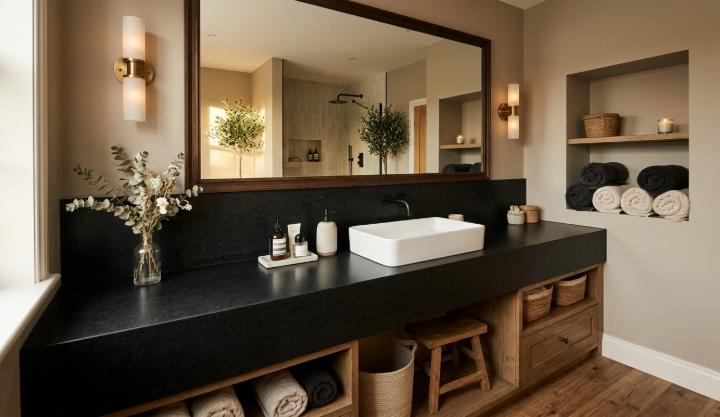
Honed Marble: Matte and Understated
Honed marble is produced by stopping the grinding process before the stone reaches a glossy sheen. The result is a smooth, flat, matte appearance rather than a reflective one. Veining remains visible, though the overall look reads as quieter and more diffused. This treatment is a consistent choice in contemporary and transitional interiors for its calm, refined character.
In terms of performance, honed marble is more porous than polished because the stone's pores remain more open. This means the slab absorbs liquids more readily and benefits from more frequent sealing. That said, the matte character conceals etch marks far better than a polished finish. Because there is no high sheen to contrast against, acid damage is considerably less visible. Scratches and light scuffs are also harder to detect, which makes honed marble a more practical option for active kitchen settings.
For care guidance specific to marble, Bob Vila's marble countertop cleaning guide offers practical advice on maintaining both honed and polished stone over the long term. Those interested in viewing honed slab options in person are welcome to visit our Minden showroom, where our team can assist with material selection.
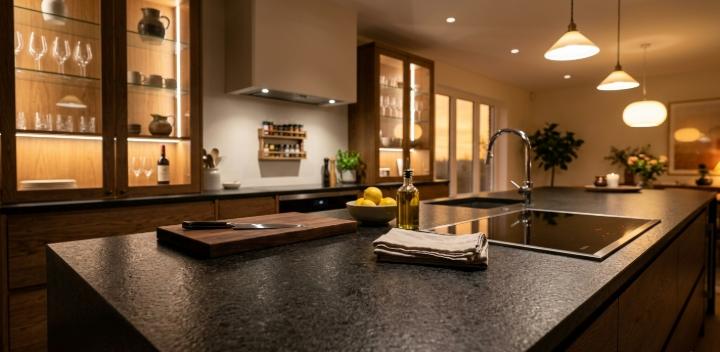
Leathered Marble: Textured and Tactile
Leathered marble begins as a honed slab that is then processed with diamond-tipped brushes of varying grit levels. The brushes work across the stone to create subtle dimples and texture, producing a slightly bumpy, tactile result that carries a low sheen and a distinctly organic quality. This adds physical depth and dimension that neither polished nor honed treatments achieve.
This treatment tends to bring out warmer, earthier tones within the stone. The texture creates visual movement that reads as both natural and design-forward, making it well suited to spaces where surface character is part of the overall aesthetic intention. It works well across a range of applications, from kitchen islands and bathroom vanities to fireplace surrounds and feature walls.
For everyday use, leathered marble is among the most forgiving of the three options. The texture naturally conceals fingerprints, water spots, and minor wear because the eye reads the overall dimension rather than individual marks. Cleaning requires slightly more attention since the dimpled character can collect fine debris, but a soft brush and a pH-neutral stone cleaner handle routine upkeep effectively. Because the leathering process leaves the pores open, consistent sealing remains equally important. The Natural Stone Institute's stone care resource provides guidance on sealing and maintaining all natural stone finishes, including leathered treatments.
Choosing the Right Finish for Your Space
Each treatment serves a distinct set of priorities. Polished marble suits formal, lower-traffic spaces where visual drama takes center stage. Honed marble balances quiet elegance with practical tolerance in areas that see regular use. Leathered marble prioritizes tactile warmth and low-visibility wear in active, design-conscious spaces.
Finish availability varies by slab, and not every marble variety is offered in all three treatments. Seeing and feeling the difference in person on actual stone gives a much clearer sense of how each option will read in your space than photographs alone. Our team at the Sacramento and Fernley locations can walk you through current inventory and available treatments. You can also request a slab quote online to get started before visiting in person.
A free design consultation is also available for anyone who wants personalized guidance. Visit our consultation booking page to schedule a session with one of our stone specialists.
Conclusion
The finish on a marble slab shapes far more than its initial appearance. It influences texture, porosity, maintenance frequency, and how the stone ages with use. Polished marble offers a luminous, formal quality suited to spaces with lighter daily demands. Honed marble brings matte sophistication with better tolerance for everyday activity. Leathered marble delivers tactile depth and natural warmth with strong resistance to visible wear. Nova Tile and Stone carries marble slabs across multiple finish options, and our team is ready to help you find the right material for your space and lifestyle.
Frequently Asked Questions
Which marble finish is the most low-maintenance for a kitchen countertop?
Leathered marble tends to be the most forgiving for active kitchen use because its textured character naturally hides fingerprints, water marks, and everyday minor wear. Honed marble is a close second, as the matte treatment makes acid etching far less visible than it would appear on a polished stone. Polished marble shows imperfections most clearly and requires more consistent upkeep to maintain its appearance in a high-use environment.
Does the finish type affect how often marble needs to be resealed?
Yes, it does. Honed and leathered marble have more open pores than polished marble, which means they absorb moisture more readily. As a result, they generally benefit from more frequent sealing. Polished marble, with its partially closed pores, can hold a protective seal for longer intervals, though all marble finishes require regular resealing based on how heavily the stone is used.
Can an existing marble finish be changed after the slab is already in place?
In some circumstances, a stone restoration professional can alter an existing treatment. A polished surface can be ground down to a honed finish, and a honed slab may be able to receive a leathered treatment. Attempting to convert a matte or leathered stone back to a high-gloss polished appearance requires specialized equipment and may not fully replicate the original result.
Is honed marble a practical option for bathroom vanities?
Honed marble works well in bathroom vanity applications. Bathroom surfaces tend to encounter far fewer acidic substances than kitchen countertops, which reduces the risk of etching. The matte treatment also complements a wide range of bathroom design styles, from contemporary to transitional. Regular sealing is still recommended to protect the stone from moisture absorption in wet environments.
What is the difference between honed and leathered marble in terms of feel?
Honed marble has a smooth, flat surface with a satiny feel, similar to fine fabric. Leathered marble has a slightly dimpled, bumpy quality created by running diamond-tipped brushes across the honed stone, giving it a more tactile, dimensional character. Honed treatments tend to read as sleek and refined, while leathered options feel warmer and more organic. Both are matte rather than glossy, but the physical texture sets them apart noticeably.