The two main types of marble countertop cuts are vein cut and cross cut. Vein cut marble is sliced parallel to the stone's natural bedding plane, producing linear, flowing veins with a structured, architectural look. Cross cut marble is sliced perpendicular to the bedding plane, creating the iconic swirling, cloud-like patterns most people associate with classic marble. Both cuts offer the same durability; the difference is entirely visual.
Choosing between the two comes down to your design goals. Vein cut suits contemporary and transitional interiors, while cross cut delivers the bold, expressive drama of old-world luxury. Whether you're renovating a kitchen or bathroom, understanding this distinction helps you select the right marble slab for your space.
Vein Cut Marble
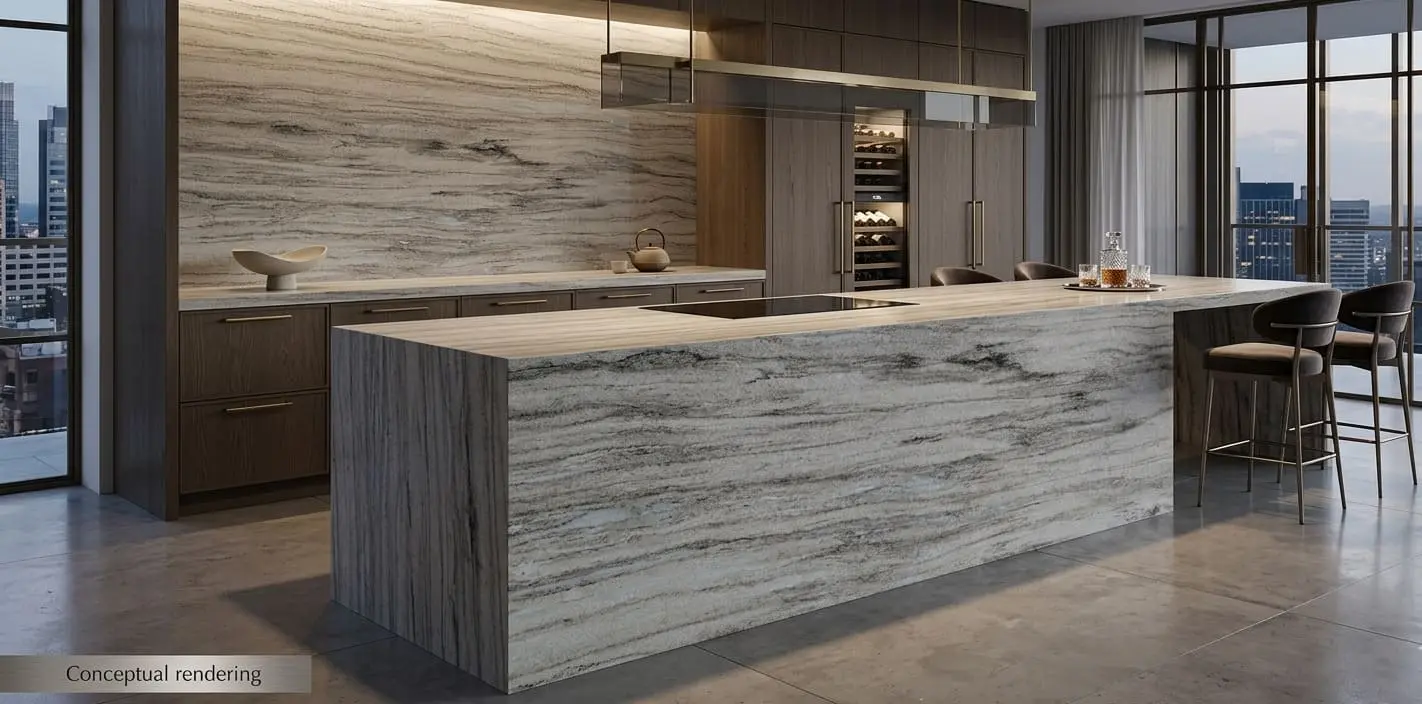
Vein cut, sometimes called "against the vein," refers to slicing the slab parallel to the stone's natural bedding plane. The result is mineral veins that run vertically or along the length of the slab, highlighting compressed layers of sediment in varying shades of similar tones rather than contrasting colors. The overall effect is structured, linear, and unmistakably architectural.
This cutting style suits contemporary and transitional interiors particularly well, where clean lines and a sense of deliberate movement define the aesthetic. Because the veining flows in a consistent direction, vein cut marble is also a go-to option for bookmatching, a technique where two mirrored slabs are displayed side by side, much like the open pages of a book. Applied to a waterfall island or a floor-to-ceiling backsplash, bookmatched vein cut marble delivers a breathtaking, high-impact look.
It's worth noting that vein cut marble varies widely in appearance. Fantasy Brown Marble is one standout example, an Indian import featuring apricot, pewter, and chestnut tones with flowing, near-parallel lines that give it an organic yet dynamic character.
To learn more about sustainability and transparency in natural stone materials, explore the Natural Stone Institute’s guide to environmental and health product labels for natural stone and review the official natural stone care and maintenance recommendations from the Natural Stone Institute.
Cross Cut Marble
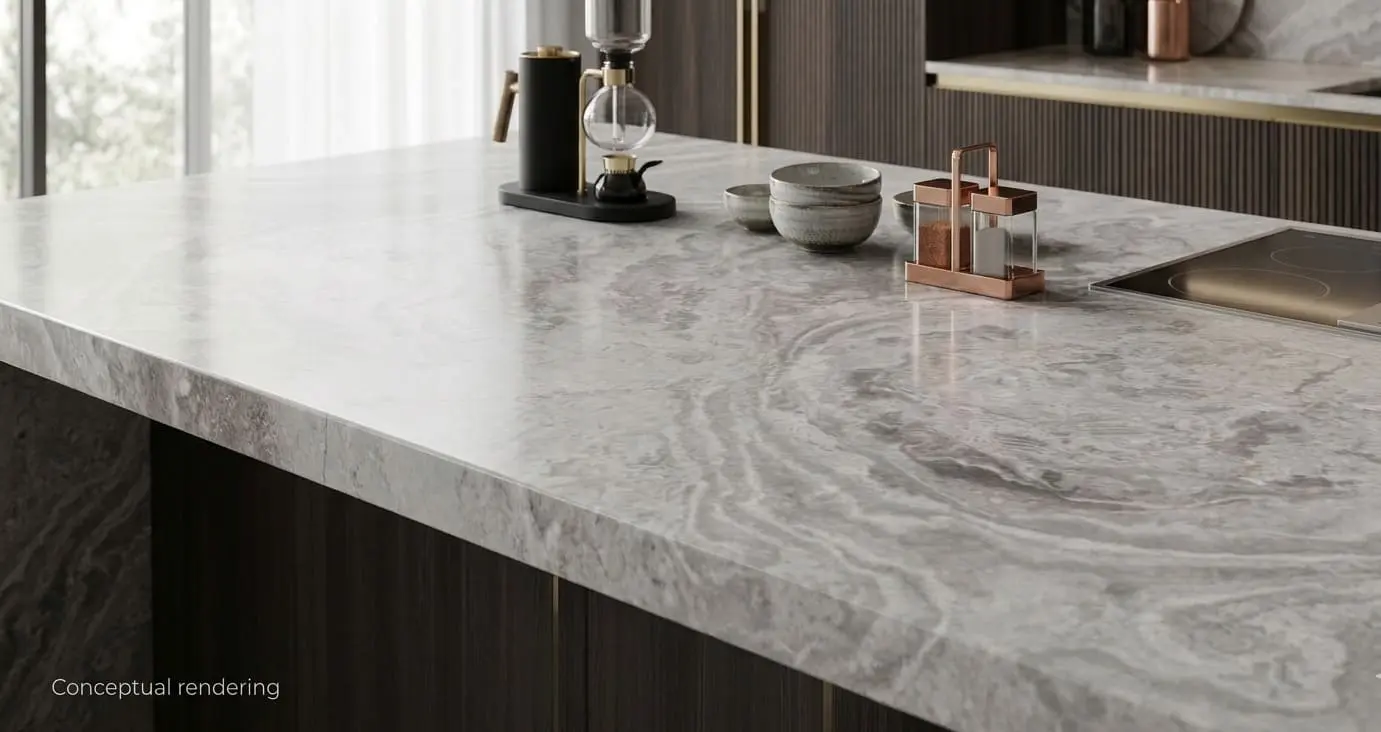
Cross cut, or "with the vein," is achieved by slicing the block perpendicular to its natural bedding plane, essentially at a 90-degree angle from a vein cut. This cross-sectional approach is what produces marble's signature swirling, cloud-like patterns, blending lighter and darker tones throughout a single slab.
Of the two cuts, cross cut is arguably the more iconic and enduring, conjuring images of classical European architecture and old-world opulence. Its expressive, almost painterly movement makes it an automatic focal point in any room, complementing everything from ornate traditional cabinetry to clean contemporary fixtures. And since no two cross cut slabs are ever identical, every countertop is inherently one of a kind.
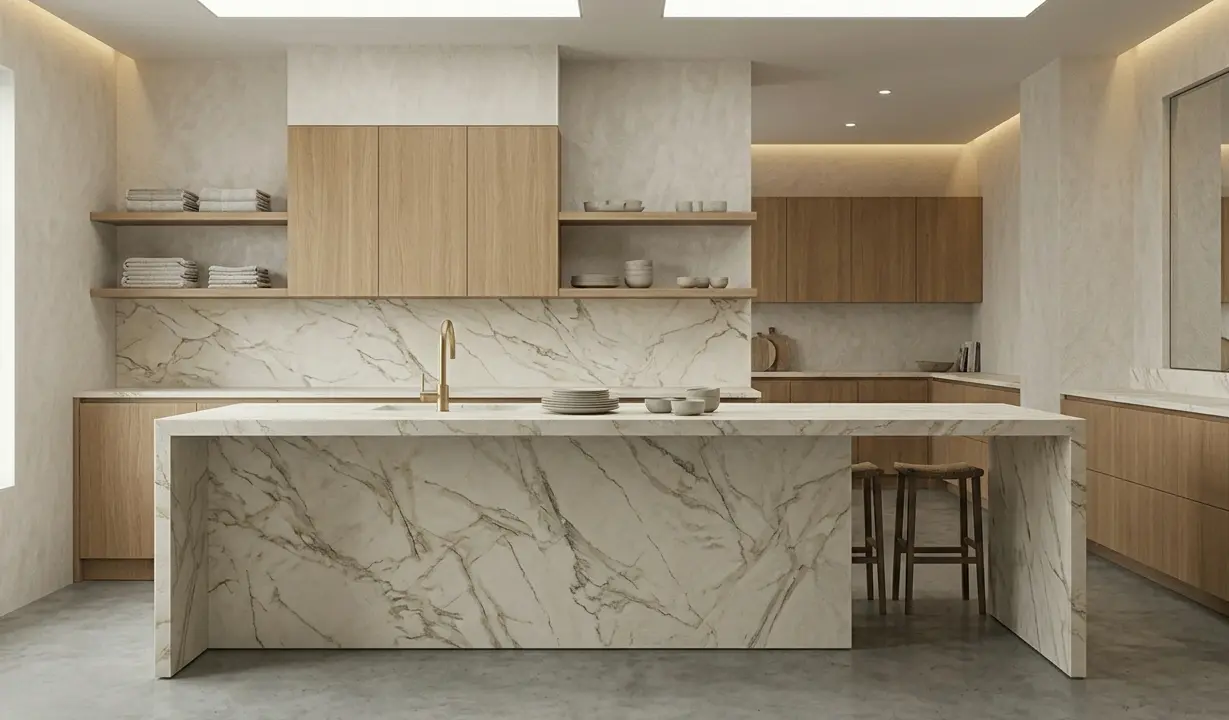
When most people picture marble, they're envisioning the dramatic swirls of a cross cut slab, like classic Calacatta marble. Super White Marble, a Brazilian stone, showcases an alabaster white base with soft dove gray veining, while Calacatta Vagli Marble pairs the same alabaster whites with finer, more delicate gray veins. Both display a mosaic-like quality with rich, high variation across the surface.
To explore similar materials in person, browse our locally available collection of premium marble and natural stone slabs or schedule a personalized showroom appointment with our stone specialists for expert design guidance.
Conclusion
Selecting the right marble slab for your countertop goes beyond choosing a color palette; the cut of the stone plays an equally powerful role in defining the final look and feel of your space. Vein cut marble brings a refined, architectural quality with its linear, flowing layers, making it ideal for modern and transitional interiors that benefit from a sense of structure and movement. Cross cut marble, on the other hand, delivers the bold, swirling drama that marble has been celebrated for throughout history, making every countertop a truly unique work of art.
Neither cut is superior to the other; it simply comes down to your personal style and the story you want your space to tell. Whether you're drawn to the clean elegance of vein cut or the expressive character of cross cut, both options offer the same enduring durability and timeless beauty that make marble a worthwhile investment. Visit Nova Tile and Stone's showroom to explore both cuts firsthand and let the slabs speak for themselves.
Frequently Asked Questions
What is the main difference between vein cut and cross cut marble?
The difference lies in how the block of stone is sliced. Vein cut marble is cut parallel to the natural bedding plane, producing linear, flowing layers of veining. Cross cut marble is sliced perpendicular to that same plane, which creates the swirling, cloud-like patterns most commonly associated with classic marble. Both come from the same stone; it's purely the direction of the cut that changes the appearance.
Does the cut of marble affect its durability or performance?
No. Both vein cut and cross cut marble offer the same level of durability and structural integrity. The cut only influences the visual pattern and aesthetic character of the slab, not its hardness, resistance, or overall performance as a countertop surface. For design professionals and contractors sourcing premium materials, you can apply for a trade account to gain access to exclusive natural stone selections and industry pricing.
Which marble cut is better for a contemporary kitchen design?
Vein cut marble tends to be the preferred choice for contemporary and transitional kitchens. Its structured, linear veining aligns well with clean-lined cabinetry and minimalist design schemes. It also lends itself beautifully to bookmatching, which can create a striking, symmetrical feature on a waterfall island or full-height backsplash.
What is bookmatching, and which cut works best for it?
Bookmatching is a technique where two slabs are positioned side by side to create a perfectly mirrored pattern, much like the open pages of a book. Vein cut marble is the most popular choice for this application because its consistent, directional veining makes the mirrored effect especially dramatic and visually cohesive. It's a particularly stunning choice for waterfall islands and statement backsplashes.
Can I see both vein cut and cross cut marble options before making a decision?
Absolutely. Nova Tile and Stone's showroom carries a wide selection of both vein cut and cross cut marble slabs, allowing you to compare the two styles side by side in person. Seeing the actual slabs, rather than photos, gives you a much more accurate sense of how the pattern, color variation, and overall character of each cut will look in your home.
Note: Some images on this page may be conceptual renderings created to illustrate design possibilities and may not depict actual installations.