Engineered stone slabs offer stunning beauty and exceptional durability for modern homes. These manufactured surfaces combine natural quartz with resins, creating countertops that resist stains and scratches. However, proper maintenance ensures your investment remains flawless for decades. Understanding correct care techniques protects your surfaces from damage while preserving their elegant appearance.
Many homeowners choose engineered stone for kitchen islands, bathroom vanities, and countertops without realizing maintenance requirements differ from natural stone. Simple daily habits prevent costly repairs and maintain pristine surfaces. This guide reveals professional maintenance strategies that preserve beauty, enhance longevity, and protect your significant investment in quality surfaces.
Discover effective cleaning methods, stain prevention techniques, and protective measures that keep engineered stone looking showroom-fresh. Learn which products damage surfaces and which enhance durability for lasting performance.
Why Proper Maintenance Matters For Your Investment
Quality engineered stone represents a significant financial commitment deserving proper care. Unlike traditional materials, these surfaces require specific maintenance approaches that preserve their unique composition. Incorrect cleaning methods can dull finishes, create etching, or compromise protective sealants that maintain surface integrity.
Proper maintenance extends surface lifespan by preventing permanent damage from common household substances. Engineered stone countertops in kitchens face daily exposure to acids, oils, and cleaning chemicals. Your bathroom vanity encounters cosmetics, hair products, and moisture that can gradually deteriorate surfaces without appropriate protection.
Regular maintenance delivers multiple benefits for homeowners:
- Preserves resale value by maintaining like-new appearance
- Prevents costly repairs from avoidable surface damage
- Maintains hygienic surfaces resistant to bacteria growth
- Protects against staining from spills and splashes
- Ensures consistent color and finish throughout surface life
- Reduces replacement costs through extended durability
Professional installation from experienced slab installer ensures proper substrate preparation that supports long-term performance. Quality materials combined with correct maintenance create surfaces that withstand decades of daily use while maintaining their original beauty.
Daily Care Practices For Engineered Stone Surfaces
Kitchen Island and Countertop Maintenance
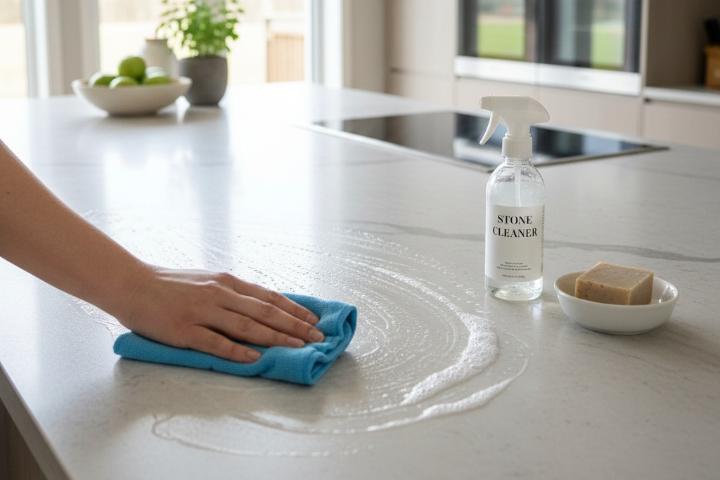
Daily cleaning requires only mild dish soap and warm water for most messes. Soft microfiber cloths prevent scratches while effectively removing debris and residue. Avoid abrasive scrubbers or harsh chemicals that damage protective surface coatings permanently.
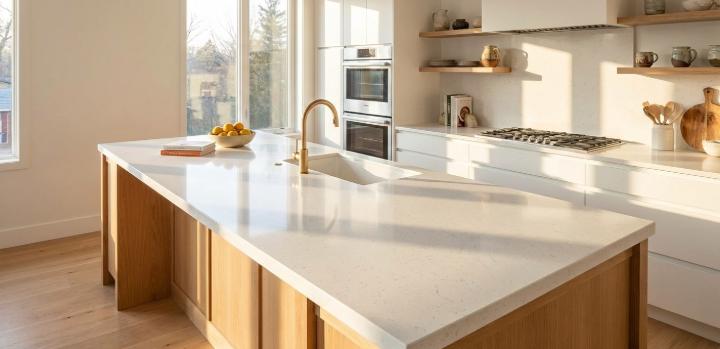
For your kitchen island, wipe spills immediately to prevent staining from acidic substances. Coffee, wine, and citrus juices can discolor surfaces if left unattended for extended periods. Use cutting boards and trivets consistently to protect against scratches and heat damage.
Natural stone slabs and engineered options both benefit from coasters under glasses. This simple habit prevents water rings and protects finishes from condensation damage. Address grease splatters promptly using gentle degreasing solutions specifically formulated for stone surfaces.
Bathroom Vanity Surface Protection
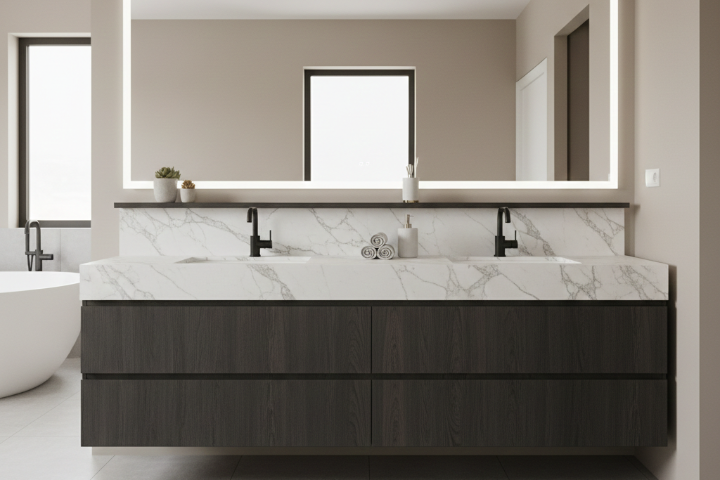
Bathroom environments present unique challenges including humidity, cosmetics, and personal care products. Clean bathroom vanity surfaces daily with pH-neutral cleaners designed for engineered stone. Harsh bathroom cleaners containing bleach or ammonia can dull finishes over time.
Keep makeup, nail polish, and hair dyes away from direct counter contact. These products contain chemicals that permanently stain or etch engineered surfaces. Store them on trays or organizers that contain spills and protect surrounding areas.
Ventilation reduces moisture buildup that can compromise surface integrity. Exhaust fans during and after showers prevent humidity-related issues. Dry surfaces after splashing to maintain optimal condition and prevent water spot formation.
Professional-Grade Maintenance Strategies
Weekly Deep Cleaning Protocol
Weekly maintenance involves deeper cleaning that removes accumulated residue and maintains surface brilliance. Mix warm water with a few drops of mild dish soap. Spray surfaces evenly and wipe with clean microfiber cloths using circular motions.
For stubborn residue, create a paste using baking soda and water. Apply gently with soft cloths, let sit briefly, then rinse thoroughly. This natural solution removes buildup without damaging protective finishes or altering surface appearance.
Inspect surfaces during weekly cleaning for chips, cracks, or developing issues. Early detection prevents minor problems from becoming expensive repairs. Check seams and edges where damage typically begins manifesting itself.
Monthly Inspection and Protection
Monthly inspections identify potential problems before they require professional intervention. Examine high-traffic areas around sinks, cooktops, and frequently used workspace sections. Look for dulling, discoloration, or surface texture changes indicating damage.
Test water beading to assess surface protection levels. Water should form beads on properly maintained engineered stone. Flat water spread indicates diminished protection requiring professional assessment and potential resealing.
Review maintenance product effectiveness and adjust routines as needed. Different environments require customized care approaches based on usage patterns, exposure levels, and specific surface formulations.
Maintenance Comparison: Engineered vs Natural Stone
Feature | Engineered Stone Slabs | Natural Stone Slabs |
Sealing Requirements | Never requires sealing | Requires regular resealing |
Stain Resistance | Highly resistant | Moderately porous |
Heat Tolerance | Moderate (use trivets) | High heat resistance |
Scratch Resistance | Excellent durability | Varies by stone type |
Maintenance Frequency | Daily light cleaning | Daily plus periodic sealing |
Chemical Sensitivity | Some chemical sensitivity | Highly acid-sensitive |
Cleaning Products | pH-neutral cleaners only | Stone-specific products |
What to Avoid: Common Maintenance Mistakes
Products That Damage Surfaces
Bleach-based cleaners create permanent discoloration on engineered stone despite appearing effective initially. These harsh chemicals break down resin binders that hold quartz particles together. Gradual degradation weakens surface integrity and causes premature failure.
Acidic cleaners including vinegar and lemon-based products etch surfaces by attacking protective coatings. This damage appears as dull spots or cloudy areas that cannot be reversed through polishing. Always verify product compatibility before applying new cleaning solutions.
Abrasive powders and scouring pads create microscopic scratches that accumulate over time. These scratches dull surface finish and create areas where dirt and bacteria accumulate more easily. Stick with soft cleaning tools recommended for stone surfaces.
Behavioral Habits to Change
Placing hot pots directly on countertops causes thermal shock that cracks or discolors surfaces. Even heat-resistant engineered stone benefits from trivets and hot pads protecting against temperature extremes. This simple precaution prevents catastrophic damage from cooking activities.
Cutting directly on surfaces creates knife marks that accumulate and mar appearance permanently. Cutting boards protect both your knives and your countertops while maintaining hygiene. Designate specific boards for different food types to prevent cross-contamination.
Standing on countertops stresses surfaces beyond their design specifications. Concentrated weight on unsupported areas can cause cracking or structural failure. Use proper step stools for reaching high storage areas safely.
Stain Removal and Surface Restoration
Immediate Spill Response Guide
Step 1: Blot Don't Wipe
Immediately blot spills with clean, dry cloths rather than wiping. Wiping spreads substances across larger areas and potentially drives them deeper into microscopic surface pores.
Step 2: Clean With Appropriate Solution
Mix mild dish soap with warm water for most spills. Apply solution gently using soft cloths or sponges. Avoid excessive scrubbing that can damage protective surface coatings.
Step 3: Rinse Thoroughly
Remove all cleaning solution residue with clean water and fresh cloths. Residual soap attracts dirt and creates cloudy buildup over time.
Step 4: Dry Completely
Use dry microfiber cloths to remove all moisture. Standing water can leave spots or encourage bacterial growth in certain conditions.
Step 5: Assess Results
Inspect cleaned areas under good lighting. Persistent stains may require specialized cleaning solutions or professional intervention.
Professional Restoration Options
Stubborn stains sometimes require professional expertise using specialized equipment and products. Certified stone care professionals have access to commercial-grade solutions unavailable to consumers. They assess damage properly and recommend appropriate restoration techniques.
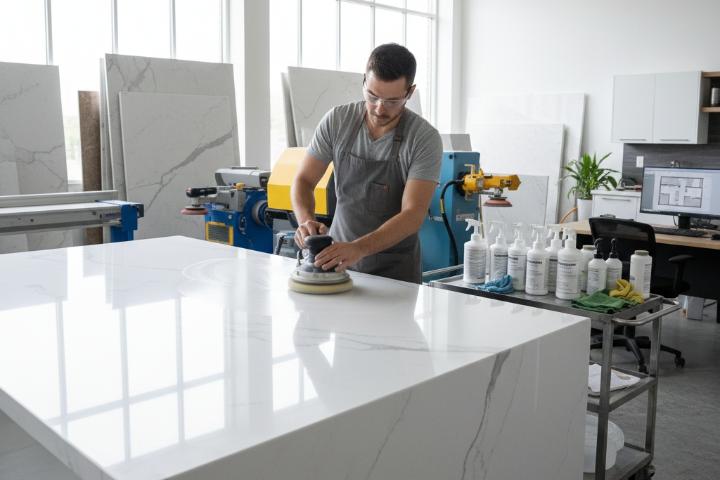
Surface refinishing restores heavily damaged engineered stone to near-original condition. This process involves professional-grade polishing compounds and equipment that homeowners cannot safely operate. Consider refinishing for surfaces showing extensive wear or damage.
Contact local specialists near you to provide expert restoration services. Professional care extends surface life and maintains property value through proper maintenance protocols.
Expert Guidance and Quality Materials
Working With Trusted Suppliers
Professional suppliers provide valuable education beyond simply selling materials. Expert teams offer guidance on selecting appropriate engineered stone for specific applications. They understand which formulations work best in different environments and usage scenarios.
Established companies offer comprehensive support including maintenance product recommendations and professional care referrals. Building relationships with knowledgeable stone specialists creates resources for addressing questions throughout your surface ownership experience.
Professional Installation Benefits
Proper installation significantly impacts long-term maintenance requirements and surface performance. Experienced installers ensure correct substrate preparation, seam placement, and edge finishing. These details affect how surfaces withstand daily use and resist damage.
Quality installation includes guidance on appropriate cleaning products and maintenance schedules. Installers familiar with specific engineered stone brands provide manufacturer-recommended care instructions. Following these guidelines protects warranties and ensures optimal performance.
Trade professionals benefit from supplier relationships that provide ongoing education and support. These partnerships ensure access to latest maintenance innovations and product developments.
Pros and Cons of Different Maintenance Approaches
DIY Maintenance
Pros:
- Cost-effective for routine cleaning and basic care
- Immediate response to spills and everyday messes
- Builds familiarity with your specific surfaces
- Allows flexible scheduling around personal routines
Cons:
- Risk of using inappropriate products damaging surfaces
- Limited access to professional-grade cleaning solutions
- Difficulty assessing when professional help becomes necessary
- Potential for improper technique causing unintended damage
Professional Maintenance Services
Pros:
- Expert knowledge of appropriate products and techniques
- Access to commercial-grade equipment and solutions
- Warranty protection for work performed
- Time savings for busy homeowners
Cons:
- Higher costs for routine maintenance tasks
- Scheduling requirements for service appointments
- Dependency on external providers for care
- Potentially unnecessary for well-maintained newer surfaces
Enhance Your Knowledge and Care Standards
The Natural Stone Institute provides excellent resources for understanding stone care principles. Their consumer care guidelines offer detailed information applicable to engineered surfaces. Educational materials help homeowners make informed maintenance decisions.
Industry events and workshops provide opportunities to learn from stone care professionals. The Natural Stone Institute calendar lists educational opportunities nationwide. Attending these events deepens understanding of proper care techniques.
Environmental considerations influence product selections for conscientious homeowners. Understanding environmental and health labels helps choose products supporting sustainability goals. Eco-friendly maintenance products deliver effective cleaning while minimizing environmental impact.
Seasonal Maintenance Considerations
Different seasons present unique challenges for engineered stone surfaces requiring adjusted care approaches. Summer humidity affects bathroom environments differently than winter dryness. Adapt cleaning frequencies and product selections based on seasonal environmental changes.
Holiday cooking increases kitchen countertop usage substantially during certain months. Prepare surfaces with protective measures before intensive use periods. Extra attention during high-traffic seasons prevents accumulated damage.
Evaluate maintenance routines quarterly to ensure they remain effective and appropriate. Usage patterns change over time requiring corresponding adjustments to care protocols. Regular assessment maintains optimal surface condition year-round.
Conclusion
Engineered stone slabs deliver exceptional beauty and performance when maintained correctly. Simple daily habits combined with appropriate products preserve surfaces for decades. Understanding what damages these materials prevents costly mistakes and ensures lasting satisfaction.
Your kitchen island, bathroom vanity, and countertops represent significant investments deserving proper attention. Implementing these maintenance strategies protects both appearance and functionality throughout surface life. Consistent care maintains pristine condition and supports strong resale value.
Discover premium engineered stone options and explore local showrooms for hands-on material evaluation. Expert guidance ensures selection of surfaces matching your lifestyle and maintenance preferences. Start your journey toward beautiful, long-lasting surfaces today.
Frequently Asked Questions
How often should I clean my engineered stone countertops?
Daily cleaning with mild soap and water maintains optimal condition for most households. Wipe spills immediately and perform deeper weekly cleaning using appropriate stone-safe products. High-traffic areas may require more frequent attention.
Can I use vinegar to clean engineered stone surfaces?
Never use vinegar or acidic cleaners on engineered stone as they etch and dull the surface permanently. These products damage protective coatings and compromise surface integrity. Stick with pH-neutral cleaners specifically formulated for stone.
Do engineered stone slabs require sealing like natural stone?
No, engineered stone never requires sealing thanks to its non-porous composition. The manufacturing process creates impermeable surfaces resistant to staining without additional sealants. This reduces long-term maintenance requirements significantly.
What causes white spots or cloudy areas on my countertop?
White spots typically result from hard water deposits or residue from harsh cleaning products. Remove deposits using specialized stone cleaners or gentle abrasive paste made from baking soda. Prevent future buildup by drying surfaces after use.
Can damaged engineered stone be repaired or must it be replaced?
Many types of damage can be professionally repaired including minor chips, scratches, and stains. Specialists use color-matched fillers and professional polishing techniques for restoration. Severe damage like large cracks may require section replacement.