Leathered countertops are natural stone surfaces finished with diamond-tipped brushes to produce a softly textured, matte surface. The process deepens the stone's natural color, partially closes its pores, and creates a finish that resists fingerprints and water spots better than a honed surface while maintaining a warmer, less formal look than polished stone. Leathered finishes are available on granite, quartzite, marble, and travertine, with granite and quartzite being the most common and durable choices for kitchen countertops. Compared to polished, a leathered surface is less reflective and requires slightly more cleaning effort due to its texture; compared to honed, it is more stain-resistant and does a better job of hiding everyday marks. It is an especially practical choice for busy kitchens, kitchen islands, and bathroom vanities where low-maintenance aesthetics matter.
How a Leathered Finish Is Made
The leathering process begins with a honed slab and takes it one step further. Fabricators run diamond-tipped brushes across the stone surface, creating subtle peaks and valleys that follow the natural mineral composition of the stone. Because every slab has a unique mix of minerals with varying hardness levels, the resulting texture is never exactly the same twice. Softer minerals yield deeper contours while harder minerals stay relatively raised, giving each finished slab its own tactile character.
The degree of texture can vary from a very light roughness to a more pronounced, weathered feel, depending on both the stone species and the intensity of the brushing. Darker, mineral-rich stones like black granite tend to develop bolder textures, while lighter quartzite and marble varieties typically result in a subtler, more refined surface.
Understanding this process matters when you are shopping for natural stone slabs because not every stone species or color is a good candidate for leathering. Stones with brittle mineral content may not hold up structurally during the brushing process, which is why reviewing a specific slab with a knowledgeable supplier is always a smart step before committing to this finish.

Leathered vs. Polished vs. Honed: What Is the Difference?
These three finishes represent the full spectrum of natural stone surface options. For a broader look at how finishes interact with different stone types, This Old House's guide to stone countertops is a useful reference.
Polished is the classic choice. The stone is buffed to a high gloss that reflects light like a mirror and brings out the richest expression of color and veining. Polished surfaces are the most stain-resistant because the buffing process seals more of the stone's pores, though fingerprints and water spots are very visible on a glossy surface.
Honed removes the gloss but keeps the surface smooth. The result is a matte, velvety appearance that feels modern and understated. Because honing stops before the pores are fully closed, honed surfaces are more porous than polished ones and generally require more frequent sealing.
Leathered shares the matte quality of a honed finish but adds a dimensional texture. The brushing process partially closes the pores, making leathered surfaces more stain-resistant than honed but less so than polished. Fingerprints, water rings, and light smudges simply disappear into the texture, and the finish deepens and enriches the stone's natural color in a way that honed finishes cannot.
Which Stones Take a Leathered Finish Best?
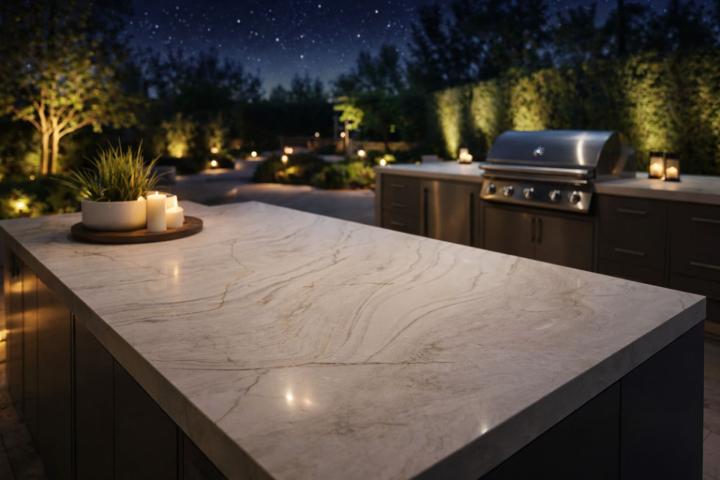
Granite is the most common stone for leathered finishes. Its dense mineral composition holds up well to the brushing process, and darker varieties like Absolute Black and Black Pearl develop particularly dramatic texture and color depth when leathered.
Quartzite is an increasingly popular candidate. As one of the hardest natural stones available, quartzite holds its texture well over time. The leathered finish produces a warmer, more rustic surface, and lighter quartzite varieties in cream, gray, and warm white tones take on an almost linen-like quality when leathered.
Marble can be leathered, though it requires careful consideration. Marble is softer and more porous than granite or quartzite, making it more vulnerable to etching if not sealed regularly. Leathered marble works best in lower-traffic applications like bathroom vanities or a secondary island surface, where the texture softens the stone's veining beautifully.
Travertine responds well to leathering, and the finish complements travertine's inherently earthy, organic quality. It creates a surface that feels cohesive in rustic, Mediterranean, and transitional design styles.
Pros and Cons of Leathered Countertops
Advantages
Hides everyday marks exceptionally well. The textured surface diffuses light rather than reflecting it, making fingerprints, water spots, and light smudges far less visible than on polished stone, which is a practical advantage in busy, high-traffic kitchens.
Enriches natural color. The diamond-brushing process draws out the depth of the stone's color in a way that a flat honed finish cannot, making minerals appear more saturated and true-to-nature.
More stain-resistant than honed. Because leathering partially closes the stone's pores, it offers better protection against staining than a honed surface and typically requires less frequent sealing.
Uniquely textured every time. No two leathered slabs look or feel alike. This is a meaningful advantage over engineered surfaces, which replicate the same pattern from slab to slab and have also been flagged by health authorities for silica exposure risks during fabrication, a concern that does not apply to natural stone.
Works across design styles. While often associated with farmhouse and rustic kitchens, leathered finishes integrate well into transitional and modern spaces when paired with the right stone color and cabinetry.
Disadvantages
Texture requires slightly more cleaning effort. The same texture that hides fingerprints can trap crumbs and fine dust in its grooves, requiring a soft brush or microfiber cloth rather than a single wipe.
Not available on every stone. The selection of stones offered in a leathered finish is narrower than what is available polished, as some mineral compositions do not respond well to the brushing process.
Can make small spaces feel darker. Leathered surfaces absorb rather than reflect light, which is worth factoring into your decision in smaller kitchens or bathrooms with limited natural light.
Refinishing can be complex. If damaged, matching the original leathered texture during refinishing is more technically challenging than re-polishing a polished stone.
Design Considerations: When Does a Leathered Finish Work Best?
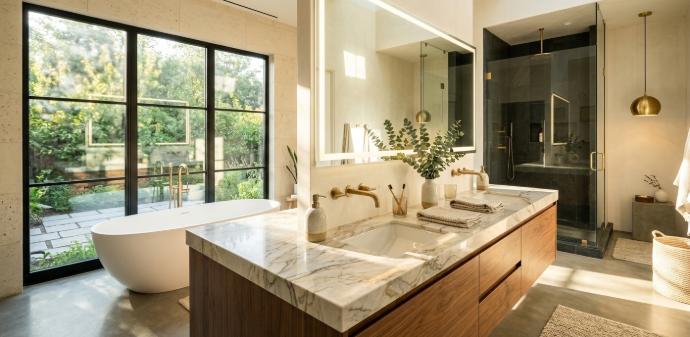
A leathered finish performs especially well where the goal is warmth and character rather than a sleek, reflective look. Kitchen islands are one of the most popular applications — the finish holds up under daily use and pairing a leathered island with polished perimeter countertops creates intentional contrast throughout the space.
Bathroom vanities are another strong candidate, particularly in primary bathrooms where a spa-like, organic atmosphere is the goal. For outdoor kitchens in Northern Nevada and Northern California, leathered granite is a practical option, as the texture provides natural slip resistance and granite's heat and UV tolerance suits exterior exposure well.
Before making a final finish decision, visiting a showroom and holding a leathered slab under natural and artificial light gives you a far more accurate read than any photo can.
How to Clean and Maintain Leathered Stone Countertops
Daily cleaning is straightforward. Wipe the surface with a damp microfiber cloth and a pH-neutral stone cleaner. For areas where crumbs settle into the texture, a soft-bristle brush lifts debris without scratching the stone. Avoid abrasive scrubbers, acidic cleaners, and anything with bleach or ammonia, as these degrade the sealer and dull the finish over time.
Sealing is still necessary for leathered natural stone, but intervals are generally more forgiving than with a honed finish. Fine Homebuilding's guide to natural stone countertop care covers sealing schedules and product recommendations in detail. If a dull or dry appearance develops, a stone conditioner applied with a microfiber cloth can restore the finish's subtle depth without altering its texture.
Conclusion
A leathered finish is one of the most distinctive and practical options available in natural stone countertops. It enriches the stone's color, hides everyday marks, and delivers an organic warmth that suits a wide range of design styles. The key to getting it right is seeing and feeling the finish in person, because no photo fully captures the tactile quality that makes this finish worth choosing.
Explore natural stone slabs in person at our stone showrooms across Northern Nevada and Northern California. You can find us in Reno, Minden, Sacramento, and Fernley. Our team can show you leathered slab options across granite, quartzite, marble, and travertine so you can see and feel the difference before making your decision. Schedule a free design consultation with a Nova stone specialist today.
Frequently Asked Questions
Is a leathered countertop harder to clean than polished?
Day-to-day cleaning is comparable, but the texture can trap fine debris that a polished surface would not. Using a soft brush alongside a damp cloth handles this easily. Most homeowners find the reduced visibility of fingerprints and water spots more than offsets the slightly more involved cleaning routine.
Can quartzite be leathered?
Yes. Quartzite is an excellent candidate for leathering due to its hardness and density. The finish holds exceptionally well over time and many homeowners find the warm, textured result of leathered quartzite among the most distinctive countertop options available in natural stone.
Is a leathered finish less durable than polished?
No. The durability of the stone itself is determined by its mineral composition, not its finish. A leathered granite or quartzite countertop is just as durable as a polished version. The finish affects appearance, stain resistance, and maintenance routine, not structural performance.
Does a leathered finish need to be sealed?
Yes. All natural stone requires sealing, leathered included. Leathered surfaces are generally less porous than honed ones, which means sealing intervals may be slightly less frequent, but a consistent sealing routine is still essential to protect against staining.
Is a leathered finish a good choice for bathroom vanities?
Yes. Bathroom vanities are one of the best applications for a leathered finish. The texture handles moisture and daily use well, the matte surface resists water spots that would be very visible on polished stone, and the organic, tactile quality of the finish contributes to the warm, spa-like atmosphere many homeowners want in a primary bathroom.