Upgrading your kitchen or bathroom no longer means settling for traditional materials that crack, stain, or require constant maintenance. Engineered stone slabs offer a perfect blend of beauty, durability, and practicality for modern homes. These innovative surfaces combine natural minerals with advanced polymer resins, creating countertops that resist scratches, heat, and moisture better than many natural alternatives.
Whether you're renovating a busy family kitchen or designing a spa-like master bathroom, engineered stone delivers consistent patterns and colors that natural materials simply cannot match. This guide explores how engineered stone transforms everyday spaces into stunning focal points. You'll discover practical applications, design inspiration, and expert tips for incorporating these versatile surfaces into your next renovation project. From selecting the perfect slab to understanding maintenance requirements, we'll walk you through everything needed to make informed decisions about your upgrade.
Why Engineered Stone Outperforms Traditional Materials
Homeowners choosing countertop materials face an overwhelming array of options, but engineered stone stands apart for compelling reasons. Unlike natural stone that varies wildly in appearance and performance, engineered options deliver predictable quality and consistency. The manufacturing process allows for superior density, making surfaces less porous and more resistant to bacteria growth.
Kitchen islands receive the most abuse in any home, enduring hot pots, sharp knives, and daily spills. Engineered stone handles this punishment gracefully. Its non-porous surface means liquids cannot penetrate, preventing stains from wine, coffee, or cooking oils. This same quality makes bathroom vanities ideal candidates for engineered surfaces, where moisture and personal care products create challenging conditions.
Key advantages include:
- Superior stain resistance compared to granite or marble
- Consistent color and pattern throughout the entire slab
- Lower maintenance requirements than natural stone alternatives
- Excellent impact resistance for high-traffic areas
- Wide variety of colors and finishes unavailable in natural materials
- Better long-term value through enhanced durability
The investment in quality countertops pays dividends through years of reliable performance. Engineered surfaces maintain their appearance without the periodic sealing required by granite or the constant vigilance needed for marble. This makes them particularly attractive for busy households where beauty shouldn't demand constant attention.
Practical Design Applications for Every Style
Creating Statement Kitchen Islands
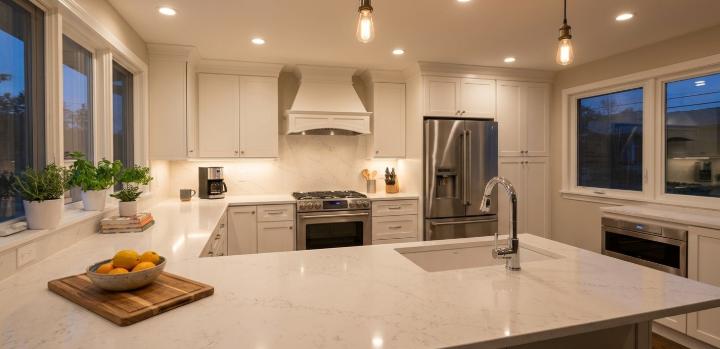
Your kitchen island serves as the heart of your home, where families gather and meals take shape. Engineered stone slabs transform this functional workspace into a dramatic centerpiece. Contemporary designs favor clean lines with waterfall edges that cascade from countertop to floor. These installations showcase the material's consistent patterning while creating bold visual impact.
Consider contrasting your perimeter countertops with a distinctive island surface Explore various slab options that complement your cabinetry while adding personality. Lighter tones with subtle veining work beautifully in traditional spaces, while bold colors with dramatic patterns suit modern aesthetics. The beauty lies in how engineered stone allows perfect symmetry when book-matching slabs for larger installations.
Thickness matters when designing islands. Standard 3cm slabs provide substantial presence, but 2cm options work well when layered for custom edge profiles. Professional fabricators can create intricate details like integrated drain boards or routed grooves for trivets. These custom touches elevate your island from functional to exceptional.
Elevating Bathroom Vanities
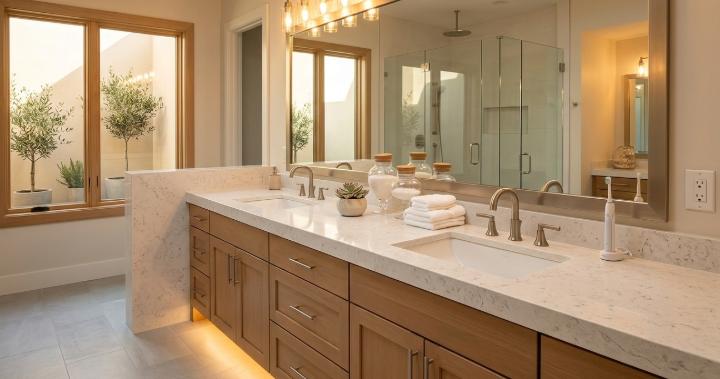
Bathroom vanities present unique challenges that engineered stone handles effortlessly. Daily exposure to water, cosmetics, and cleaning products demands surfaces that resist damage without constant maintenance. Finding the right materials starts with understanding how different spaces create different demands.
Double vanities benefit from seamless installations where no visible joints interrupt the surface. Engineered stone's large format slabs accommodate longer runs without piecing sections together. Undermount sinks integrate cleanly, creating smooth transitions that prevent water accumulation. Consider extending the countertop material as a backsplash, protecting walls while creating cohesive design.
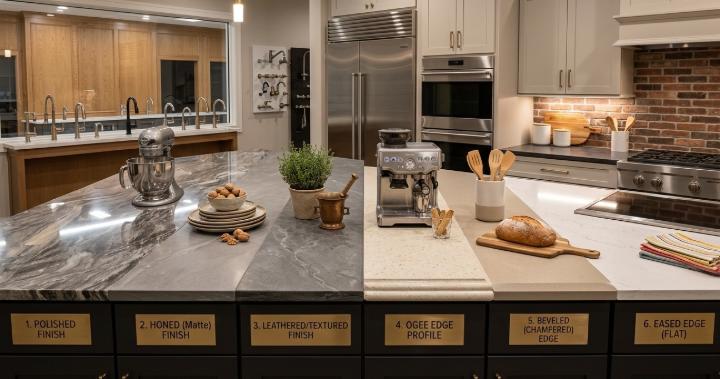
Powder rooms offer opportunities for bolder choices. Smaller vanities allow experimentation with dramatic colors or patterns that might overwhelm larger spaces. The material's uniform appearance ensures consistent quality regardless of slab size. Edge treatments like ogee or bullnose profiles add refinement without compromising durability.
Versatile Countertop Solutions
Beyond islands and vanities, engineered stone adapts to numerous applications throughout your home. Laundry rooms benefit from durable surfaces that resist detergent spills and heavy usage. Home bars gain sophistication with seamless installations that accommodate sinks and ice makers. The material's heat resistance makes it suitable near cooktops, though trivets remain recommended for very hot pans.
Natural stone slabs vary dramatically in pattern and color, making it difficult to match sections from different blocks. Engineered alternatives eliminate this concern, allowing confident expansion or future modifications. This consistency proves invaluable for phased renovations where matching new work to existing installations matters.
Selecting and Installing Premium Surfaces
Understanding Quality and Options
Not all engineered stone performs equally. Premium brands contain higher percentages of natural quartz, typically 90-95%, with the remainder consisting of polymer resins and pigments. This composition delivers superior hardness and durability. Lesser quality products incorporate more resin, potentially compromising longevity and appearance.
Shopping locally offers distinct advantages over online ordering. Visit showrooms in Reno where you can examine full slabs under proper lighting. Colors and patterns photograph poorly, making in-person inspection essential. Natural and artificial light reveal different characteristics, so evaluate samples in your actual space before committing.
Professional guidance matters when navigating choices. Trade accounts provide contractors and designers access to expanded selections and technical support. Experts help match materials to specific applications, ensuring performance meets expectations. They understand which finishes work best for different environments and can recommend appropriate edge treatments.
Installation Considerations
Proper installation requires specialized equipment and expertise. Engineered stone's weight demands robust cabinet support and precise measurements. Professional fabricators template exact dimensions using digital technology, ensuring perfect fits around sinks, cooktops, and other fixtures. Attempting DIY installation risks costly mistakes and voided warranties.
Installation Process Overview:
Step 1: Remove existing countertops and prepare cabinets for new weight loads. Ensure level surfaces and proper support structure.
Step 2: Template the space using physical templates or digital laser measurement. Account for all cutouts, seams, and overhangs.
Step 3: Fabricate the slabs with precise cuts, polish edges to specified profiles, and drill fixture holes at the shop.
Step 4: Transport slabs carefully to job site. Install using appropriate adhesives and support systems for permanent placement.
Step 5: Complete seam joining if necessary, attach undermount sinks, and perform final inspection before customer acceptance.
Experienced installers complete most residential projects within one day after fabrication. They protect surrounding areas from dust and damage while ensuring proper placement. Quality installation includes securing seams so tightly they become virtually invisible. Proper support prevents future cracking or movement.
Comparing Engineered Stone to Alternative Materials
Understanding how engineered stone stacks up against other popular options helps make informed decisions:
Material | Durability | Maintenance | Cost Range | Heat Resistance | Stain Resistance |
Engineered Stone | Excellent | Very Low | $$$ | Very Good | Excellent |
Granite | Very Good | Medium | $$$-$$$$ | Excellent | Good with sealing |
Marble | Good | High | $$$$ | Poor | Poor without sealing |
Laminate | Fair | Low | $ | Poor | Fair |
Solid Surface | Good | Low | $$ | Fair | Very Good |
Pros and Cons of Engineered Stone:
Pros:
- Non-porous surface resists bacteria and staining
- Consistent appearance throughout entire slab
- Wide variety of colors including options mimicking natural stone
- Minimal maintenance beyond routine cleaning
- Strong warranty protection from reputable manufacturers
- Environmentally friendly options use recycled materials
Cons:
- Cannot withstand direct heat from pots exceeding 300°F
- Visible seams in very large installations
- Limited outdoor applications due to UV sensitivity
- Higher initial cost than laminate or tile
- Difficult to repair if damaged, often requiring section replacement
- Weight requires professional installation and strong cabinet support
Local suppliers in Sacramento carry diverse inventories allowing side-by-side comparisons. Seeing materials in person reveals textural differences that photos cannot capture. Touch surfaces, examine edges, and discuss specific needs with knowledgeable staff who understand regional design trends and climate considerations.
Maintenance and Long-Term Care
Engineered stone's appeal includes remarkably simple maintenance. Daily cleaning requires only mild soap and water or pH-neutral cleaners. Avoid harsh chemicals, abrasive pads, or acidic cleaners that might dull the surface over time. The non-porous nature means no sealing ever becomes necessary, unlike granite or marble.
Proper granite cleaning requires specialized products and regular sealingMarble maintenance demands even more attention, with monthly sealing and careful product selection. Engineered alternatives eliminate these concerns, saving time and money over the material's lifespan.
Protect your investment by using cutting boards rather than slicing directly on surfaces. While engineered stone resists scratches better than many alternatives, sharp knives can still cause damage. Place trivets under hot cookware, even though the material tolerates moderate heat. These simple precautions ensure surfaces maintain their beauty for decades.
Hard water deposits wipe away easily with vinegar solutions, though regular cleaning prevents buildup. For stubborn residue, non-abrasive cleaners formulated for engineered stone work effectively. Manufacturers often provide specific care instructions, which professional installers share during final walk-throughs. Following these guidelines maintains warranties and appearance.
Finding the Right Supplier and Support
Choosing where to purchase engineered stone slabs impacts your entire experience. Large-format materials require careful handling, proper storage, and specialized fabrication equipment. Established suppliers maintain climate-controlled warehouses protecting inventory from damage. They employ experienced staff who understand product specifications and application requirements.
Sample programs allow you to evaluate materials in your home before purchasing. Convenient locations in Minden serve surrounding communities with personalized service. Taking samples home reveals how lighting affects appearance throughout the day. Colors shift between natural daylight and artificial evening illumination, making this step crucial.
Free shipping on qualifying orders removes logistics concerns for larger projects. Experienced delivery teams handle heavy slabs safely, minimizing damage risks. They coordinate with contractors to ensure materials arrive precisely when needed, preventing storage issues or delays. Professional suppliers stand behind their products with comprehensive warranties and responsive customer service.
Expert guidance helps navigate overwhelming choices. Staff members discuss maintenance requirements, suggest complementary materials, and share installation best practices. Local shopping options connect you with community businesses invested in your satisfaction. Building relationships with suppliers provides resources for future projects and ongoing support.
Conclusion
Engineered stone slabs represent smart investments for homeowners seeking durable, beautiful surfaces that simplify life. Their combination of aesthetic appeal and practical performance makes them ideal for kitchen islands, bathroom vanities, and countertops throughout your home. The material's consistency eliminates concerns about natural stone variation while delivering comparable or superior functionality.
Your renovation deserves materials that perform as beautifully as they look. Engineered stone offers that perfect balance, providing years of reliable service without demanding constant attention. From initial selection through professional installation and daily use, these surfaces exceed expectations. Modern manufacturing creates options previously unavailable, allowing personalized designs that reflect individual style.
Ready to transform your kitchen or bathroom? Visit a trusted supplier to explore options, request samples, and connect with experienced professionals. Your dream space awaits, built on the foundation of quality materials and expert craftsmanship.
Frequently Asked Questions
How does engineered stone differ from natural quartz?
Engineered stone contains approximately 90-95% natural quartz crystals bound with polymer resins. Natural quartz slabs are cut directly from quarried stone. Engineered versions offer consistent patterns and enhanced performance characteristics, while natural quartz displays unique variations.
Can engineered stone withstand heat from cooking?
Engineered stone tolerates moderate heat but requires trivets for pots directly from stovetops. The resin binders can discolor or crack with prolonged exposure to temperatures exceeding 300°F. Brief contact with warm dishes poses no risk.
How long do engineered stone countertops typically last?
With proper care, engineered stone surfaces last 25-50 years or longer. Their durability often exceeds the lifespan of surrounding cabinetry and fixtures. Manufacturer warranties typically cover 10-15 years against defects.
Is engineered stone environmentally friendly?
Many manufacturers incorporate recycled materials, including post-consumer glass and industrial byproducts. The production process uses less energy than quarrying natural stone. Non-porous surfaces eliminate the need for chemical sealants throughout their lifespan.
What causes discoloration in engineered stone?
Prolonged UV exposure can yellow certain lighter colors, making engineered stone unsuitable for outdoor applications. Strong chemicals like paint removers or oven cleaners may cause surface damage. Proper cleaning with recommended products prevents discoloration.