Yes, natural stone is a sustainable countertop choice. It contains no petroleum-based resins, no synthetic binders, and no chemical additives, which separates it from engineered materials like quartz that rely on polymer resins derived from fossil fuels. A life cycle assessment published in the Sustainability Study on floor coverings found that natural stone carries a global warming potential approximately 84 percent lower than large-format ceramic or porcelain tile. With a service life that routinely exceeds 50 years, natural stone reduces the replacement cycles that generate construction waste over time. At the end of its useful life, natural stone can be reclaimed, repurposed, or recycled, while engineered quartz generally cannot. The primary sustainability considerations for natural stone are transportation distance, since stone is often quarried internationally, and sealing product selection, since low-VOC sealers perform comparably to solvent-based alternatives with a lower environmental impact.
This article covers how natural stone performs across the key sustainability criteria: production process, longevity, recyclability, maintenance footprint, and how it compares to engineered quartz.
What Makes a Countertop Material Sustainable
Sustainability in countertop materials is typically evaluated across several factors: how the material is produced, how long it lasts, what happens to it at the end of its life, and what maintenance it requires over time.
Production involves the energy and resources used to bring the material from its raw state to a finished slab. Longevity matters because a material that needs to be replaced every 15 to 20 years creates more waste and more demand for new resources than one that can remain in service for decades. End-of-life recyclability determines whether the material ends up in a landfill or can be returned to productive use. And ongoing maintenance factors in what cleaners, sealers, and treatments are required to keep the surface in good condition, since some products used for maintenance carry their own environmental considerations.
Natural stone addresses each of these categories, though no material is without tradeoffs. At our showrooms in Reno, Minden, Sacramento, and Fernley, we work with homeowners and trade professionals who are increasingly asking about environmental impact alongside material performance, and natural stone's life cycle holds up well under that scrutiny. You can browse our natural stone slab inventory to see the full range of materials we currently carry.
How Natural Stone Is Produced
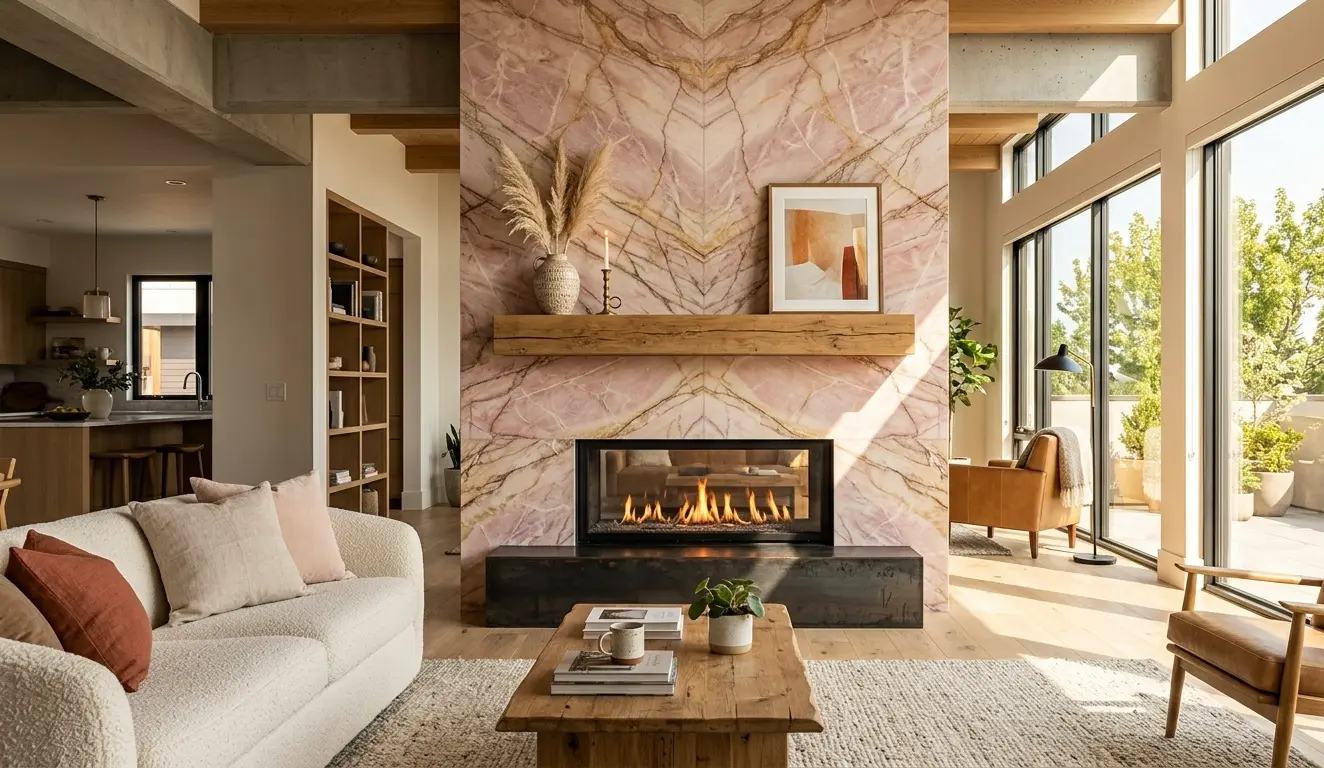
Natural stone slabs begin as raw blocks extracted from quarries. The blocks are transported to cutting facilities where they are sawn into slabs, then ground and polished to the desired finish. The process uses energy and water, primarily for cutting equipment and polishing machinery, but does not involve the addition of resins, binders, pigments, or synthetic compounds. The material that arrives as a finished slab is the same stone that came out of the ground, with no chemical alteration to its composition.
A life cycle assessment published in the Sustainability Study on floor coverings found that natural stone carries a global warming potential approximately 84 percent lower than large-format ceramic or porcelain tile. Stone's direct production chain, from quarry to slab, is a contributing factor to that difference. This Old House provides a useful overview of how different stone types are quarried and finished for residential use.
Transportation distance is a factor worth noting. Natural stone is sourced from quarries around the world, and the carbon footprint of transportation varies depending on where the stone originates. Brazilian quartzite and Italian marble travel farther than domestically quarried granite. This does not make international stone a poor choice, but it is a relevant consideration for buyers who are specifically focused on reducing transportation emissions. Because we are a direct natural stone importer, we have visibility into sourcing and can share origin information with buyers who are researching this question.
Longevity and Reduced Replacement Cycles
A significant environmental consideration for natural stone is its service life. Granite, quartzite, and marble countertops, when properly sealed and maintained, can last 50 years or more. Many historic homes contain original marble countertops and stone floors that remain functional and intact after a century of use.
Countertop materials with shorter service lives, whether laminate, solid surface, or some engineered stones, may need to be replaced one or more times over the same period. Each replacement cycle generates construction waste and demand for new materials. A surface that remains in service for decades reduces that cycle.
Longevity is one reason natural stone countertops are cited in green building frameworks, including LEED (Leadership in Energy and Environmental Design), as a material that contributes to a building's sustainability profile. Fine Homebuilding covers how material selection factors into sustainable home design and long-term performance in more detail.
Recyclability and Reuse
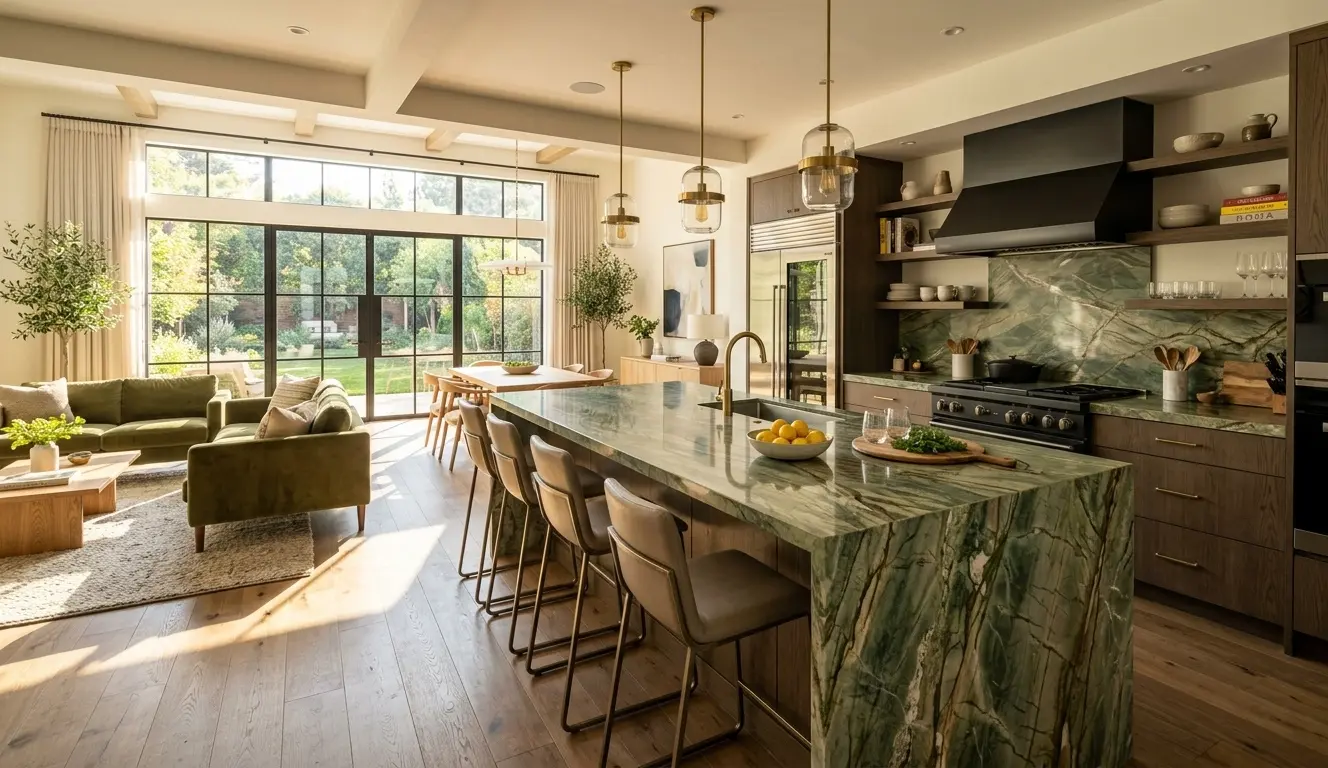
At the end of its first useful life, natural stone can be repurposed in ways that most manufactured countertop materials cannot. Salvaged marble and granite slabs are regularly reclaimed from renovations and reused as countertops, tabletops, flooring, cladding, or accent pieces. Stone that is no longer suited for its original application can be cut down into tile or broken into aggregate for landscaping and construction.
Because natural stone contains no synthetic resins or adhesives, it does not present the same end-of-life challenges that engineered materials do. Engineered quartz slabs, which are composed of ground quartz crystals bound with petroleum-based resins, are not currently recyclable through standard channels. Once an engineered quartz countertop reaches the end of its life, it generally goes to a landfill.
The option to reclaim and reuse natural stone is an environmental factor that is often overlooked in material comparisons. Salvage yards and architectural reclaim dealers regularly carry natural stone from renovation projects, extending the material's service life beyond its first installation. Homeowners who want to see how natural stone holds up over time are welcome to visit us at any of our showroom locations to view slabs and speak with our team directly.
How Natural Stone Compares to Engineered Quartz
Engineered quartz is a widely used alternative to natural stone, and its performance properties offer practical advantages in certain applications. However, its sustainability profile involves factors that are not always fully detailed in product comparisons.
Engineered quartz is manufactured from crushed quartz crystals combined with petroleum-based polymer resins, pigments, and sometimes recycled glass or other additives. The resin component, which typically makes up 7 to 10 percent of the slab, is derived from non-renewable fossil fuel resources. The manufacturing process requires significant energy input and generates industrial byproducts.
There are also occupational health concerns associated with engineered quartz fabrication. Cutting and grinding quartz slabs releases crystalline silica dust, which has been linked to silicosis, a serious and irreversible lung disease, as well as lung cancer. The CDC and NIOSH have issued guidance on silica dust exposure for stone fabrication workers, and several countries have moved to restrict or ban the fabrication of engineered quartz in response to documented health impacts among workers.
Natural stone also contains silica in varying amounts depending on the type, but the silica content in materials like marble, travertine, and soapstone is significantly lower than in engineered quartz. Granite and quartzite do contain higher silica levels, and the same dust-control practices apply during fabrication. The distinction is that natural stone does not require the resin-bonding process that creates additional exposure risks. The natural stone varieties we carry, including marble, quartzite, granite, travertine, dolomite, and soapstone, contain no synthetic resins or manufactured binders of any kind.
Maintenance and Sealing
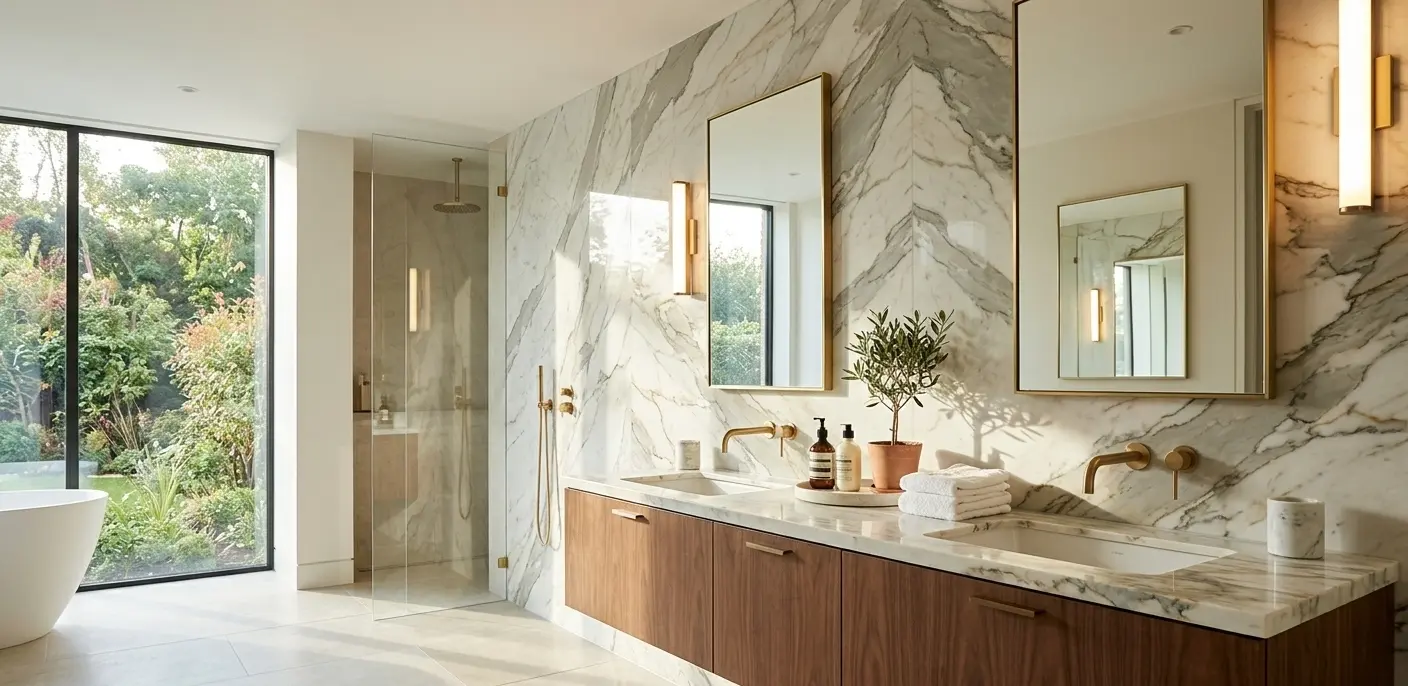
Natural stone typically requires periodic sealing to protect against staining, and the sealer selected has its own environmental implications. Many conventional stone sealers contain volatile organic compounds (VOCs), which off-gas into indoor air and contribute to air quality concerns.
Low-VOC and water-based sealers are widely available and provide comparable protection to solvent-based products. Selecting a low-VOC sealer is one way to reduce the environmental footprint of the countertop maintenance routine.
Beyond sealing, natural stone requires only mild, pH-neutral cleaners for daily maintenance. pH-neutral cleaners are among the lower-impact cleaning products used in residential settings, and their environmental footprint is reduced compared to stronger chemical treatments required by some other countertop materials. When customers come in, our team is available to answer questions about sealing schedules and product selection for the specific stone they are considering. You can schedule an appointment at any of our four showrooms at a time that works for you.
Conclusion
Natural stone is not without environmental considerations. Quarrying requires energy, transportation contributes to carbon emissions when stone travels long distances, and sealing requires ongoing attention to product selection. Measured across the full life cycle, however, natural stone carries no synthetic binders or petroleum-based resins in production, can remain in service for 50 years or more before replacement, and can be reclaimed and reused at the end of that service life. For homeowners evaluating both performance and environmental footprint, understanding the full life cycle of natural stone provides a more complete basis for comparison.
If you would like to see natural stone slabs in person, we have showrooms in Reno, Minden, Sacramento, and Fernley. You can request a slab quote to get the process started, or apply for a trade account if you are working on a client project.
Frequently Asked Questions
Is natural stone an eco-friendly countertop choice?
Natural stone is produced without synthetic resins, pigments, or petroleum-based binders and requires no chemical manufacturing process. Its service life can exceed 50 years, which reduces the frequency of replacement over time. Transportation distance and sealing product selection are the primary factors that affect how eco-friendly a specific natural stone purchase is.
How does natural stone compare to engineered quartz for sustainability?
Natural stone has a direct production chain with no synthetic additives, while engineered quartz is manufactured using petroleum-based polymer resins that bind the crushed quartz crystals together. At end of life, natural stone can be reclaimed, repurposed, or reused, while engineered quartz is generally not recyclable through standard channels. Both materials involve quarrying and energy use in production, but natural stone does not carry the resin-based manufacturing footprint that engineered quartz does.
Does natural stone contribute to LEED certification?
Natural stone can contribute to LEED certification points in several categories, including material durability, low VOC emissions, and regional material sourcing when the stone is quarried within a defined distance of the project. LEED evaluates materials across their full life cycle, and natural stone's service life and recyclability are factors that support a favorable assessment.
What type of sealer should I use on natural stone to minimize environmental impact?
Low-VOC and water-based sealers are widely available and provide effective protection without the off-gassing associated with solvent-based products. Looking for products specifically labeled low-VOC or water-based is the most practical step for reducing indoor air quality impact. Reapplication frequency varies by stone type and use, but most residential countertops require sealing once every one to three years.
Which natural stone varieties are considered the most sustainable?
Marble, travertine, soapstone, and limestone contain lower levels of crystalline silica compared to granite and quartzite, which is relevant for fabrication health considerations. From a service life and maintenance standpoint, quartzite and granite are among the more durable options, reducing the likelihood of replacement over a long period. All natural stone varieties share the core sustainability profile of resin-free production and recyclability at end of life.