How Engineered Stone Slabs Are Reshaping Modern Interiors
Engineered stone slabs have become one of the most talked-about materials in contemporary interior design, and for good reason. They combine precise color consistency with surface durability that holds up across kitchens, bathrooms, floors, and walls, though specific performance depends on material type, finish, and proper care. Whether you are planning a full kitchen overhaul or refreshing a bathroom vanity, understanding how these materials fit into today's design landscape gives you a sharper starting point.
Interior design is moving toward surfaces that balance visual impact with long-term practicality. Engineered stone, which includes both quartz and porcelain slabs, sits at the center of that shift. Unlike natural stone, where every slab varies in color and veining, engineered options arrive with controlled patterning that allows for cohesive large-format applications across floors and walls. That consistency has made them a go-to choice for designers working on open-plan spaces where visual continuity matters.
This guide covers the top interior design trends featuring engineered stone slabs, practical styling tips for kitchens, bathrooms, floors, and walls, and how to find the right slab for your project without guesswork.
Stone Slabs for Floors, Walls, and More
Designers and homeowners choose engineered stone slabs because they offer a predictable, high-performing surface that adapts across different applications. From kitchen countertops to full-height bathroom walls, their structural consistency makes them easier to specify than natural stone in projects requiring uniform coverage. That said, performance still depends on the specific product and how well it is maintained.
Advantages of engineered stone slabs:
- Quartz slabs are non-porous by composition, reducing liquid absorption on kitchen countertops and bathroom vanity tops, though proper cleaning practices still matter.
- Porcelain slabs are vitrified at high temperatures, resulting in a dense surface that resists moisture, staining, and wear across both indoor and outdoor applications.
- Both materials are available in large-format sizes that reduce visible seam lines on floors and walls, supporting the seamless aesthetic popular in contemporary design.
- Finish variety is broader than many homeowners expect: polished, honed, and specialty finishes are available in both quartz and porcelain, giving designers real flexibility across projects.
- Porcelain slabs are UV-stable, making them one of the few slab materials suitable for exterior floors and walls without concerns about sun-related color shift.
One practical tip: always request full-slab samples before committing to a large-format floor or wall application. Color reproduction in photographs rarely captures how a slab reads under real lighting conditions in your specific space.
Engineered Stone Slab Design Ideas for Every Room
The versatility of engineered stone slabs is one of the key reasons they appear so frequently in current design coverage. From top design events 2026 to residential renovations across Northern Nevada, these materials are showing up in more applications than ever before. Below are the strongest design directions homeowners and designers are pursuing right now.
Kitchen Countertops and Backsplash Walls
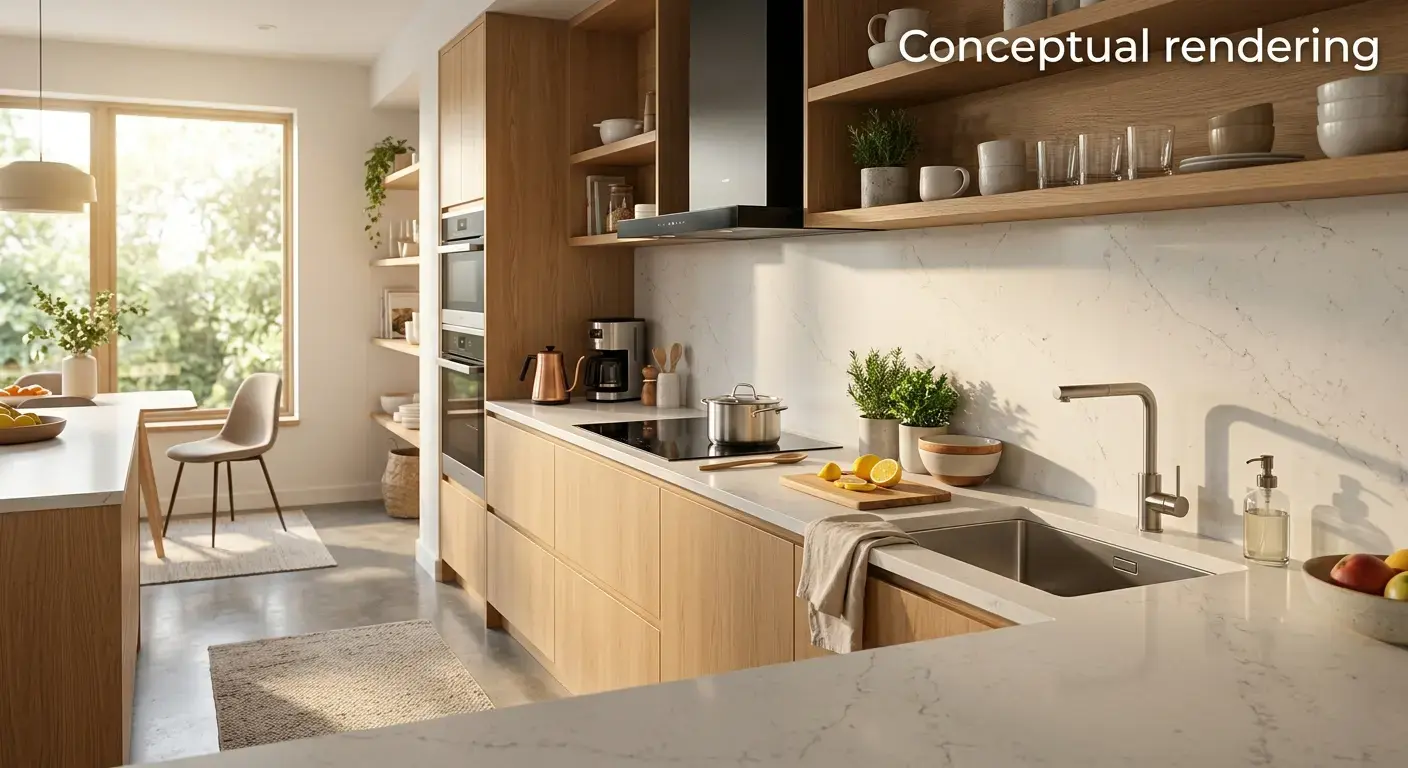
Quartz slabs remain the dominant choice for kitchen countertops in both residential and commercial applications. Their non-porous structure limits liquid penetration from everyday cooking, though acidic ingredients and abrasive cleaners can still affect the surface over time. The most current kitchen aesthetic pairs a honed quartz countertop with a full-height slab backsplash in the same material, creating an uninterrupted visual plane from countertop to upper cabinet.
Porcelain slabs are also gaining ground in kitchens, particularly in large-format configurations where the low number of seams reinforces a clean, minimal look. Porcelain meets recognized certification standards for water absorption and surface density, as outlined by the porcelain tile certification standards, giving specifiers a measurable quality benchmark to reference. The natural stone look categories in current porcelain production are detailed enough that many kitchen applications are nearly indistinguishable from polished marble or honed travertine at a glance.
Bathroom Walls and Vanity Surfaces
Slab-format surfaces have transformed bathroom design because they eliminate the grout lines that traditional tile formats require. A floor-to-ceiling porcelain slab wall in a shower or wet room creates an expansive, hotel-quality aesthetic that is harder to achieve with smaller formats. For wet area applications, a honed or matte finish is the appropriate choice: polished surfaces become slippery when wet, making them unsuitable for shower floors or bathroom floor applications where safety is a priority.
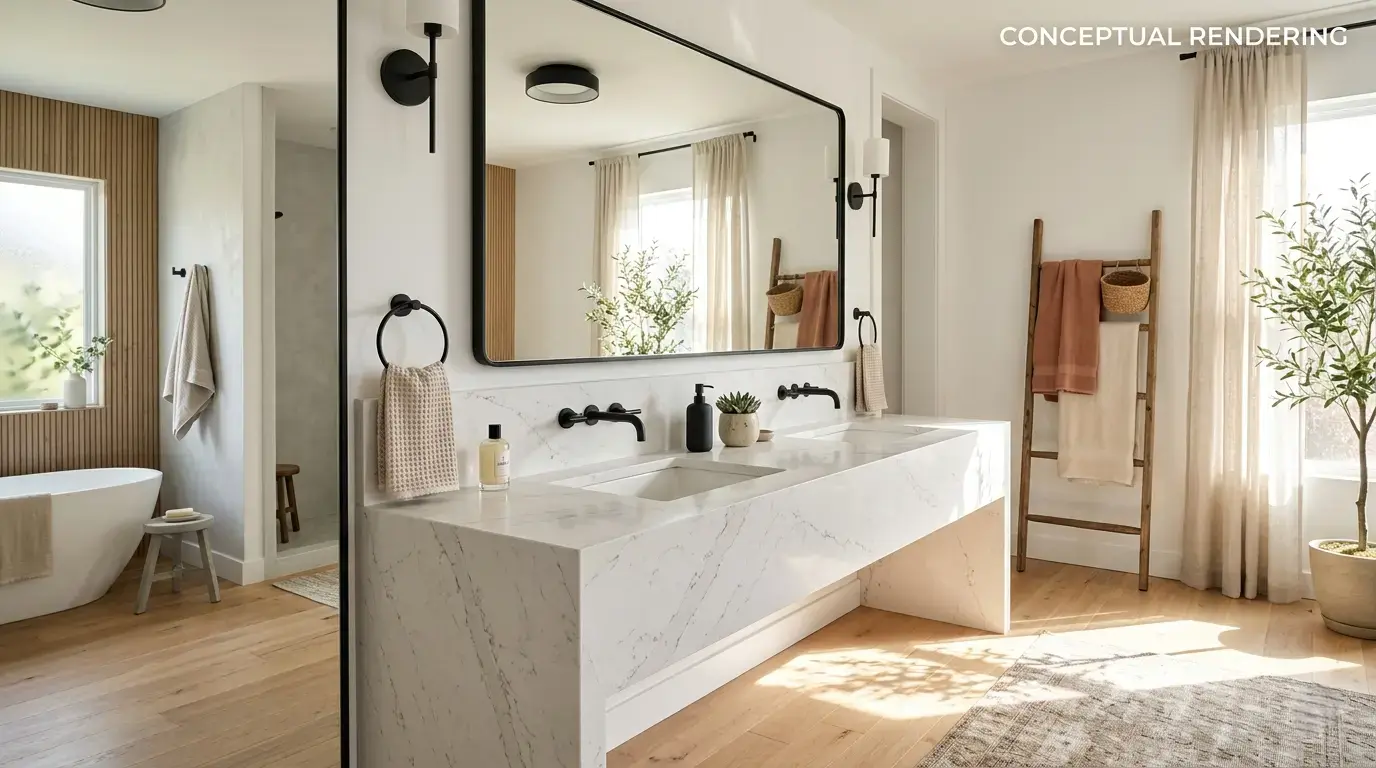
Quartz slabs are a strong specification for bathroom vanity tops where moisture exposure is frequent but splash-zone flooding is not a factor. Their non-porous surface limits bacterial growth and simplifies daily cleaning, though they should not be used in outdoor applications or areas with significant UV exposure. A waterfall-edge quartz vanity top in a soft veined pattern is one of the strongest current bathroom design trends, especially when paired with matte black or brushed brass fixtures.
Statement Floors in Living Spaces
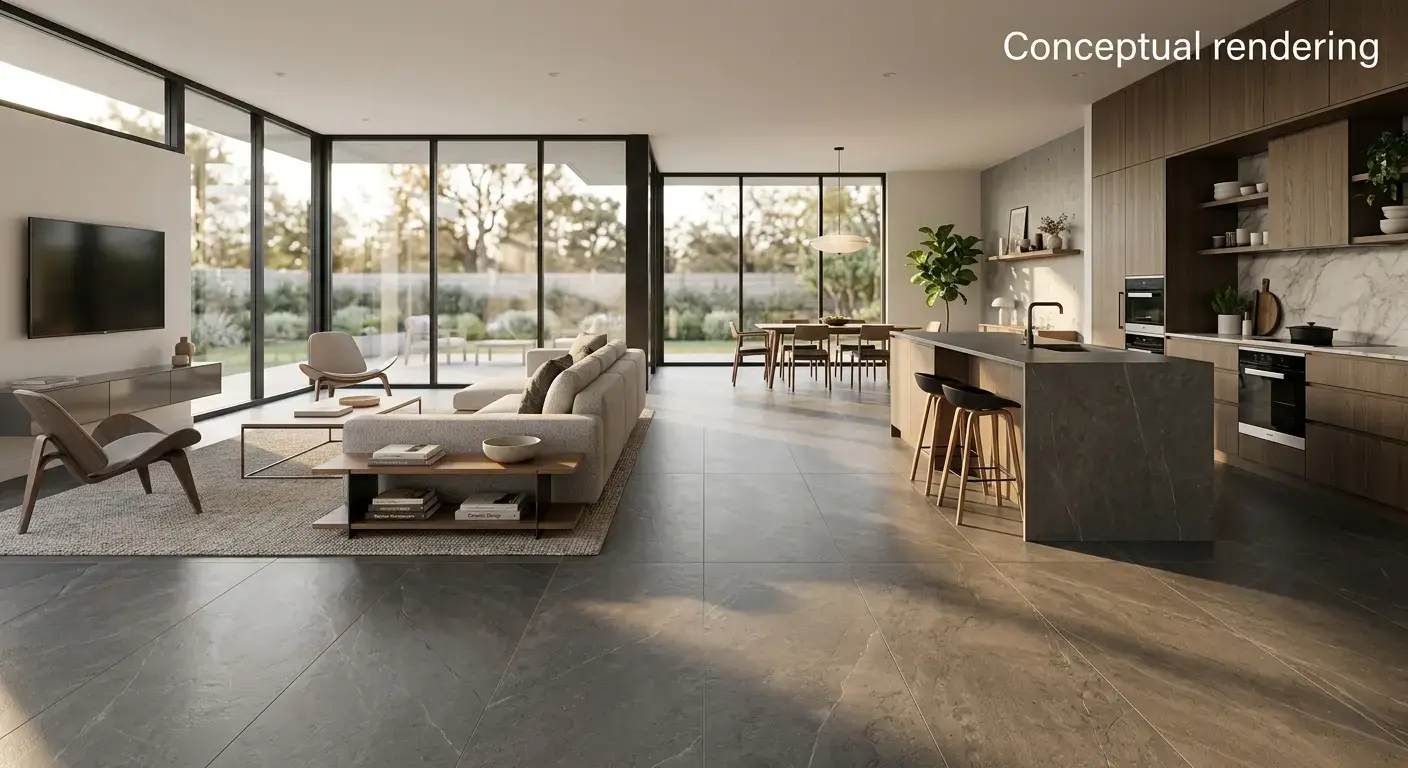
Large-format porcelain slabs are now appearing on living room and hallway floors in configurations that were previously associated only with natural stone. The low maintenance profile is a key factor: unlike polished marble floors that require periodic sealing and careful product selection for cleaning, porcelain floors hold up well under regular traffic with standard care. That durability comes with a qualifier: even hard-wearing surfaces benefit from proper care routines, and dragging heavy furniture across any slab floor without protection can cause surface damage.
The current design preference for large-format floors leans toward warm concrete-look and travertine-look porcelain finishes rather than the cool grey tones that defined the previous decade. These warmer tones connect more naturally to organic interior palettes featuring natural wood, linen, and unlacquered metal.
Feature Walls and Fireplace Surrounds
Porcelain slabs designed for wall applications can be used on feature walls and, in certain configurations, fireplace surrounds, though fireplace suitability varies by specific product and should always be confirmed before specification. The visual impact of a full-height slab feature wall in a living or dining room is significant: it functions as large-scale art while maintaining a clean, architectural quality that painted surfaces cannot replicate.
Quartz slabs are suitable for interior feature walls but are not recommended for fireplace surrounds due to heat sensitivity. For applications near direct heat sources, porcelain or natural stone materials offer more appropriate performance characteristics.
Sourcing Engineered Stone Slabs From a Specialist Supplier
Finding the right engineered stone slab requires more than browsing images online. The difference between a polished quartz slab in a catalog photograph and the same slab seen under showroom lighting can be significant enough to change a design decision entirely. Working with a specialist supplier who maintains a live slab inventory gives you an accurate picture of what you are actually selecting.
Nova Tile and Stone carries a curated selection of engineered stone slabs alongside natural stone options, available for in-person review at showroom locations in Reno and Minden. The in-person viewing process is particularly valuable for large-format floor and wall applications, where the slab's full pattern and finish quality need to be assessed at scale rather than from a cropped product image.
The full slab inventory covers both engineered and natural stone options, organized to help homeowners and trade professionals narrow down options efficiently. For trade professionals managing multiple client projects, a trade account provides streamlined access to pricing and inventory information. If you are ready to move forward on a specific project, a slab quote request is the fastest way to get accurate material information before committing to a design direction.
Industry standards published by the TCNA provide a useful technical reference for understanding how engineered stone and porcelain slabs are tested and rated, particularly for commercial applications where compliance documentation may be required.
Engineered Stone Slabs: A Quick Comparison
Feature | Quartz Slabs | Porcelain Slabs |
Suitable for kitchens | Yes | Yes |
Suitable for bathrooms | Yes | Yes |
Suitable for floors | Yes | Yes |
Suitable for walls | Yes | Yes |
UV stable (outdoor use) | No | Yes |
Fireplace surround | Not recommended | Check product spec |
Finish options | Polished, honed, specialty | Polished, honed, specialty |
Sealing required | Generally not required | Generally not required |
Pattern consistency | High (engineered) | High (engineered) |
Pros and Cons of Engineered Stone Slabs
Pros:
- Consistent color and pattern across multiple slabs, useful for large floor and wall applications
- Non-porous or low-porosity surfaces reduce sealing frequency compared to most natural stone
- Available in large formats that minimize visible seam lines
- Quartz and porcelain cover a wide finish range including polished and honed options
- Porcelain is UV-stable and suitable for exterior applications
Cons:
- Engineered patterning, while sophisticated, does not replicate the mineral depth of natural stone
- Quartz is not suitable for outdoor use or areas with significant UV exposure
- Polished finishes on any slab material become slippery when wet; wet-area applications require matte or textured surfaces
- Heat resistance does not equal thermal-shock resistance; trivets are still recommended near heat sources
- Color and veining variety, while broad, is still defined by manufacturer production runs
How to Choose an Engineered Stone Slab: A 4-Step Guide
Getting the right slab for your project does not require design expertise, but it does require a structured approach. This short sequence helps you move from inspiration to a confident material decision.
- Identify the application. Determine whether the slab will serve a kitchen countertop, bathroom wall, floor, or feature wall. The application defines which material types are appropriate and which finish options are safe and practical.
- Match finish to function. Polished finishes suit countertops and low-traffic wall panels. Honed or matte finishes are the better choice for floors and wet-area surfaces where slip resistance is a safety consideration.
- Review in person. Request an appointment to view slab options at a local showroom where full-slab panels can be assessed under real lighting conditions rather than relying on digital images alone.
- Request a formal quote. Once a direction is confirmed, submit a detailed quote request that includes application type, approximate square footage, and finish preference. This gives the supplier the information needed to confirm availability and slab matching across multiple pieces.
Conclusion
Engineered stone slabs have earned their place in today's most forward-looking interiors because they address real design and performance needs at the same time. From large-format porcelain floors in living areas to quartz kitchen countertops with matching backsplash walls, the applications are as broad as the material range. Understanding the distinctions between quartz and porcelain, selecting the right finish for each application, and viewing slabs in person before specifying are the three habits that lead to the strongest outcomes.
For homeowners and design professionals ready to explore what engineered stone slabs can do in a specific project, Nova Tile & Stone website is a practical starting point. Book an appointment to view options at the showroom and work through the selection process with knowledgeable staff. The right slab is easier to find when you can see it at full scale.
Frequently Asked Questions
What is the difference between quartz and porcelain engineered stone slabs?
Quartz slabs are manufactured from ground quartz bound with resins, producing a non-porous surface suited to interior kitchens and bathrooms. Porcelain slabs are fired from clay at high temperatures, creating a denser surface that is UV-stable and suitable for both indoor and outdoor applications. Both are engineered rather than quarried, which gives them more consistent patterning than natural stone.
Are engineered stone slabs good for bathroom walls?
Both quartz and porcelain slabs work well for bathroom wall applications. Porcelain is the stronger choice for full wet-area wall coverage, including shower surrounds, due to its very low water absorption rate. Quartz performs well on vanity walls and dry bathroom wall panels. For any wet-area floor or shower floor application, a honed or matte finish is necessary to maintain safe slip resistance.
Can engineered stone slabs be used on floors?
Porcelain slabs are suitable for both residential and commercial floor applications, and their UV stability makes them appropriate for exterior floors as well. Quartz slabs are used for interior floors but are not recommended for outdoor applications due to UV sensitivity. Any polished slab on a floor becomes a slip hazard when wet; honed or textured finishes are the appropriate choice for flooring in wet or high-traffic areas.
How do you maintain engineered stone slabs?
Most engineered stone slabs require no periodic sealing, but routine care still matters. Clean spills promptly, avoid abrasive cleaners and scouring pads, and use trivets near heat sources rather than placing hot cookware directly on the surface. Following the specific care guidelines provided by the manufacturer or supplier helps preserve the slab's appearance over the long term.
What finish is best for an engineered stone kitchen countertop?
Polished finishes are the most popular choice for kitchen countertops because they are easy to wipe clean and reflect light well. Honed finishes offer a softer, more matte appearance and can be a better fit for design schemes that favor a less reflective surface. Specialty finishes are available in select products. Polished is the more standard specification for kitchen countertop applications, but the best choice depends on the overall design direction and how much visible surface texture you want.