Quick Answer: The best natural stones for outdoor countertops are granite and quartzite due to their exceptional durability and weather resistance. Granite resists scratches, chemicals, and extreme heat, while quartzite offers similar resilience with more color options. Both require sealing every 2-3 years. Marble works well in covered outdoor areas with mild climates, while soapstone provides natural stain resistance but needs careful handling due to its softer composition.
What You Need to Know:
Natural stone transforms outdoor spaces with lasting beauty and functionality, but choosing the right type requires understanding key factors: weather resistance, maintenance needs, slip safety, and climate compatibility. This guide covers the four most popular natural stone options (granite, marble, soapstone, and quartzite), their specific durability characteristics, essential sealing requirements to prevent freeze-thaw damage, daily maintenance practices, and how regional climate affects stone performance. You'll learn exactly which stone suits your needs based on usage intensity, local weather patterns, and maintenance commitment level.
For decades, natural stone has been a cornerstone of interior design. From countertops and islands to floors and showers, its applications are vast, and its popularity is well-deserved. Natural stone offers smoothness, durability, and customization options. With an extensive palette of colors available, it brings sophistication and beauty to any environment.
Yet this elegance doesn't need to remain indoors. Natural stone works equally well in exterior applications. It can add distinctive texture to outdoor staircases or bring stunning visual appeal to exterior countertops. The diverse varieties of natural stone available make these possibilities even more exciting. In this guide, we'll explore popular natural stone materials for outdoor countertops to help you make the best choice for your property.
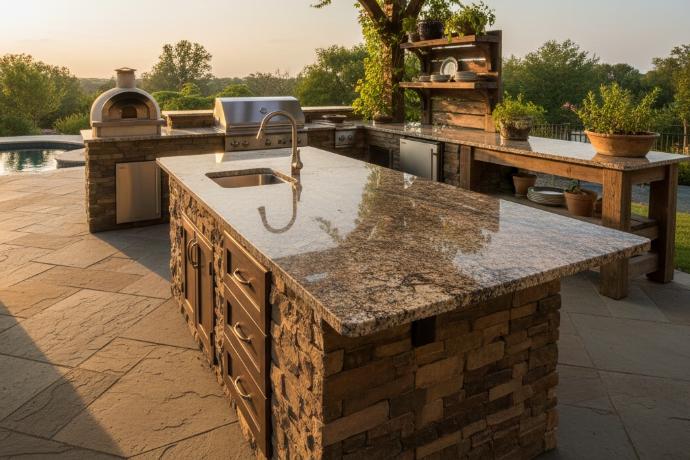
Weather Resistance and Durability
A critical consideration when selecting stone is its ability to withstand environmental conditions. The material must hold up against local weather patterns and regular use, which is why many homeowners prefer to shop local for materials suited to their specific climate. For walkway installations, the stone needs to endure consistent foot traffic. For countertop applications, it must resist damage from sharp utensils and kitchen tools.
Let's examine several popular natural stone options and assess their durability and weather-resistant properties. Common choices include:
- Granite: Regarded as one of the toughest natural stones available, granite has proven its worth in countless applications both inside and outside homes. It resists scratches, chemical exposure, and even intense heat, positioning it as a superior choice for outdoor countertops and fixtures. The sustainability, versatility, and recyclable nature of granite slabs add to its advantages.
- Marble: This stone exhibits slightly more sensitivity compared to granite. Nevertheless, it compensates with its elegant, timeless appearance. When properly sealed and cared for, marble slabs perform excellently in outdoor settings, infusing spaces with unmatched grace and classical charm.
- Soapstone: Unlike some natural stones that require sealing to prevent staining, soapstone offers inherent protection. Its nonporous composition prevents liquids and spills from penetrating and causing permanent discoloration. Soapstone slabs demand relatively minimal upkeep and acquire a distinctive patina that adds to their character. However, soapstone's softer composition compared to granite or marble means careful handling is necessary to maintain its look.
- Quartzite: Similar to granite, quartzite ranks among the most enduring and resilient natural stone options for countertops. It withstands high temperatures and handles everything from heavy rainfall to sharp-edged cutlery, particularly when properly sealed and maintained. Quartzite slabs offer an impressive spectrum of colors, allowing complete customization of your outdoor countertop design.
Enhancing Longevity Through Sealing
The resilience and lifespan of these materials can be substantially improved through regular sealing, which shields them from scratches, chips, and damaging weather conditions. Sealing becomes particularly crucial regarding freeze-thaw cycles. Throughout winter months, moisture can penetrate and freeze within your outdoor countertop. When water freezes, it expands, potentially causing stone fractures. Proper sealing blocks water infiltration initially, thus preventing these fractures and prolonging your countertop's durability.
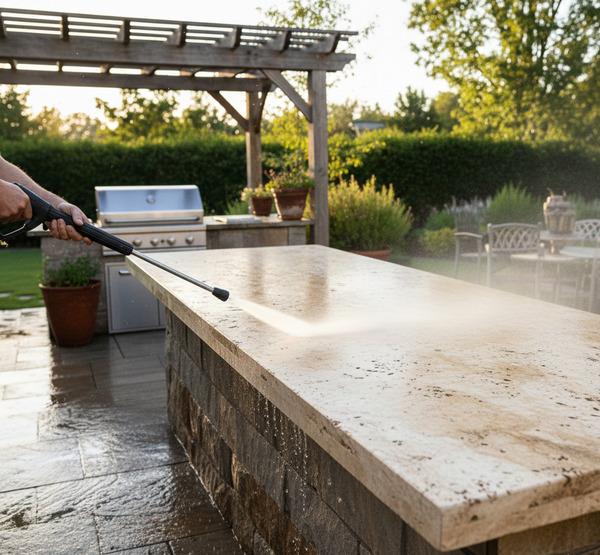
Care and Maintenance Needs
Though natural stone countertops offer impressive durability, they're not invincible. Consistent cleaning and sealing can dramatically increase their longevity. While different natural stones may demand varying levels of attention, several maintenance practices apply universally across all stone types:
- Prompt spill cleanup: Although sealed countertops provide protection against spills, you should still address messes immediately to account for any potential sealant gaps. This practice helps safeguard your countertop from buildup and grime.
- Post-use cleaning routine: Bacteria and mold can develop on countertops that appear clean, particularly in outdoor environments. Apply an antibacterial cleaner and thoroughly dry your countertop after each use.
- Gentle handling: Even highly durable countertops have vulnerabilities. When working with heavy or sharp items, keep them away from the countertop surface to avoid scratches and damage. Refrain from sitting on countertop edges whenever feasible.
- Temperature protection tools: While most natural stones offer some degree of heat resistance, hot pads and trivets provide additional safeguarding against extreme temperatures.
- Consistent resealing schedule: Sealing shields your countertop from staining, freeze-thaw damage, and various contaminants. It represents perhaps the most crucial aspect of preserving your countertop's condition. The frequency of resealing depends on your specific stone type, but maintaining this practice is non-negotiable for preserving your countertop's appearance and structural integrity.
Traction and Safety Features
Any surface intended for foot traffic must emphasize slip prevention. Certain natural stones, such as granite and quartzite, possess natural texture that promotes traction. Nonetheless, all outdoor stone tiles should receive anti-slip sealant treatment. Additional techniques like sandblasting or honing can further enhance grip.
These safety measures become especially critical around outdoor pools, showers, and pathways. Water accumulation is common in these locations, making material selection crucial for preventing slips and injuries. While no single stone stands out as the absolute best for outdoor tiles, proper sealant application can enhance slip resistance across all stone types. For project pricing and availability, consider submitting a slab quote request to compare suitable options for your specific needs.
Regional Climate Factors
Different geographical areas pose distinct challenges for outdoor natural stone installations. Properties in the southeastern United States, for instance, must contend with frequent rainfall and storms, particularly during hurricane season. Maintaining sealed countertops and walkways becomes essential under these circumstances.
Conversely, regions like the southwestern U.S. face extreme heat conditions, which can impact both the stone material and its protective sealant. In such climates, adjusting maintenance routines becomes necessary to ensure optimal performance.

Discover Your Ideal Stone With Nova Tile and Stone
Choosing appropriate stone countertops for outdoor applications can feel overwhelming, but you don't have to navigate this alone. Our tile and stone company stands ready to assist your search with expert staff and an exceptional inventory of natural stone slabs sourced from around the globe.
Conclusion
Transforming your outdoor spaces with natural stone creates lasting value and timeless beauty for your property. Whether you're designing an outdoor kitchen, installing elegant walkways, or enhancing your patio with stunning countertops, the right stone selection makes all the difference. Granite offers unmatched durability for high-traffic areas, while marble brings classical elegance to sheltered outdoor spaces. Soapstone provides low-maintenance luxury, and quartzite delivers both resilience and visual versatility.
Success with outdoor natural stone comes down to three key factors: selecting a material that matches your climate and usage needs, committing to regular sealing and maintenance, and working with knowledgeable professionals who understand stone characteristics. By prioritizing these elements, your outdoor stone installations will continue to impress for years to come. Take the time to evaluate your specific requirements, consider your local weather patterns, and don't hesitate to seek expert guidance. The investment you make in quality natural stone slabs and proper care will reward you with outdoor spaces that combine functionality with breathtaking aesthetics. For contractors, designers, and industry professionals seeking exclusive pricing and benefits, be sure to apply for trade account to access additional resources and support.
Frequently Asked Questions
What is the most durable natural stone for outdoor countertops?
Granite and quartzite rank as the most durable options for outdoor countertops. Both stones resist scratches, withstand extreme temperatures, and handle daily use exceptionally well. Granite has a proven track record in outdoor applications, while quartzite offers similar durability with unique color options. When properly sealed and maintained, either stone can last decades in outdoor environments, making them excellent long-term investments for your exterior spaces.
How often should I reseal my outdoor natural stone countertops?
Resealing frequency depends on your specific stone type and local climate conditions. Generally, outdoor natural stone countertops should be resealed every 1-3 years. Granite and quartzite typically need resealing every 2-3 years, while marble and soapstone may require more frequent attention annually or bi-annually. To test if your countertop needs resealing, sprinkle water on the surface, if it absorbs rather than beads up, it's time to reseal. Harsh weather conditions and heavy use may necessitate more frequent sealing schedules.
Can marble be used for outdoor countertops in all climates?
Marble can work beautifully in outdoor settings, but it requires careful consideration of your climate. In regions with mild weather and minimal freeze-thaw cycles, properly sealed marble performs well. However, in areas with harsh winters, frequent temperature fluctuations, or high rainfall, marble's porous nature makes it more vulnerable to damage. If you love marble's aesthetic but live in a challenging climate, consider installing it in covered outdoor areas or choosing a more weather-resistant alternative like quartzite that offers similar veining patterns.
What maintenance is required to keep outdoor natural stone looking its best?
Outdoor natural stone requires consistent but straightforward maintenance. Clean up spills immediately to prevent staining, even on sealed surfaces. After each use, spray the countertop with an antibacterial cleaner and wipe it dry to prevent mold and bacteria growth. Use cutting boards, hot pads, and trivets to protect against scratches and heat damage. Avoid placing excessive weight on countertop edges. Most importantly, maintain your resealing schedule based on your stone type. These simple practices will preserve your stone's beauty and extend its lifespan significantly.
How do I choose between granite, marble, quartzite, and soapstone for my outdoor project?
Your choice should balance aesthetics, durability needs, maintenance commitment, and climate factors. Choose granite for maximum durability and minimal maintenance in high-use areas or extreme climates. Select marble if you prioritize elegant aesthetics and can commit to regular maintenance in a moderate climate. Opt for quartzite when you want granite-like durability with more color variety and distinctive patterns. Pick soapstone if you prefer a naturally non-porous stone with unique character that requires gentle handling.
Consider your lifestyle, local weather, intended use, and willingness to perform regular maintenance when making your final decision. If you’d like personalized guidance and to view full slabs in person, schedule an appointment to discuss the best option for your specific outdoor project.