Mixing countertop materials means using two different surfaces in the same kitchen, typically one material on the perimeter counters and a different material on the island. The most common pairings are quartzite or marble islands set against granite or porcelain slab perimeters, and sintered stone work zones paired with a contrasting natural stone island. The approach works because different areas of a kitchen have different demands: high-traffic zones near the sink and stove benefit from durable, non-porous surfaces, while the island is better suited for a more expressive stone that serves as a visual focal point. A mixed countertop kitchen looks cohesive rather than mismatched when the two materials share undertones, balance pattern weight between them, and each surface is chosen for the zone it serves best.
Why Homeowners Are Mixing Countertop Materials
Not long ago, most kitchens used a single countertop material throughout. Today, that approach is less common. Open-concept kitchens with large islands have given homeowners a natural opportunity to treat the island as a visual centerpiece, separate from the surrounding perimeter. Designers and homeowners have responded by selecting a statement material for the island and a more subdued, workhorse material for the counters that take daily abuse near the sink, stove, and prep zones.
The practical argument is just as strong as the design one. High-traffic areas benefit from surfaces that are tough, non-porous, and easy to clean. A surface that works beautifully as an island focal point may not be the right choice for a busy perimeter counter that sees constant contact with water, acidic foods, and sharp utensils. Mixing materials allows each surface to do exactly what it is best suited for.
Start With a Design Anchor
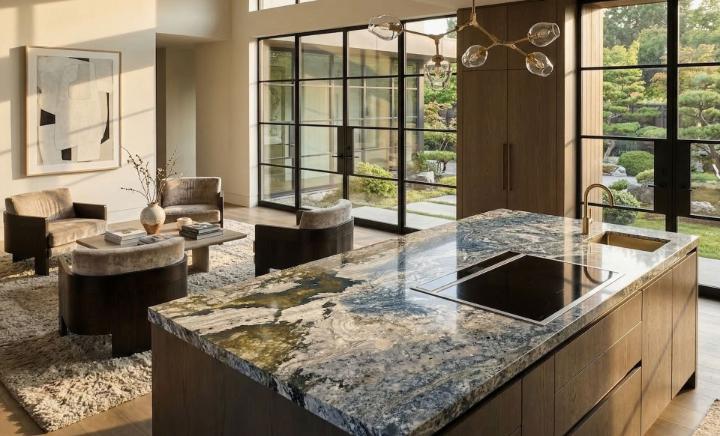
Before selecting any materials, decide which surface will serve as the anchor of the design. In most kitchens, the island plays this role. It occupies the most visible position in the room and offers the most surface area to showcase a dramatic slab. Starting here makes every other decision easier.
Once you have chosen your anchor material, everything else should support it rather than compete with it. If the island features a quartzite slab with bold, sweeping veins in cream and gold, the perimeter counters should stay quieter. A honed granite in a warm neutral tone would allow the island to remain the focal point without the two surfaces fighting for attention. The goal is contrast that feels curated, not chaos.
Matching Undertones, Not Just Colors
The most common mistake when mixing countertop materials is focusing on surface color without paying attention to undertones. Two stones can look similar in isolation and clash completely once they are installed side by side. Granite with cool gray undertones will feel disconnected next to a marble or quartzite that reads warm beige or gold.
Before committing to any combination, view the full slabs together in the same lighting conditions. According to This Old House, natural stone can look significantly different depending on lighting, which is why evaluating slabs in person under varying light conditions is essential before making a final selection. Pay attention to the secondary tones within each stone, not only the dominant color. Veining in one slab often pulls from the base tone of the other, and finding that thread of shared color is the key to making a mixed countertop kitchen feel cohesive.
Warm undertones, such as cream, gold, beige, and brown, work naturally together. Cool undertones including gray, white, blue-gray, and charcoal follow the same logic. Mixing warm and cool can work, but it requires a deliberate bridge element like cabinet color, hardware finish, or flooring to tie the two surfaces together visually.
Balancing Pattern and Movement
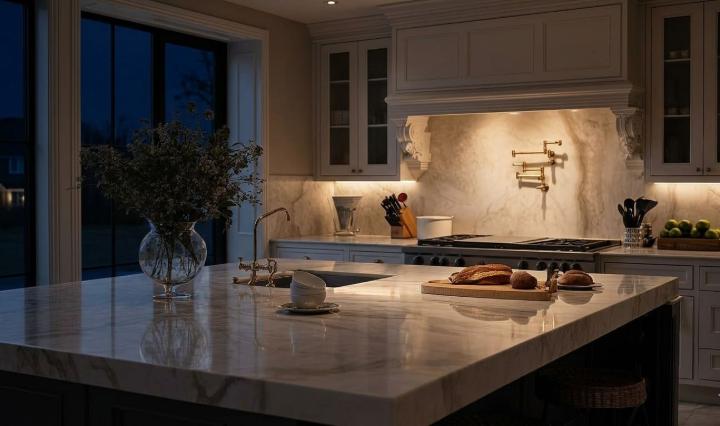
Natural stone slabs vary widely in how much visual movement they carry. A quartzite slab with long, dramatic veins has significant pattern weight. A honed granite in a solid charcoal has almost none. Pairing two high-movement stones in the same kitchen is rarely successful because neither surface has room to breathe, and the eye does not know where to land.
A reliable rule is to let one surface carry the pattern and let the other stay relatively quiet. If the island features a marble with bold gold and gray veining across a white base, the perimeter counter should be a material with minimal movement. Conversely, a perimeter in a busy granite calls for a more restrained island surface. Keeping this balance in place is what separates a kitchen that feels intentional from one that feels overwhelming.
Finishes also play a role in balancing the visual weight of two materials. A leathered or honed finish on one surface and a polished finish on the other creates textural contrast that adds depth without relying on pattern. This combination is especially effective when both materials share similar color families, since the finish difference provides enough distinction to keep each surface readable as its own design element.
Assigning Materials to Zones
One of the practical benefits of mixing countertop materials is the ability to match each surface to how that part of the kitchen is actually used. The perimeter counter near the sink and stove handles the most demanding daily work. This zone benefits from a surface that is non-porous, heat-tolerant, and resistant to staining from food and cleaning products.
Porcelain slabs and sintered stone perform exceptionally well in this role. Both are non-porous, never require sealing, and stand up to heat and moisture without any special care. As the CDC and NIOSH have noted, silica dust exposure is a serious occupational concern with some engineered stone products, making fully sintered materials like porcelain slabs and sintered stone a safer choice for households mindful of long-term material considerations. Quartzite and granite are also excellent in high-use zones when properly sealed, bringing natural stone character without the vulnerability of softer materials.
The island, by contrast, often functions more as a gathering space, serving area, and design centerpiece than as a primary prep surface. This is where a more expressive material like marble, onyx, or a dramatic quartzite slab fits naturally. The island sees lighter daily wear in most kitchens, which makes it the right place for a material that prioritizes beauty alongside reasonable durability.
Travertine is another natural stone that works well in a supporting role, particularly in kitchen designs that lean toward warm Mediterranean or transitional aesthetics. Its characteristic texture and warm earth tones pair naturally with honed granite or a soft quartzite on the perimeter without either surface overpowering the other.
How Many Materials Is Too Many
Two countertop materials is the standard for mixed kitchens and represents the right ceiling for most residential spaces. Three materials can work in very large kitchens with clearly defined zones, such as a separate bar area or a butler's pantry that functions as a distinct room. In a standard open kitchen, three materials almost always creates visual clutter.
Two materials give enough contrast to feel intentional while keeping the design grounded. The island and the perimeter counters are the two primary surfaces, and giving each one its own material is both practical and visually satisfying. Beyond that, additional materials are best introduced through the backsplash, flooring, or fixtures rather than through additional countertop surfaces.
Common Combinations Worth Considering
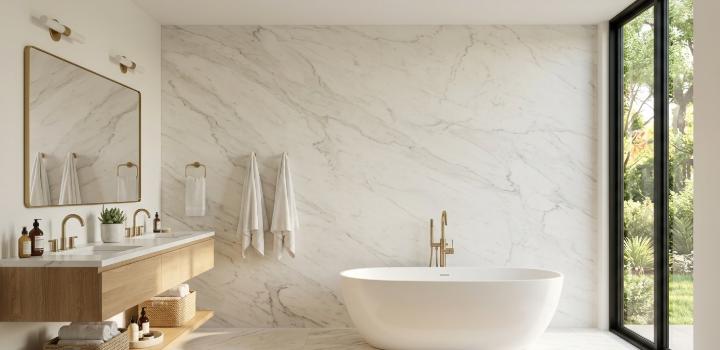
Several pairings work reliably well across a range of kitchen styles. Fine Homebuilding notes that understanding the hardness and porosity of each stone is essential when planning a kitchen where two different natural materials will share the same space, since mismatched care requirements can complicate long-term maintenance.
A quartzite island alongside a granite perimeter is one of the most versatile combinations available. Both are natural stones with similar care requirements, and the wide range of colors available in each material makes it easy to find a pairing with shared undertones. The quartzite brings drama and movement while the granite provides a steady, durable foundation.
Marble paired with a honed porcelain slab perimeter is a strong choice for kitchens that want the elegance of natural stone on the island without sacrificing practicality in the work zones. The porcelain slab requires no sealing and handles daily abuse without complaint, while the marble provides the classic, luminous look that is difficult to replicate with any other material.
Sintered stone on the perimeter paired with a leathered quartzite island is an increasingly popular combination for modern and transitional kitchens. Both materials are refined and high-performance, and the textural contrast between the smooth sintered surface and the leathered stone finish creates a sophisticated interplay without relying on dramatic color differences.
Conclusion
Mixing countertop materials is one of the most effective ways to create a kitchen that is both beautiful and genuinely functional. By letting one material lead as the visual anchor, matching undertones carefully, balancing pattern weight between the two surfaces, and assigning each material to the zone it is best suited for, the result is a kitchen that feels cohesive and considered rather than disjointed. The key is treating the two surfaces as partners in the same design rather than independent choices.
As a direct stone importer, our team carries a full selection of slab materials, including granite, quartzite, marble, travertine, onyx, porcelain slabs, and sintered stone. We offer free design consultations to help you find the right pairing for your kitchen at our showrooms in Reno, Minden, Sacramento, and Fernley. When you're ready to shop local and see full slabs in person, visiting a showroom is the most reliable way to evaluate how two materials will look side by side before committing to either one.
Frequently Asked Questions
Can you mix two different natural stones on kitchen countertops?
Yes. Mixing two natural stones is one of the most popular approaches in modern kitchen design. The most important factors are shared undertones and balanced pattern weight. Two stones with significant movement can overwhelm a space, so pairing a high-movement stone like a veined quartzite with a calmer stone like a solid-toned granite tends to produce the most cohesive result. Both materials will also require sealing, which simplifies the maintenance routine since the same care applies to each surface.
What is the best material to use on a kitchen island when mixing countertops?
The kitchen island is the natural choice for the more expressive or visually dramatic material in a mixed countertop kitchen. Quartzite, marble, and statement granite slabs with bold veining all work well here because the island functions more as a gathering and serving area than as a primary prep surface. Onyx is another option for islands in kitchens where a luminous, distinctive look is the goal. Choosing the most striking material for the island and keeping the perimeter more subdued gives the overall design a clear focal point.
Does mixing countertop materials make the kitchen harder to maintain?
A: It depends on which materials you select. If both surfaces are natural stone, they will share similar sealing and cleaning requirements, which keeps maintenance straightforward. If one surface is a natural stone and the other is a non-porous material like porcelain slab or sintered stone, the non-porous surface requires no sealing at all while the natural stone will need periodic resealing. In either case, using pH-neutral cleaners safe for natural stone on both surfaces is a reliable approach that works across most combinations.
How do you know if two countertop materials will look good together?
The most reliable method is to view the full slabs side by side before making a decision. Countertop materials can look different in a small sample than they do at full slab scale, and natural light reveals undertones and veining that artificial showroom lighting can sometimes obscure. Look for a shared color thread between the two slabs, whether that is a tone in the veining of one that echoes the base color of the other, or a shared warm or cool undertone. If the two materials share that connection, they will read as intentional together rather than accidental.
Is it more expensive to use two different countertop materials in one kitchen?
The overall cost depends on which materials you choose and how much surface area each covers. Selecting a premium statement stone for the island and a more durable, value-oriented material for the larger perimeter counter is actually a common way to achieve a high-end look while managing the overall project budget. Using an expressive marble or quartzite only on the island, which typically covers less square footage than the full perimeter, allows more flexibility in material selection without committing that stone to the entire kitchen.