What does maintaining Calacatta marble involve? Calacatta marble is a premium natural stone defined by a bright white base and bold veining in gold, taupe, brown, or deep gray. Like all natural stone, it is porous and acid-sensitive, which means consistent care directly determines how well the stone holds up over time. Understanding why maintenance matters, and what it actually involves, helps owners protect their investment from the moment the stone is first installed.
Key maintenance facts at a glance:
| Factor | Detail |
|---|---|
| Porosity | Porous; absorbs liquids without a proper sealant barrier |
| Acid sensitivity | Reactive to citrus juice, vinegar, and acidic cleaners |
| Sealing frequency | Every 6 to 12 months depending on use and exposure |
| Recommended cleaner | pH-neutral stone cleaner or mild liquid soap with warm water |
| Finishes available | Polished, honed, leathered; each with different care considerations |
| Primary risk | Staining from delayed spill response; etching from any acid contact regardless of response time |
Calacatta marble is durable, but its longevity depends entirely on how consistently it is maintained. The stone resists everyday wear, but care instructions must always be followed to preserve its appearance over time.
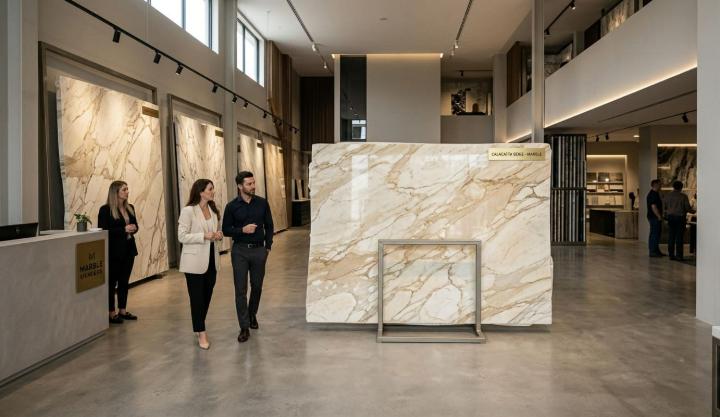
Why Proper Stone Care Matters More Than Most Homeowners Expect
Many homeowners assume that applying a protective treatment once is sufficient. With Calacatta marble, that assumption leads to avoidable damage. The stone's calcium carbonate composition makes it chemically reactive to acidic substances. When an acid contacts the material, it dissolves a microscopic layer of the stone, leaving behind a dull, discolored patch known as an etch mark. This reaction happens regardless of whether the stone has been treated, because sealants protect against staining by slowing liquid absorption into the pores, but they offer no protection against etching. Acid reacts on the surface of the stone immediately upon contact and does not need to be absorbed to cause damage.
Etching and staining are the two most common problems that develop when care is inconsistent. Staining occurs when liquids penetrate the porous material and leave a discolored residue behind. Etching, by contrast, is a chemical reaction rather than a deposit, which means it cannot be wiped away. It requires professional polishing or abrasion to correct. Understanding this distinction is critical for anyone who wants to keep the stone looking the way it did when first installed.
The Natural Stone Institute notes that all natural stone benefits from regular protective treatment and pH-neutral cleaning as the most reliable approach to long-term care. Our natural stone slab inventory includes a range of Calacatta varieties, each with specific finish characteristics that influence how the material should be cared for.
Sealing and Stone Protection: What Homeowners Need to Know
Applying a protective sealant is one of the most important steps in caring for Calacatta marble. It is important to understand, however, that sealants do not make the stone impervious to staining. They make the stone more resistant to staining by slowing liquid absorption, giving you more time to clean up spills before they penetrate and leave a residue behind. The treatment penetrates the stone's pores to reduce that absorption rate rather than forming a coating on top of the material. It is important to note, however, that no standard sealant prevents etching, since acid reacts directly on the surface and does not depend on absorption to cause damage.
The protective barrier should be applied upon installation and reapplied every 6 to 12 months depending on the level of use and exposure to moisture. A simple water test helps determine when a fresh application is needed: if a few drops of water bead up on the material, the existing treatment is still effective; if the water absorbs quickly and darkens the stone, it is time for reapplication. The stone is built for lasting use, but this periodic attention is essential to maintaining that durability over time.
The frequency of reapplication also varies by location. Wall cladding and accent panels in low-contact areas may need attention only once a year, while installations in higher-moisture environments require more consistent care. Our team is available through a free design consultation to help guide you on the right protection schedule for your specific application and finish.

Daily Cleaning Practices That Protect the Finish
Day-to-day cleaning of Calacatta marble is straightforward, but the products and tools used matter significantly. The material is easy to maintain, but abrasive cleaners and harsh chemicals should always be avoided. Cleaning the stone regularly with the wrong products causes gradual degradation that is difficult and costly to reverse.
For routine care, a soft cloth or microfiber mop with warm water is sufficient for removing dust and light residue. For deeper cleaning, a pH-neutral stone cleaner or mild liquid dish soap diluted in warm water is appropriate. It is important to avoid using excessive amounts of soap or cleanser, as residue buildup can leave a film and cause streaks over time.
The following substances should never come into direct contact with Calacatta marble: vinegar, lemon juice, wine, coffee, and any cleaning product that contains bleach, ammonia, or hydrofluoric acid. These materials either etch the calcium carbonate in the stone or degrade the protective layer, leaving the material vulnerable to staining. Understanding how to clean marble surfaces with the right products from the start prevents the kind of damage that requires professional restoration to address.
Responding to Spills Before Damage Sets In
Prompt response to spills is one of the most effective forms of ongoing marble care. The stone performs well in everyday environments, but standing liquids should never be left on the material for extended periods. Even water, if left to pool and evaporate repeatedly, can eventually cause mineral deposits or discoloration over time.
When a spill occurs, blotting rather than wiping is the correct approach. Wiping spreads the liquid across a larger area and increases the likelihood of absorption into the stone. Blotting lifts the spill directly without spreading it further. After blotting, the area should be cleaned with a damp cloth and a pH-neutral cleanser, then dried thoroughly.
For tougher organic stains such as wine, coffee, or tea, a professional stone care specialist can apply the appropriate treatment to draw the stain out without risking further harm to the material. Difficult stains should always be assessed by a qualified professional rather than treated with aggressive cleaning agents that could cause additional damage to the finish or the underlying stone. Our showroom team across Reno, Minden, Sacramento, and Fernley can connect you with the right resources for ongoing care guidance specific to your Calacatta variety and finish.
How Your Finish Choice Affects Long-Term Care
The finish applied to a Calacatta stone surface directly affects how it behaves in daily use and what ongoing care it requires. A polished finish amplifies the visual depth of the veining but shows fingerprints and light marks more readily, and requires consistent wiping to maintain its reflective appearance. A honed finish has a more open, matte texture that can be more susceptible to staining than polished if a protective treatment is not consistently maintained. A leathered finish offers a textured, low-sheen appearance that helps conceal smudges, but care instructions should still be followed consistently to maintain the finish over time.
Regardless of finish, trivets and heat pads are always recommended when placing warm items near the material, as direct contact with very hot objects should be avoided even though the stone handles ambient heat well. Similarly, cutting directly on the material is not recommended; a cutting board should always be used to protect the finish and prevent fine scratches that accumulate over time.
Understanding how to select the ideal stone finish before installation also plays a role in how manageable the care routine will be, since each finish responds differently to wear, moisture, and cleaning frequency.
When to Seek Professional Stone Restoration
Consistent daily care and periodic re-protection handle most maintenance needs, but some situations require professional assessment rather than at-home management. Deep staining that does not respond to standard cleaning, visible etch marks on a polished finish, surface cracks or chips, and general dulling of a once-bright appearance are all signs that professional stone restoration may be appropriate.
Stone restoration professionals have access to diamond abrasive tools and polishing compounds that can resurface and re-hone marble without damaging the underlying material. The material is built for lasting use, but each application and level of damage should be evaluated individually before deciding on a course of action.
For trade professionals specifying Calacatta marble across residential or commercial projects, our trade account program provides access to expert support and detailed material guidance tailored to professional applications. Homeowners planning a new installation can submit a slab quote request to begin the planning process.
Maintenance Considerations Across Different Applications
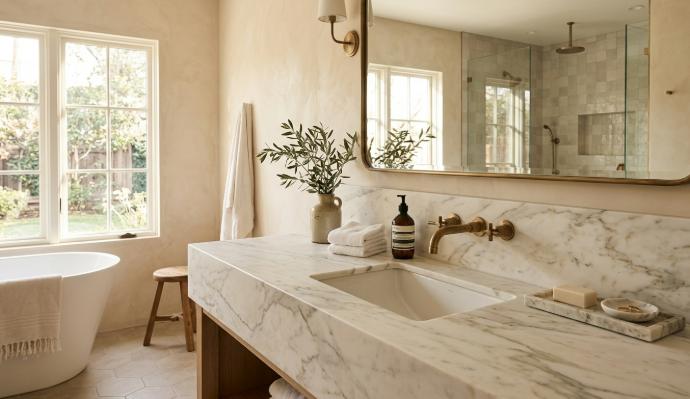
Calacatta marble behaves differently depending on where it is installed, and the care approach should reflect that.
In bathroom vanities and wall cladding, the primary concern is moisture. Panels in humid environments benefit from more frequent re-protection and should be wiped down and dried after regular use. The stone performs well in indoor humid spaces, but a proper protective barrier is still needed to guard against moisture and staining over time.
In shower surrounds, grout lines and the stone itself both require attention. A squeegee after each use reduces water mineral buildup, and the area should be dried rather than left wet. Polished finishes in wet zones may be more slippery when wet, so a honed or textured finish is preferred for floor applications in those environments.
In fireplace surrounds and accent walls, the material sits further from moisture but still benefits from annual re-protection and regular dusting. Radiant heat from a fireplace does not typically damage the stone, but direct contact with flames or extreme heat should always be avoided.
Conclusion
Calacatta marble is a material that rewards attentiveness. Its bold veining and luminous white background are capable of defining a space for decades, but only when the stone receives the consistent care it requires. Applying a protective treatment on a regular schedule, cleaning with the right products, responding to spills promptly, and protecting the finish from abrasion and heat are not complicated tasks, but they do require commitment.
The difference between a Calacatta installation that looks as striking at year ten as it did when first installed, and one that has dulled and stained beyond recovery, comes down entirely to how it has been maintained. Nova Tile and Stone carries a curated selection of natural stone surfaces alongside the expertise to help you understand exactly what your chosen material needs to perform its best over the long term.
Frequently Asked Questions
How often should Calacatta marble be re-sealed or treated for protection?
A fresh protective application is recommended every 6 to 12 months depending on the level of use and exposure to moisture. A simple water test determines when reapplication is needed: if water beads on the material, the existing treatment is still working; if it absorbs quickly and darkens the stone, it is time for a new application. Higher-use installations and those in humid environments generally require more frequent attention than low-contact wall panels or accent features.
What cleaners are safe to use on Calacatta marble?
A pH-neutral stone cleaner or a small amount of mild liquid dish soap diluted in warm water is appropriate for regular cleaning. Harsh chemicals, bleach, ammonia, vinegar, and any acidic or abrasive cleaning products should always be avoided, as they can etch the material or degrade the protective layer over time. The stone is easy to maintain, but the wrong products cause damage that is difficult and costly to reverse.
What is the difference between staining and etching on marble?
Staining occurs when a liquid penetrates the porous material and leaves a discolored deposit beneath the surface. Etching is a chemical reaction caused by acidic substances that dissolves a thin layer of calcium carbonate, leaving a dull or lightened patch on the finish. Staining may respond to professional stone treatment, depending on the depth and type of stain, but etch marks require professional polishing or re-honing to fully correct since they represent a physical change to the stone's surface rather than a deposit within it.
Can Calacatta marble be used in a bathroom shower?
Yes. Shower wall surrounds are one of the most refined applications for this material. The stone performs well in indoor humid environments, but a proper protective barrier is essential to guard against moisture penetration and staining. For shower floors and other wet applications, a honed or textured finish is preferred over polished, as polished finishes may be more slippery when wet.
How do I know if my Calacatta marble needs professional restoration?
Signs that professional attention may be needed include deep staining that does not respond to standard cleaning, visible etch marks on a polished finish, surface cracks or chips, and general dulling that cannot be addressed through regular care. The material is built for lasting use, but significant damage should always be evaluated by a stone care professional rather than treated with aggressive at-home methods that risk causing further harm.