High-quality natural stone slabs should have consistent thickness (3cm standard), low porosity (water beads on surface), natural well-distributed veining, uniform coloring, and be free from cracks, though harmless fissures are normal. Granite offers superior durability for kitchens, marble provides elegant aesthetics for lower-traffic areas, and quartzite delivers the hardest option with marble-like appearance.
Inspect slabs under natural lighting, perform water absorption tests, check thickness uniformity with a measuring tape, and run your fingernail across any lines to distinguish structural cracks (which catch your nail) from safe fissures (which feel smooth).
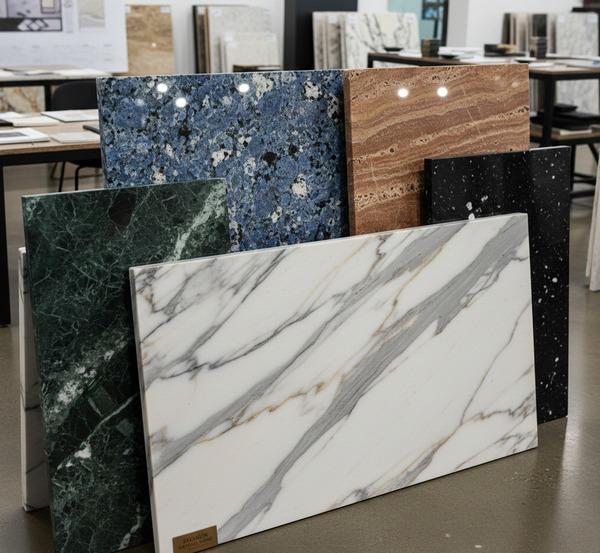
Understanding Different Types of Natural Stone
Before quality assessment begins, recognizing the traits of popular natural stones proves valuable. Every variety possesses distinctive attributes that suit specific uses.
Granite
Granite represents an igneous rock recognized for its outstanding hardness and longevity. It demonstrates strong resistance to scratches, heat exposure, and daily usage, establishing it as a superior selection for kitchen surfaces and busy locations. Granite appears in diverse colors and speckled designs.
Marble
Marble represents a metamorphic rock valued for its sophisticated veining and premium aesthetic. It possesses less hardness than granite, rendering it more vulnerable to scratching and etching from acidic materials.
Nevertheless, these organic characteristics can enhance marble's appeal for numerous individuals. This stone commonly appears in bathroom vanities, fireplace enclosures, and ornamental features, where it experiences less rigorous application.
Quartzite
Quartzite represents a metamorphic rock originating as sandstone, transforming through extreme heat and pressure. It demonstrates exceptional hardness and durability, surpassing granite's strength, and provides an aesthetic resembling marble with superior toughness. This resemblance establishes it as a preferred option for active kitchens, floor highlights, and additional busy areas.
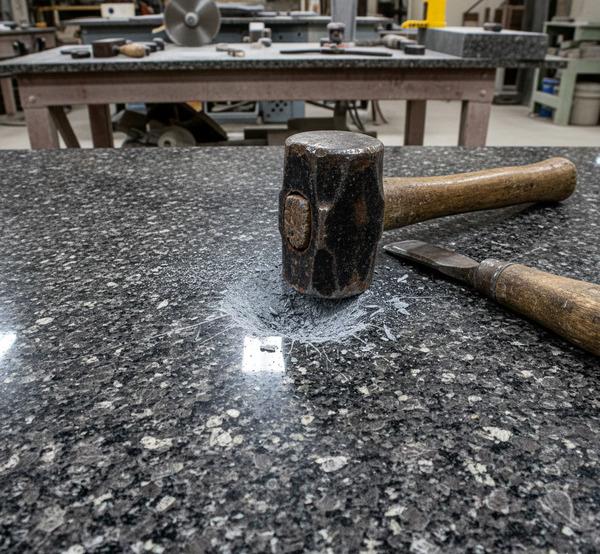
Key Factors To Evaluate Quality
Monitor several critical elements when examining a natural stone slab. These characteristics will assist you in establishing the stone's quality and appropriateness.
Stone Hardness
The stone's hardness establishes its resistance to scratching and surface wear. A superior, hard stone, like quartzite, will withstand scratching, whereas a softer stone may display marks more readily.
Keep in mind, granite and quartzite possess greater hardness than marble. This distinction proves essential to evaluate based on your planned application and positioning for your natural stone.
Slab Porosity
Porosity indicates the quantity of microscopic pores throughout the stone, influencing how readily it absorbs moisture, which is why it’s important to shop local and evaluate slabs in person when possible. Stones with lower porosity demonstrate stronger stain resistance. Granite exhibits relatively minimal porosity, whereas certain marble slabs display higher porosity.
Apply several water droplets on your stone specimen to observe absorption speed. The stone possesses minimal porosity if the water forms beads. The stone exhibits greater porosity and will demand a strong sealant if the water rapidly penetrates.
Slab Thickness
A slab's thickness affects its stability and longevity. The industry benchmark for countertop thickness typically measures three centimeters (approximately 1.25 inches). Slabs measuring around two centimeters thick may demand additional support.
Confirm the thickness remains uniform throughout the complete slab. Variable thickness can generate installation difficulties and may signal inferior fabrication quality. Utilize a measuring tape to verify multiple points along the perimeters.
Patterns and Veining
Veining represents the design of lines and coloration flowing through the stone, establishing its distinctive character. In a display center, the veining should present a natural appearance and balanced distribution in premium slabs. Uneven or splotchy designs can occasionally signal a lower-quality stone slab.
Book-matched slabs, where two adjacent surfaces create mirror images, indicate superior quality and craftsmanship. This design creates a striking visual impact but typically carries a premium price.
Color Consistency
Though variation characterizes natural stone's attraction, the overall coloration should remain uniform across the stone. Substantial discoloration or sections that appear misplaced could signal contaminants or fillers.
Examine the slab under strong, natural illumination to obtain an precise perception of its authentic color. Artificial illumination can modify the appearance, so attempt to evaluate it outside or adjacent to a natural light source when feasible.
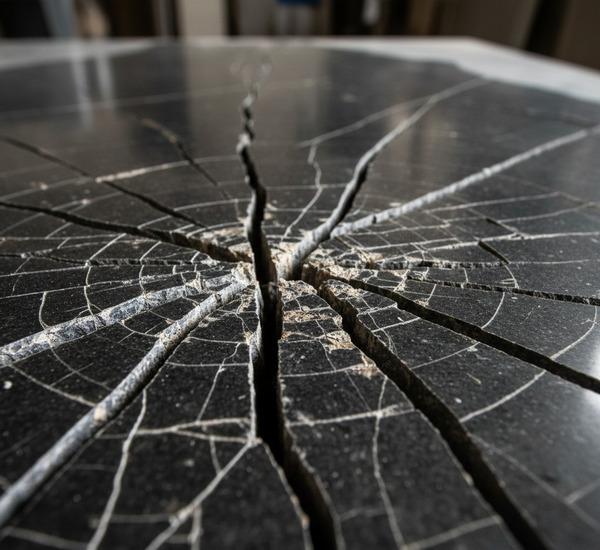
Common Defects and How To Spot Them
A premium slab should lack visible imperfections. Understanding how to identify these concerns will assist you in preventing a poor purchase.
Cracks
Cracks represent structural defects that can compromise the slab. They differ from fissures, which occur naturally and do not affect the stone’s structural integrity. A crack will produce a rough sensation when touched and may extend through the full thickness of the slab.
When viewing an in-store display, examine the slab’s surface and edges carefully to detect a crack. Slide your fingernail along any visible line, if it catches, it is likely a crack, whereas a fissure will feel smooth.
Fissures
Fissures represent natural divisions along the stone's crystalline composition. They constitute a typical feature of numerous natural stones and don't compromise the slab, but may influence its visual attractiveness.
Fissures manifest as fine lines but remain structurally stable. A trustworthy supplier can assist you in recognizing them and verifying that they pose no structural risk.
Staining
Stains can develop if the stone has absorbed fluids, causing discoloration. Examine the slab thoroughly for any dark areas or sections that appear distinct from the remaining stone.
Review the borders and any sections that may have encountered moisture. A premium slab should display a consistent appearance without any indication of staining.
Though some slight imperfections occur naturally, they should not compromise the stone's aesthetics. Glide your hand across the face to detect any uneven areas or irregularities. A properly finished slab should produce a smooth and consistent sensation when touched.
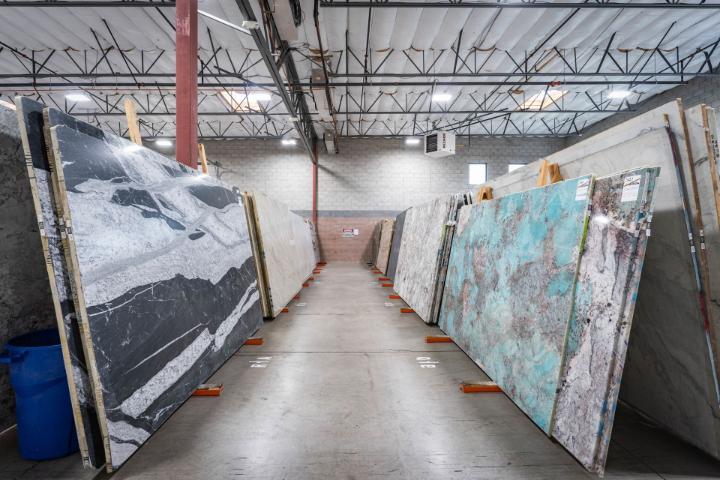
Find High-Quality Stone Slabs at Nova Tile and Stone
Nova Tile and Stone dedicates itself to supplying our customers with premium natural stone slabs. Our team meticulously chooses each piece to guarantee it satisfies our elevated standards for quality and aesthetics. We encourage you to visit our showroomsto browse our comprehensive collection.
Selecting a natural stone slab represents a meaningful decision, but it need not be stressful. By comprehending the various types of natural stone and recognizing what to seek, you can confidently choose a premium piece that matches your vision.
Conclusion
Selecting high-quality natural stone slabs requires careful evaluation of multiple factors, from understanding stone varieties to identifying potential defects. By examining hardness levels, porosity, thickness consistency, veining patterns, and color uniformity, you can make an informed investment that enhances your space's beauty and functionality.
Remember to inspect slabs under natural lighting, test for porosity, and distinguish between harmless fissures and problematic cracks. Whether you choose the durability of granite, the elegance of marble, or the resilience of quartzite, your attention to these quality indicators will ensure you select a slab that delivers lasting value and visual appeal for years to come.
Frequently Asked Questions
What is the most durable natural stone for kitchen countertops?
Quartzite stands as the most durable natural stone option for kitchen countertops, surpassing even granite in hardness. Its exceptional resistance to scratching, heat, and daily wear makes it ideal for busy cooking spaces. Granite follows as a close second, offering outstanding durability with a wider range of color options and typically lower costs than quartzite.
How can I tell if a natural stone slab is properly sealed?
Perform a simple water test by placing several droplets on the stone's surface. If the water beads up and remains on top, the slab has adequate sealing or low porosity. If water quickly absorbs into the stone, it requires sealing or resealing. This test helps you determine the stone's porosity level and whether additional protective treatment is necessary before installation.
Are fissures in natural stone a cause for concern?
Fissures are not a structural concern and represent natural characteristics of the stone's formation. These thin lines occur along the crystalline structure and remain completely stable. Unlike cracks, fissures feel smooth to the touch and don't compromise the slab's integrity. Many homeowners appreciate fissures as they contribute to the stone's unique, organic appearance.
What thickness should I choose for my natural stone countertops?
The industry standard thickness for natural stone countertops measures three centimeters (approximately 1.25 inches), providing optimal strength and durability without requiring additional support. Two-centimeter slabs are available at lower costs but may need extra reinforcement during installation. Verify that your chosen thickness remains consistent across the entire slab to avoid installation complications.
How do I distinguish between high-quality and low-quality veining patterns?
High-quality veining appears natural, well-distributed, and enhances the stone's overall aesthetic without creating visual chaos. The patterns should flow organically throughout the slab rather than appearing blotchy or inconsistent. Premium slabs may feature book-matched veining, where adjacent pieces mirror each other symmetrically. Avoid slabs with erratic, disjointed veining patterns or significant color patches that seem out of place, as these may indicate lower-grade material.