To coordinate stone surfaces across an entire home, select one anchor stone for the kitchen, then align all secondary surfaces to it using three variables: color temperature (warm or cool undertone), veining scale (bold for feature surfaces, quiet for supporting ones), and finish type (polished, honed, or leathered). Using different stone materials across rooms is common and workable; what determines whether they hold together visually is whether those three variables stay consistent.
Whole-home stone coordination applies any time stone surfaces appear in more than one room: kitchen countertops, bathroom vanities, fireplace surrounds, floors, or accent walls. The kitchen countertop functions as the anchor because it occupies the largest surface area in the most visible part of the home. Every other stone selection responds to it. A cool white marble in the primary bathroom can work alongside a warm quartzite kitchen if the two rooms do not share a direct sightline. A travertine floor in a hallway that connects directly to a gray granite kitchen is more likely to create visual conflict because the undertones are opposite and the transition is abrupt.
This guide covers how to build a whole-home stone palette room by room, what finish and veining decisions look like at each stage, and the most common mistakes that cause otherwise good individual selections to clash when installed together.
Start with One Anchor Surface
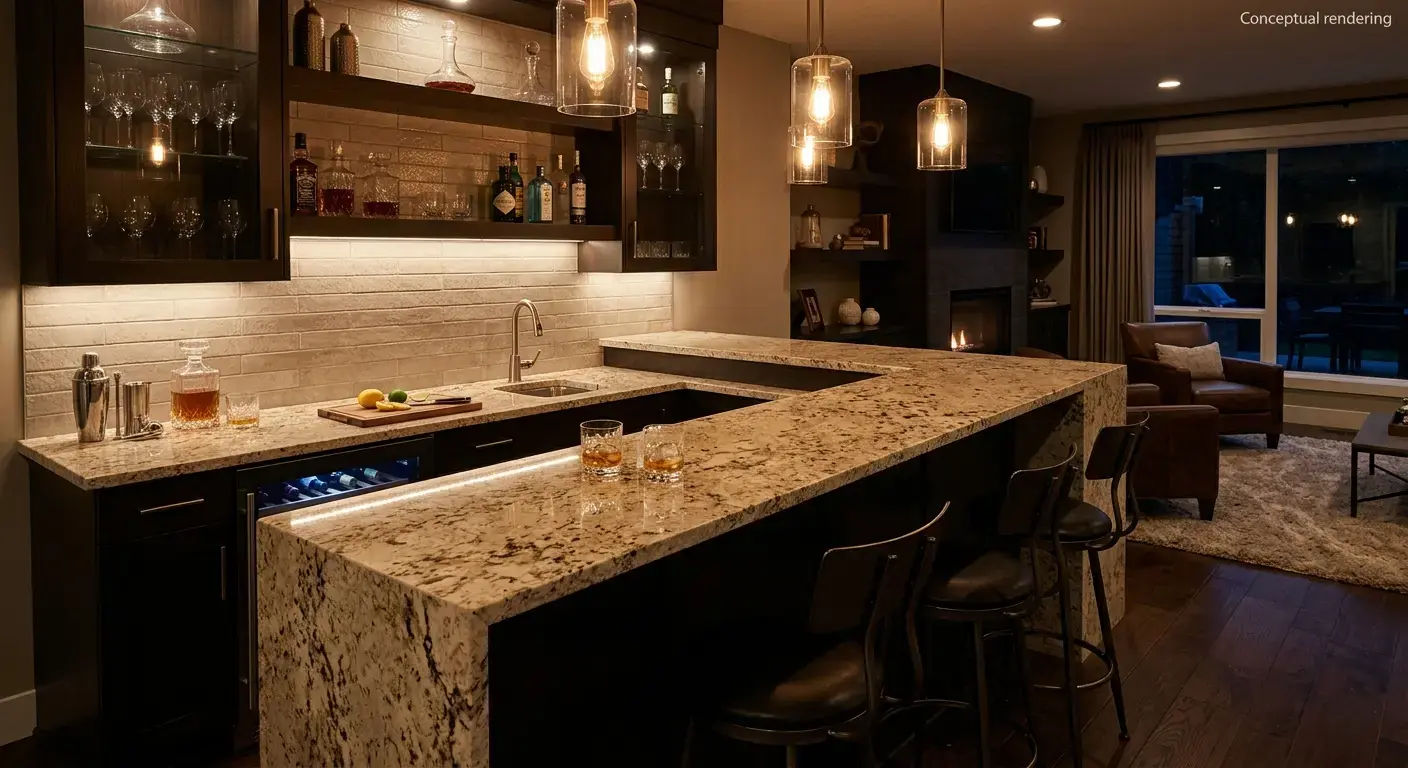
Every successful whole-home stone plan begins with one primary surface that drives all other decisions. In most homes, that anchor is the kitchen countertop. It sits at the visual center of the main living area, it tends to be the largest single stone installation in the house, and it is the surface guests are most likely to notice first.
Choose the kitchen stone before committing to anything else. Once that selection is made, you have a reference point for undertone (warm or cool), veining density (minimal, moderate, or dramatic), and finish (polished, honed, or leathered). Every other stone in the home should respond to that reference point in some way.
If your anchor surface is a warm-toned quartzite with soft gold veining, for example, you will generally want to carry warm undertones into adjoining spaces. That does not mean every room needs gold veins. It means the stones you choose elsewhere should not introduce conflicting cool or blue-gray tones that work against the anchor. Taking time to browse our slab inventory before committing to an anchor stone helps you compare undertones and veining options across the full range of available materials.
Align Undertones Across Rooms
Undertone alignment is the single most important factor in whole-home stone coordination. Every stone has either a warm or cool base, and mixing the two without intention tends to produce rooms that feel unresolved.
Warm undertones include beige, cream, gold, taupe, and brown. You will find these in many granites, travertines, dolomites, and warm-toned quartzites. Cool undertones include gray, white, blue, and green. Many marbles, certain quartzites, and most gray granites fall into this category.
There is no rule that says an entire home must stay exclusively warm or exclusively cool. It is common to use a cool white marble in the primary bathroom while keeping warm-toned quartzite in the kitchen. The key is to avoid placing the two in spaces that are visually connected. If your kitchen opens into a hallway with a travertine floor, a cool gray kitchen countertop and a warm beige floor will create visual tension every time someone walks through the space.
Fine Homebuilding's natural stone countertop guide offers useful guidance on how material selection in open floor plans affects spatial continuity, which is worth reviewing if your kitchen, dining, and living areas share sightlines.
Scale Veining to Room Size and Function
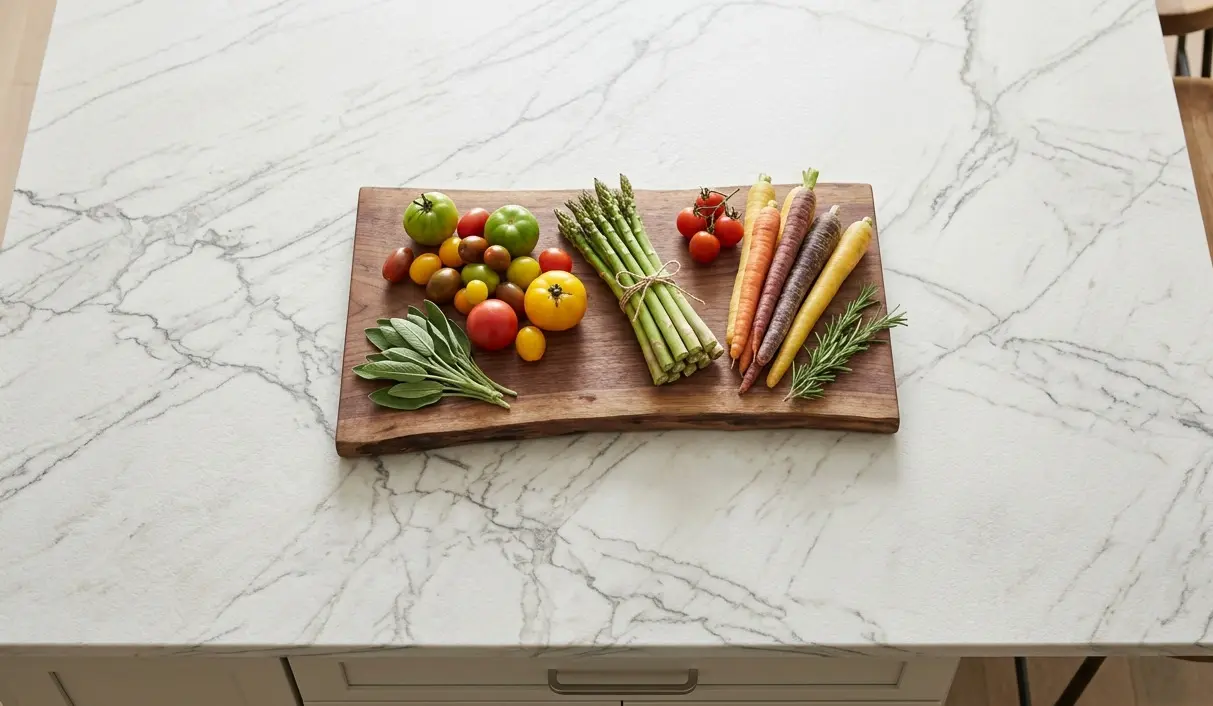
Veining scale refers to how bold, dense, or dramatic the movement in a stone appears. A high-drama marble with thick, sweeping veins reads very differently from a granite with tight, subtle speckle patterns. Placing both in adjacent spaces without a visual bridge can make rooms feel like they belong to different homes.
As a general rule, reserve bold veining for feature surfaces: the kitchen island, the primary bathroom vanity, or a fireplace surround. Supporting surfaces in adjoining spaces, such as secondary bathroom countertops, mudroom surfaces, or hallway floors, tend to benefit from quieter stones that let the feature pieces lead.
This does not mean secondary surfaces need to be plain. A honed limestone floor with soft, irregular movement can complement a dramatic marble countertop in an adjacent room. What it avoids is placing two high-movement stones in direct visual competition with each other.
Coordinate Finishes Intentionally
Stone finish affects both the look and the maintenance behavior of a surface. Polished finishes reflect light and intensify color. Honed finishes absorb light and soften the appearance of a stone. Leathered finishes add texture while preserving some of the stone's natural depth.
Using the same finish throughout an entire home is not required and often not ideal. Polished marble works well on a kitchen countertop but may feel slippery underfoot on a bathroom floor. Leathered granite suits a casual kitchen island but might not match the tone of a formal powder room.
A practical approach is to coordinate finishes by zone. If your kitchen features polished surfaces, consider carrying polished or lightly honed selections into visible adjoining spaces. When a space functions differently, such as a mudroom or a wet shower floor, shift to a finish that suits the function without worrying about matching the kitchen exactly.
This Old House's stone countertop resource covers practical guidance on natural stone finish selection that is worth consulting before finalizing decisions across multiple spaces.
Room-by-Room Coordination Approach
Kitchen: The kitchen countertop and island set the visual standard for the home. Choose your most expressive stone here. If the island and perimeter countertops use different materials, keep them within the same color family and finish type to avoid competing focal points.
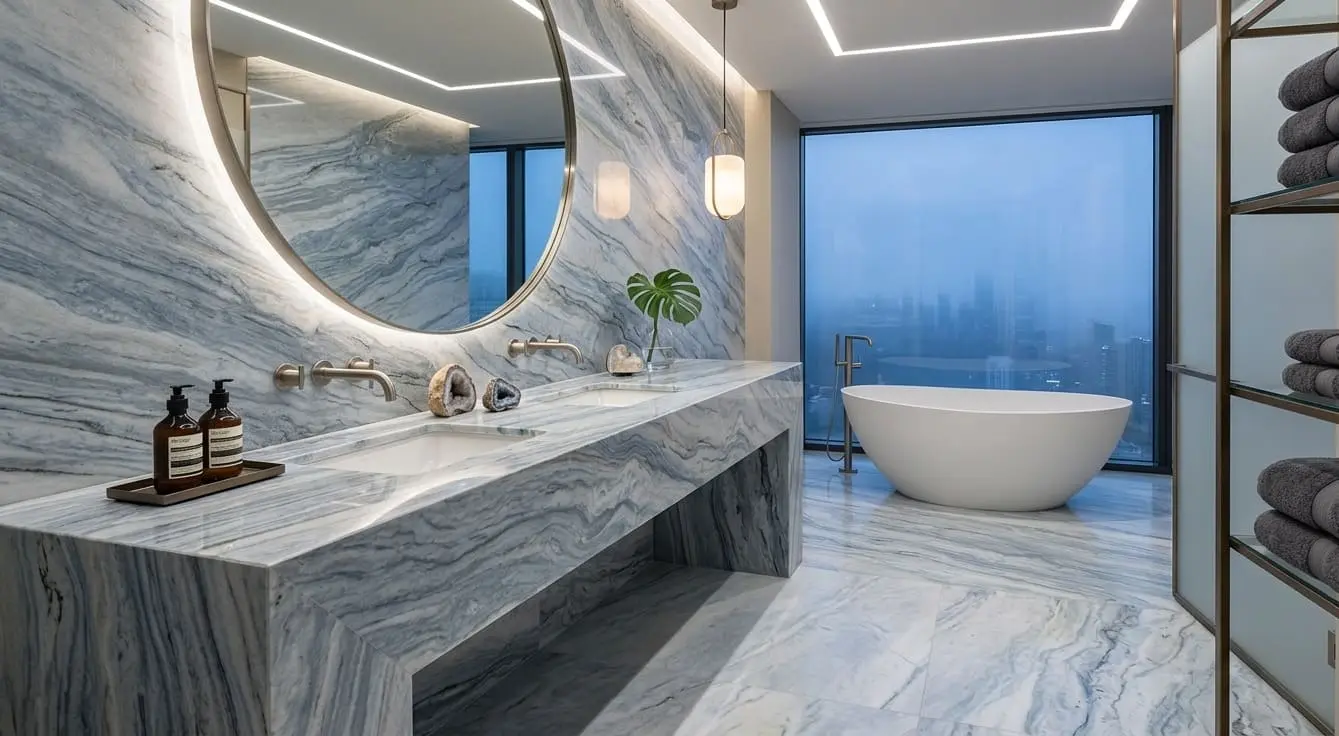
Primary bathroom: The primary bath can introduce a second featured stone, provided the undertone stays consistent with the kitchen anchor. A cool white marble primary bath works alongside a warm quartzite kitchen only if the two spaces are not in a direct sightline, or if a transitional material such as a neutral wood floor separates them visually.
Secondary bathrooms: Guest baths and powder rooms are opportunities to use quieter, more neutral stones that support the overall palette without competing with feature surfaces. Smaller vanity tops are also a practical place to use remnant slabs, which a stone specialist can help identify when you request a slab quote.
Fireplace surrounds: Stone fireplace surrounds connect most directly to the living room floor and wall palette rather than the kitchen. A neutral limestone or travertine surround tends to work well across a wide range of home palettes, particularly in transitional and traditional interiors.
Floors and walls: Stone flooring in entryways, hallways, or great rooms should be chosen with the countertop palette in mind, since floors occupy the largest visual surface area in any room. Large-format porcelain slabs are worth considering for flooring applications in high-traffic areas where natural stone requires more maintenance planning.
Viewing Slabs Together Before Committing
Undertone and veining can look very different on a small sample than they do on a full slab installed next to other materials. The most reliable way to confirm that two stones will work together is to view full-size slabs in the same space under similar lighting conditions.
We encourage homeowners and design professionals to visit our showroom locations before finalizing a whole-home plan. Bringing photographs of your existing flooring, cabinetry, and wall colors helps narrow selections quickly. If you are working with a designer or contractor on a multi-surface project, our trade account program provides dedicated support for larger or ongoing projects.
It is also worth noting that the CDC and NIOSH guidance on engineered stone covers silica dust exposure related to fabrication. If you are working with a fabricator on multiple surfaces, reviewing that guidance can help you ask informed questions about worksite safety practices.
Common Mistakes to Avoid
Choosing each room's stone in isolation is the most common mistake in whole-home projects. Selections made room by room, without a shared reference, tend to produce finishes that each look reasonable on their own but create a fragmented result across the home.
A second common mistake is relying on small samples under showroom lighting. Natural stone shifts significantly under different light sources. A stone that reads as a neutral gray in a showroom may pull green or purple under the warm incandescent lighting common in residential kitchens.
Finally, avoid committing to a whole-home plan before the anchor stone is secured. Lead times on specific slabs vary, and selecting secondary materials around a stone that later becomes unavailable can require starting the coordination process over. Confirm availability of your anchor stone first, then work outward from there. If you are ready to begin selecting materials, scheduling an appointment with our team is a practical first step before committing to a whole-home plan.
Conclusion
Coordinating stone surfaces across an entire home is less about matching materials exactly and more about establishing a consistent visual logic. When undertones align, veining scale is balanced between feature and supporting surfaces, and finishes suit their applications, different stones in different rooms read as part of a cohesive whole. Starting with a strong anchor surface in the kitchen and building outward from that reference point gives every subsequent decision a clear frame of reference. The result is a home where stone surfaces feel connected rather than collected.
Frequently asked questions
No. Stone surfaces do not need to match across a home. What matters is that the materials share compatible undertones and that veining scale and finish type are distributed intentionally. Many well-coordinated homes use three or four different stone types across different spaces.
Yes, but placement matters. Warm and cool stones can coexist in a home when they are separated by transitional materials or located in spaces that do not share a direct sightline. Placing a warm quartzite countertop directly adjacent to a cool gray marble floor in a connected open-plan space is where the combination tends to create visual conflict.
Quartzite and granite are commonly used as anchor surfaces because of their durability and wide range of color options. Marble works well as an anchor in more formal or traditional interiors. A practical anchor is the stone that most closely reflects the overall tone and style you want for the home, selected before any secondary surfaces are chosen.
Identify the undertone of the existing floor first. If the floor is warm-toned, look for countertop stones in the beige, cream, gold, or taupe range. If the floor pulls cool or gray, lean toward whites, light grays, or stones with silver veining. Bringing a flooring sample to a slab showroom allows you to hold materials together before committing.
Yes. Using a single stone material across multiple applications, such as kitchen countertops, bathroom vanities, and a fireplace surround, creates strong visual continuity. The practical consideration is that some stones perform better in certain applications than others. A polished marble that works well on a countertop may not be the right choice for a high-traffic floor. Discussing application requirements with a stone specialist before committing to a whole-home selection helps avoid performance issues down the line.