Quartzite is a natural metamorphic stone that requires pH-neutral cleaning, prompt spill management, and periodic resealing to maintain its surface texture and long-term durability. Available in polished, honed, leathered, and specialty finishes, it is installed across floors, walls, fireplace surrounds, and both indoor and outdoor feature areas. Because quartzite is porous by nature, liquids and acidic substances can penetrate an unsealed surface and cause permanent discoloration or finish damage. Understanding the right maintenance approach is not optional for quartzite owners; it is the baseline for keeping the stone in its original condition.
Quartzite is frequently confused with manufactured quartz, but the two materials behave very differently under daily use. As Bob Vila explains, quartzite is a naturally occurring metamorphic rock formed when sandstone is subjected to intense geological heat and pressure, producing a crystalline structure that is harder than most granite varieties, yet still vulnerable to acids, abrasives, and moisture when left unprotected. This distinction directly shapes how it should be cleaned, how often it needs to be sealed, and which products are safe to use on its surface.
Whether the quartzite in your space is installed as flooring, a wall surface, a fireplace surround, or an outdoor feature area, the fundamentals of proper care remain consistent: use gentle stone-safe products, address spills immediately, and maintain an active sealing schedule. The sections below cover each of these practices in detail.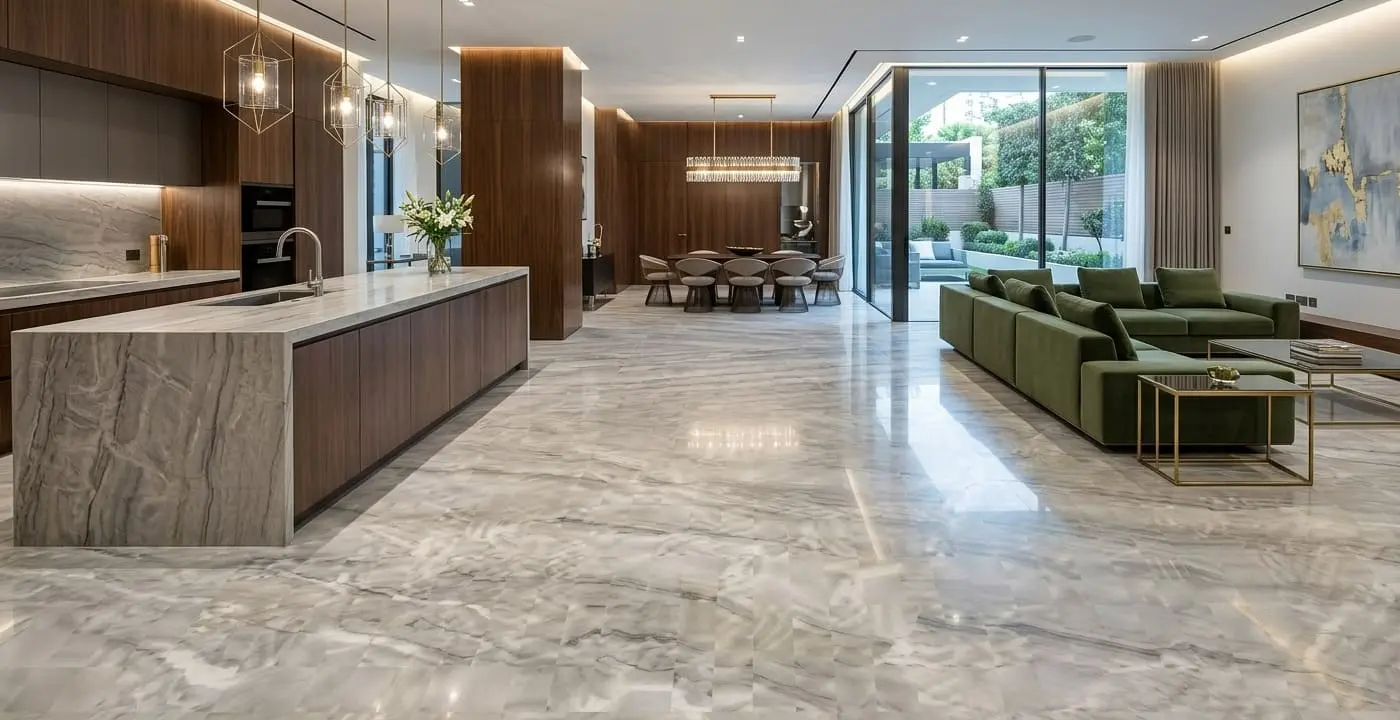
Why Quartzite Needs Specialized Care
Because quartzite is a porous natural stone, it can absorb liquids when left unprotected. Spills from acidic substances such as citrus juice, vinegar, or certain cleaning solutions can penetrate the surface and cause discoloration if not addressed right away. Even routine water exposure can gradually wear down an unsealed stone over time, particularly in outdoor applications or high-moisture environments like bathrooms.
The finish type of your quartzite also plays a direct role in how dirt and residue accumulate. A leathered or honed surface tends to show fewer water spots than a high-gloss polished finish, while specialty finishes may carry their own unique texture considerations. All finish types, however, require consistent attention to preserve their appearance and structural integrity. Browsing our live stone slab inventory is a good starting point for understanding the range of quartzite finishes available and how each one responds to its environment.
Acid-based cleaners are particularly damaging to natural stone regardless of finish. The minerals in quartzite react to acidic solutions in a way that dulls the surface and breaks down any protective sealant. This is why selecting the right cleaning product matters just as much as the frequency of cleaning.
Routine Cleaning for Quartzite Floors, Walls, and Feature Surfaces
For day-to-day upkeep, simplicity is the most effective approach. A pH-neutral stone cleaner or a gentle solution of warm water and a small amount of mild dish soap is sufficient for regular surface maintenance. Harsh chemical formulas, bleach, and anything marketed as a heavy-duty household cleaner should be avoided entirely on natural quartzite surfaces.
When wiping down the stone, use a soft microfiber cloth or a non-abrasive sponge. Rough scrubbing pads and hard-bristled brushes can introduce micro-scratches into the surface, especially on polished quartzite, which diminishes its reflective quality over time and makes the stone more susceptible to residue buildup.
After cleaning, always rinse the surface with clean water to remove any soap residue. Leftover cleaning solution can leave a film that dulls the stone's natural luster. Dry the surface immediately with a soft, absorbent cloth rather than allowing it to air dry. Standing water, even in small amounts, can seep into microscopic pores and leave behind mineral deposits or water staining, particularly on floor applications where pooling is more common.
For wall-mounted quartzite surfaces, a lightly dampened microfiber cloth is sufficient for routine dust and grime removal. Avoid saturating the surface with water during cleaning, as excess moisture can work its way into grout lines and behind the stone over time.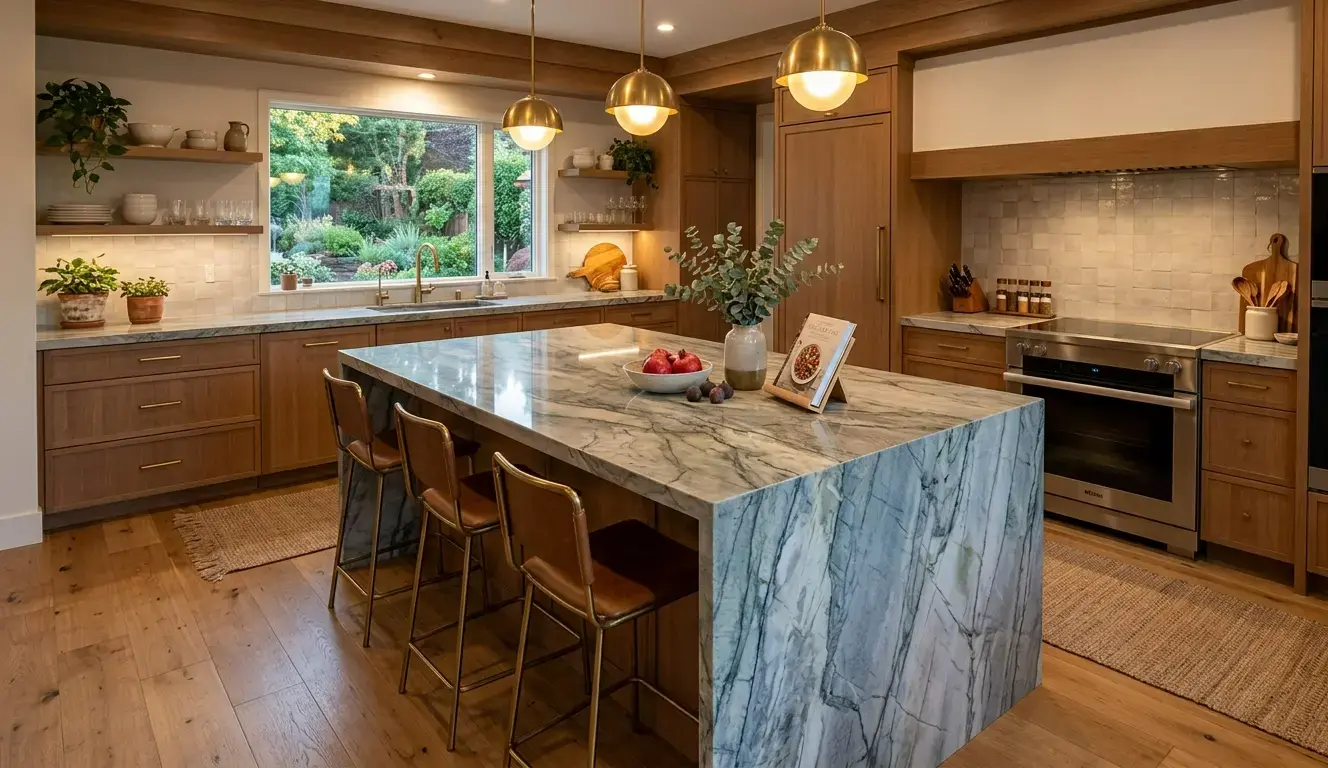
Managing Spills and Surface Stains on Natural Stone
Speed is critical when it comes to spills on quartzite. The longer a liquid sits on the surface, the greater the chance it will be absorbed into the stone, particularly if the sealant has worn thin. As soon as a spill occurs, blot the area with a clean cloth rather than wiping across the surface, as wiping spreads the liquid further and increases the affected area.
For oil-based residues such as lubricants, outdoor grime, or product buildup, a small amount of pH-neutral dish soap applied directly to the spot works well to lift the substance before it sets. Water-based spills should be blotted immediately and followed with a clean, damp wipe-down and thorough drying.
Avoid acidic household substances when attempting to address stains, even if you have encountered advice suggesting they work on other surfaces. On quartzite specifically, acids etch the finish and permanently alter the stone's texture in ways that are both difficult and costly to address. Always reach for a product formulated explicitly for natural stone. The Natural Stone Institute recommends stone-specific pH-neutral cleaners as the consistent standard across all natural stone surface types.
Sealing Quartzite: The Most Effective Long-Term Protection
Sealing is the single most impactful maintenance step for any quartzite surface. A quality penetrating stone sealer creates an invisible barrier within the pores of the stone, slowing down liquid absorption and giving you more time to address spills before they become permanent stains.
Most quartzite surfaces benefit from resealing once or twice a year, though the exact frequency depends on the finish type, the level of foot traffic or environmental exposure, and whether the surface is installed indoors or outdoors. A polished quartzite floor in a high-traffic entryway or an outdoor surface exposed to the elements will require more frequent attention than an interior wall feature or fireplace surround.
To determine whether your quartzite needs resealing, place a few drops of water on the surface and observe what happens. If the water beads up and sits on top, the sealant is still performing well. If it absorbs into the stone within a few minutes and leaves a darkened spot, resealing is overdue. If you would like personalized guidance on the right sealing schedule for your specific quartzite surface, our team is available through a free design consultation to help you work out the right maintenance routine.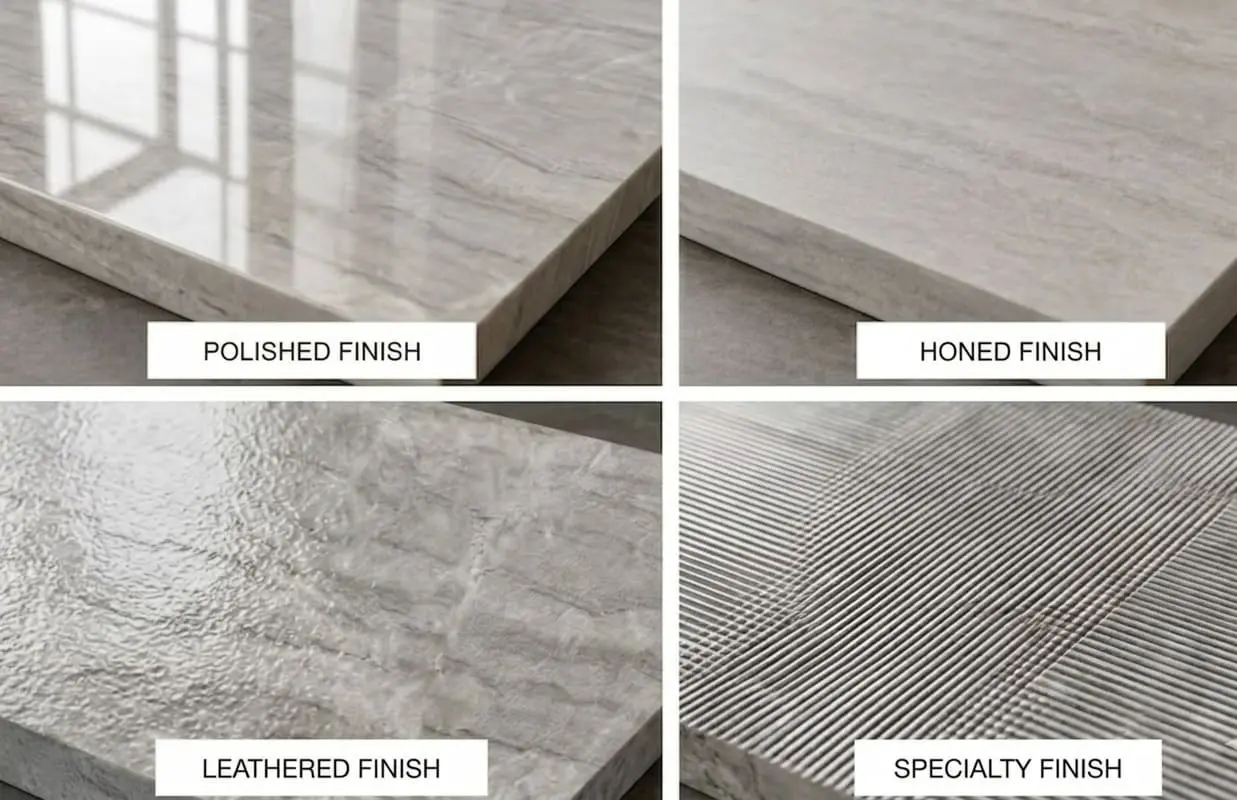
Caring for Quartzite by Finish Type
Because quartzite is available in several distinct finishes, maintenance approaches vary slightly depending on the surface texture you have selected. According to Use Natural Stone, each finish type interacts differently with light, moisture, and daily wear, which is why understanding your specific finish is essential before settling on a cleaning routine.
Polished quartzite has the highest sheen and the most reflective quality of all finish types. It shows water spots and smudges more readily, which means it benefits from more frequent wiping and careful drying after any contact with moisture.
Honed quartzite, with its matte, low-reflective surface, is more forgiving of everyday contact but can absorb oils and liquids more visibly because its surface is more open. Consistent sealing is especially important for honed surfaces to prevent absorption staining.
Leathered quartzite carries a textured, dimensional surface that adds organic character to floors, walls, and fireplace surrounds. Grime and dust can settle into the texture more readily than on smooth finishes, so regular brushing with a soft, dry cloth between cleanings helps keep the surface looking its best.
Specialty finishes vary by product and should always be maintained according to the specific recommendations tied to that surface. If you are working with a specialty finish, our slab quote request page is a convenient way to connect with our team and get tailored guidance before committing to a care routine.
Outdoor and UV-Resistant Quartzite Maintenance
One of the standout qualities of quartzite as a natural stone is its UV resistance, making it a reliable choice for outdoor installations such as exterior walls, patio flooring, and landscape feature surfaces. Unlike some natural stones that fade or discolor under prolonged sun exposure, quartzite holds its color and finish integrity in outdoor environments.
That said, outdoor quartzite surfaces face environmental stressors that interior applications do not. Rainwater, organic debris, moss, and temperature fluctuations all contribute to gradual surface wear if the stone is not properly sealed and maintained. Outdoor quartzite should be inspected and resealed more frequently than interior surfaces, and any organic buildup such as moss or algae should be addressed with a stone-safe cleaner rather than a pressure washer, which can damage the finish and force moisture into the stone.
For fireplace surrounds, heat proximity and soot residue are the primary maintenance considerations. Quartzite is well-suited for fireplace applications, but soot and ash should be wiped away promptly with a dry cloth before any damp cleaning is applied to avoid pushing particulate matter deeper into the stone's surface texture. If you are exploring quartzite options for an upcoming project, our overstock sale occasionally features natural stone selections at reduced availability.
What to Avoid When Caring for Quartzite
Keeping quartzite in excellent condition over time is largely about consistency and restraint. Abrasive cleaning powders, acidic sprays, steam cleaners on unsealed surfaces, and any solvent not specifically formulated for natural stone should be avoided entirely. These substances strip the sealant, alter the surface finish, and in some cases cause irreversible chemical reactions with the stone's mineral composition.
For floor applications, heavy furniture or sharp-edged objects dragged across the surface can chip or scratch the stone, particularly along edges and grout lines. Using felt pads under furniture legs and handling heavy items carefully will significantly extend the life of a quartzite floor.
Edges and corners on wall panels and floor tiles are worth inspecting periodically for minor chipping that a stone professional can address before it worsens. Our full range of natural stone options is available to explore at our showrooms where you can browse by finish, size, and style to find the quartzite surface that fits your project.
Conclusion
Quartzite is a remarkable natural stone that rewards consistent, attentive care with decades of beauty across floors, walls, fireplace surrounds, and outdoor feature areas. With its UV-resistant properties, availability in polished, honed, leathered, and specialty finishes, and versatility across both indoor and outdoor applications, it is one of the most adaptable natural stone surfaces available. The key to preserving it lies in using the right products, sealing on schedule, and understanding how each finish type responds to its environment. Small, regular maintenance efforts will always outperform reactive deep cleaning after damage has already occurred. If you are unsure about the right care routine for your specific quartzite finish or application, our free design consultation is a great place to start the conversation.
Frequently Asked Questions
Can quartzite be used outdoors?
Yes. Quartzite is UV resistant, making it a suitable choice for outdoor floors, exterior walls, and landscape feature surfaces. Because outdoor surfaces face greater environmental exposure than interior applications, more frequent sealing and inspection are recommended to maintain the stone's finish and prevent moisture absorption.
How often should quartzite surfaces be resealed?
Most quartzite surfaces benefit from resealing once or twice per year. The frequency depends on the finish type, traffic level, and whether the surface is installed indoors or outdoors. The water bead test is a reliable way to check whether the current sealant is still performing effectively.
What is the difference between polished, honed, and leathered quartzite finishes?
Polished quartzite has a high-gloss, reflective surface that shows water spots more readily. Honed quartzite has a matte finish that is more forgiving of contact but absorbs oils more visibly. Leathered quartzite has a textured, dimensional surface that adds organic character but requires regular dry brushing to prevent grime from settling into the texture.
Is quartzite the same as quartz?
No. Quartzite is a naturally occurring metamorphic rock formed from sandstone under intense geological pressure. Quartz surfaces are engineered products made from crushed quartz crystals bound with resin. The two materials have different porosity levels, maintenance requirements, finish options, and suitable applications.
Can quartzite be used for fireplace surrounds?
Yes. Quartzite is well-suited for fireplace surrounds due to its density and heat tolerance. Soot and ash residue should be removed promptly with a dry cloth before any damp cleaning is applied, and the surface should be sealed regularly to protect the finish from heat proximity and environmental exposure near the firebox.