Choosing and verifying a quartzite slab requires evaluating authenticity, thickness, finish, slab size, and fabrication compatibility before purchase. Quartzite is a natural metamorphic stone prized for its marble-like appearance, scratch resistance, and heat tolerance, but it is also one of the most commonly mislabeled stones in showrooms, with marble and dolomite frequently sold under the quartzite name.
To choose the right slab, shoppers should confirm the stone is genuine quartzite using a scratch test and an acid test, then assess slab dimensions, thickness (2cm vs. 3cm), finish type (polished, honed, or leathered), veining compatibility with their space, and the condition of any natural fissures. Working with an experienced fabricator who specializes in quartzite is equally important, as the stone's hardness demands specific cutting equipment and technique.
This guide covers each step so you can select a quartzite slab with confidence and avoid the most common mistakes buyers make.
What Makes Quartzite Different From Other Stones
Before you start shopping, it helps to understand what quartzite actually is. Quartzite is a natural metamorphic rock that begins as sandstone. Over millions of years, intense underground heat and tectonic pressure fuse the sandstone's quartz grains into an interlocking crystalline structure, resulting in one of the hardest stone countertops available for residential use, typically rating a 7 on the Mohs hardness scale.
That geological transformation gives quartzite three qualities that set it apart. First, it's harder than granite, making it highly resistant to scratches and everyday surface wear. Second, it handles heat exceptionally well since it was literally formed under extreme temperatures. Third, because it's composed almost entirely of quartz crystals rather than calcium-based minerals, it doesn't etch from acidic foods the way marble does. Spill lemon juice or vinegar on marble and you'll see a dull mark within minutes. Do the same on true quartzite and nothing happens.
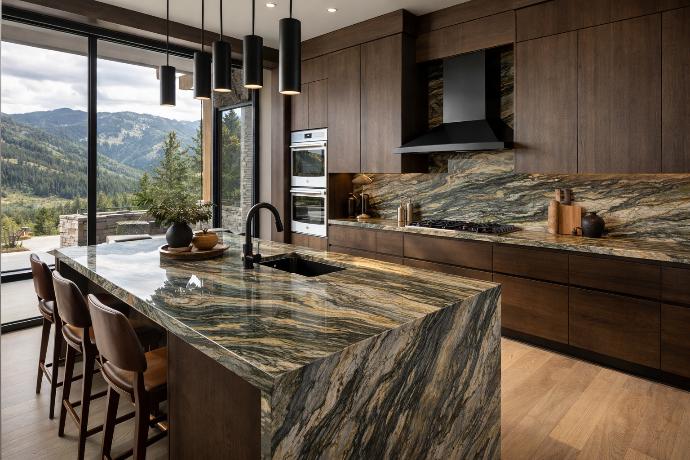
The color range is broader than many people expect. Pure quartzite is white or light gray, but trace minerals introduced during formation add soft golds, warm taupes, rosy pinks, cool blues, and deep greens. Every slab is naturally unique, which means your countertop will be one of a kind.
The Mislabeling Problem: Why You Need to Verify
This is the part of the quartzite conversation most retailers skip, and it's the most important thing to understand before you shop. A significant number of slabs in stone yards across the country are labeled quartzite when they are actually marble, dolomite, or dolomitic marble. The confusion happens at every level of the supply chain, sometimes through honest geological misclassification and sometimes through deliberate mislabeling.
Why does it matter? Because marble and dolomite contain calcium-based minerals that react to acids. They etch. If you install what you believe is low-maintenance quartzite only to discover it pits and dulls from everyday cooking, that's an expensive and heartbreaking mistake.
Some of the most commonly mislabeled stones are soft white and brown-toned slabs with veining that closely resembles genuine quartzite but are actually dolomite or dolomitic marble. The good news is that two simple field tests can protect you every time.
How to Verify a Quartzite Slab: Two Essential Tests
The Scratch Test
True quartzite is harder than glass. Ask the showroom for a broken sample chip or a corner piece, and drag it firmly across an old glass tile or mirror surface. Real quartzite will leave a clear, permanent scratch in the glass. You'll hear it grind and feel it bite.
If the stone slides across without marking the glass, or leaves only a faint chalky smear that wipes away, the slab is likely marble or dolomite. Any reputable stone dealer should welcome this test or be willing to demonstrate it for you. Hesitation about running the test is itself a red flag.
The Acid Test
Pour a small amount of lemon juice or white vinegar onto an inconspicuous section of the slab. Let it sit for 10 to 15 minutes, then wipe it off and examine the spot under good lighting. True quartzite will show absolutely no reaction. The surface will look exactly the same as before.
If the area appears etched, dulled, or slightly lighter where the acid sat, the stone contains calcite and is not true quartzite. This test takes less than 20 minutes and could save you from a costly mistake.
Always run both tests. Some stones pass one and fail the other. Running them together gives you a complete picture.
Key Factors to Consider When Choosing a Quartzite Slab
Slab Size and Seam Planning
Quartzite slabs typically measure around 120 inches by 75 inches, though dimensions vary by origin and quarry. Larger slabs are advantageous because they reduce the number of seams in your finished surface. For expansive kitchen islands or full-height backsplashes, prioritize slab size early in your selection process so your fabricator can plan cuts accordingly.
Never choose a quartzite slab from a small sample chip alone. Veining shifts, color depth changes, and the overall movement of the stone only becomes apparent when you view the complete piece. Always visit a showroom to see and approve your specific slab in person.
Thickness: 2cm vs. 3cm
Quartzite slabs come in two standard thicknesses. The 3cm option (approximately 1.25 inches) is the industry standard for countertops and requires no additional plywood support beneath it. The 2cm option is thinner and lighter, making it a good choice for backsplashes, bathroom walls, and some vanity applications, but it typically needs additional substrate support for countertop use. For kitchen countertops, 3cm is the right choice in most situations.
Finish Options: Polished, Honed, or Leathered
The finish you select changes both the look and the maintenance behavior of your quartzite.
A polished finish delivers the high-gloss, reflective surface that shows off the stone's natural depth and color most dramatically. Polishing also compresses the surface pores slightly, making the stone a bit more resistant to staining and easiest to clean. This is the most popular choice for kitchen countertops.
A honed finish gives you a soft, matte surface without any shine. It tends to mask fingerprints and water spots better than polished, which makes it popular for busy family kitchens. The trade-off is that honed surfaces are slightly more porous and benefit from more frequent sealing attention.
A leathered finish adds a subtle texture with soft ridges and a gentle sheen that falls between matte and glossy. It hides imperfections well and has become increasingly requested for kitchen islands and bar tops. The texture adds character and makes everyday wear less noticeable.
Color, Veining, and Design Compatibility
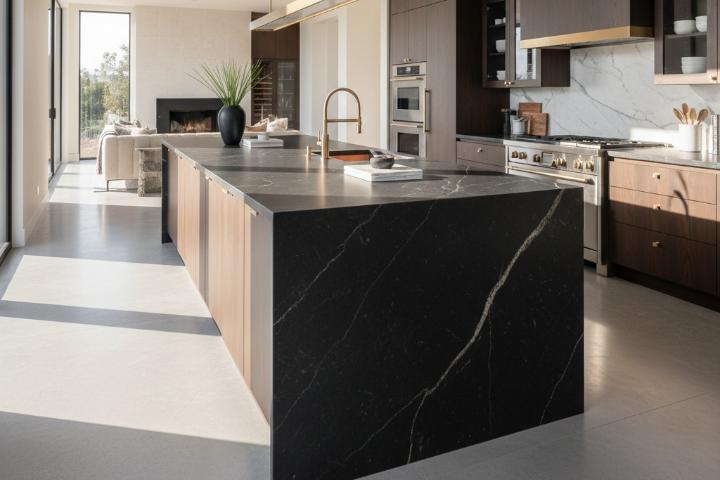
Quartzite's color palette skews toward whites, creams, warm neutrals, and soft grays, a range that works beautifully with a wide variety of cabinet colors and design styles. Certain varieties introduce more dramatic veining or unexpected tones like cool blue, deep green, or rich amber.
When evaluating color, bring samples of your cabinet door, flooring, and hardware finishes to the showroom. Lighting in a stone yard differs significantly from lighting in your home, so view the slab under showroom lighting and near natural light if possible. The way quartzite reads in different lighting conditions is worth confirming before you buy.
Checking for Natural Fissures and Repairs
Natural fissures, which are thin lines or separations within the stone, are common in quartzite and are not necessarily a defect. Most fissures are stable and will not affect the long-term performance of your countertop. Run your fingernail across any fissure lines you notice. If the nail catches and the fissure feels raised or open, it may be a structural concern worth discussing with your fabricator.
Watch for heavy resin fills, which appear as glassy or cloudy areas over cracks, and mesh backing on the underside of a slab, which can indicate a fragile or heavily repaired piece. A modest amount of resin stabilization is normal. Extensive repair work warrants a conversation with the dealer before purchase.
Edge Profiles and Fabrication Considerations
Quartzite's hardness makes it more demanding to cut and fabricate. Specialized diamond blades, slower feed rates, and experienced hands are required to produce clean edges and precise cutouts. It's also worth noting that engineered stone fabrication carries documented silica exposure risks, a factor some homeowners weigh when choosing between natural quartzite and manufactured alternatives.
Simpler edge profiles like eased, beveled, or slightly rounded edges are most practical for quartzite and tend to produce the cleanest, most consistent results. Elaborate profiles like ogee or full bullnose are possible but increase fabrication time and cost. A slightly eased or softened edge is also worth considering on corners, since perfectly square, sharp corners on any stone are more susceptible to chipping from impact.
Ask your fabricator how frequently they work with quartzite specifically, not just natural stone generally. Experience with granite doesn't automatically translate to expertise with quartzite's unique hardness and cutting behavior.
Sealing and Long-Term Maintenance
Most quartzite countertops benefit from annual sealing with a quality impregnating sealer. The simple water test tells you when resealing is needed: sprinkle a few drops on the surface and watch. If the water beads up, your seal is working. If it absorbs and darkens the stone within a few minutes, it's time to reseal. For a broader look at how different natural stone countertops compare in terms of sealing and upkeep, Fine Homebuilding's countertop guide is a reliable reference.
Daily cleaning requires nothing more than warm water and mild dish soap on a soft cloth. Avoid acidic or abrasive cleaners, bleach, and ammonia, as these will degrade your sealer over time and require more frequent reapplication.
Conclusion
Choosing a quartzite slab is one of the most rewarding decisions you can make in a kitchen or bathroom renovation, but it pays to go in informed. Verifying authenticity with the scratch and acid tests protects your investment before a dollar is spent. Viewing full slabs in person, understanding thickness and finish options, and working with experienced fabricators ensures the stone performs as beautifully as it looks. Quartzite is a long-term investment in your home, and the extra steps taken during selection pay dividends for decades.
Our stone specialists are available for free design consultations at our Reno, Minden, Sacramento, and Fernley showrooms to help you evaluate quartzite slabs side by side and find the right match for your project.
Frequently Asked Questions
How can I tell if a slab labeled quartzite is actually quartzite?
The two most reliable field tests are the scratch test and the acid test. For the scratch test, drag a chip of the stone across a glass surface. Real quartzite will scratch the glass clearly. For the acid test, apply a few drops of lemon juice or vinegar to the slab and wait 10 minutes. True quartzite will show no reaction at all. If either test fails, the stone is likely marble or dolomite, even if it's labeled quartzite.
What is the best thickness for quartzite countertops?
For kitchen and bathroom countertops, 3cm (approximately 1.25 inches) is the standard recommendation. At this thickness, no additional plywood support is required beneath the stone. The 2cm option is lighter and works well for backsplashes and some vanity walls but typically requires substrate support for countertop use.
Does quartzite need to be sealed, and how often?
Yes, most quartzite varieties benefit from sealing once a year using a quality impregnating sealer. Denser, highly metamorphosed varieties may go 18 months between applications, while more porous stones may need attention every 6 to 8 months. The water bead test is the easiest way to know when it's time. If water soaks in rather than beading on the surface, it's time to reseal.
What finish should I choose for quartzite countertops?
Polished is the most popular choice for kitchen countertops. It's the easiest to clean, slightly more stain resistant, and shows off the stone's color and depth most vividly. Honed is a good option if you prefer a softer, matte look and don't mind slightly more attentive sealing. Leathered adds a textured, tactile quality that works especially well on islands and bars where a casual, lived-in aesthetic is the goal.
Can quartzite be used in outdoor kitchens?
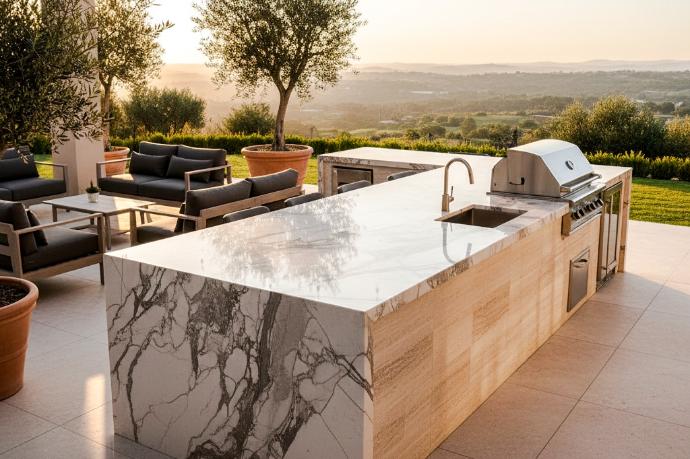
Yes. Unlike engineered quartz, which contains resins that can degrade under prolonged UV exposure, quartzite is UV-stable and handles outdoor conditions well. It is heat-resistant, freeze-thaw resistant, and maintains its appearance through weather extremes, making it an excellent choice for outdoor countertops, bar tops, and seating areas.