Choosing a stone countertop for your lifestyle comes down to matching the right material to how you actually use the space: granite and quartzite work best for high-use kitchens and low-maintenance households, marble suits bakers and design-forward spaces, travertine and dolomite perform well in bathrooms and lower-traffic areas, and calcareous stones require more care than siliceous ones in kitchens where acidic foods and liquids are present daily. The right stone depends on how frequently you cook, whether you have children, how much maintenance you are prepared to do, and where the countertop will be installed. Here is how each material aligns with common lifestyle needs:
- Granite suits active cooks and families with children. It ranks between 6 and 6.5 on the Mohs hardness scale, resists heat and scratches, and seals effectively against staining.
- Quartzite is the harder option, ranking between 7 and 8 on the Mohs scale, and resists acid etching, making it a practical choice for kitchens where citrus, wine, and tomato-based foods are common.
- Marble performs well for bakers because its calcite composition keeps the surface cool, but it etches from acidic foods and requires more frequent sealing than granite or quartzite.
- Travertine is better suited to bathrooms and lower-traffic surfaces. Its natural voids can accumulate debris in a heavily used kitchen.
- Dolomite falls between marble and quartzite in both hardness and acid sensitivity, making it a consideration for homeowners who want a marble-like appearance with slightly better resistance to etching.
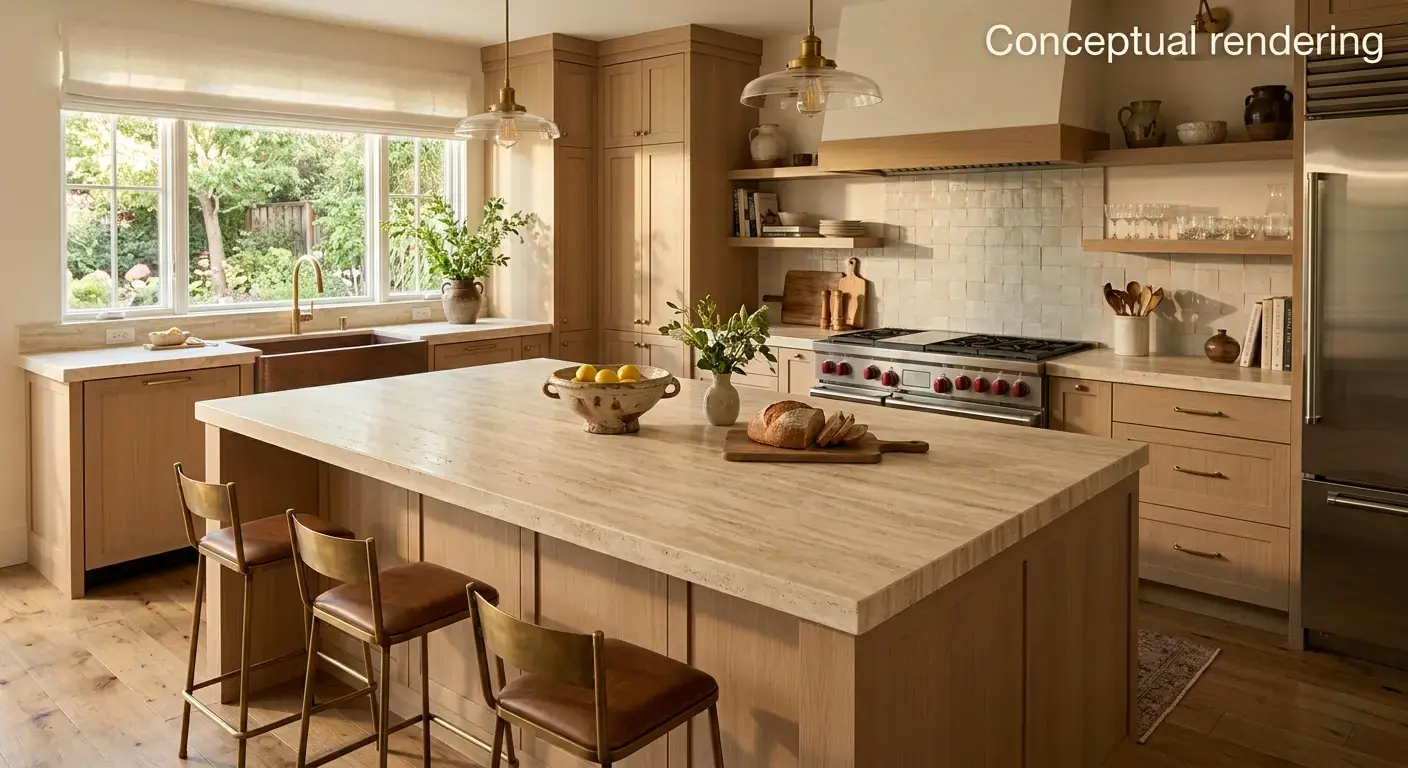
Why Lifestyle Fit Matters as Much as Appearance
Natural stone countertops vary significantly in hardness, porosity, and chemical sensitivity. Two slabs that look nearly identical in a showroom can perform very differently over years of use. A marble countertop that develops a graceful patina in a lightly used kitchen may show frustrating wear in a household where acidic foods and spills are a daily occurrence. A dense quartzite that suits a working chef may be more material than necessary for a guest bathroom used a few times a week.
Understanding the practical demands of your space before you shop makes the selection process more direct and leads to a result you will be satisfied with over time. The stone industry broadly groups countertop-grade natural stone into two categories: siliceous stones and calcareous stones. Siliceous stones, primarily granite and quartzite, are composed largely of silica and resist acid etching. Calcareous stones, including marble, travertine, and dolomite, contain calcium carbonate and react chemically with acidic substances, including citrus juice, vinegar, and wine. This distinction is one of the most important factors in matching a stone to how you cook and clean. For a broader overview of how stone properties translate to kitchen performance, this guide to stone countertops from This Old House covers the key material differences in detail.
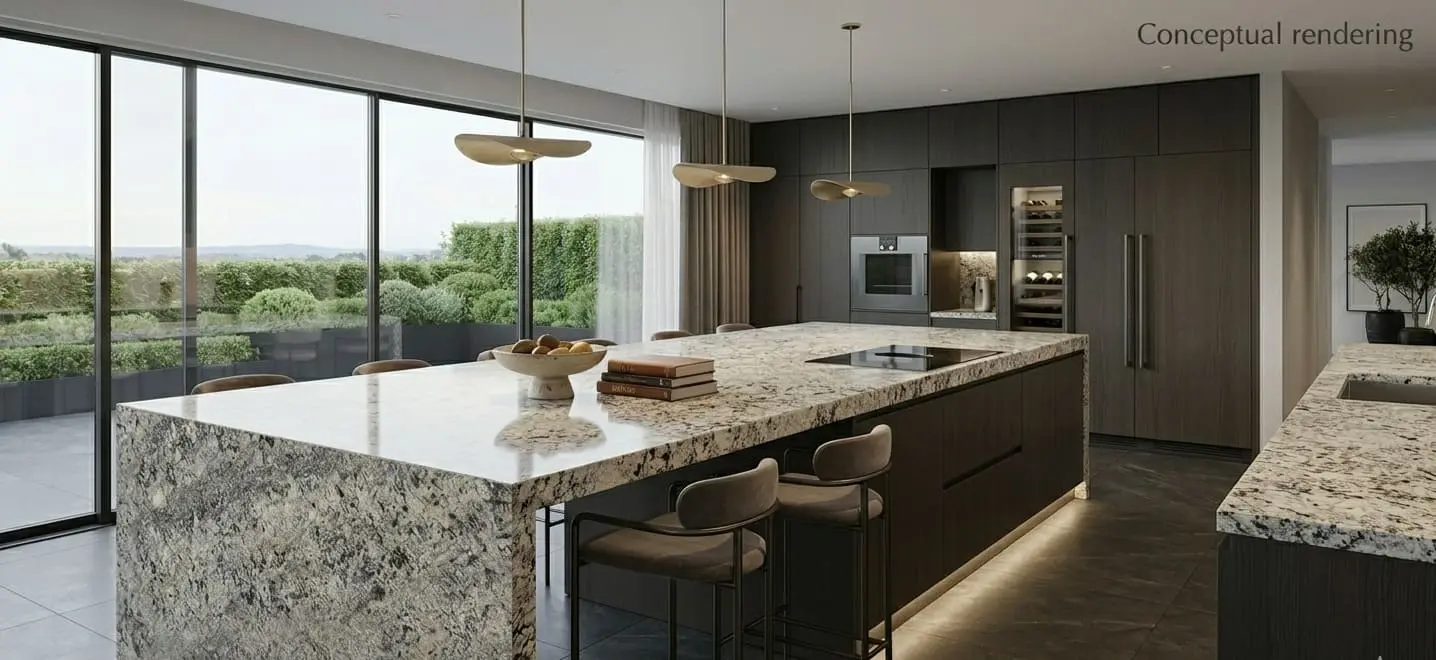
For Active Cooks and High-Use Kitchens
Granite is one of the more practical choices for a kitchen that sees heavy daily use. It ranks between 6 and 6.5 on the Mohs hardness scale, handles heat from cookware reasonably well, and holds up against the scratches and impacts that come with active food preparation. When properly sealed, granite resists staining from oils, sauces, and liquids. Medium and darker-toned granites tend to conceal minor surface wear and require less visible upkeep than lighter varieties.
Quartzite offers similar advantages with a higher hardness rating, typically between 7 and 8 on the Mohs scale, making it one of the harder natural stones available for residential countertops. True quartzite also resists acid etching, which gives it a practical advantage over marble in kitchens where citrus, wine, and tomato-based foods are regular presences. Both materials require periodic sealing, but the maintenance commitment is manageable with the right routine. Browse our granite and quartzite slab inventory to explore available options in a range of colors and finishes.
For Bakers and Pastry Enthusiasts
Marble has been used as a baking surface for centuries for a practical reason: calcite-based stone stays cool at room temperature, making it well-suited for rolling out pastry dough, tempering chocolate, and working with butter-based recipes that require a cold work surface. For homeowners who bake regularly and are willing to accept the trade-offs of a softer stone, marble is a functional choice as well as an aesthetic one.
The primary considerations with marble in a kitchen are its sensitivity to acid etching and its natural porosity. Acidic foods and liquids will dull the surface of polished marble over time, creating a patina that some homeowners find acceptable and others find difficult to manage. Regular sealing reduces staining risk but does not prevent etching. A honed finish, which produces a matte rather than glossy surface, conceals etching and minor scratches more effectively than polished marble and is a practical recommendation for kitchen applications. Fine Homebuilding's guide to natural stone countertops offers useful perspective from builders and designers on how marble performs in working kitchens.
For Families with Young Children
Households with children need a countertop that handles daily wear, including craft projects, homework sessions, spilled drinks, and frequent food preparation, without requiring careful handling. In this context, granite and quartzite are reliable choices because both materials resist scratching, tolerate incidental heat, and seal effectively against staining.
Lighter granite and quartzite varieties can show water spotting and smudging more readily than darker options, so finish selection matters alongside material selection. A honed or leathered finish on granite will show fingerprints and water marks less noticeably than a polished finish of the same stone, which can make a practical difference in a high-traffic kitchen.
Travertine, while durable and visually warm, is a more porous stone with natural voids in its surface. In a kitchen with heavy daily use, those filled voids can accumulate debris over time, making travertine a better fit for lower-traffic applications such as bathroom vanities or accent surfaces. Our team can walk you through the options at any of our showroom locations across Northern Nevada and Northern California.
For Low-Maintenance Households
Not every homeowner wants to manage sealing schedules, stone-safe cleaning products, and etching protocols on a regular basis. For households that want a natural stone look with minimal upkeep, dense granite in a darker color is typically the most forgiving option. Very dense, dark-colored granites absorb liquid more slowly and may need resealing less frequently than lighter, more porous varieties.
Quartzite that has been properly sealed at installation and maintained with a pH-neutral cleaner can also be a lower-maintenance choice, particularly for homeowners who want the veined aesthetic of marble without the acid sensitivity of a calcareous stone.
When you are ready to move forward, you can request a slab quote to get pricing on the materials that fit your project.
For Design-Forward and Aesthetic-Priority Spaces
When aesthetics are the primary driver and a space will receive moderate rather than heavy use, the range of options expands. Marble, with its translucent depth and natural veining, is one of the more distinctive countertop materials available for residential applications. Bookmatched slabs, where two sequential pieces are opened to create a mirrored veining pattern, produce a notable focal point on kitchen islands, bathroom vanities, and feature walls.
Travertine in a honed finish offers a warm, earthy character well suited to transitional and Mediterranean-influenced interiors, and performs reliably on bathroom vanities and lower-use kitchen surfaces. Dolomite occupies a middle ground between marble and quartzite in hardness and acid sensitivity, making it a consideration for homeowners who want a marble-like aesthetic with slightly improved durability. Designers and trade professionals can access exclusive pricing and project support by applying to our trade account program.
For Bathroom Vanities and Spa-Style Spaces
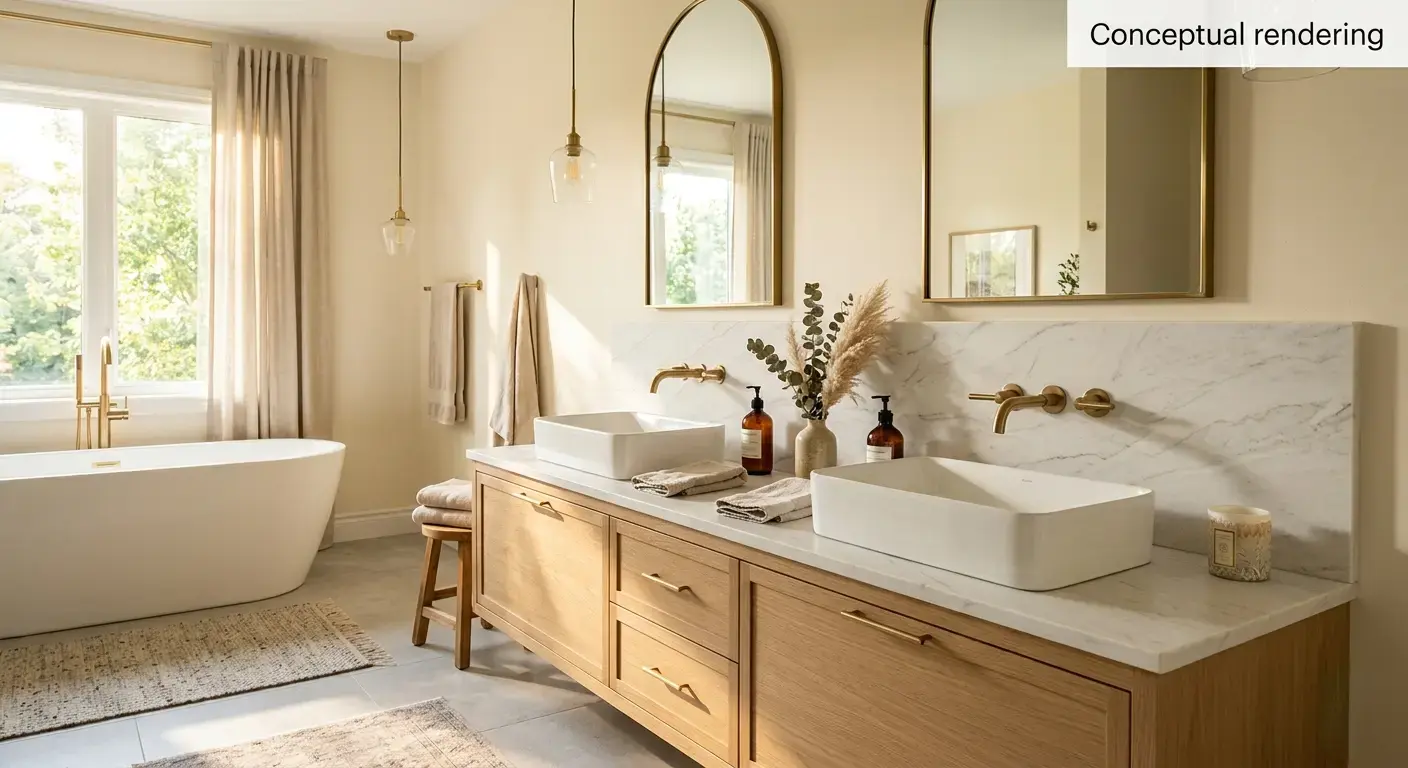
The bathroom is where many homeowners feel most comfortable specifying marble, travertine, and other calcareous stones. Exposure to acidic food and beverages is eliminated, cleaning habits are gentler, and the primary functional demand is resistance to water and routine bathroom products. Marble vanities are among the more popular applications for this material, providing the visual character of natural stone without the acid-etching risk present in kitchen use.
For spa-style primary bathrooms, large-format bookmatched marble slabs used across both the vanity top and surrounding walls create a continuous veining pattern that is well suited to high-design applications. Travertine is another practical choice for bathroom applications, particularly in warm-toned interiors where its natural variation and texture complement wood cabinetry and matte hardware finishes. If you would like guidance on selecting the right stone for your bathroom project, book a free design consultation with our team.
Conclusion
Choosing a stone countertop is less about finding the most popular material and more about finding the one that fits how your household actually lives. Granite and quartzite are the more forgiving choices for high-use kitchens, active families, and low-maintenance households. Marble suits homeowners who value aesthetics and are willing to accept a surface that changes in appearance with use over time. Travertine and dolomite fill specific niches for lower-traffic spaces and design applications where warmth and texture take priority. Seeing slabs in person, in natural light and alongside cabinet and flooring samples, is the most reliable way to make a final decision. Visit our natural stone showroom to explore the full range of slab materials available across our Northern Nevada and Northern California locations.
Frequently Asked Questions
What is the most durable natural stone for a kitchen countertop?
Quartzite is generally considered one of the more durable natural stones for kitchen countertops in terms of scratch and acid resistance. True quartzite ranks between 7 and 8 on the Mohs hardness scale and resists etching from acidic foods. Granite is a close second and offers solid heat and scratch resistance with a well-established maintenance routine.
Is marble a practical choice for a kitchen countertop?
Marble can work in a kitchen, depending on how the space is used. It performs best in kitchens with moderate traffic and for homeowners who are comfortable with a surface that develops a patina over time. A honed finish is generally recommended over polished marble for kitchen applications because it conceals etching and minor scratches more effectively.
How often does natural stone need to be sealed?
Resealing frequency depends on the stone’s porosity, finish, location, level of use, and the type of sealer applied. Some natural stones may not require sealing, while others need periodic treatment. Rather than following a fixed schedule, check the sealer manufacturer’s instructions and periodically test the surface by placing a few drops of water on a clean, dry area. If the stone absorbs the water and darkens, it may be time to consult a stone-care professional or apply a compatible impregnating sealer.
What natural stone works well for a bathroom vanity?
Marble and travertine are practical choices for bathroom vanities because the bathroom environment eliminates the risk of acid etching from food and beverages. Both materials work well in applications where daily cleaning involves mild, pH-neutral products. Quartzite and granite are also viable options for bathroom vanities and carry lower maintenance requirements.
Can natural stone countertops be used outdoors?
Granite and quartzite are generally well suited for outdoor kitchen countertops because both materials resist UV exposure, freeze-thaw cycles, and temperature fluctuations better than calcareous stones. Standard engineered quartz is generally not recommended for outdoor use because the resin binders can degrade and discolor in direct sunlight.
Note: Some images on this page may be conceptual renderings created to illustrate design possibilities and may not depict actual installations.