Choosing a stone countertop color is one of the most visible decisions in a kitchen or bathroom remodel, and the right starting point is rarely the stone itself. Begin with what is already fixed in the room, including cabinet finish, flooring, and lighting, then use those conditions to identify which stone color family and pattern level fits the space.
- White and cream stone, found in marble, quartzite, dolomite, and granite, pairs with the widest range of cabinet colors and is the most versatile choice for kitchens with limited natural light
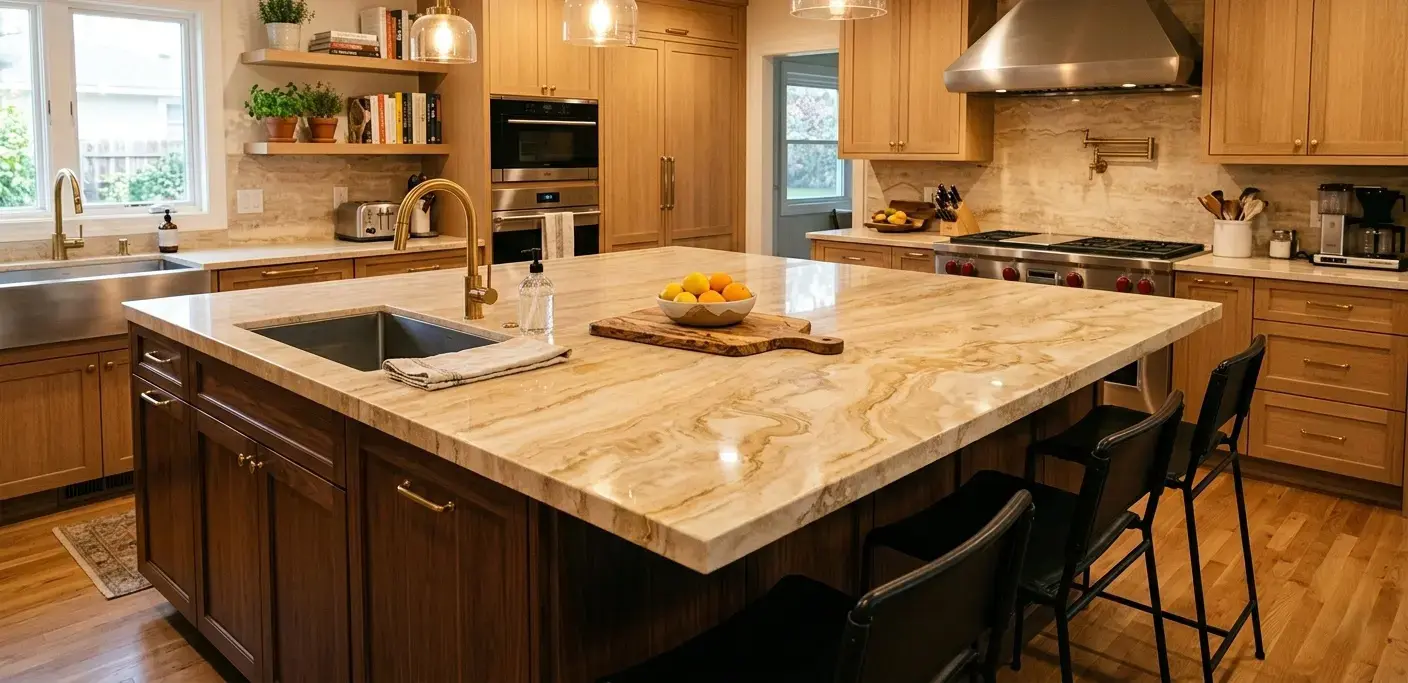
- Warm-toned stone in gold, amber, and ivory reads well against dark wood cabinetry because it repeats the warm undertones already present in the room
- Gray granite and gray quartzite coordinate with both warm and cool cabinet finishes depending on the undertone of the specific slab, making gray the most neutral choice within natural stone
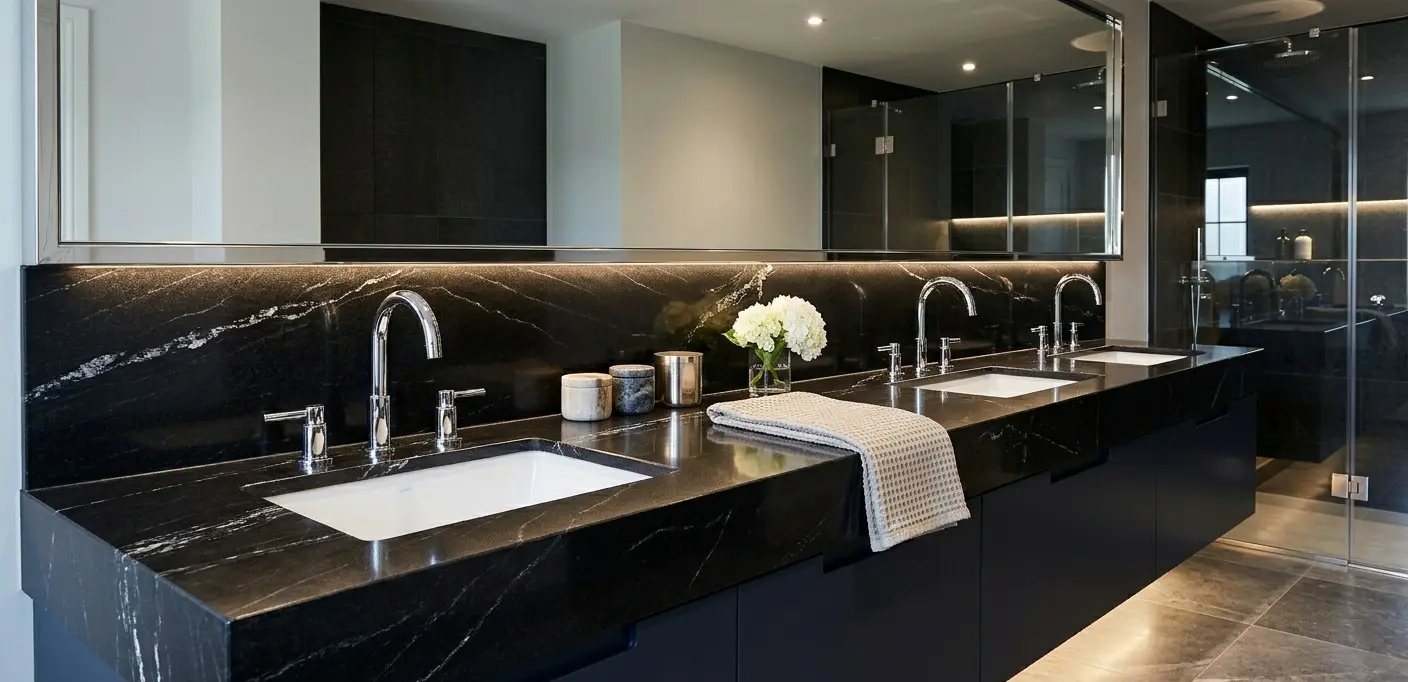
- Dark stone in black or charcoal, including black granite and soapstone, creates the strongest visual contrast against white cabinetry and adds weight to large, open kitchens
- Granite has the broadest color range of any natural stone, spanning white, gray, gold, black, green, and blue depending on mineral composition and quarry origin
- North-facing kitchens receive cooler indirect light throughout the day, making warm-toned stone in cream, ivory, or amber a more reliable choice than cool gray or white stone in those spaces
- High-movement veining in quartzite and marble functions as a focal point; uniform, speckled granite recedes and supports other design elements without competing
As a direct stone importer, we carry granite, quartzite, marble, travertine, dolomite, soapstone, onyx, slate, porcelain slabs, sintered stone, and quartz. The guidance below focuses on natural stone color families, where material type has the most direct influence on the colors and patterns available to you.
Start with the Cabinets
The largest fixed surface in any kitchen is cabinetry. Using your cabinet finish as the starting reference point grounds the countertop color decision in what is already set in the room.
White and light gray cabinets accept a wide range of countertop colors. They work with warm-toned stone such as cream quartzite or ivory marble, neutral gray granite, and dark countertops for contrast. When white cabinetry is paired with a cool-white countertop, the effect is clean and open. When paired with warm-toned stone, the result is softer and more inviting.
Dark stained cabinetry in walnut, espresso, or warm oak creates a different set of considerations. Against deep brown tones, warm granite or quartzite in gold and amber coordinates by repeating the warmth already present in the room. A light marble or cream quartzite countertop on dark cabinetry creates contrast instead, reducing the visual weight of the lower cabinets. Both directions work; the choice depends on whether you want the countertop to blend with or stand apart from the cabinetry.
Two-tone kitchens, where the island and perimeter cabinets differ in finish, create an opportunity to differentiate the countertop color by zone. Using a warmer stone on the island and a lighter, cooler stone on the perimeter is one approach. Using the same material in two complementary tones is another.
Our commission-free design team offers free design consultations at each of our showroom locations and can help you work through cabinet-to-countertop pairings with full slabs in front of you.
How Lighting Affects Stone Color
Lighting is one of the most underestimated variables in countertop selection. The same slab that reads as cool and gray in a showroom can shift toward blue or green under specific light conditions at home. A stone that appears warm and golden under incandescent light may read flat under daylight-spectrum LED fixtures.
North-facing kitchens receive indirect, cooler light throughout the day. In these spaces, warm-toned stone in cream, ivory, gold, or amber helps offset the ambient coolness of the light. Cooler gray or white stone in a north-facing kitchen can read flat if the room lacks supplemental warm artificial light.
South-facing kitchens receive direct sunlight for much of the day. Both warm and cool stone tones work in these spaces because the natural light itself adds warmth. Dark stone in south-facing kitchens absorbs light and adds visual grounding without making the room feel smaller.
Under-cabinet lighting and pendant fixtures also affect how stone reads at countertop height. This guide to natural stone countertops from Fine Homebuilding recommends evaluating stone samples under multiple light sources, specifically under the actual lighting conditions of the room where the countertop will be installed, before making a final selection.
Color Families in Natural Stone
Natural stone spans a wide color range, but the colors available within each material type are not equal. Understanding which families each stone covers before visiting a showroom helps focus the search. You can browse our current slab inventory by material and color to get a sense of what is available before your visit.
White and cream White and cream stone is available in granite, quartzite, marble, and dolomite. Within this family, tone ranges from cool white with blue or gray undertones to warm white in cream or ivory. White quartzite varieties carry warm ivory backgrounds with soft gold veining. White marble such as Carrara reads cooler, with blue-gray veining on a white ground. Dolomite falls in this family as well, with soft gray-white tones and subtle cloudy veining. White granite produces a speckled, mineral-crystal appearance rather than flowing veins.
Gray Gray stone is well-represented in granite, where minerals in silver, charcoal, and cool gray produce a range of speckled patterns. Gray quartzite and marble exist in softer, more veined expressions. Marble in gray ranges from varieties with bold, high-contrast veining to quieter stones with minimal movement. Gray stone coordinates with both warm and cool cabinet finishes depending on the undertone of the specific slab.
Warm-toned: gold, amber, beige, brown Granite offers a wide range of warm tones across natural stone. Gold and amber granite varieties with movement in honey, rust, and caramel pair well with dark wood cabinetry and wood flooring. Quartzite in the warm family includes options with gold and bronze veining on a light background. Travertine is concentrated in the warm family, with cream, ivory, and walnut tones that suit kitchens with a transitional or Mediterranean aesthetic.
Dark: black, charcoal, deep green Dark stone creates contrast against light cabinetry and adds visual grounding in large, open kitchens. Black granite is dense and relatively uniform in surface appearance. Dark gray granite varieties carry movement from white and silver minerals. Soapstone is consistently dark gray to near-black, with soft white veining, and deepens further with mineral oil application over time. According to This Old House's complete guide to stone countertops, dark stone countertops paired with white cabinetry produce one of the most clearly defined contrasts in residential kitchen design.
Pattern and Movement Color tone and pattern are two separate axes of the decision. Two slabs in the same general color can look completely different depending on the degree of veining, mineral variation, and movement they carry.
Quartzite and marble tend to carry strong veining and movement, with patterns that sweep across the slab in arcs and curves. When the countertop is meant to function as a focal point in the room, high-movement stone in these materials provides that effect. In a kitchen with visual complexity from patterned tile, bold hardware, and detailed cabinetry, a quieter stone with minimal movement gives the room balance.
Granite typically has a granular, mineral-speckled appearance rather than flowing veins, which makes it a more neutral background option within natural stone. It suits kitchens where the countertop is intended to support other design elements rather than draw attention on its own.
Porcelain slabs can replicate the veining patterns of marble and quartzite with consistent repetition across panels, which is useful when a matched appearance is important across a large surface area. For buyers also evaluating engineered quartz, NIOSH has published workplace safety findings on engineered stone fabrication that are worth reviewing when comparing natural and engineered surface options.
View Full Slabs Before Deciding
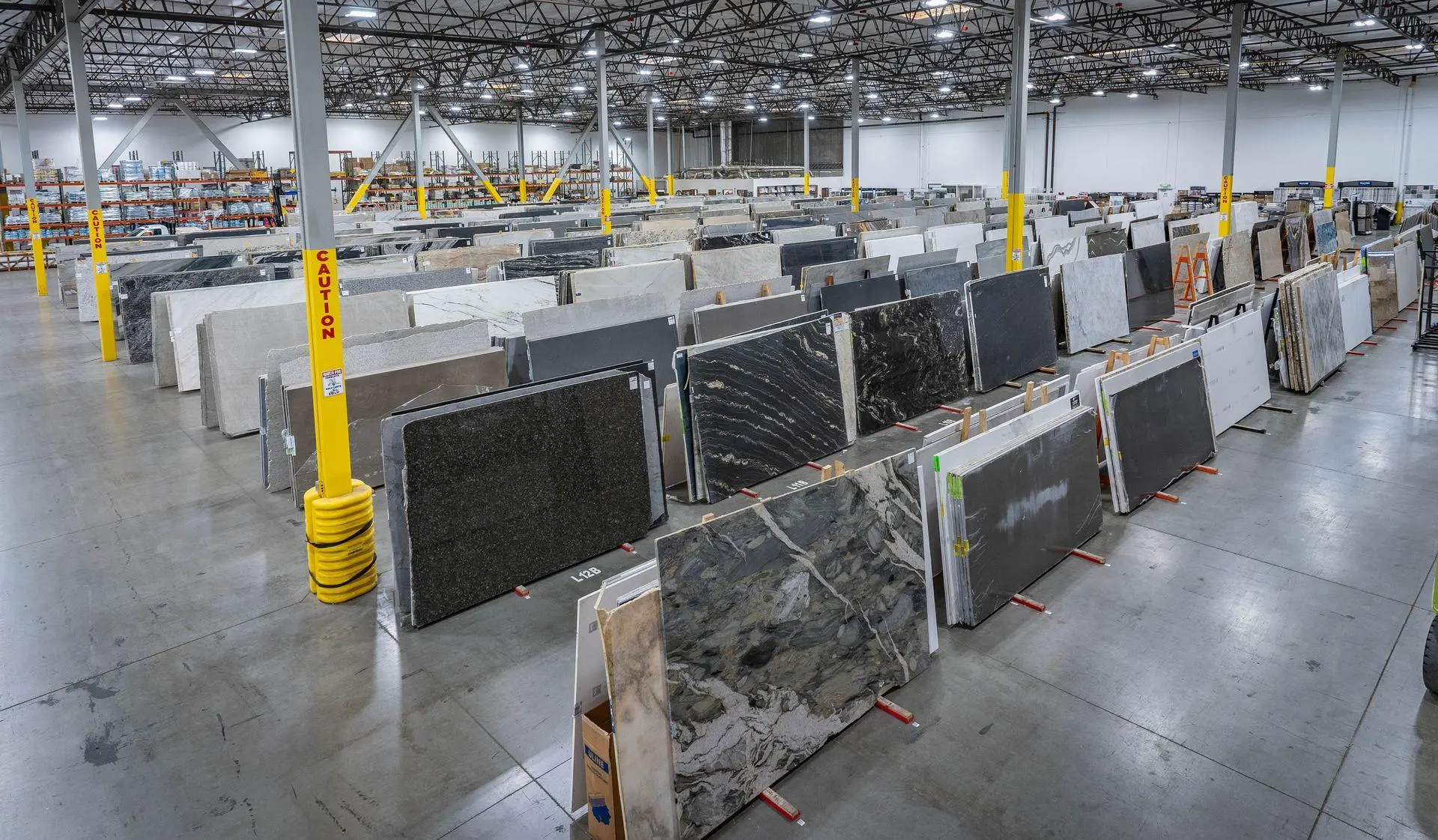
A small sample chip or an online photo does not represent what a full slab looks like at countertop scale. A chip shows one small section of the stone. The veining, mineral variation, and tonal shifts across a full slab may differ significantly from any small sample. A stone that appears uniformly light gray in a sample can have warm cream areas, concentrated mineral striations, or bold veining patterns across its full surface.
Viewing slabs in person is particularly important when selecting stone with high movement or complex color variation. It allows you to evaluate the specific slab you are considering, not a representative example of the material category. Two slabs from the same quarry and material description can differ noticeably in tone, movement density, and color distribution. This is why we carry slabs on display at all four of our showroom locations in Reno, Minden, Sacramento, and Fernley.
Designers and trade professionals working on larger projects can access our slab inventory directly through our trade account program.
Conclusion
Stone countertop color selection becomes more manageable when you work through the decision in sequence. Start with the cabinet finish and flooring already in the room. Consider how lighting conditions throughout the day affect how stone reads in that specific space. Identify the color family and movement level that suits the design intent. Then view full slabs in person to confirm the actual slab matches what you expect.
Each step brings the field of options into focus. Our design team is available at our showrooms for free consultations, and you can also request a slab quote to start the conversation before your visit.
Frequently Asked Questions
Should the countertop match or contrast the cabinets?
Both approaches produce workable results. Contrasting countertop and cabinet colors, such as dark stone against white cabinetry, creates clear visual definition between surfaces. Coordinating them, such as warm-toned stone against warm wood cabinetry, produces cohesion and a unified palette. The choice depends on how much visual emphasis you want the countertop to carry in the room.
Does natural stone color change over time?
Some natural stones develop a patina with age. Soapstone deepens and darkens with mineral oil application. Marble may show etching from acidic contact over time, which affects the surface finish rather than the underlying stone color. Granite and quartzite are generally stable in color over the long term with proper sealing and routine maintenance.
How does the finish affect how a countertop color reads?
The finish changes color perception considerably. A polished finish is reflective and brings out the depth and saturation of the stone's color. A honed finish produces a matte surface where color reads slightly softer and more muted. A leathered finish adds texture and tends to deepen the color in darker stones while giving lighter stones a warmer, more organic quality. Choosing a finish is part of the color decision.
Can I use different stone colors on the island and the perimeter?
Yes. Using two stone colors in one kitchen is a common approach, often done to distinguish the island as a design element. The most reliable method is keeping the two stones within a related color family, such as a lighter and a darker version of the same warm or cool tone. Evaluating both slabs together under the room's actual lighting conditions helps confirm whether the pairing works before committing.
What stone type has the most color options?
Granite has the broadest color range of any natural stone, spanning white, cream, gray, gold, brown, black, blue, green, and red depending on mineral composition and quarry origin. Quartzite and marble cover white, gray, and warm-toned families extensively. Soapstone and slate are primarily dark gray to near-black. Travertine is concentrated in warm cream and ivory tones.