Stone countertops vary significantly in heat resistance depending on their mineral composition, formation process, and whether they contain polymer resins. Natural stones including granite, quartzite, and porcelain slab are among the most heat-tolerant options available, while engineered surfaces that contain resin binders begin to degrade at temperatures as low as 300°F. The key distinction is between materials formed entirely from mineral compounds and those manufactured with organic binders that can scorch, discolor, or crack under sustained heat exposure.
At a glance, here is how common countertop materials compare:
- Granite — tolerates temperatures up to approximately 1,200°F; sealant may be affected at lower temperatures
- Quartzite — highly heat-resistant natural stone formed under extreme geological pressure; no resin content
- Marble — moderate heat tolerance; polished surfaces can dull from thermal stress; calcium carbonate composition makes it vulnerable to thermal shock
- Travertine — calcium-based like marble; handles moderate heat but susceptible to rapid temperature change
- Porcelain slab — excellent heat resistance, rated up to approximately 1,000°F; contains no polymer binders
- Sintered stone — formed at extreme temperatures; among the most heat-stable surfaces available
- Engineered quartz — polymer resins begin degrading around 300°F; direct heat contact not recommended
Understanding how each material behaves under heat conditions helps homeowners use their surfaces correctly and choose the right stone countertop for their cooking habits.
Why Heat Affects Countertops Differently
The way a countertop responds to heat comes down to what it is made of at the molecular level. Natural stone is a crystalline mineral material that formed over millions of years under pressure and heat inside the earth. When you place a hot pan on granite or quartzite, you are setting something warm against a material that was created at temperatures far beyond anything found in a home kitchen.
Engineered surfaces work differently. Engineered quartz, for example, combines crushed natural quartz crystals with polymer resins to create a uniform, non-porous slab. The quartz itself is heat-tolerant, but the resins that bind it are not. When heat exceeds the threshold of those binders, the resin can scorch, discolor, or cause the surface to crack.
The other variable is thermal shock. Even heat-resistant materials can be damaged when they experience a sudden, extreme shift in temperature. Placing a pan from a 500°F oven directly onto a cold stone surface creates stress as different parts of the slab expand at different rates. This is not a routine risk in most kitchens, but it is worth understanding, especially for surfaces that see heavy cooking use.
Granite
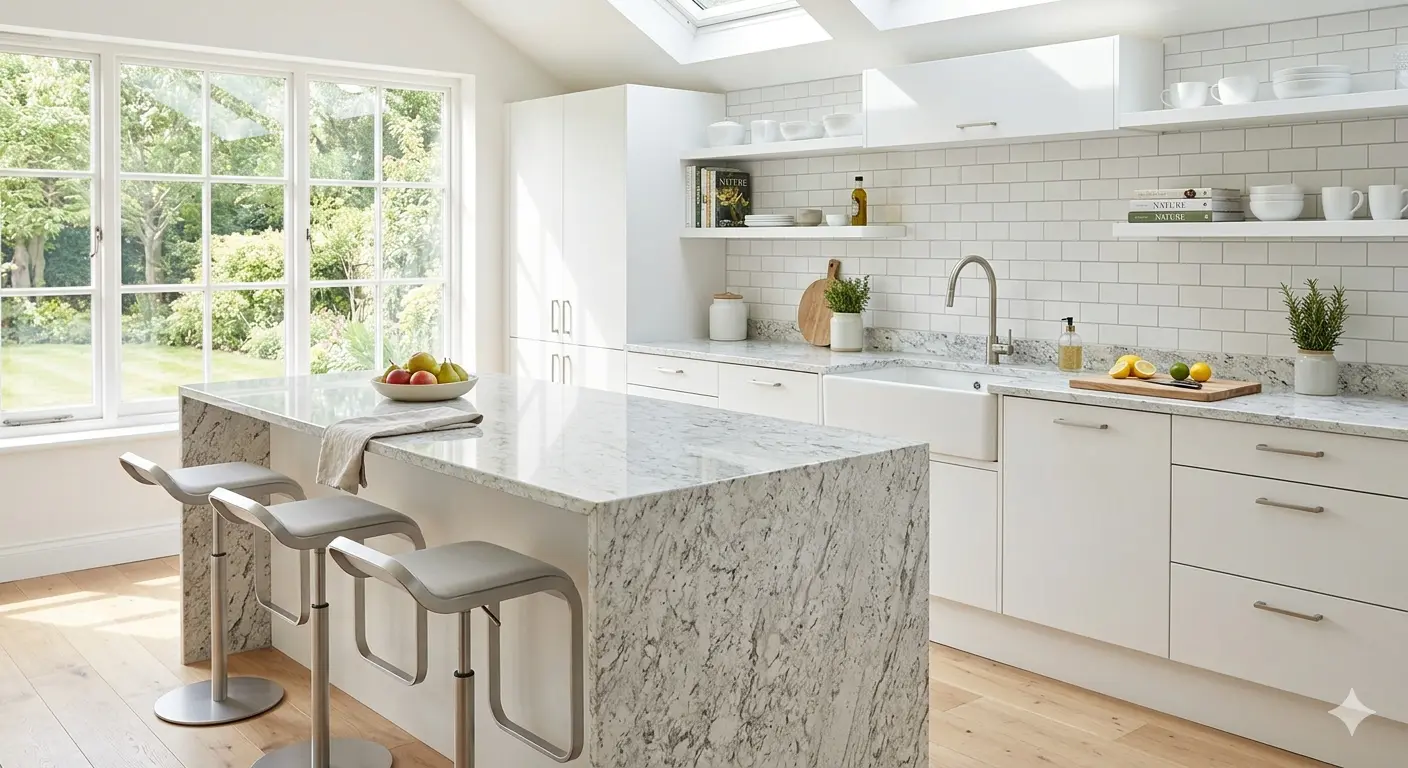
Granite is one of the most heat-tolerant countertop materials available. It forms when molten rock cools slowly deep within the earth, a process that creates a dense crystalline structure capable of handling temperatures up to approximately 1,200°F without the stone itself sustaining damage.
That tolerance comes with one important qualifier. Most granite countertops are sealed, and the sealant is not as heat-resistant as the stone beneath it. Sealants can begin to show damage at temperatures in the 450 to 500°F range. A hot pan placed directly on sealed granite may leave a dull spot or faint discoloration not from the stone, but from the sealant breaking down in that area.
In practical terms, granite handles daily kitchen heat well. Brief contact with warm cookware rarely causes visible damage, but placing very hot pans directly on the surface over time can degrade the sealant and require reapplication sooner than normal. Using a trivet or cooling rack is always the recommended practice.
Quartzite
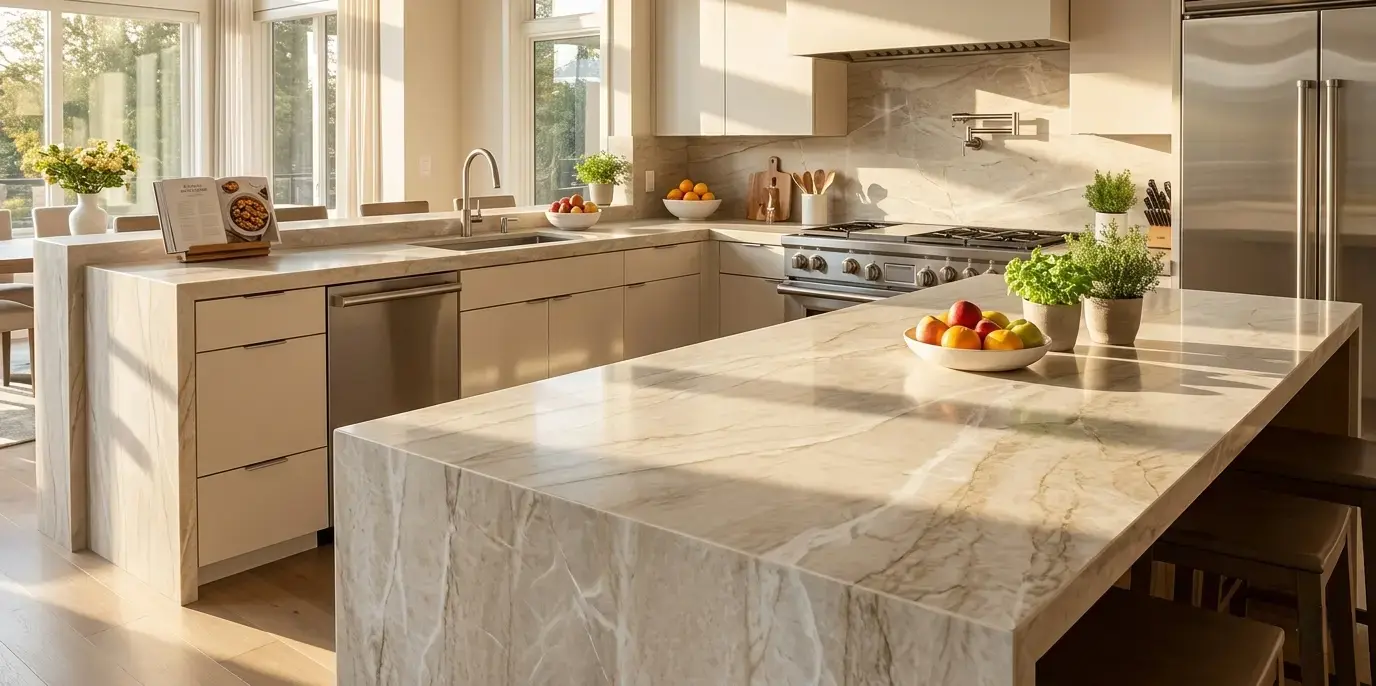
Quartzite is a metamorphic rock formed when sandstone is subjected to intense heat and pressure over geological time. That formation process gives quartzite a dense, tightly interlocked mineral structure with no polymer content. The result is a natural stone with heat resistance that parallels granite.
Quartzite can withstand direct heat exposure well, and because it contains no resins, there is no binder material at risk of degrading. The stone itself is the surface. That said, rapid temperature changes remain a consideration. A significant thermal shock, such as moving a frozen item directly to a very hot stone, can place stress on any natural material. Under normal kitchen conditions, this level of extreme temperature contrast is unlikely, but it reinforces why trivets remain a sensible habit regardless of material.
One additional note: some stones sold as quartzite are geologically closer to marble or a hybrid of the two. These softer quartzite varieties share more performance characteristics with marble, including lower heat tolerance. Viewing countertop slabs in person and confirming the material's mineralogy with a knowledgeable supplier helps ensure the stone you select matches your expectations.
Marble
Marble occupies a distinct position in the heat resistance conversation. As a metamorphic rock composed largely of calcium carbonate, marble handles moderate heat reasonably well, but it is more vulnerable to thermal stress than granite or quartzite.
The more common concern with marble and heat is not cracking but surface changes. Polished marble can lose its finish when exposed to sustained heat from hot cookware. The polished surface reflects light because of how the crystals are aligned at the surface. Intense heat can disrupt that alignment and leave dull spots that are difficult to reverse without professional refinishing. Honed marble finishes are somewhat more forgiving in this regard because the surface is already matte.
Thermal shock is also a more significant risk with marble than with harder stones. Placing an oven-hot pan onto marble that has been sitting at room temperature can cause stress cracks or crazing, particularly along natural fissure lines in the slab.
For homeowners who cook frequently and want marble in the kitchen, working with honed finishes and using trivets consistently is the practical approach. Marble performs well in lower-heat applications such as baking stations, breakfast bars, and bathroom vanities where direct contact with hot cookware is less common. For more on how marble fits into a broader natural stone countertop selection, Fine Homebuilding's countertop guide covers material comparisons in detail.
Travertine
Travertine is a sedimentary limestone formed from mineral deposits around natural springs. Like marble, it is composed primarily of calcium carbonate, which means it shares many of marble's heat response characteristics.
Travertine handles moderate heat without cracking under normal household conditions. However, its porous structure and calcium-based composition make it vulnerable to rapid temperature swings in the same way marble is. Sustained heat from a hot pan can affect both the sealant in the filled pores and the stone surface itself.
Travertine is commonly used in kitchens as a countertop material, but its heat tolerance calls for the same precautions applied to marble. Hot pans should not rest directly on the surface, and sealant should be maintained regularly to protect the stone from both heat and moisture.
Porcelain Slab
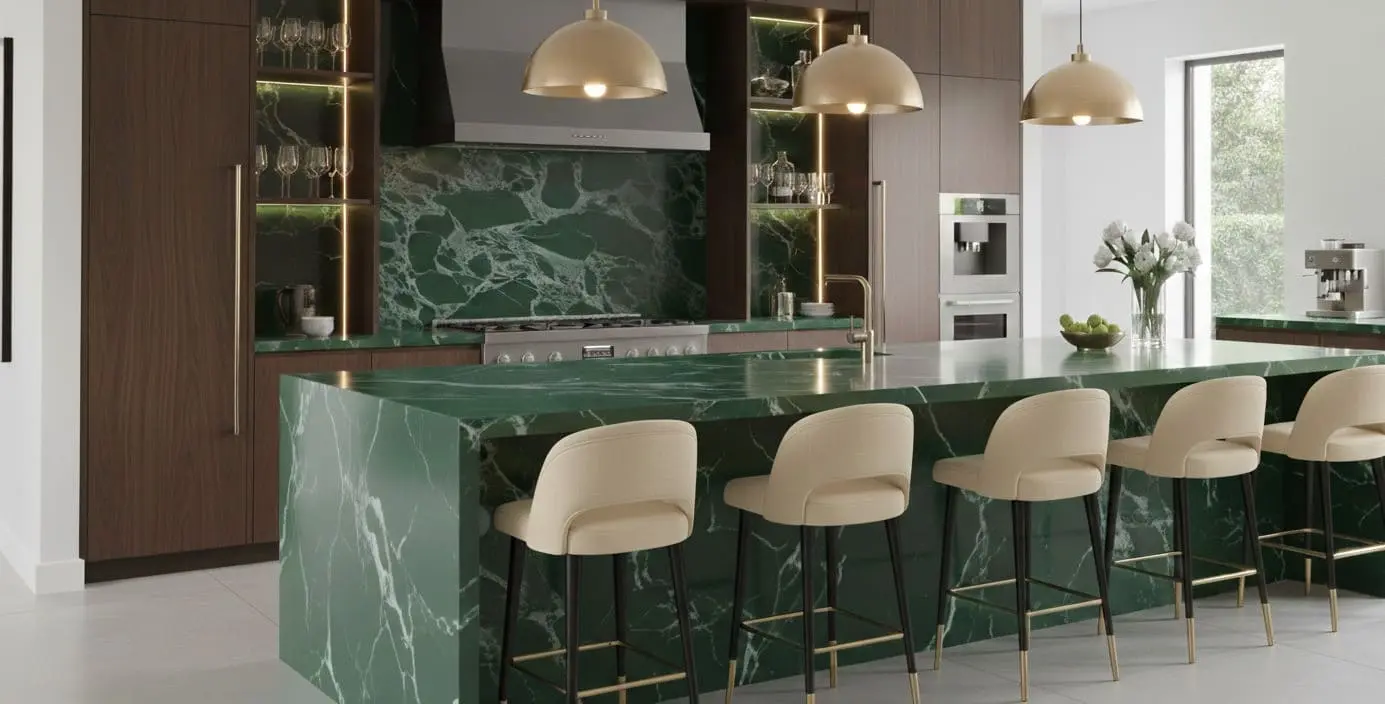
Porcelain slab is fired in kilns at temperatures exceeding 2,000°F during manufacturing. That production process results in a surface with strong heat resistance. Porcelain contains no polymer resins, and its dense, vitrified structure does not degrade under normal kitchen heat conditions.
In practical terms, porcelain slab handles heat well. Brief contact with hot cookware is unlikely to cause discoloration or surface damage. Some manufacturers rate porcelain for heat resistance up to approximately 1,000°F. The primary concern with porcelain and heat is not the material itself but the potential for thermal shock if a very cold slab experiences sudden extreme heat. Under typical residential cooking conditions, this is not a common issue.
Porcelain slab is an option we carry at all four locations. If you are shopping for stone locally in Northern Nevada or Northern California, you can view full-size porcelain slabs in person before making a selection.
Sintered Stone
Sintered stone is produced by subjecting raw mineral powders to extreme heat and pressure, a process that mimics geological stone formation at an accelerated pace. The result is a fully mineral surface with no resin content and among the highest heat tolerance ratings available in countertop materials.
Sintered stone can withstand direct heat contact from hot cookware without discoloring or cracking under normal use. Its non-porous surface and mineral composition give it performance characteristics closer to geological stone than to engineered surfaces. Among the materials available for countertops, sintered stone carries one of the higher heat tolerance ratings.
Engineered Quartz: A Different Category
Engineered quartz warrants a separate discussion because its heat response differs fundamentally from natural stone. Beyond heat performance, NIOSH has documented health and safety findings related to engineered stone fabrication, making an understanding of surface composition relevant beyond just daily use. Quartz countertops are composed of approximately 90 to 94 percent crushed quartz crystals bound together with polymer resins that make up the remaining six to ten percent of the material.
The quartz mineral itself is highly heat-tolerant. The resins are not. At temperatures above approximately 300°F, the polymer binders in engineered quartz can begin to degrade. The damage typically appears as discoloration, a yellowish or white burn mark, or surface cracking. Depending on the extent, this type of damage may not be repairable.
Common kitchen heat sources that can affect engineered quartz include pots taken directly from the stove or oven, slow cookers left on the counter during use, and cast iron cookware that retains heat for extended periods. Trivets and insulating pads are essential with this material.
For homeowners who prioritize heat resistance in an engineered surface, porcelain slab and sintered stone are the options that do not share the resin-based heat limitations described above. We carry all three engineered surface types across our showroom locations, and our design team can walk you through the differences based on how your kitchen is used.
The Role of Trivets Across All Materials
Even for heat-tolerant surfaces like granite and quartzite, trivets and silicone pads serve a protective function. Hot cookware can affect stone sealants at temperatures well below what would damage the stone itself. Sealants are applied to natural stone to resist staining and moisture, and degrading the sealant, even without visible surface damage, reduces the stone's protection against other daily wear.
A trivet adds a barrier that costs nothing in terms of aesthetics and supports the condition of both the sealant and the surface over time. We recommend them across all countertop materials in our inventory as part of a routine approach to surface care. Keeping one near the stove or cooktop ensures the habit is easy to maintain.
Conclusion
Heat tolerance is one of the most practical performance factors in countertop selection, and the range across available materials is significant. Granite, quartzite, porcelain slab, and sintered stone offer strong heat resistance rooted in mineral composition and formation at high temperatures. Marble and travertine handle moderate heat but require more attention around hot cookware and rapid temperature change. Engineered quartz presents the most heat-sensitive profile due to its polymer resin content.
As a direct stone importer, our design team across our showroom locations in Reno, Minden, Sacramento, and Fernley works with homeowners to match materials to how a kitchen is actually used. If heat performance is a priority in your selection, we can walk you through the options in person, let you compare surfaces side by side, and help you make a decision grounded in how you cook. Free design consultations are available by appointment, and you can request a slab quote online ahead of your visit. Contractors and trade professionals can apply for a trade account for access to preferred pricing across our full slab and tile inventory.
Frequently Asked Questions
Can you put a hot pan directly on a granite countertop?
Granite can withstand the heat from a hot pan without the stone itself sustaining damage. However, the sealant applied to granite can be affected at lower temperatures, typically in the 450 to 500°F range. Placing very hot pans directly on sealed granite over time may degrade the sealant and require earlier reapplication. Using a trivet is recommended to protect the sealant and maintain the surface.
What countertop material is most resistant to heat?
Granite, quartzite, porcelain slab, and sintered stone are among the most heat-resistant countertop options. All four are fully mineral surfaces without polymer resin binders. Sintered stone and porcelain slab are produced at extremely high temperatures during manufacturing, which gives them a particularly high heat tolerance. Engineered quartz is among the least heat-resistant due to its resin content.
Why does heat damage engineered quartz but not natural stone?
Engineered quartz contains polymer resins that bind the crushed quartz crystals together. These resins begin to degrade at temperatures above approximately 300°F, causing discoloration or cracking at the surface. Natural stone countertops like granite and quartzite contain no polymer binders. Their mineral composition is stable under heat conditions found in residential kitchens.
Can marble countertops crack from heat?
Marble is susceptible to thermal shock, which occurs when the stone experiences a rapid, extreme change in temperature. Placing a pan from a very hot oven directly onto cold marble can create stress across the surface that results in cracking, particularly along natural fissure lines. Sustained heat from cookware can also dull polished marble finishes. Using trivets and avoiding sudden temperature extremes reduces this risk.
Does a leathered or honed finish affect heat resistance?
The finish applied to a stone surface does not meaningfully change the material's underlying heat tolerance. Granite, quartzite, and marble perform comparably in terms of heat resistance regardless of whether they carry a polished, honed, or leathered finish. The practical difference is that honed and leathered finishes tend to show heat-related sealant damage less visibly than polished surfaces because they are already matte.