Natural stone ages by developing a patina, shifting in surface tone, and responding to the environment it lives in, and for most stone varieties, these changes add character and depth rather than diminish appearance. Unlike manufactured surfaces engineered to stay static, natural stone is a living material that continues to evolve after it leaves the quarry. Understanding how different stones change over time helps homeowners make better material choices and approach long-term care with realistic expectations. Our natural stone slab inventory covers the full range of materials discussed in this guide, from marble and soapstone to granite and quartzite.
Key points about how natural stone ages:
- Marble softens and develops a patina through a combination of surface wear and mild chemical reactions
- Soapstone darkens progressively, often shifting from pale gray to deep charcoal over months or years
- Granite and quartzite change very slowly and are among the most dimensionally stable natural stone options
- Travertine and limestone lighten slightly over time and can develop a refined surface texture
- Sealer breakdown is a normal part of the aging cycle and requires periodic reapplication
- Stone patina is widely regarded as a design asset rather than a maintenance failure
What Patina Means in Natural Stone
Patina is the gradual surface transformation that occurs as stone is exposed to its environment, daily handling, cleaning products, light, moisture, and time. The term originates in metalwork, where copper and bronze develop a distinctive surface layer through oxidation, but the concept applies equally to stone.
In natural stone, patina develops through a combination of microscopic abrasion, chemical interaction, and the slow absorption of oils from hands, food, and cleaning agents. The result is a surface that reflects the history of the space it occupies. Aged stone in European kitchens and historic buildings has been recognized for this quality over centuries. What begins as a polished or honed slab gradually takes on a softer character that develops through use rather than manufacturing. For a broad overview of how natural stone surfaces behave in residential settings, the Fine Homebuilding natural stone countertop guide is a thorough reference.
Patina is not damage. It is a surface transformation that occurs when a material is used as intended over time. Recognizing this distinction changes how homeowners relate to their stone and how they care for it.
Marble: The Stone That Softens With Use
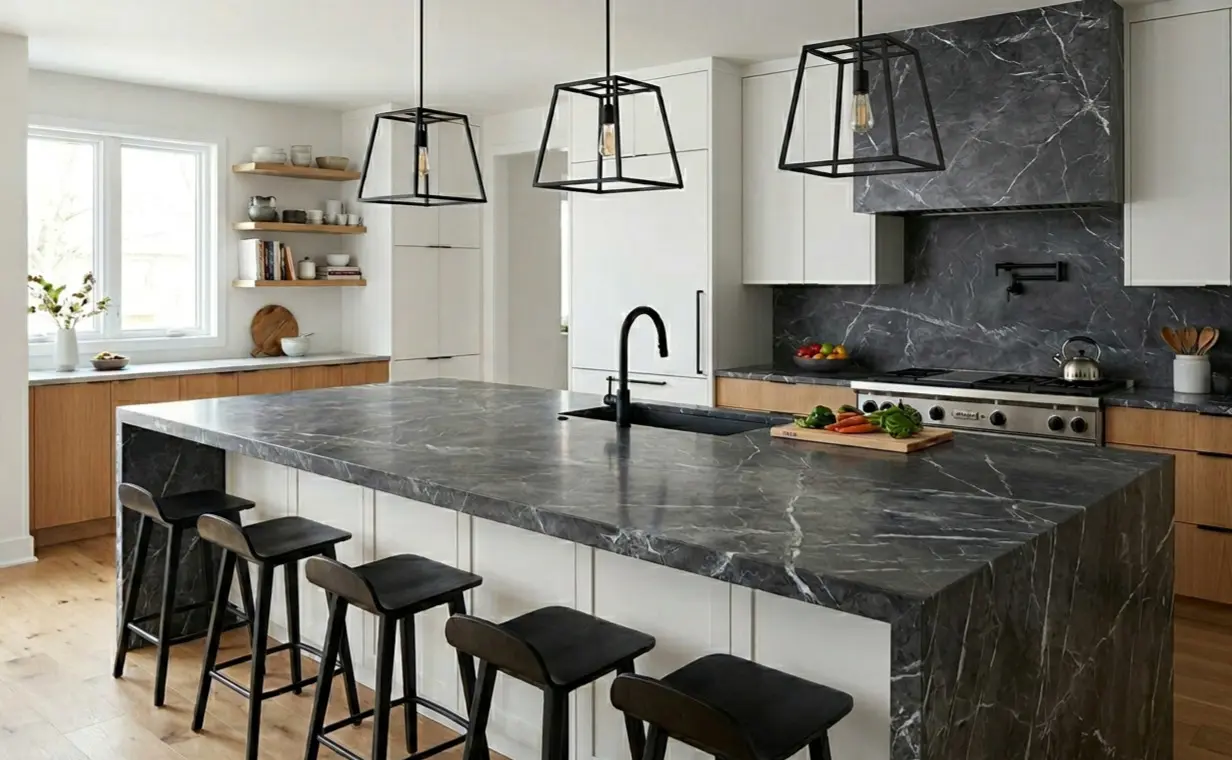
Marble is the stone most associated with visible aging, and it also develops the most pronounced patina of any commonly used countertop material. This is directly tied to marble's mineral composition. Marble is primarily calcite, a mineral that reacts when it contacts acidic substances such as citrus juice, vinegar, coffee, or wine. That reaction is called etching, and it creates dull spots or subtle surface irregularities on polished marble where the acidic contact occurred.
When etching happens uniformly across a marble surface over years of use, the result is a softened, matte quality that many homeowners and designers find more appealing than the original mirror-like polish. The surface begins to look warmer, less clinical, and more integrated with the materials around it. Carrara marble, for example, often develops an ivory-cream tone with a refined texture after several years in a kitchen environment. Calacatta varieties tend to hold their contrast longer because the veining remains pronounced even as the background shifts.
Marble can also be revived. A stone fabricator can hone or repolish the surface to minimize accumulated etching and restore a more even appearance. This ability to be refinished is one reason marble countertops have remained in service in homes and institutions for decades. Sealing marble slows stain absorption but does not prevent patina formation. The two processes are separate, and setting accurate expectations around both is the key to a satisfying long-term experience with marble.
Soapstone: Intentional Darkening as a Design Feature
Soapstone ages more visibly and more rapidly than most other countertop stone types, and its transformation is considered one of its defining characteristics. Fresh soapstone typically presents as a medium gray with subtle veining. Over time, exposure to oils from food preparation, hand contact, and cleaning products causes the stone to darken progressively. Untreated soapstone can shift from pale silver-gray to a deep charcoal over the course of several months to a few years, depending on use patterns.
Many homeowners choose to accelerate this process by applying food-grade mineral oil to the surface. Oiling deepens the color immediately and creates a more even, finished appearance. Left untreated, soapstone darkens unevenly at first before settling into a naturally graduated tone over time. Both approaches are valid choices based on aesthetic preference. Designers and trade professionals selecting stone for client projects can review our trade account application for access to slab pricing and project support.
Soapstone is soft enough to develop light surface scratches over time, which tend to blend into the patina rather than standing out as individual marks. Those scratches can be sanded out if desired. This combination of gradual color development and scratch blending makes soapstone one of the few countertop materials where surface aging is considered part of its expected behavior.
Granite: Stable, Slow, and Consistent Over Time
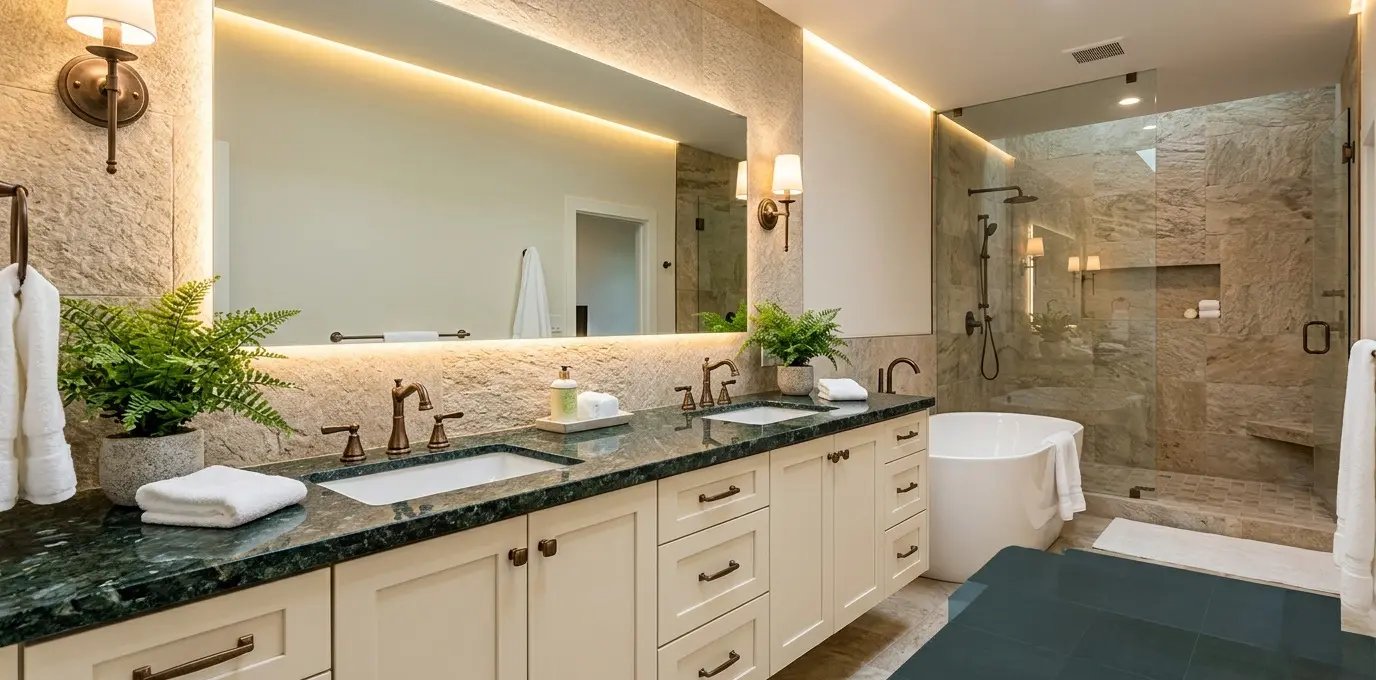
Granite ages more slowly than any other common countertop stone type, and its changes are subtle enough that most homeowners do not notice them over the course of ordinary residential use. Granite is a crystalline igneous rock composed primarily of quartz, feldspar, and mica. Its density and hardness make it highly resistant to scratching, staining, and the surface reactions that affect softer calcium-based stones.
Over very long periods, granite can undergo gradual mineral shifts in response to moisture and atmospheric conditions, particularly in outdoor applications. Feldspar minerals may develop slight clay transformations over decades, and iron-bearing minerals can produce subtle rust tones in some varieties. Indoors, these changes are minimal and are generally not perceptible within a typical residential timeline. This Old House covers how different stone surfaces perform in kitchens and bathrooms, including granite's long-term durability profile, in their stone countertop overview.
What homeowners are more likely to notice is the gradual decline of the sealer over time, which can cause the stone to lose some of its early stain resistance. Resealing on a schedule appropriate to the specific stone's porosity addresses this entirely. Granite countertops with consistent maintenance over several decades continue to perform comparably to how they did when first installed.
Quartzite: Exceptional Long-Term Stability
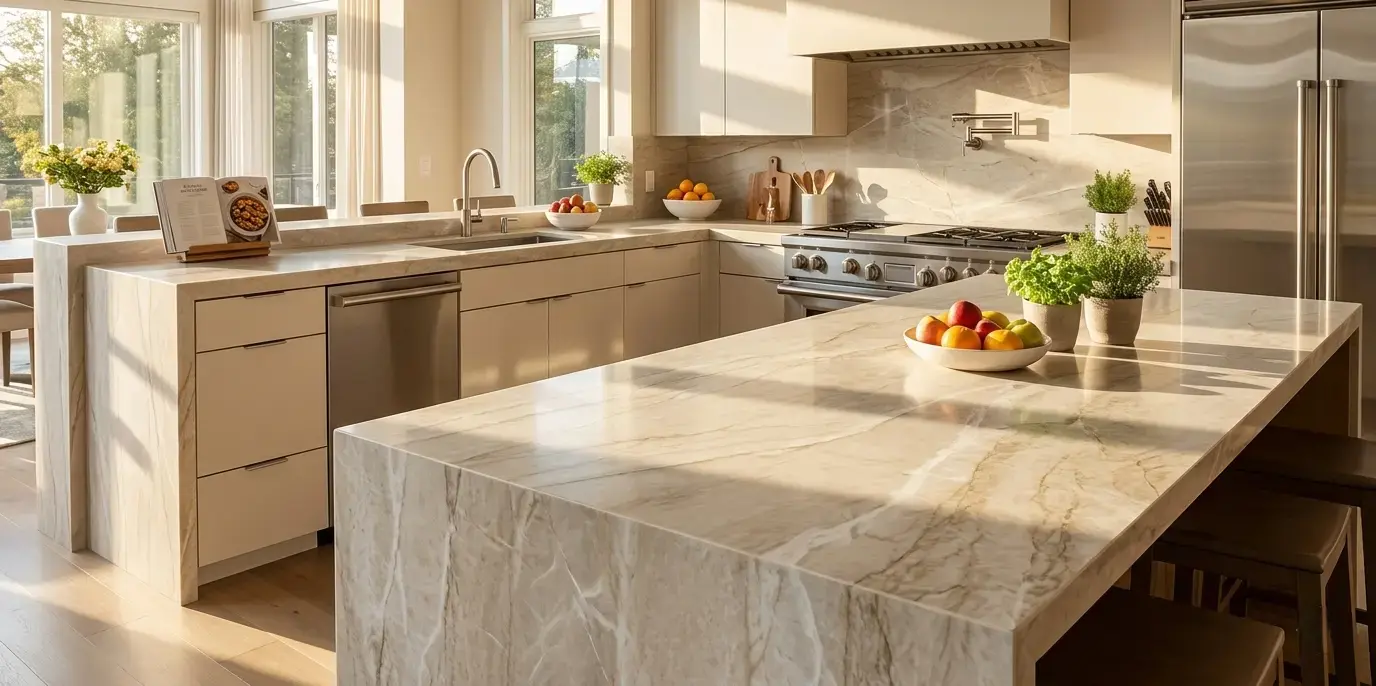
Quartzite is formed when sandstone undergoes intense heat and pressure, producing an extremely hard, dense metamorphic rock. Its mineral composition is dominated by interlocking quartz grains, which makes it highly resistant to the chemical reactions and surface wear that affect marble and softer stones. Quartzite does not etch when it contacts acids, does not darken with oil absorption, and does not develop the same kind of visible patina as calcite-based stones.
Over time, quartzite holds its appearance reliably while developing a very gradual softening of surface sheen in high-use areas. The veining and color remain consistent. This stability is one of the main reasons quartzite is selected as an alternative by homeowners who want the visual appeal of marble without the surface reactivity. A quartzite countertop installed today should look essentially the same in twenty years with basic care and periodic sealing. Homeowners in Northern Nevada and Northern California can shop local for natural stone and view quartzite slabs in person at any of our four showroom locations.
Travertine and Limestone: Lightening and Refining
Travertine and limestone are calcium-based stones that share many aging characteristics with marble but express them differently. Both tend to lighten slightly in color over time as the surface develops through cleaning cycles and mild environmental exposure. Travertine, which has a characteristic porous cellular structure, may see the texture of those pores become more pronounced or softer over the years depending on how the stone was filled and finished.
Limestone develops a smooth, refined surface texture through use that differs from its appearance when freshly cut. Many designers select limestone specifically for applications where a muted, settled surface is part of the design intent from the beginning. Both travertine and limestone require consistent sealing and attention to acid contact, as they etch similarly to marble.
How Sealers Factor Into the Aging Process
Every natural stone that requires sealing will need that sealer reapplied at intervals that vary by stone type, porosity, and daily use patterns. Sealer is not a permanent barrier. It is a temporary treatment that absorbs into the stone's pores and slows liquid penetration. As sealer breaks down through cleaning and use, the stone becomes more susceptible to staining until it is reapplied.
The water test remains the standard field check for sealer condition. A few drops of water left on the surface for several minutes will either bead up on a well-sealed stone or absorb and darken the surface on a stone that needs attention. Catching sealer deterioration early is more straightforward than addressing deep stains after the fact. Research on the health concerns linked to engineered stone fabrication from NIOSH has reinforced why many homeowners are returning to natural stone, which requires no resin binders or synthetic compounds in its production.
Aging as a Long-Term Design Consideration
The materials that improve with age are uncommon in home design. Most manufactured surfaces degrade over time, losing the uniformity and precision that made them appealing when new. Natural stone responds differently. A marble countertop with ten years of daily use in a family kitchen carries a surface quality that develops specifically through use. Soapstone with a decade of patina reflects the conditions of the household it has served.
This is one of the more practical differences between natural stone and engineered surfaces. Quartz countertops are designed to remain unchanged, and they do, until they show wear that reads as deterioration rather than natural development. Stone changes in a way that is consistent with how the material behaves by nature, which many homeowners find preferable to a surface that can only degrade from its original condition.
Conclusion
Natural stone is one of the few countertop materials that changes in ways that are considered desirable rather than simply showing wear. Marble softens and shifts in tone. Soapstone deepens from gray toward charcoal. Granite holds steady with minimal visible change. Quartzite resists surface alteration almost entirely. Travertine and limestone refine and mellow through use. Each of these materials changes on its own timeline and in its own way.
At our showrooms in Reno, Minden, Sacramento, and Fernley, our design team works with homeowners choosing natural stone not just for how it looks today, but for how it will look five, ten, and twenty years from now. Understanding how a stone ages is as important as understanding how it looks in a showroom. Request a slab quote to start your project, or schedule a design consultation with our team. You can also explore all four of our natural stone showroom locations to view slabs in person before making your selection.
Frequently Asked Questions
Does marble patina look like damage?
Marble patina results from the accumulation of microscopic surface wear and mild chemical reactions over time. On polished marble, this often appears as a subtle softening of the original mirror-like sheen. Etching from acidic contact, particularly in kitchen environments, contributes to this overall texture. Whether patina reads as damage or as expected surface development depends largely on the expectations set before the stone is installed. Homeowners who understand this process in advance are generally more comfortable with how marble changes over time.
Can soapstone be restored if it ages more than I expected?
Yes. Soapstone can be sanded and refinished because of its relative softness. Light scratches can be addressed by the homeowner using fine-grit sandpaper. Deeper accumulated wear can be addressed professionally. Because soapstone does not rely on a surface sealer or finish coat the way many other materials do, there is no risk of stripping a protective layer during the refinishing process. Mineral oil can be reapplied after sanding to restore the darker tone.
Does granite change color over time indoors?
Granite indoors changes very slowly compared to other natural stone types. Minor sealer degradation over time can affect how the surface absorbs light and moisture, but the stone itself holds its color reliably under normal residential conditions. If granite appears to be shifting in color or tone, the most common explanation is that the sealer has broken down and needs to be reapplied rather than any change in the stone itself.
Is quartzite a good choice if I want a surface that stays consistent over time?
Quartzite is one of the most dimensionally stable natural stone options for countertop use. Its dense quartz mineral structure resists the chemical reactions that cause etching in marble and the color shifts that occur in soapstone. With appropriate sealing and basic care, quartzite holds its appearance across decades. Homeowners who want the visual quality of veined natural stone without the surface reactivity of marble consistently find quartzite a practical match for that goal.
Does sealing prevent patina from forming?
Sealing reduces stain absorption by slowing the rate at which liquids penetrate the stone's surface. It does not prevent patina. The microscopic surface changes that create patina, including gradual abrasion, light chemical interaction, and the slow absorption of environmental oils, occur at the surface level or involve reactions that sealers do not block. Sealing and patina development are two separate processes. A properly sealed marble countertop will still develop the softened surface quality that comes with years of use while being better protected against deep staining.