Stone slabs are no longer limited to countertops and backsplashes. Today, they are being used in a wide range of creative applications across both residential and commercial interiors, including accent walls, custom furniture, large-format flooring, outdoor installations, and monolithic kitchen islands.
Natural stone materials such as marble, granite, quartzite, and travertine offer a combination of durability, unique patterning, and visual versatility that makes them well-suited for both functional and decorative purposes. Whether you are renovating a single room or designing a space from the ground up, stone slabs present design-forward options that deliver long-term aesthetic and material value.
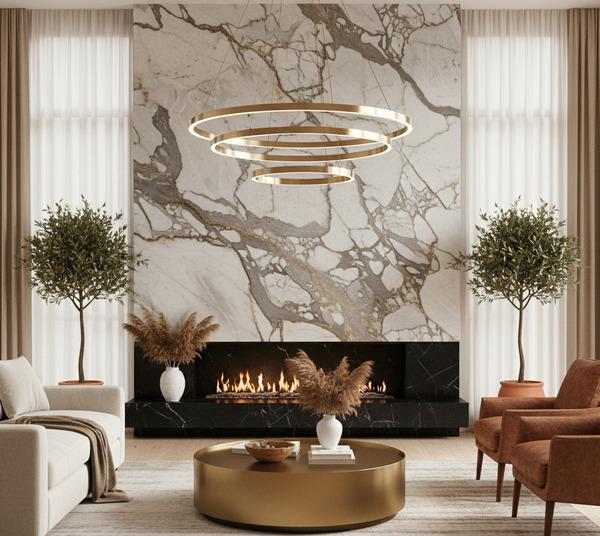
1. Accent Walls That Command Attention
A flat, unremarkable wall becomes an architectural moment when covered with stone slabs featuring bold veining or rich texture. Marble, granite, and quartzite each bring their own personality to living rooms, offices, and bedrooms, layering in a sense of refinement that's difficult to replicate with other materials. These stone-clad feature walls naturally draw the eye and anchor a room's entire design direction, demonstrating how bold material choices can define a contemporary aesthetic.
2. One-of-a-Kind Stone Furniture
Coffee tables, dining tables, and desks crafted from stone slabs strike an ideal balance between long-lasting resilience and elevated style. Each custom piece functions as a design anchor in any room. Whether the approach leans toward clean, streamlined profiles or more expressive sculptural forms, stone furniture integrates naturally across a wide range of interior styles. The inherent patterns and textures found in natural stone mean no two pieces are alike, giving every item its own distinct character.
3. Flooring That Makes a Statement
Used as large-format tiles or arranged in intricate patterns, stone slabs bring a new dimension to floor design. This approach works especially well in open-plan layouts, where continuous stone flooring creates visual flow and a sense of cohesion across the entire space. The broad spectrum of available colors, finishes, and surface treatments makes stone an adaptable choice across contemporary, traditional, and industrial interiors alike, delivering understated luxury underfoot.
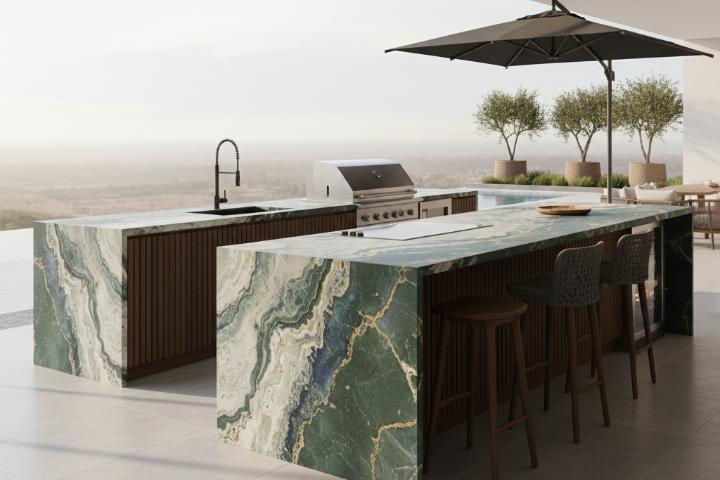
4. Unexpected Outdoor Installations
Stone slabs are moving beyond standard patio and pathway use into more expressive outdoor territory. Water features, fire pit surrounds, and garden sculptures are just a few of the ways this material is being deployed outside. Their natural ability to hold up against the elements makes them as practical as they are visually compelling. Whether the goal is a tranquil garden retreat or a dramatic outdoor focal point, stone slabs deliver both lasting durability and artistic presence. When you’re ready to shop local, turn to us for premium materials, expert guidance, and personalized service that ensures your outdoor project is built to impress and made to last.
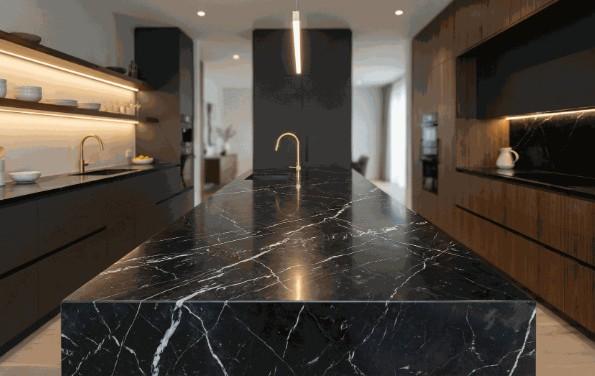
5. The Monolithic Kitchen Island
Taking the kitchen island concept further, some designers are constructing entire islands from a single continuous stone slab. This approach prioritizes visual impact alongside everyday practicality. A sweeping marble surface with intricate veining or a solid granite form with a matte finish each bring their own brand of sophistication to the modern kitchen. The result is a workspace that doubles as a sculptural centerpiece, anchoring the room with weight, permanence, and style.
Stone slabs are proving to be far more than a building material. They are an active design element that continues to push creative boundaries, bringing natural beauty and lasting value into every space they occupy.
Conclusion
Stone slabs have clearly grown into something far greater than a functional surface material. From commanding accent walls and sculptural furniture to seamless flooring, outdoor installations, and monolithic kitchen islands, their role in modern design continues to expand in ways that are both practical and visually striking. What makes stone slabs particularly compelling is that no two pieces are ever identical, each slab carries its own natural pattern, color variation, and texture, making every application inherently unique.
Whether you are redesigning a single room or planning a full-scale renovation, incorporating stone slabs into your vision is a decision that pays off in both aesthetic impact and long-term value. Designers and homeowners looking for a trusted source can rely on Nova Tile and Stone, our tile and stone company, which offers premium materials and personalized guidance. For professionals, we also provide trade accounts, making it simple to access our collection and expertise for every project.
Frequently Asked Questions
What types of stone slabs work best for accent walls?
Marble, quartzite, and granite are among the most popular choices for accent walls because of their dramatic veining, rich color variation, and surface depth. Marble tends to deliver a more classic, refined look, while quartzite offers a harder, more durable option with similar visual appeal. Granite works well in spaces that call for bold, earthy tones and a more textured finish. The best choice ultimately comes down to the existing color palette of the room and the overall design direction you want to establish.
Are stone slabs suitable for outdoor use year-round?
Yes, many natural stone slabs are well-suited for outdoor environments and can hold up across different seasons and weather conditions. Granite and quartzite, in particular, are known for their density and resistance to moisture, temperature fluctuations, and surface wear. That said, proper sealing is recommended to protect the stone from prolonged exposure to the elements and to maintain its appearance over time. Consulting with a stone specialist will help you identify the right material and finish for your specific outdoor application.
How do stone slab kitchen islands differ from standard countertop installations?
A monolithic stone island is typically fabricated from a single, continuous slab rather than multiple pieces joined together. This approach eliminates visible seams and creates a more cohesive, sculptural appearance. It also means the island's design is shaped largely by the natural dimensions and characteristics of the slab itself, making each installation genuinely one of a kind. Beyond aesthetics, a full stone island offers the same durability and heat resistance that make stone a trusted choice for kitchen surfaces in general.
Can stone slabs be used for furniture in smaller spaces?
Absolutely. While large stone dining tables are a natural fit for spacious interiors, stone slabs can also be scaled down for use in compact spaces. A small stone coffee table or a slim stone desk can introduce the same sense of material quality and visual interest without overwhelming a room. Lighter-toned stones like white marble or soft beige travertine tend to work especially well in smaller areas, as they reflect light and help the space feel more open.
How do I maintain stone slab flooring in high-traffic areas?
Stone slab flooring in high-traffic areas benefits from routine cleaning with a pH-neutral cleaner to avoid damaging the surface or breaking down any existing sealant. Periodic resealing is also important, particularly for more porous stones like marble and travertine, to prevent staining and moisture absorption. Using protective pads under furniture legs and placing mats at entryways can help minimize surface scratches and wear. With consistent care, stone flooring retains its appearance and structural integrity for decades. When you’re ready to source premium stone slabs for your project, request a slab quote or schedule an appointment with us to view our collection and discuss your project needs.