Graphite marble is having a defining moment in contemporary interiors. Its deep charcoal tones and dramatic veining deliver the kind of visual impact homeowners want without sacrificing the refinement that natural stone slabs are known for. Whether you are planning a full kitchen renovation or refreshing a single feature wall, this material brings a sophistication that feels intentional and lasting.
Dark stone has shifted from accent element to centerpiece in modern design. Graphite marble's layered gray palette coordinates effortlessly with both warm and cool color schemes, making it one of the most versatile choices in today's stone market. The veining patterns found in natural slabs ensure that no two installations look identical, giving every project a built-in sense of exclusivity.
This guide covers where and how to use graphite marble effectively, from kitchen countertops and bathroom floors to exterior walls and outdoor applications, along with practical planning tips for getting the most from this distinctive material.
Dark Natural Stone Slabs Redefine the Contemporary Interior
Graphite marble earns its place in modern interiors through a combination of visual strength and material longevity. Unlike synthetic surfaces that replicate stone patterns, natural stone slabs carry real mineral depth. Color and veining shift depending on the light source, giving graphite marble a presence that engineered alternatives simply cannot match.
Designers and architects increasingly favor dark stone for high-contrast applications because it anchors a room visually. A graphite marble floor or countertop creates a strong focal point without requiring additional decorative layers to fill the space.
Key reasons graphite marble suits modern and contemporary homes:
- Bold veining adds visual texture without pattern wallpaper or decorative tile
- Dark tones conceal daily wear better than lighter stone surfaces
- Polished finishes reflect light, helping rooms with deep-toned materials stay bright
- Honed and leathered options reduce glare for matte-forward design schemes
- Compatible with warm metals like brass and bronze as well as cool metals like chrome and stainless
- Spans kitchen, bathroom, exterior wall, and floor applications with equal confidence
According to sustainability standards reviewed by natural stone industry organizations, natural stone carries measurable advantages over synthetic surfaces, including a longer service life and lower embodied carbon across a building's lifespan.
Graphite Marble vs. Other Dark Stone Options
Stone Type | Veining Style | Best Application | Maintenance Level | Common Finish |
Graphite Marble | Bold, sweeping | Countertops, feature walls | Moderate (seal regularly) | Polished, honed |
Nero Marquina | Fine white veins | Bathrooms, floors | Moderate | Polished |
Black Granite | Minimal, speckled | Outdoor kitchens, floors | Low | Polished, flamed |
Charcoal Slate | Subtle layering | Exterior walls, floors | Low | Natural cleft |
Room-by-Room Applications for Kitchen, Bathroom, and Exterior Spaces
Kitchen Countertops and Backsplashes
The kitchen is where graphite marble makes its strongest design statement. A full-height backsplash in matching slab material creates a seamless, uninterrupted surface behind the range or prep station. This approach turns the kitchen wall into an architectural feature rather than a utilitarian backdrop.
On countertops, graphite marble pairs well with flat-front cabinetry in white, off-white, or light wood tones. The contrast between the dark stone and lighter cabinetry is a signature of contemporary kitchen design. As noted in comprehensive stone countertop guidance, edge profiles play a significant role in the final aesthetic. Straight and waterfall edges reinforce modern styling, while ogee edges lean more traditional.
Bathroom Floors and Shower Walls
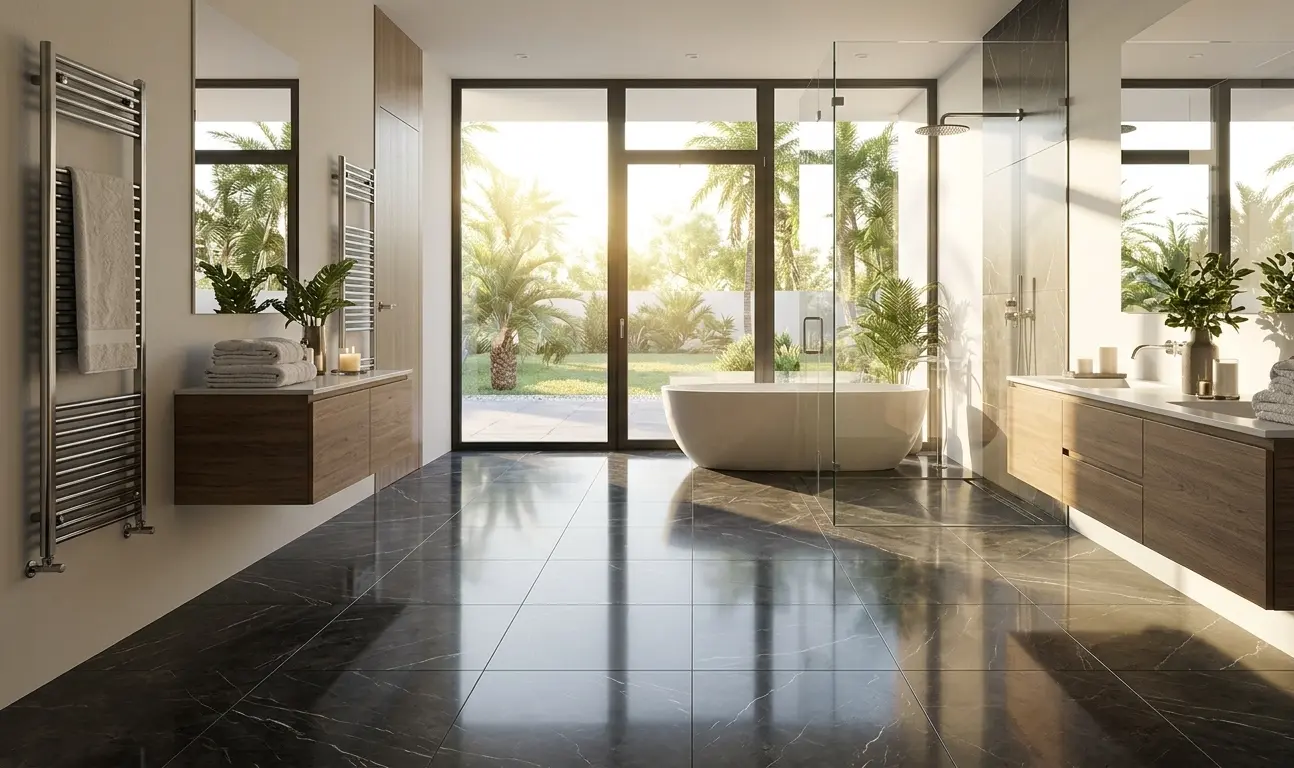
Graphite marble works exceptionally well in bathrooms, where its tone evokes the calm of high-end spa environments. Large-format floor tiles in graphite create an expansive, uninterrupted surface that makes compact bathrooms feel more considered in their design.
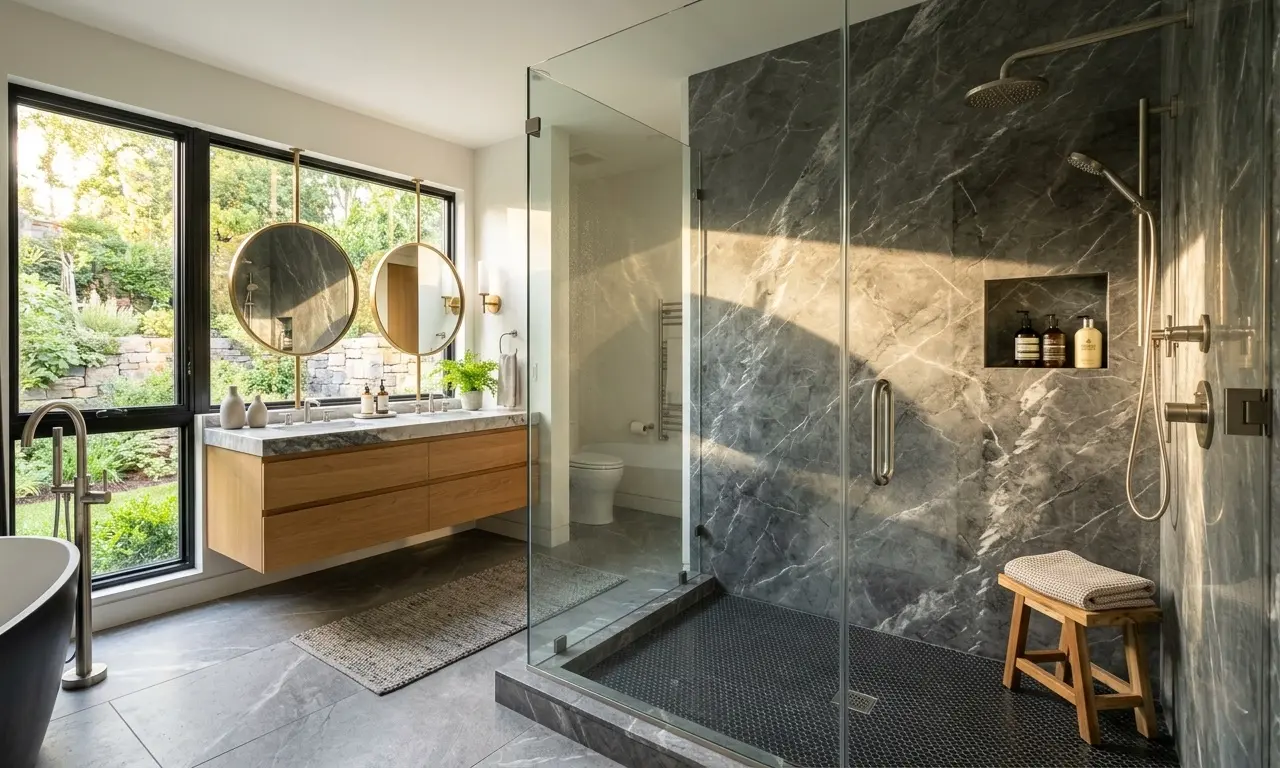
For shower enclosures, continuous slab panels eliminate grout lines and reduce moisture infiltration points. A full-slab shower wall paired with a contrasting white or light vanity top gives the bathroom a clean, high-contrast look that reads as sophisticated without being excessive.
Exterior Walls and Outdoor Floors
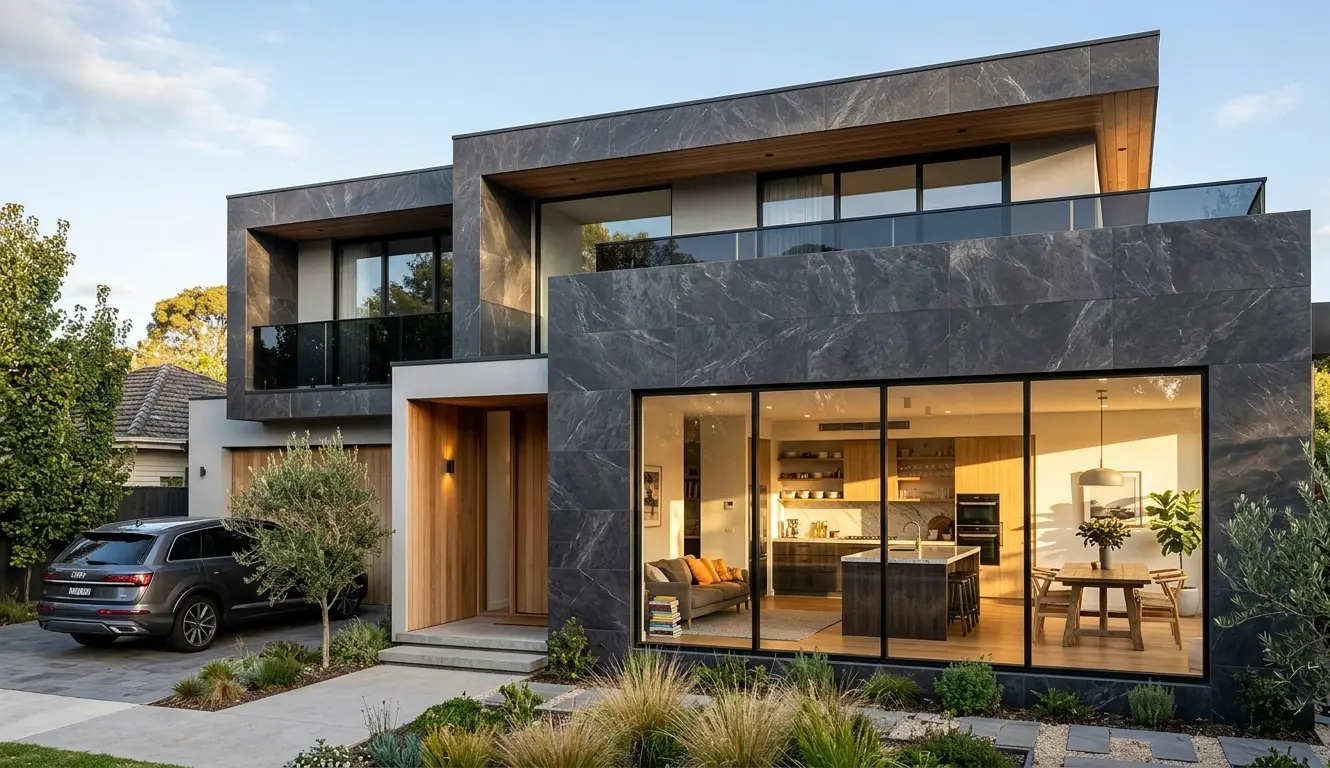
Graphite marble's durability extends to outdoor applications when the correct finish and slab thickness are selected. Exterior wall cladding in graphite stone adds architectural weight to building facades, particularly in contemporary construction where flat planes and bold materials define the exterior character.
For outdoor floors, a flamed or brushed finish increases slip resistance while maintaining the stone's distinctive character. Graphite tones also weather gracefully, developing a subtle patina that reinforces the natural origin of the material over time. Architects and designers following major design showcases in 2026 will notice that dark exterior stone cladding continues to appear in prominent commercial and residential builds.
Graphite Marble Pros and Cons
Pros:
- Distinctive veining makes every slab one of a kind
- Handles high-traffic areas well with proper sealing
- Versatile across interior and exterior applications
- Timeless material that outlasts short-cycle design trends
Cons:
- Requires periodic sealing to prevent staining
- Light-colored spills can show on unsealed surfaces
- Premium material cost compared to porcelain alternatives
- Heavier than engineered stone, requiring structural consideration for some installs
How to Plan a Graphite Marble Installation (5 Steps)
- Define the application scope. Determine whether you are using graphite marble for countertops, floors, walls, or multiple surfaces before selecting a slab. Each application has different thickness and finish requirements.
- Review full slabs in person. Veining and tone vary significantly between slabs. Viewing the actual stone at a showroom prevents surprises after fabrication cuts are made.
- Select the right finish. Polished finishes work best for countertops and feature walls. Honed or leathered options suit floor and exterior applications where glare or slip resistance is a concern.
- Confirm structural requirements. Thick slabs used for countertop overhangs or outdoor applications may require reinforced substrate preparation before installation begins.
- Plan a maintenance schedule. Sealing frequency depends on traffic level and the finish type. Establishing a care routine before installation protects the surface from day one.
Finding the Right Graphite Marble Slab for Your Project
Sourcing the right graphite marble slab begins with seeing the material in person. View available slab options to get a sense of the range of graphite and dark stone offerings, then visit a showroom to evaluate veining, finish, and slab scale against your actual project dimensions.
Showrooms in Reno, Minden, Fernley, and Sacramento carry graphite marble in multiple finishes and slab formats. Each location offers hands-on guidance to help match the right stone to the demands of your kitchen, bathroom, exterior wall, or floor project.
Trade professionals can open a trade account to access project pricing and streamlined ordering. If you prefer to start online, locate a nearby showroom and connect with a stone specialist before committing to a slab selection.
Conclusion
Graphite marble combines the visual strength of dark stone with the refinement of natural stone slabs, performing equally well across kitchens, bathrooms, exterior walls, and floors. Its veining depth and tonal range give contemporary interiors a character that no manufactured surface can replicate.
Whether you are designing a high-contrast kitchen, a spa-inspired bathroom, or a commanding exterior facade, graphite marble delivers results that hold up to daily use and improve with age. Visit our slab gallery to explore available options, request samples, and speak with a specialist about bringing graphite marble into your next project.
Frequently Asked Questions
Is graphite marble a good choice for kitchen countertops?
Yes. Graphite marble works well for kitchen countertops when properly sealed. It handles food preparation surfaces effectively and creates strong visual contrast against lighter cabinetry and appliances.
How often does graphite marble need to be sealed?
Most graphite marble countertops require sealing once or twice per year, depending on traffic level and the porosity of the specific stone. High-use surfaces benefit from more frequent treatment.
Can graphite marble be installed outdoors?
Yes, with the appropriate finish and thickness. Flamed or brushed finishes increase slip resistance for outdoor floor applications. Always confirm with your supplier that the specific slab is rated for exterior use and temperature fluctuation.
What finishes are available for graphite marble?
Graphite marble is available in polished, honed, leathered, and brushed finishes. Polished finishes amplify veining detail and light reflection. Honed and leathered finishes deliver a more matte, tactile surface better suited for floors and high-contact areas.
How does graphite marble compare to black granite for flooring?
Graphite marble offers more visible veining and greater visual texture, while black granite provides a more uniform surface with minimal pattern movement. Marble requires more maintenance but delivers stronger design distinctiveness and a warmer stone aesthetic.