Granite and marble are the two most popular natural stone countertop choices for kitchens. Granite is more durable, lower maintenance, and budget-friendly, making it ideal for high-traffic kitchens. Marble is softer, requires more upkeep, and costs more, but delivers a timeless, luxurious look that granite can't fully replicate. Both boost property value and come in a wide range of colors and finishes.
The right choice depends on four key factors:
- Durability needs - Granite resists scratches and heat better than marble
- Maintenance commitment - Granite seals every two years; marble every six to twelve months
- Design preference - Marble offers elegant veining; granite offers bold color variety
- Budget - Granite typically costs around three-fifths the price of marble
Appearance
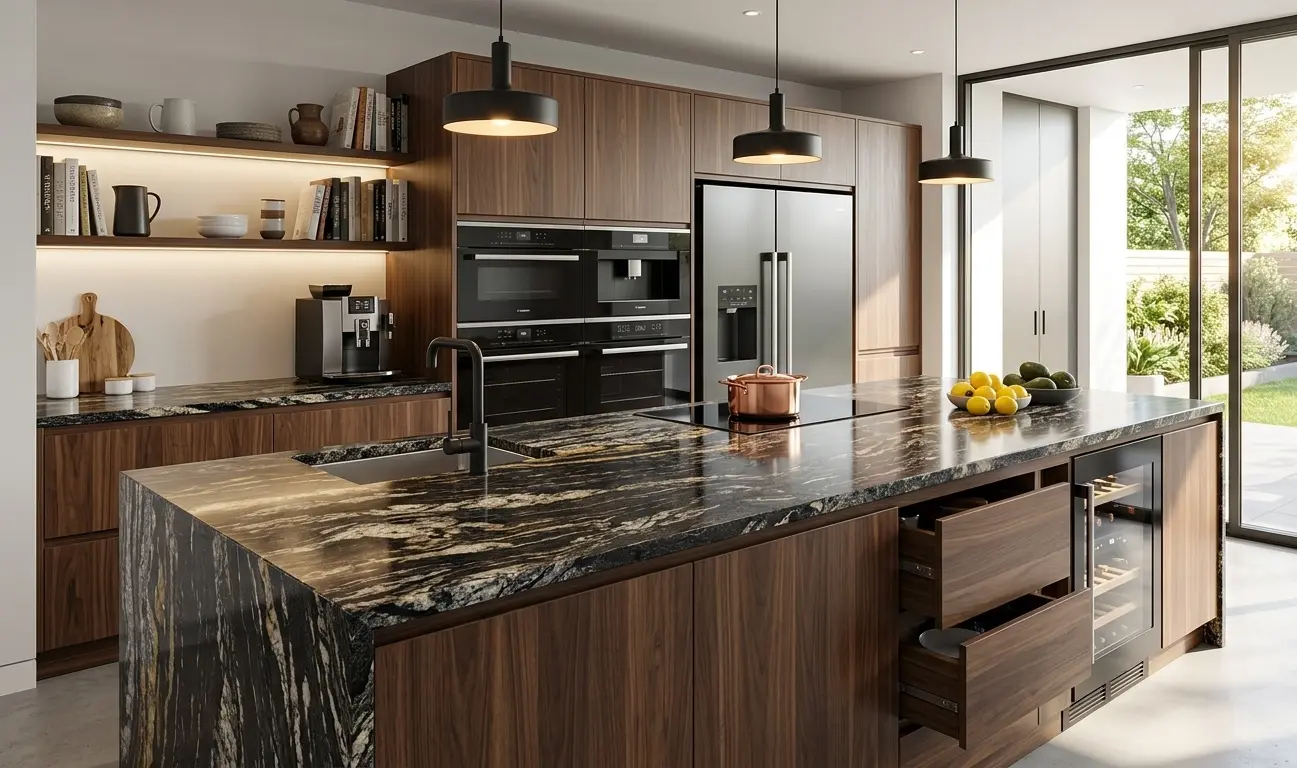
Granite's wide variety of colors, patterns, and natural variations is one of its biggest selling points. Options range from white and beige to brown, copper, pink, black, and beyond. Some slabs carry subtle speckling, while others display bold streaks and dramatic movement, and since no two slabs are identical, picking your specific piece matters. Keep in mind that unusual color choices like red or blue may appeal to a narrower pool of buyers down the road.
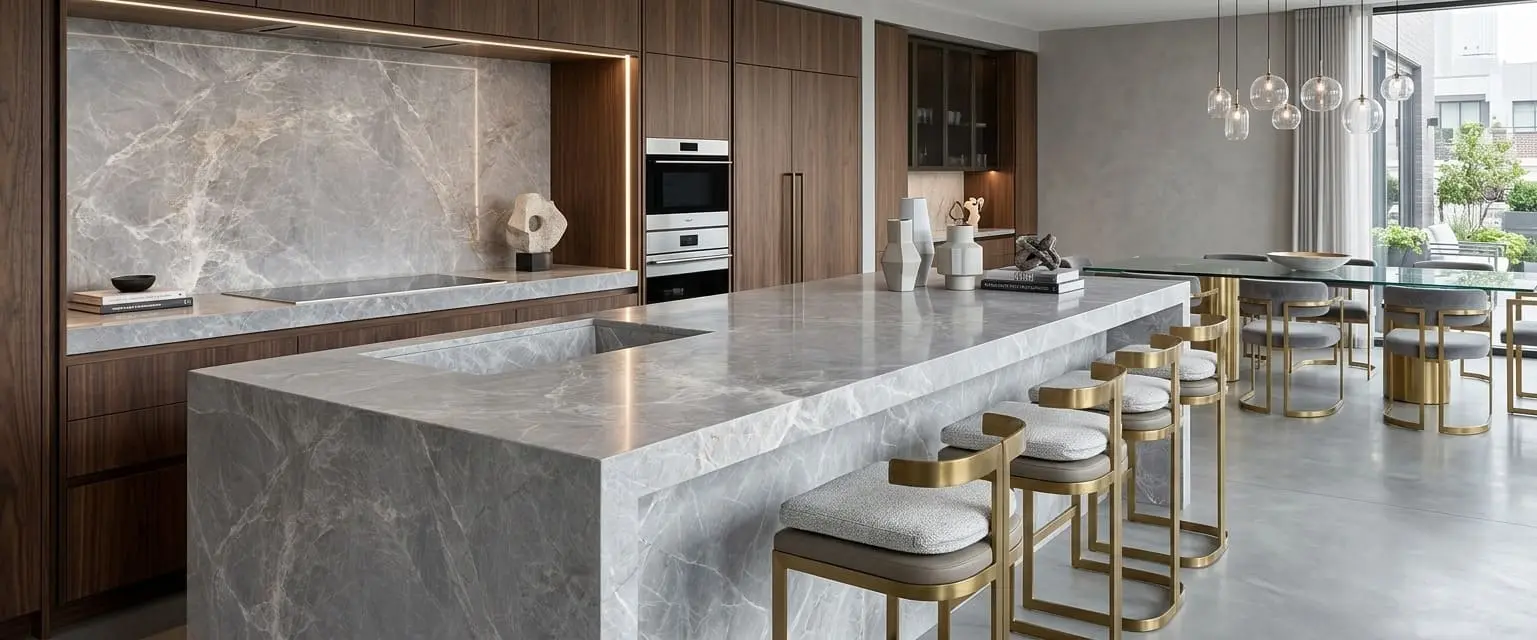
Marble, on the other hand, has earned its legendary status through its distinctive veining and enduring elegance. Every slab is completely unique, and it has a natural way of becoming the focal point of any space it occupies. White and cream are the most prevalent marble tones, though tan, brown, black, and gray are readily available. Vein colors span from soft whites and creams to warm golds and cool grays, with patterns ranging from delicate hairline markings to sweeping, dramatic strokes.
Carrara marble sits at a price point comparable to granite and remains the most widely used variety. Calacatta marble commands a higher price for its bolder veining and more opulent look. Emperador marble leans into rich brown tones, while Crema Marfil brings warmth and brightness through its beige and golden-yellow palette.
Both materials share a common set of surface finish options, polished, honed, leather, and brushed, each delivering a different visual and tactile result. Whether your kitchen leans modern, farmhouse, rustic, or traditional, the finish you select will shape both the aesthetics and the long-term maintenance demands of your countertop.
Durability
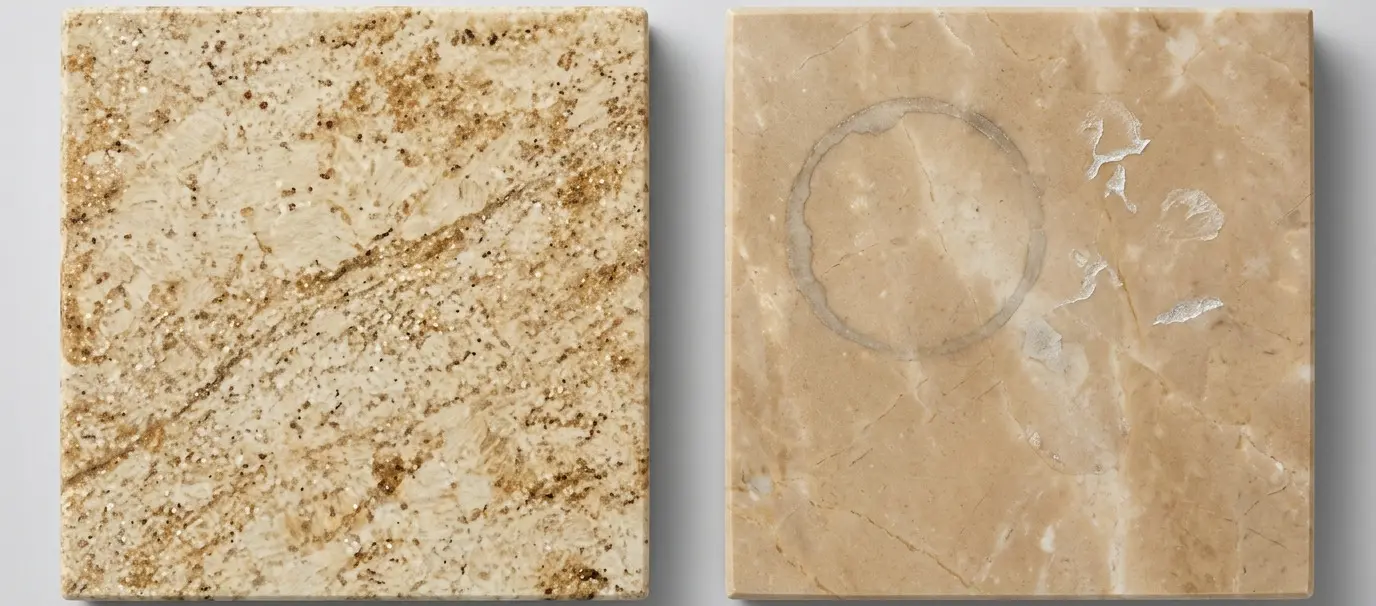
Granite ranks among the toughest natural stone countertop options available. Its heat resistance makes it highly resistant to cracking and chipping, even when hot cookware is set directly on the surface. It also holds up better against scratches than marble, though etching remains a possibility. Spills generally wipe up with ease, but prompt cleanup is still recommended to protect the porous surface from staining.
Marble is often perceived as fragile, yet it's actually quite resilient against cracks and chips. It can handle heat up to 350°F, though anything hotter calls for a trivet as a precaution.
Where marble falls short is in its susceptibility to scratching and staining. As a softer stone, it etches more easily, so a cutting board should always be used during food prep. Acidic substances, tomatoes, citrus, wine, and certain cleaning products, can leave permanent etch marks. Wiping up spills quickly is essential to keeping the surface looking its best. Explore durable granite and marble surfaces available at our local Nova Tile and Stone showrooms.
Maintenance
With consistent care, both stone countertop types can serve you well for decades. Resealing is a requirement for both, though the frequency depends on the finish type and the level of daily activity your kitchen sees.
Granite typically needs resealing every two years to maintain its moisture resistance. Minor scratches can be addressed with a color-matched epoxy, while deeper cracks are best left to a professional. Routine cleaning with mild soap and water works well; stay away from abrasive products that can dull and scratch the surface. Spills, particularly oil-based liquids, should be wiped up promptly. Follow these practices and granite can genuinely last a lifetime.
Marble requires more frequent sealing, typically every six months to a year. It's worth noting that sealing guards against stains but does not prevent etching. A pH-neutral cleaner or a product formulated for natural stone is the right choice for regular cleaning. Because marble is more porous than granite, fast spill response is especially important. Stubborn stains may require a specialized stone-cleaning product. With proper attention, marble will hold up well over time, though it's more likely to show signs of wear than granite.
Price
Both granite and marble fall into the premium countertop category. Granite is generally the more budget-friendly of the two, typically costing around three-fifths the price of marble.
That said, final costs depend on several variables. The specific stone type, slab size, labor, and any additional treatments all factor into the total price. Rarer granite colors or premium marble varieties like Calacatta carry higher price tags. Larger or custom-shaped slabs will push costs up, while smaller pieces or tile formats offer a more economical alternative. Installation complexity and labor time add to the overall investment as well. If surface treatments for enhanced stain or etch resistance are applied during manufacturing, expect to pay more upfront in exchange for lower maintenance costs later.
When weighing granite against marble, both are stunning choices, but granite edges ahead in terms of durability and ease of care. These insights can help you narrow down what fits your lifestyle best, and using an online visualizer to preview each option in your actual space can further guide your decision.
Our countertop slab selections feature granite, marble, travertine, and slate in a variety of polished and matte finishes. Trade professionals can streamline sourcing and pricing by applying for a Nova Tile and Stone trade account, or schedule an appointment with our team to explore countertop slab options in person.
Conclusion
Choosing between granite and marble countertops ultimately comes down to how you live in your kitchen and what you value most in a surface. Granite is the go-to choice for homeowners who prioritize durability, lower maintenance, and long-term resilience against daily wear. Marble, meanwhile, rewards those who are drawn to its timeless beauty and are willing to put in the extra care it demands.
Neither material is a wrong choice, they're simply built for different lifestyles and design visions. If your kitchen sees heavy daily use, granite's toughness and forgiving nature make it a practical investment. If you're designing a space where aesthetics take center stage and you're committed to proper upkeep, marble delivers an unmatched level of elegance that few surfaces can rival.
Whichever direction you lean, investing in a quality natural stone countertop is a decision that adds lasting value, both to your home and to your everyday experience in it. Take the time to view actual slabs in person, and consult with a stone specialist to make sure you're choosing the surface that's right for you. Work with a trusted tile and stone supplier like Nova Tile and Stone to confidently select the right natural stone for your project.
Frequently Asked Questions
Is granite or marble better for a busy kitchen?
Granite is generally the better fit for a high-traffic, heavily used kitchen. Its harder surface resists scratches, handles heat well, and is less prone to staining and etching compared to marble. Marble can still work in an active kitchen, but it requires more diligent care and quicker spill response to keep it looking its best over time.
How often do granite and marble countertops need to be sealed?
Granite countertops typically need to be resealed approximately every two years, while marble requires more frequent attention, usually every six months to a year. The exact schedule can vary depending on how much use your kitchen gets and the type of surface finish applied to the stone.
Can marble countertops withstand heat from pots and pans?
Marble is heat-resistant and can handle temperatures up to 350°F, but it's still recommended to use a trivet or heat pad when placing very hot cookware directly on the surface. While granite offers slightly better heat tolerance in everyday use, neither material should be treated as completely heatproof without protection.
What is the price difference between granite and marble countertops?
Granite is generally the more affordable option of the two, typically priced at around three-fifths the cost of marble. However, final pricing varies based on the stone type, slab size, surface finish, installation complexity, and any additional treatments applied. Premium varieties like Calacatta marble or rare-colored granite can significantly raise the overall cost. Request a slab quote from Nova Tile and Stone to compare granite and marble pricing based on your specific project requirements.
Which countertop is easier to maintain, granite or marble?
Granite is easier to maintain overall. It requires less frequent sealing, is more resistant to scratching and staining, and can be cleaned with basic mild soap and water. Marble demands more upkeep, it needs more regular sealing, is sensitive to acidic substances that cause etching, and may require specialty cleaning products to address stains. For homeowners who prefer a lower-maintenance surface, granite is the more practical long-term choice.