Granite is a natural igneous rock composed primarily of feldspar, quartz, and mica, formed through the slow cooling of magma deep within the earth's crust. It ranks between 6 and 7 on the Mohs hardness scale, making it one of the most scratch-resistant natural stones used in residential design. Granite slabs are available in polished, honed, leathered, and specialty finishes, and are suitable for both indoor and outdoor applications including kitchen countertops, floors, walls, fireplace surrounds, and exterior cladding. Because granite is UV resistant and considered appropriate for food preparation when properly sealed, it is widely regarded as a practical, long-lasting surface material for high-use areas.
Whether the project involves a kitchen renovation, a fireplace feature wall, or an outdoor living space, browsing our stone slab options is a strong starting point for finding the right granite for any setting.
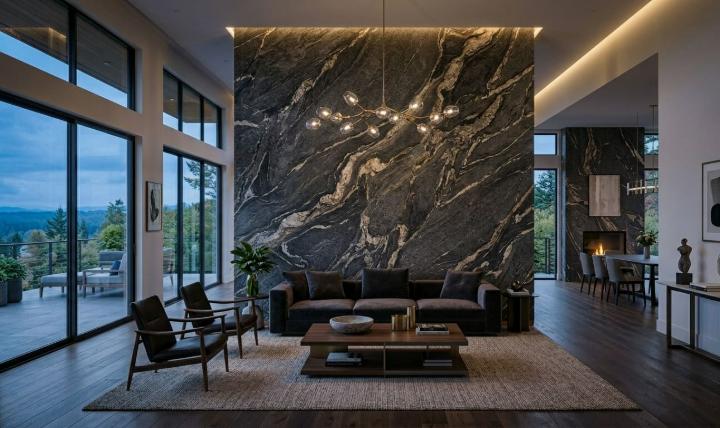
The Composition Behind Every Slab
No two granite slabs look identical because the mineral ratios within each piece vary depending on where and how it formed. Feldspar is the dominant mineral in granite and is responsible for the stone's base color, producing tones that range from white and gray to pink and deep red. Quartz contributes hardness and a glassy translucency, while mica appears as thin, shimmering flakes of either dark biotite or light-colored muscovite. Trace minerals such as hornblende, tourmaline, or garnet add further variation, producing everything from deep blacks and warm browns to soft whites and vibrant blues.
This natural variability is what gives each slab a one-of-a-kind character that no engineered product can replicate. Referencing a stone finish selection guide early in the planning process helps clarify how the same stone can read entirely differently depending on how its surface is treated.
Hardness and Long-Term Durability
On the Mohs scale, granite typically ranks between 6 and 7. A standard steel knife blade scores approximately 5.5, which means everyday kitchen tools, cutlery, and common household objects are unlikely to leave marks on the surface. This hardness also contributes to the material's structural integrity over time.
Properly maintained granite resists chipping, cracking, and surface degradation over decades of regular use. That durability is particularly relevant in high-traffic zones where softer stones such as marble, which ranks between 3 and 4 on the same scale, would show wear more quickly.
Available Finish Options
The finish applied to a granite slab significantly affects both its visual character and its practical performance in a given setting. Each treatment produces a distinctly different result, and choosing among them is one of the most consequential decisions in the selection process.
Polished Finish
A polished surface produces a high-gloss, mirror-like sheen that amplifies the stone's colors and veining. Light reflects off it in a way that makes patterns appear vivid and deep. This finish is a popular choice for kitchen countertops and formal interior feature walls where a refined, luminous look is the priority.
Honed (Matte) Finish
A honed finish removes the reflective quality entirely, leaving a smooth, flat surface with a quiet, understated appearance. It gives the material a more casual and contemporary feel. Honed granite works well on floors, bathroom vanities, and spaces where subtlety is the design intention.
Leathered Finish
A leathered finish preserves the stone's natural texture while closing the pores slightly. The result is a tactile, gently undulating surface with a low sheen that helps conceal fingerprints and water marks. It is especially well suited to kitchen surfaces and outdoor applications where a more organic, lived-in quality is desirable.
Specialty Finishes
Beyond those three primary options, granite can also be treated with brushed or sandblasted techniques. These specialty finishes cater to specific aesthetic visions and functional requirements. If a particular finish or slab dimension is already in mind, submitting a slab quote request is a practical next step toward confirming availability and sourcing the right material.
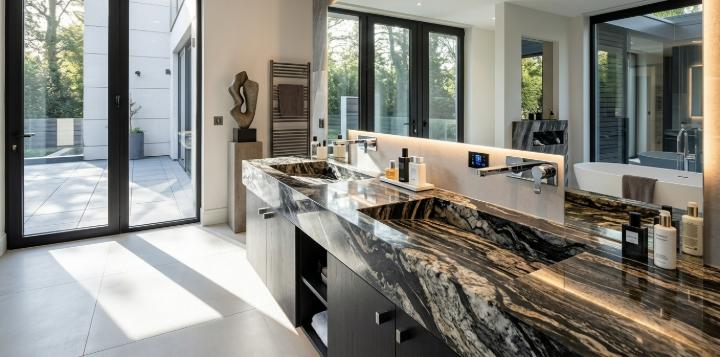
UV Resistance and Outdoor Applications
One of the most practical physical properties of granite is its resistance to ultraviolet light. Unlike many engineered surfaces that fade, discolor, or structurally degrade with prolonged sun exposure, granite maintains its color integrity outdoors over extended periods. This makes it a dependable choice for exterior applications including outdoor kitchens, pool surrounds, garden pathways, and building facade cladding.
UV stability also means the same material used indoors can extend seamlessly to covered patios or exterior fireplaces without developing visual inconsistencies between the two areas over time. For surfaces that will see both heavy use and sun exposure, understanding granite countertop care from the start helps protect the finish and extend its lifespan both outdoors and in.
Where This Material Performs Best
Granite's combination of hardness, weather resistance, and visual range gives it an unusually broad scope of application across both interior and exterior spaces.
Kitchen Surfaces
Granite is widely regarded as one of the most appropriate materials for kitchen countertops. It holds up well under consistent daily preparation activity, and when properly sealed, it is considered suitable for direct food contact. Granite is naturally porous, but regular sealing creates a protective barrier that prevents liquids and bacteria from penetrating the surface. For homeowners ready to move forward with a kitchen project, our Sacramento, Reno, Minden, and Fernley showrooms carry live slab inventory available for in-person viewing.
Flooring
Used as floor tiles or large-format slabs, granite brings a sense of permanence and character to any room. Polished finishes reflect natural light beautifully in open living areas, while honed or leathered options provide better traction in wet zones such as entryways and bathrooms.
Wall Cladding
As a wall material, granite adds texture and visual weight to interiors. Feature walls in living rooms, bathrooms, and entry halls benefit from the organic richness that a natural igneous stone introduces. The variety of color tones available makes it adaptable to both warm and cool design palettes.
Fireplace Surrounds and Hearths
Granite is heat-resistant, making it a reliable choice for fireplace surrounds and hearth applications. The stone's natural patterns create a dramatic focal point that works across modern, rustic, and transitional interior styles.
Outdoor Spaces
Its UV stability and weather tolerance make granite a practical solution for exterior steps, pavers, outdoor kitchen counters, and wall cladding. The material holds its structural and visual integrity through temperature fluctuations and moisture exposure in ways that less dense stones cannot.
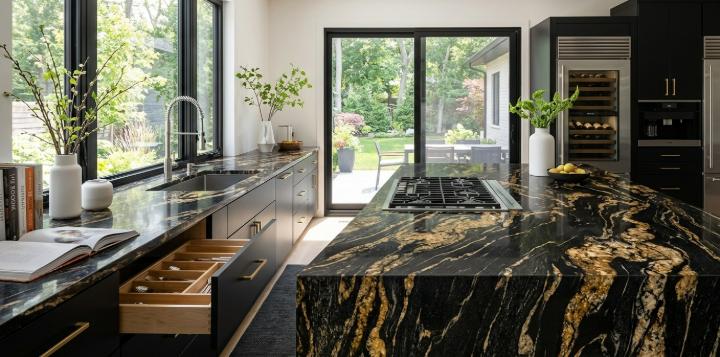
Food Safety Considerations
For anyone designing an active kitchen, the food-safe properties of granite are worth understanding clearly. In its natural state, granite is porous, which means it requires proper sealing to prevent the absorption of liquids and bacteria. When sealed correctly, it becomes resistant to bacterial penetration and is widely considered appropriate for food preparation surfaces in both residential and commercial kitchen environments.
Granite also demonstrates strong heat resistance. However, placing extremely hot cookware directly on the surface is not recommended, as sudden and intense heat can cause thermal stress to the stone over time. Using trivets or heat pads is a simple habit that preserves the surface and extends its longevity.
How It Compares to Other Natural Stones
Understanding where granite sits relative to other stone options clarifies when it is the right fit for a project. Marble is a metamorphic rock with elegant veining, but it is considerably softer and more porous, making it more susceptible to etching from acidic substances in kitchen environments. Quartzite offers comparable or greater hardness but tends toward lighter tones with more linear movement. Onyx is translucent and visually striking but significantly softer, better suited to accent features than heavily used horizontal surfaces.
Granite occupies a practical middle ground: harder and more resistant to everyday damage than most natural stone counterparts, while still delivering the organic visual depth that draws people to natural materials. A stone countertop comparison across granite, marble, quartzite, and other options provides helpful context for projects where multiple materials are under consideration.
Granite in Contemporary Design
The assumption that granite belongs exclusively in traditional or rustic interiors no longer reflects how designers are currently using it. Honed and leathered versions in cooler tones integrate naturally into minimalist and contemporary spaces, providing textural contrast against lacquered cabinetry, polished concrete, and matte wall finishes. Dark slabs with tight, uniform mineral patterns work particularly well in modern kitchens where quiet drama is the design goal. Lighter options with subtle movement bring warmth to Scandinavian-influenced or transitional interiors without visually dominating the space.
Identifying which pattern and finish combination works best within a specific room's proportions, lighting, and material palette is where professional guidance adds the most value. Booking a free design consultation with one of our specialists makes that process more focused and productive from the very start.
Conclusion
Granite earns its reputation through a combination of properties that few materials can match: geological hardness, UV stability, heat resistance, and a visual character shaped by millions of years of natural formation. Across kitchen countertops, floors, walls, fireplaces, and outdoor spaces, it performs with consistency while bringing organic beauty that holds up over decades. The range of finishes available, from polished to leathered to specialty treatments, means it adapts to virtually any design direction. Nova Tile and Stone carries a live slab inventory of granite options, and our team is available for free design consultations to help match the right material to your specific project.
Frequently Asked Questions
Is granite a practical choice for an active kitchen countertop?
Yes. Its hardness rating means it resists scratching from everyday kitchen tools. When properly sealed, it is also considered appropriate for food preparation, as sealing prevents liquids and bacteria from penetrating the stone's natural pores.
What is the main difference between a polished and a leathered granite finish?
A polished finish produces a reflective, high-gloss surface that highlights color depth and veining. A leathered finish retains the stone's natural texture with a low sheen, which makes fingerprints and water marks less visible and gives the surface a more tactile, organic quality.
Can granite be used on exterior walls and outdoor kitchen surfaces?
Yes. Its resistance to ultraviolet light means it does not fade or degrade with prolonged sun exposure, making it a dependable option for outdoor kitchens, exterior cladding, pool surrounds, and covered patio countertops.
Does every granite slab look the same?
No. Because it forms through natural geological processes, every slab carries a unique mineral composition that determines its color, veining, and overall pattern. No two pieces are identical, which is why viewing full slabs in person before selecting is strongly recommended.
How does granite compare to marble in high-use areas?
Granite is considerably harder and less porous than marble, making it more resistant to scratching and staining in demanding environments like kitchen countertops. Marble is more susceptible to etching from acidic substances and generally requires more attentive maintenance in comparable settings.