Granite is relevant again in 2026 because design preferences have shifted toward natural materials, its hardness and heat resistance make it practical for kitchen use, and the range of available colors and patterns has expanded well beyond what most homeowners remember.
Several factors are driving this renewed interest:
- Design trends in 2026 favor organic, natural surfaces over uniform engineered ones
- Granite scores 6 to 6.5 on the Mohs hardness scale, making it one of the harder stones used in residential countertops
- Granite handles heat from cookware without surface damage the way some synthetic materials cannot
- Available granite varieties now include white-background, black, blue-gray, and dramatically veined slabs that suit a range of contemporary interiors
- Sealing requirements are manageable, typically once a year, and routine maintenance involves only mild soap and water
If you have not looked at granite recently, the selection and the design context around it are both different from what defined the material a decade ago.
What Changed in the Market
For most of the 2010s, engineered quartz captured significant market share by offering homeowners a consistent, low-maintenance surface. The appeal was straightforward: uniform color, no sealing required, and predictable patterning. Granite, by contrast, felt less controllable. Every slab was different, and that variability made some buyers nervous.
The design mood in 2026 is different. There is a growing preference for surfaces that read as genuine rather than manufactured. Interiors that lean into organic texture, natural imperfection, and material honesty have become more sought after across a range of styles, from quiet minimalism to warm, layered spaces. Granite fits that direction naturally because it is, by definition, an unrepeatable material. Each slab came out of the earth under a specific set of geological conditions that will never be duplicated.
That shift in taste has brought granite back into serious consideration for homeowners and designers who want a surface that feels grounded in something real.
Granite's Performance Attributes
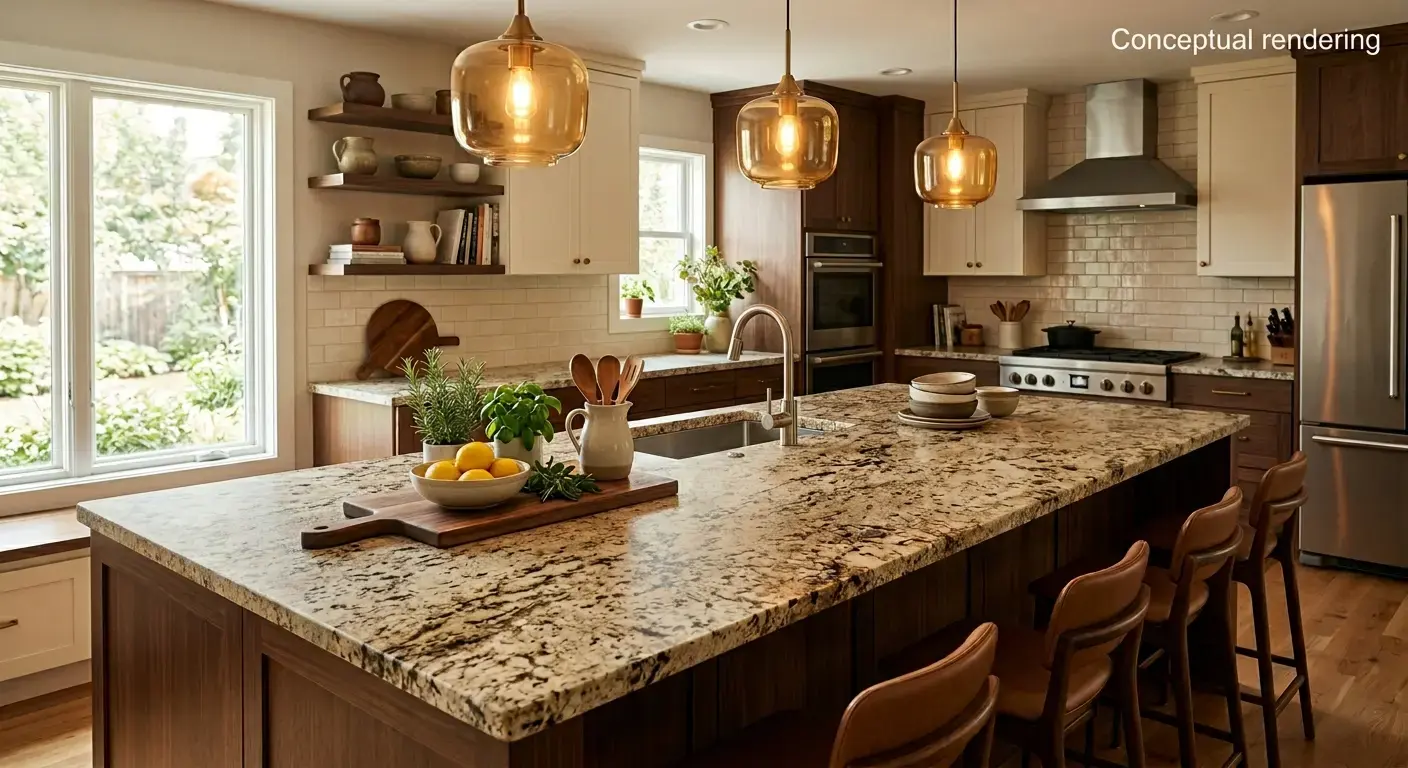
Part of what makes the current moment worth examining is that granite's core performance attributes did not change. Granite scores between 6 and 6.5 on the Mohs hardness scale, making it one of the harder natural stones available for residential use. It handles daily kitchen activity well, holds up to heat better than many synthetic surfaces, and resists scratching from routine cooking tasks.
Sealing requirements are real but manageable. A properly sealed granite countertop resists moisture and staining effectively, and most granite surfaces need to be resealed no more than once a year depending on the stone and the finish. Homeowners who maintained their granite countertops over the years report that the material holds its appearance over time.
Granite's hardness is a consistent factor in countertop decisions. More homeowners are weighing that alongside appearance rather than treating aesthetics as the only variable. A surface that holds up through years of active kitchen use has practical value, and granite's hardness rating supports that use case.
You can review our current natural stone slab inventory to see the granite selections we carry across our showrooms.
The Visual Range Is Broader Than People Remember
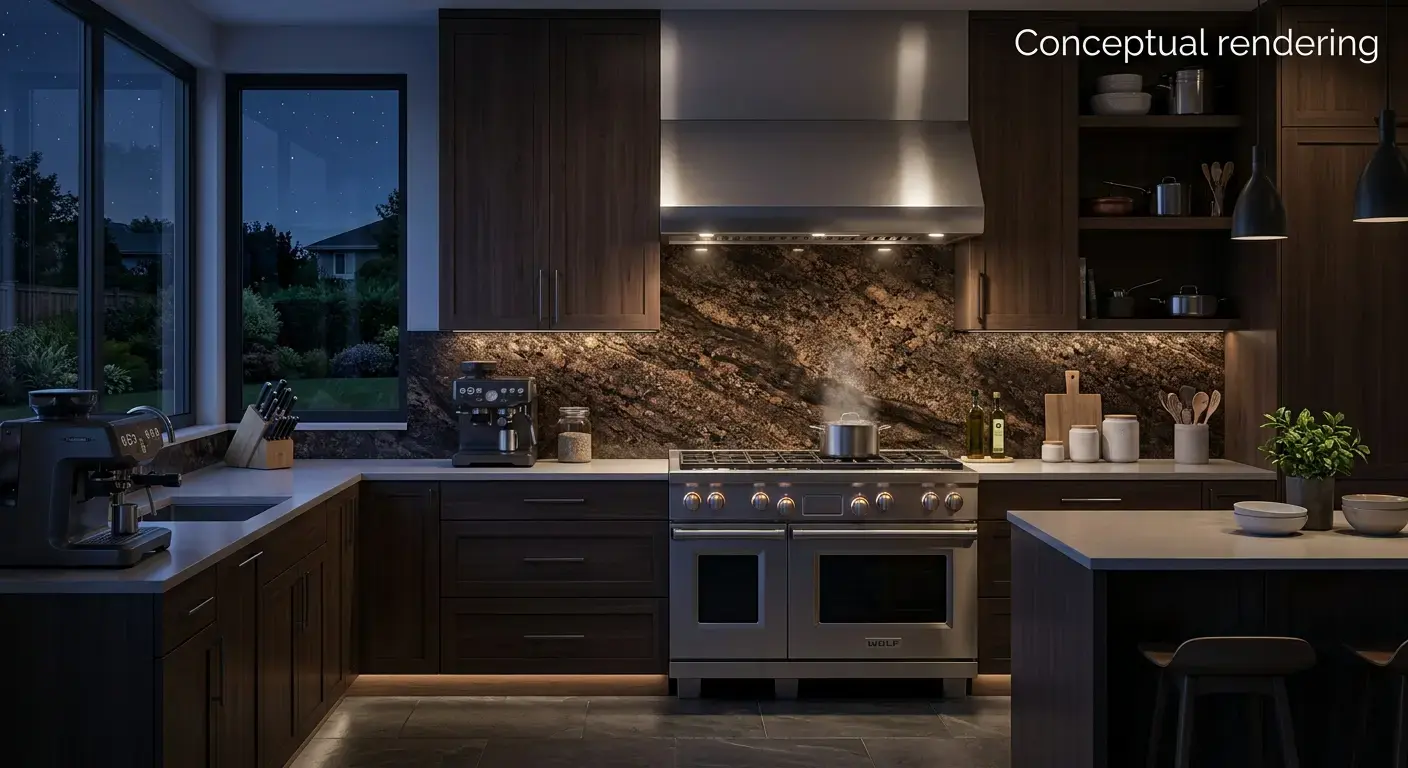
One reason granite lost ground in design conversations was that many people's mental image of it was frozen in the early 2000s: beige and brown speckled slabs, busy patterns, heavily gold-veined surfaces that overwhelmed a kitchen. That version of granite existed, but it was never the full picture, and it is far from the full picture today.
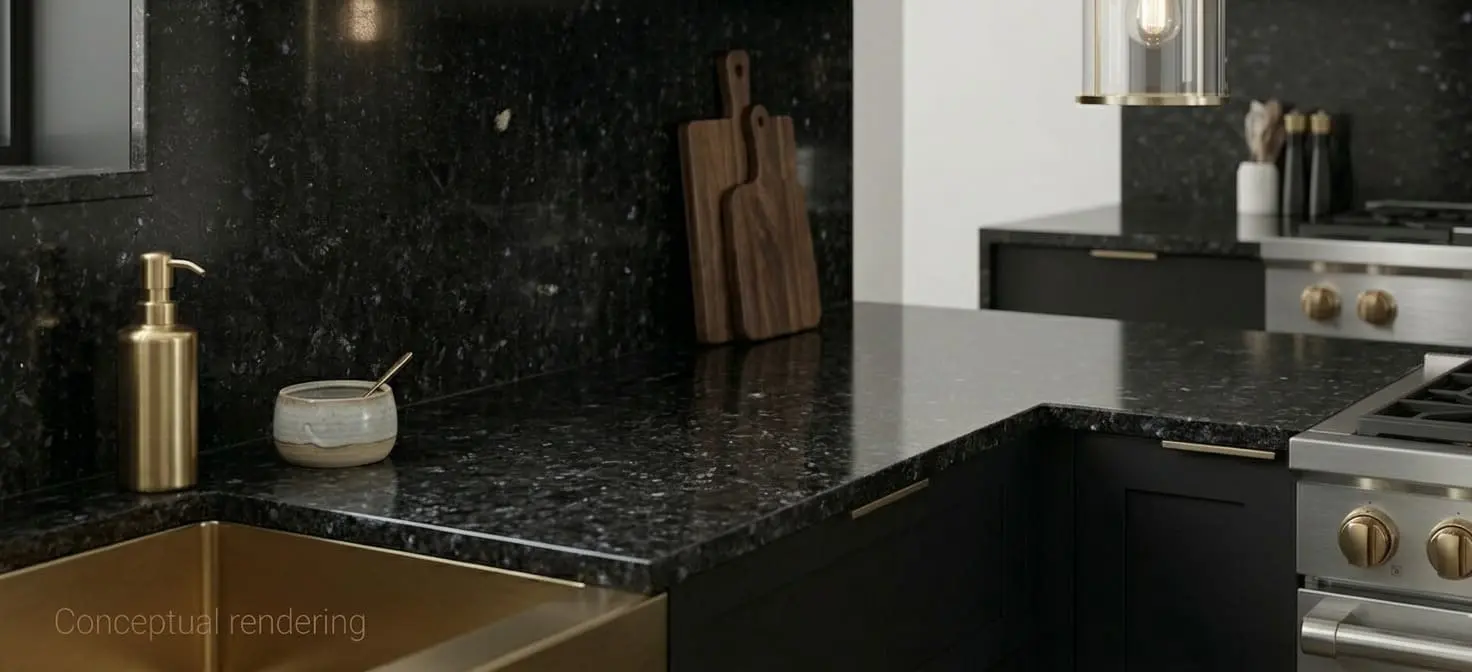
Contemporary granite sourcing pulls from quarries across Brazil, India, Norway, South Africa, and other regions, and the material range is wide. There are granites with clean white backgrounds and soft dark movement that read similarly to some marbles. There are deep black granites with very little visible patterning, blue-gray granites with quiet mineral shimmer, and slabs with dramatic veining that functions as a focal point in the same way a statement marble would.
The "granite looks dated" association was always more about specific slab choices from a specific era than about granite as a category. Sourcing has evolved, and so has the variety available to homeowners walking into a stone showroom today.
How Granite Fits Current Design Directions
The design styles that are gaining traction in 2026 tend to share a common thread: an appreciation for materials that look like what they are. Warm minimalism, organic modern, and earthy transitional interiors all benefit from surfaces that carry visual texture without demanding attention.
Granite works in these spaces because it does not try to imitate anything. It is not attempting to look like marble, and it is not the result of a manufacturing process designed to produce a specific aesthetic. The variation in granite comes from minerals cooling under pressure over millions of years, and that origin is visible in the surface.
For kitchen islands, granite offers the combination of visual presence and practical durability that high-use surfaces require. A large slab of a well-chosen granite can anchor a kitchen without the maintenance concerns that come with softer stones. For bathrooms, the right granite can create a grounded, spa-adjacent feeling that works well alongside natural wood, matte fixtures, and organic-shaped basins.
Homeowners working with a designer or making decisions independently can benefit from seeing slabs in person before committing. We encourage anyone considering stone to visit our showroom locations and look at slabs under different lighting conditions before making a final decision.
Granite and the Local Sourcing Conversation
Sustainability considerations have become more prominent in home building and remodeling decisions, and natural stone holds up well in that conversation when the full picture is considered. Granite is quarried directly from the earth, requires no synthetic binders or resins, and does not off-gas over time. A granite countertop that remains in place for many years involves fewer replacement cycles than surfaces with shorter service lives, which is a factor some homeowners weigh in their material decisions.
As a direct stone importer, we work with quarries to bring stone into our showrooms without unnecessary intermediaries. That supply chain structure matters because it affects both transparency and selection. We know where our stone comes from, and we can speak to the material honestly when homeowners ask questions.
For trade professionals, our trade account program provides access to slab inventory and pricing structured for professional project work.
What to Look for When Choosing Granite in 2026
Choosing well requires looking at a few things beyond color preference. Movement and pattern density vary widely across granite types, and what reads as attractive in a small sample tile can look very different across a full slab. Viewing full slabs in person is always the better approach.
Finish matters as well. Polished granite has the classic high-gloss surface most people associate with the material, but honed and leathered finishes have become increasingly popular because they reduce glare, hide fingerprints more effectively, and give the stone a softer, more tactile quality. Leathered granite in particular has attracted attention in design circles for its textured surface that emphasizes the stone's natural mineral character.
Edge profiles also affect how the finished countertop reads. A clean eased or waterfall edge suits contemporary kitchens, while a more detailed profile works in traditional or transitional spaces. This Old House covers the practical side of stone countertop selection in depth if you want additional context before visiting a showroom.
We recommend scheduling an appointment so we can walk through slab options with you directly. For larger projects, you can also request a slab quote before your visit.
Fine Homebuilding offers detailed guidance on natural stone selection that covers technical considerations alongside design ones, and the CDC/NIOSH guidance on engineered stone provides useful context on what to ask fabricators about cutting and finishing practices.
Conclusion
Granite's return to relevance in 2026 reflects a broader shift in how homeowners are thinking about countertop materials. The hardness, the range of available aesthetics, the natural material character, and the performance under daily use are all factors that favor granite in that conversation. What changed is the design culture around the material, and it has moved in a direction that suits granite well. If you are planning a kitchen or bathroom remodel and have not looked at granite recently, the current selection is broader than many people expect, and the right slab can work across a range of contemporary interior directions.
Note: Some images on this page may be conceptual renderings created to illustrate design possibilities and may not depict actual installations.
Frequently Asked questions
Granite is in active use in new construction and remodel projects in 2026. Design preferences have moved toward natural materials with organic variation, which works in granite's favor. The material's range of available colors and patterns is broader than many homeowners expect.
Granite is a natural stone that requires periodic sealing to maintain stain resistance. Quartz is an engineered product that does not require sealing. Both perform well in kitchens. Granite generally handles heat more effectively, while quartz offers more consistent patterning. The right choice depends on how you prioritize aesthetics, maintenance preferences, and performance.
Granite is available in polished, honed, and leathered finishes. Polished granite has a reflective, glass-like surface. Honed granite has a matte finish that is softer in appearance. Leathered granite has a textured surface that emphasizes the stone's natural mineral character and tends to show fingerprints less than polished finishes.
Granite requires sealing to protect against moisture and staining, typically once a year depending on the stone and level of use. Beyond that, routine cleaning with a mild soap and water is sufficient. Granite does not require specialized daily products and holds up to normal kitchen activity without issue.
The best approach is to view full slabs in person at a stone showroom rather than relying on small samples or online photos. Lighting, slab size, and the full sweep of the stone's movement all affect how a granite reads in a finished space. Visiting a showroom with your cabinet and flooring samples makes comparisons much easier.