Gold quartzite is a natural metamorphic stone composed primarily of silicon dioxide (SiO₂), formed when quartz-rich sandstone is subjected to extreme heat and pressure within the earth's crust. It registers 7 on the Mohs hardness scale, harder than granite (6 to 6.5) and significantly harder than marble (3 to 5). Gold quartzite does not etch from acidic substances because it lacks the calcium carbonate composition found in marble. The stone is quarried primarily in Brazil and is used for kitchen countertops, bathroom vanities, backsplashes, and fireplace surrounds. It is available in polished, honed, and leathered finishes. Its warm cream, ivory, and gold tones have made it one of the most requested natural stone categories in 2026 as kitchen design shifts away from cool gray palettes toward warmer, earthy materials. For a broader look at how natural stone performs across surface applications, this stone countertop guide from This Old House covers the key material comparisons.
What Makes Gold Quartzite a Strong Choice for Kitchens and Bathrooms in 2026
Kitchen design in 2026 is moving away from the cool gray and stark white palettes that dominated for more than a decade. Warm neutrals, honey tones, and natural earthy hues are now leading what designers and industry researchers have identified as the defining shift of the current remodel cycle. Gold quartzite sits at the center of that shift. Its warm base colors read well against natural wood cabinetry, brushed brass hardware, and the soft cream and greige paint tones that have replaced the crisp whites of earlier trends.
Beyond aesthetics, gold quartzite offers a performance profile suited to active kitchens. As a true quartzite, it does not etch from acidic spills the way marble does, and its density makes it among the most scratch-resistant natural stones available. For homeowners weighing their options, Fine Homebuilding's natural stone countertop selection guide offers a useful breakdown of how different stone types compare across performance categories.
How Gold Quartzite Varies From One Slab to the Next
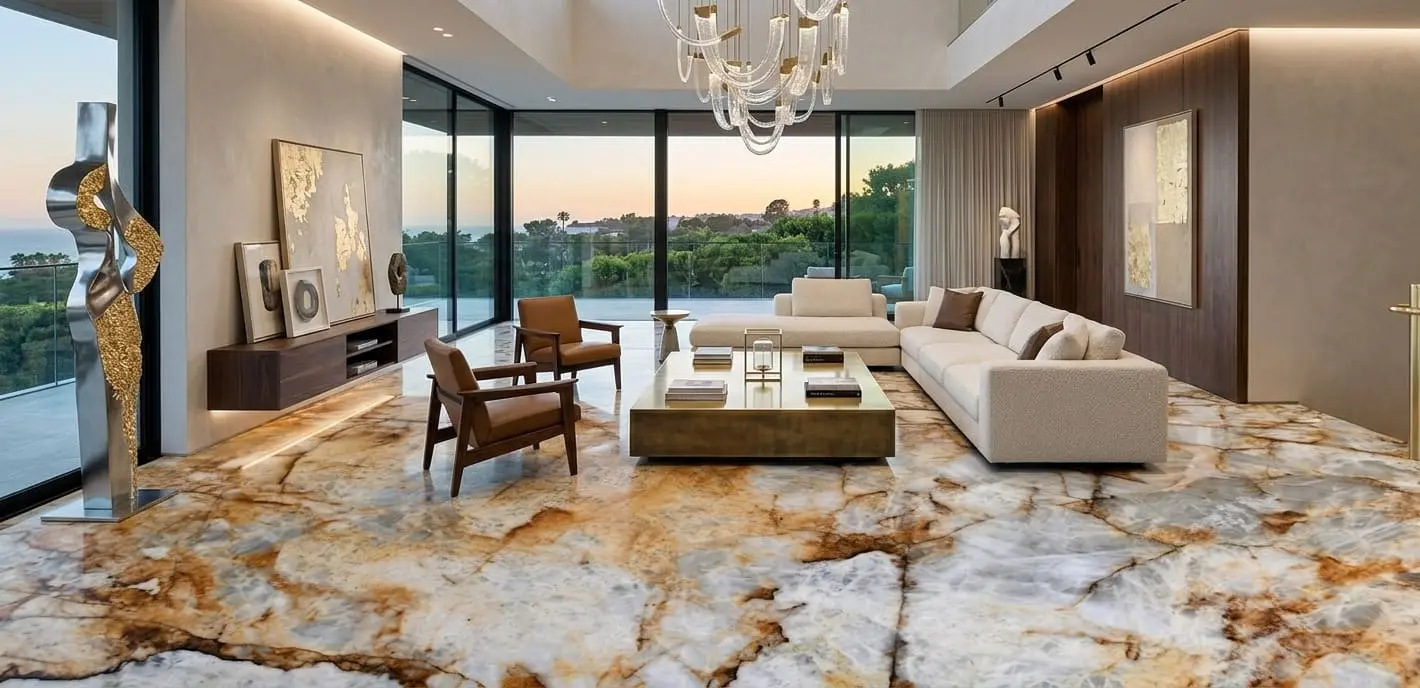
Gold quartzite is not a single stone but a category covering several distinct Brazilian quartzite varieties that share warm base tones and gold or amber veining. Within that category, slabs vary considerably in how much gold is present, how bold the veining movement is, and how the stone reads across different lighting conditions. Some varieties present as soft and understated, with pale cream backgrounds and fine gold threading. Others carry deeper honey and amber tones with more expressive directional movement that draws comparisons to the grain patterns found in aged wood. Translucent varieties with high quartz purity interact with light differently than opaque slabs, producing a luminous quality that can be used to advantage in backlit applications such as bar tops and feature panels.
The most widely carried gold quartzite variety at our showrooms has a soft ivory or off-white base with pale gold, tan, and warm gray veining that moves in flowing patterns across the slab. It is available in polished, honed, and leathered finishes and works well as a kitchen countertop, island surface, or full slab backsplash. Homeowners can browse our current quartzite slab selection online, and because slab inventory changes with each shipment, we encourage anyone seriously considering gold quartzite to view slabs in person at whichever of our four showroom locations is most convenient.
Cabinet Colors, Hardware, and Backsplash Pairings That Work With Gold Quartzite
Gold quartzite integrates naturally with materials that share or complement its warm undertones. Natural wood cabinetry in oak, walnut, or white oak is a consistent pairing that designers are specifying heavily in 2026. The grain of wood and the natural veining of gold quartzite create visual continuity without matching too precisely. Brushed brass and unlacquered brass hardware reinforce the warmth in the stone without overpowering it.
For painted cabinetry, soft whites, warm creams, greiges, and deep forest greens all work well against gold quartzite. Stark cool whites can flatten the warmth in the stone, so when the goal is to let the gold tones read fully, off-white and cream finishes tend to be more effective. Navy and deep charcoal cabinets provide contrast that allows bold-veined slabs to read as the focal point of the space.
Backsplash pairings work best when they support rather than compete with the countertop. A honed or matte ceramic tile in cream, greige, or warm white allows the stone surface to remain the visual anchor. For kitchens where the slab extends to a full backsplash, the continuous surface eliminates the need for a tile decision altogether and produces a cohesive result in natural stone design. Homeowners who want guidance on pairings before committing to a slab can book a free design consultation with our commission-free design team.
Polished, Honed, and Leathered: Choosing the Right Finish for Gold Quartzite
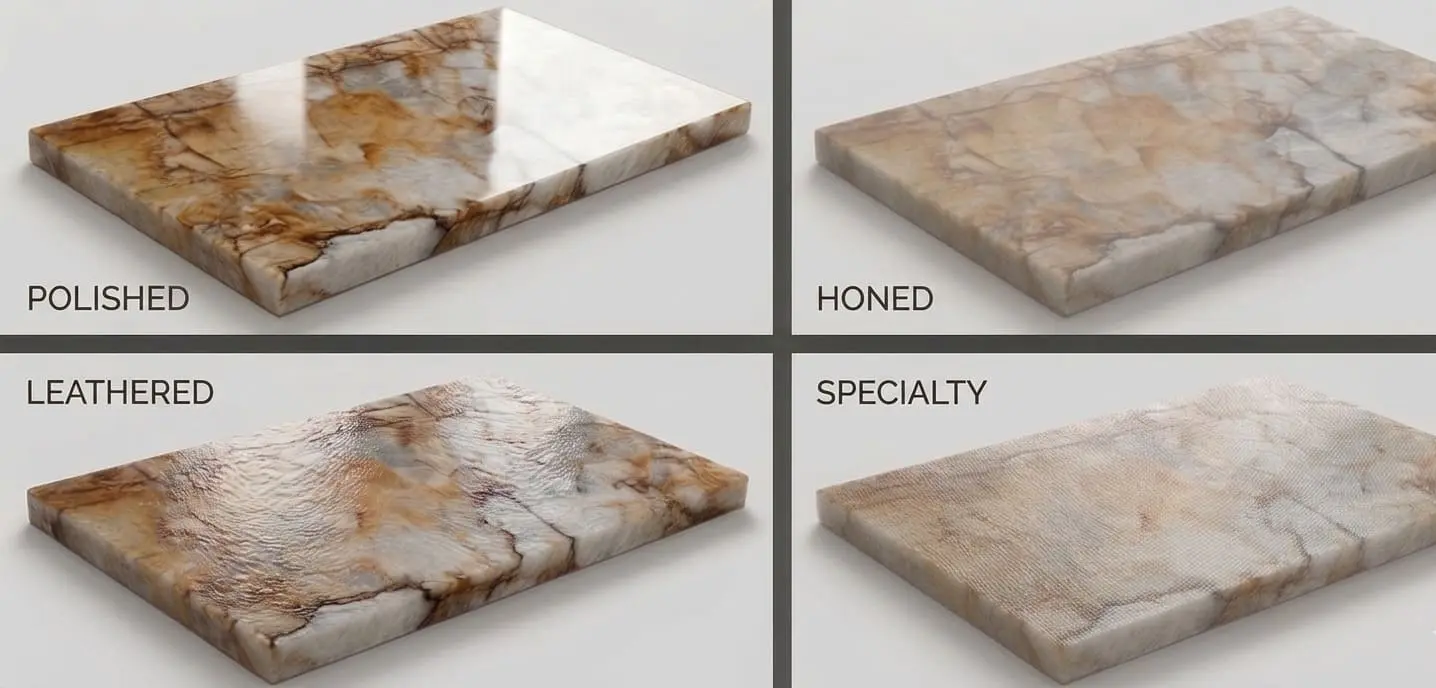
Gold quartzite is available in three primary finish categories, and the choice affects both appearance and day-to-day maintenance.
A polished finish produces a high-gloss surface that brings out the depth of gold and amber veining. It is a common choice for bathroom vanities and lower-traffic countertop applications. A honed finish removes the gloss for a smooth, matte surface that reads as softer and more natural. Many homeowners prefer honed gold quartzite in kitchen applications because it is more forgiving of fingerprints and water spotting than polished stone. A leathered finish adds surface texture through a brushing process that produces a tactile, dimensional quality. The leathered finish is one of the most requested options we carry in gold quartzite, and it pairs well with the natural wood and brushed brass combinations that are prominent in 2026 kitchen design. Designers and contractors working across multiple projects can apply for a trade account to access dedicated support across our slab inventory.
Sealing, Cleaning, and Routine Care for Gold Quartzite Countertops
Gold quartzite requires periodic sealing to maintain resistance to liquid absorption. Annual sealing is a practical baseline for kitchen countertop applications, though frequency can vary based on the specific variety, finish, and level of use. A simple water test, placing a few drops on the surface and observing whether they absorb or bead, is a reliable way to gauge whether resealing is needed.
Daily cleaning with a pH-neutral stone cleaner or mild dish soap and warm water is sufficient for routine maintenance. Avoid acidic or abrasive cleaners, which can break down the sealer over time. Unlike marble, gold quartzite does not etch from lemon juice, vinegar, or other common kitchen acids. Cutting boards and trivets are still recommended as a general practice to preserve both the stone surface and the sealer. Any cutting or modification to quartzite should be handled by a professional stone fabricator. Homeowners and professionals researching health and safety considerations around stone work can refer to CDC and NIOSH guidance on silica safety in stone fabrication for current research and recommendations.
Conclusion
Gold quartzite countertops combine the visual warmth that is prominent in kitchen and bathroom design in 2026 with the performance characteristics of one of the harder natural stones available. The warm ivory and gold tones in this stone category work across a range of cabinet colors, hardware finishes, and design styles, while its hardness and acid resistance make it practical under daily use.
As a stone and tile importer with showrooms in Reno, Minden, Sacramento, and Fernley, we carry quartzite slabs across a range of varieties and finishes. Our commission-free design team is available for free consultations to help you find the right stone for your project. Homeowners who are ready to move forward can request a slab quote directly through our website. Slab inventory changes regularly, so visiting a showroom to view options in person under natural light is the most reliable way to evaluate a stone before committing.
Frequently Ask Questions
Is gold quartzite the same as marble?
No. Gold quartzite and marble are different stones with different mineral compositions and performance characteristics. Marble is composed primarily of calcite or dolomite and is susceptible to etching from acidic substances such as lemon juice, vinegar, and wine. Gold quartzite is composed primarily of quartz and does not etch from acids. The two materials can appear similar in lighter gold and cream varieties, but they are distinct stones with different maintenance requirements.
Does gold quartzite require sealing?
Yes. Gold quartzite is a natural stone with some degree of porosity and benefits from periodic sealing. Annual sealing is a practical baseline for kitchen countertop applications, though frequency can vary based on the specific variety, finish, and level of use. A quality impregnating stone sealer helps the surface resist liquid absorption without altering the stone's appearance.
How do gold quartzite varieties differ from one another?
Gold quartzite varieties range from soft ivory and cream bases with fine gold threading to deeper honey and amber tones with bold directional movement. Some varieties have a translucent quality due to high quartz purity, which interacts with light differently than opaque slabs. The right choice depends on how much warmth and visual presence fits the design goals of the space.
Can gold quartzite be used in bathrooms?
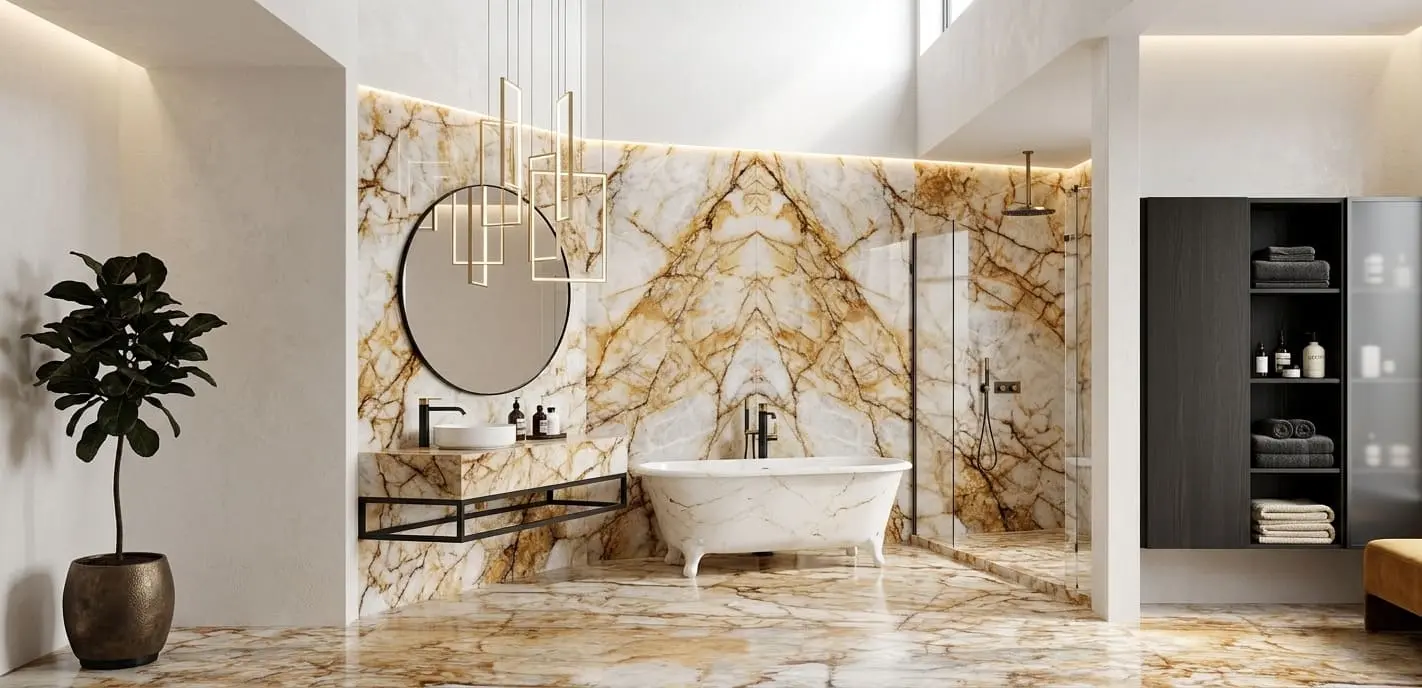
Yes. Gold quartzite works well in bathroom vanities, shower walls, and accent panels. Its resistance to etching makes it more practical than marble in wet environments where personal care products may contact the surface. Periodic sealing is still recommended, particularly in shower applications where the stone is in regular contact with water.
What cabinet colors work best with gold quartzite?
Natural wood finishes in oak, walnut, and white oak are among the most effective pairings. For painted cabinetry, warm off-whites, creams, and greiges allow the gold tones in the stone to read naturally. Deep colors such as navy, forest green, and charcoal provide contrast that highlights veining. Stark cool whites tend to work against the warm undertones present in most gold quartzite varieties.