How Marble Travels From Mountain to Your Home
Few materials tell a richer story than marble. One moment it rests deep inside a mountain. The next, it anchors a kitchen island or lines a spa-worthy bathroom wall.
Natural stone slabs are quarried, cut, finished, and shipped through a meticulous process that transforms raw rock into refined luxury. Understanding that journey helps homeowners make smarter, more confident purchasing decisions.
In this guide, you will discover how marble moves from remote quarry sites to your living spaces, why it remains a top choice for kitchens, bathrooms, patios, pool decks, and exterior walls, and how to source it with confidence. Whether you are renovating a single room or designing a new build, this post will give you the knowledge to choose wisely and invest well.
Why Marble Endures as a Premier Surface Choice
Marble has remained a benchmark of quality for thousands of years. It is not simply about aesthetics. The material offers a combination of durability, thermal resistance, and one-of-a-kind veining patterns that engineered alternatives struggle to replicate.
According to the Use Natural Stone initiative, natural stone carries environmental and health certifications that engineered surfaces often cannot match. Unlike synthetic composites, marble does not off-gas chemicals into your home. It is a product of the earth, not a factory.
Key Benefits at a Glance
- Unique veining: No two slabs are identical, giving every installation a custom character.
- Heat resistance: Marble stays cool underfoot, making it ideal for pool decks and sun-exposed patios.
- Longevity: With proper sealing, marble surfaces last for decades in high-traffic areas.
- Property value: Stone surfaces consistently rank among the top features buyers seek.
- Versatility: Suitable for kitchens, bathrooms, exterior walls, flooring, and outdoor living areas.
- Health-conscious: Free from the silica concerns linked to engineered stone products.
Marble vs. Other Popular Stone Options
Feature | Marble | Granite | Quartzite | Porcelain |
Natural origin | Yes | Yes | Yes | No |
Heat resistance | High | High | High | Moderate |
Vein patterns | Bold, dramatic | Subtle, speckled | Varied | Printed |
Maintenance | Moderate | Low | Low-Moderate | Low |
Outdoor suitability | Select varieties | Excellent | Excellent | Excellent |
Price range | Mid to premium | Mid | Mid to premium | Budget to mid |
Stunning Design Applications for Kitchens, Bathrooms, and Outdoor Spaces
Marble is one of the most versatile natural materials available to designers and homeowners alike. Its applications stretch well beyond the kitchen counter. When you understand the full range of possibilities, it becomes easier to picture how a single stone can define an entire home.
Marble in the Kitchen
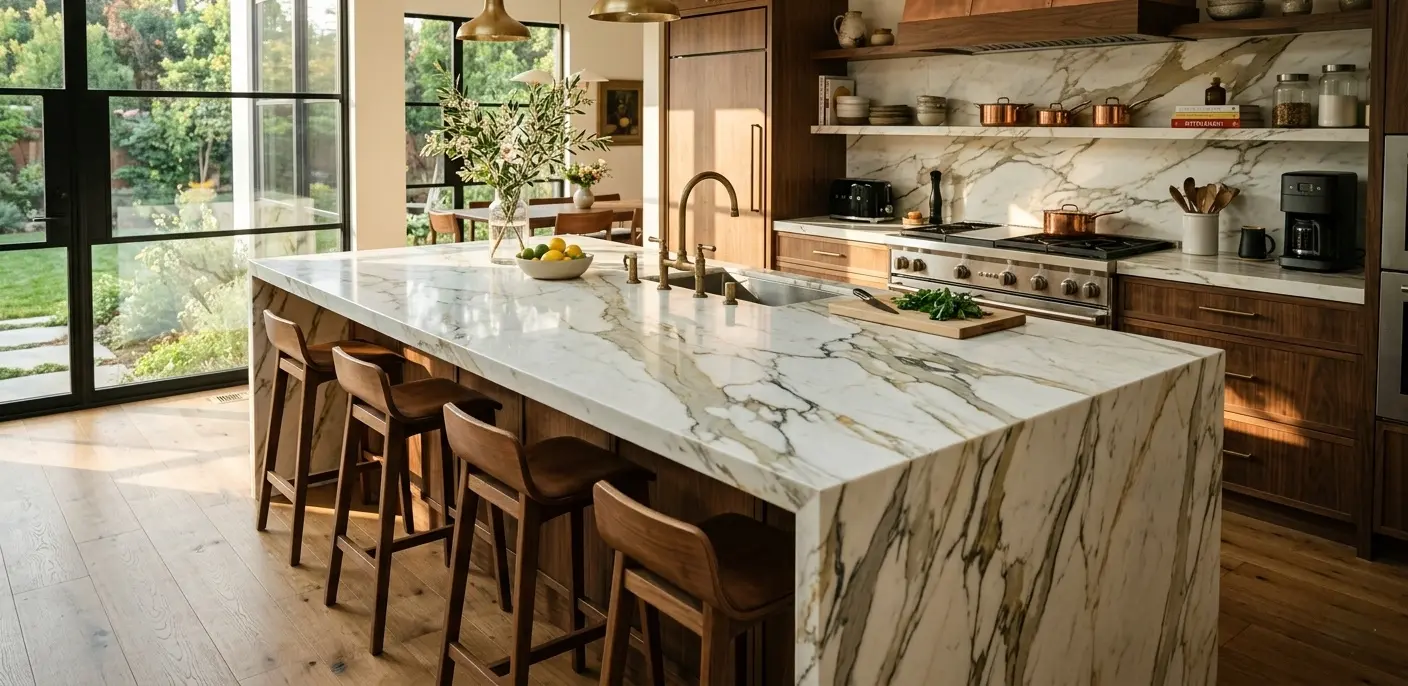
The kitchen is the most popular destination for marble slabs. A waterfall island in Calacatta marble instantly becomes the focal point of any cooking space. Pairing it with warm wood cabinetry and matte brass fixtures creates a layered, sophisticated palette that classic color schemes have validated for generations.
For backsplashes, honed marble in a large-format slab format eliminates grout lines and delivers a seamless, gallery-like surface behind the range. The result feels clean, intentional, and elevated.
Marble in the Bathroom
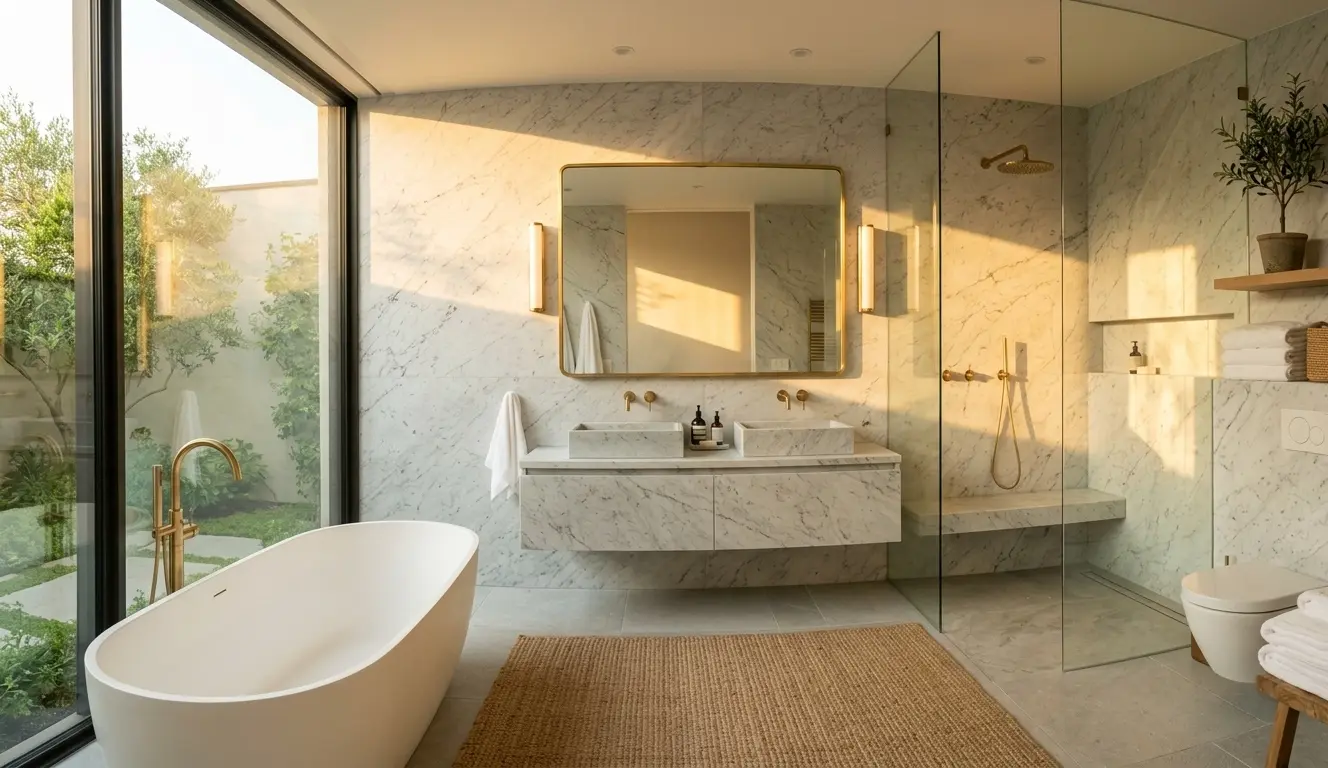
Bathrooms benefit enormously from marble's natural ability to feel both luxurious and hygienic. Full-height marble walls in a shower transform a functional space into something closer to a private retreat. Coordinating floor slabs with wall cladding in complementary tones creates visual continuity that makes even compact bathrooms feel expansive.
Vanity tops in book-matched marble are another standout application. The symmetrical veining creates an almost artistic centerpiece, especially in powder rooms where drama is welcome.
Patios and Pool Decks
Outdoor applications are where marble's thermal properties shine. Light-toned slabs like White Onyx or Silver Shadow absorb less heat than darker materials, making them comfortable underfoot on warm afternoons beside a pool. For patios and pool decks, a brushed or sandblasted finish improves slip resistance without sacrificing the stone's natural elegance.
Pairing outdoor marble with native landscaping and clean-lined furniture creates cohesive outdoor living zones that extend the home's interior aesthetic into open air.
Exterior Walls
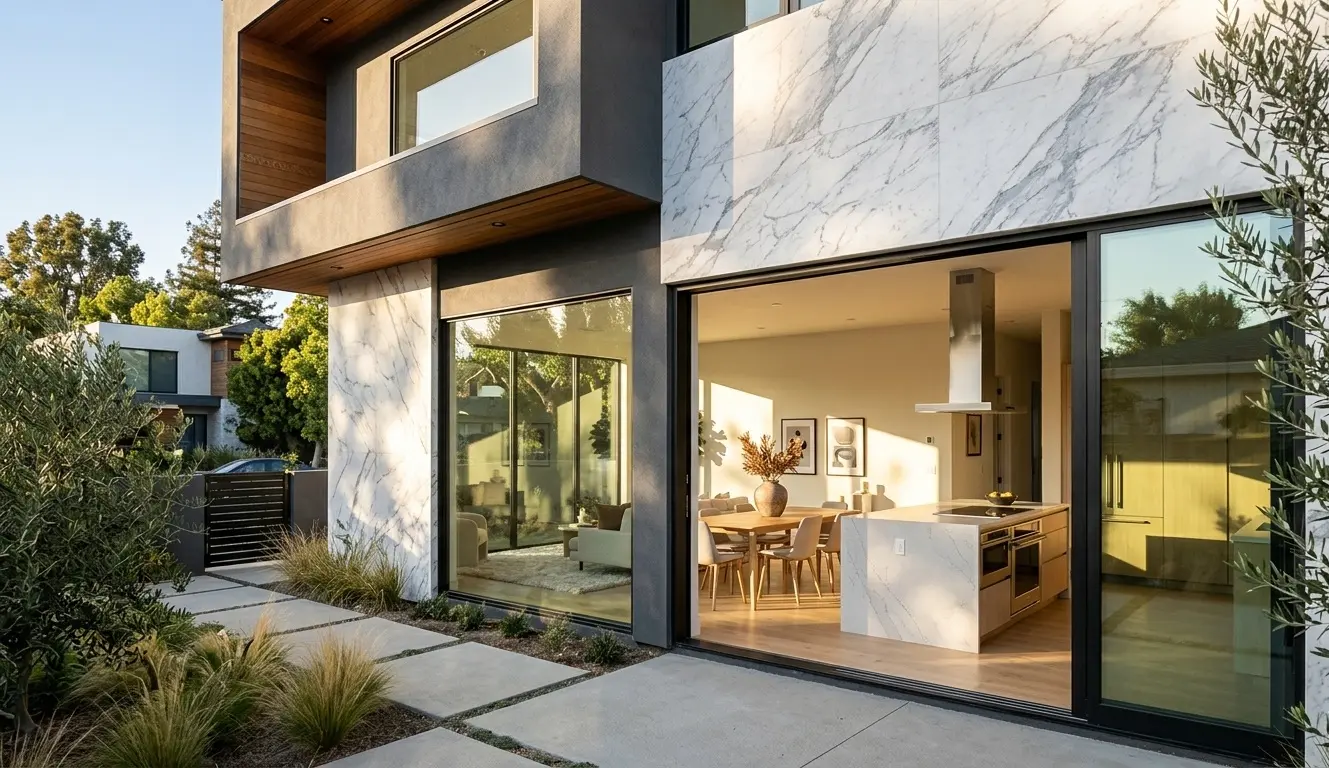
Marble cladding on exterior walls offers both visual drama and natural insulation. Thin marble veneers are installed as rainscreen systems, protecting structural elements from moisture while creating a striking facade. Projects that incorporate innovative flooring and cladding systems tend to demonstrate superior long-term performance and reduced maintenance costs.
How to Source Natural Stone Slabs the Right Way
Understanding how to source stone confidently saves time, prevents costly mistakes, and ensures the finished project matches your vision. Not all marble is equal, and not all suppliers provide the same level of guidance.
A Step-by-Step Sourcing Guide
Step 1: Define Your Project Scope Identify which surfaces you are covering, such as a kitchen, bathroom, patio, or exterior wall. Calculate the square footage needed, adding at least 10 percent for cuts and waste.
Step 2: Research Stone Varieties Narrow your selection by considering vein intensity, background tone, and finish type. Polished marble suits interiors. Brushed or flamed finishes work better for outdoor use.
Step 3: View Slabs in Person Digital images cannot capture the full depth and movement of a stone slab. Visiting a showroom to see the actual material under different lighting conditions is essential.
Step 4: Request Samples Order physical samples and place them beside your cabinetry, flooring, and paint swatches. Evaluate them across morning and evening light before committing.
Step 5: Confirm Stock and Lead Times Natural stone is a finite material. Confirm that enough slabs from the same lot are available for your entire project. Mixing lots introduces visible tonal differences.
Pros and Cons of Natural Marble
Pros:
- Unmatched visual character and depth
- Naturally cool surface, great for warm climates
- Long lifespan when properly maintained
- Boosts resale value
- Environmentally responsible material
Cons:
- Requires periodic sealing to resist staining
- Susceptible to etching from acidic substances
- Heavier than engineered alternatives, requiring structural consideration
- Premium pricing compared to porcelain or ceramic
Trusted Guidance for Your Next Stone Project
Sourcing natural stone works best when you partner with a supplier who combines broad inventory with genuine design expertise. The process of choosing slabs should feel inspiring, not overwhelming.
Nova Tile and Stone provides curated slab collections across multiple showroom locations, each staffed by knowledgeable professionals who understand both the technical and aesthetic dimensions of stone selection. Whether you are a homeowner planning a single bathroom remodel or a design professional working on a full residential build, access to expert guidance changes the outcome of a project.
Trade professionals can access volume pricing and dedicated account management by applying for a trade account, which streamlines the sourcing process across multiple projects. The program is designed to support architects, interior designers, general contractors, and tile installers who need reliable supply and consistent quality.
For homeowners located in Nevada, the Reno and Fernley showrooms along with the Minden location offer an extensive selection of marble and natural stone, with the ability to view full slab sizes before purchasing. California-based clients can explore the full range at the Sacramento location.
Working with suppliers who follow recognized industry standards gives homeowners added confidence that installation recommendations are based on proven best practices. Proper installation is just as critical as the stone itself, and choosing contractors experienced with natural stone ensures lasting results.
Conclusion
Marble is more than a surface material. It is a geological record shaped over millions of years, refined through expert craftsmanship, and delivered to homes as something genuinely irreplaceable. From the quarry face to a finished kitchen counter, every stage of the journey reflects a standard of quality that synthetic alternatives simply cannot match.
Natural stone slabs offer homeowners an opportunity to invest in materials that age gracefully, perform reliably, and carry real aesthetic authority. Whether you are drawn to the bold drama of a Calacatta vein across a kitchen island, the serene quiet of a honed marble bathroom, or the sun-warmed elegance of a stone patio, the right slab makes every space feel more intentional.
Ready to find the slab that fits your space? Browse the full collection and connect with a stone specialist who can help you move from inspiration to installation.
Frequently Asked Questions
What is the difference between marble and quartzite?
Marble is a metamorphic rock formed from recrystallized limestone, known for bold veining and a soft feel. Quartzite originates from sandstone and offers greater hardness and scratch resistance, making it a better choice for high-use kitchen surfaces.
How often does marble need to be sealed?
Most marble surfaces benefit from sealing once a year in kitchens and every two to three years in bathrooms or lower-traffic areas. The frequency depends on use, finish type, and the specific stone variety.
Is marble suitable for outdoor patios and pool decks?
Yes, but the finish matters. Polished marble can become slippery when wet. A brushed, honed, or flamed finish provides better traction for patios and pool decks while preserving the stone's natural character.
Can natural stone be used on exterior walls?
Absolutely. Marble and other natural stones have been used as exterior cladding for centuries. Modern installation systems ensure weather resistance and structural integrity, making stone-clad exterior walls both beautiful and practical.
How do I know how many slabs I need for my project?
Calculate the total square footage of the surfaces you are covering, then add at least 10 percent to account for cuts, waste, and pattern matching. Your stone supplier or tile contractor can help verify the final quantity before you purchase.