What Are Engineered Slabs and Why Every Homeowner Should Know
Engineered slabs are redefining the way people think about surface design at home. If you have been searching for a surface that rivals the beauty of natural stone slabs while offering added durability and lower upkeep, engineered options deserve a close look. They combine crushed minerals, resins, and pigments to create a product that is consistent, strong, and visually compelling.
Engineered slabs are manufactured surfaces made from compressed minerals and resins. They closely mimic the appearance of natural stone slabs while offering superior consistency and resistance to staining and cracking.
Whether you are planning a kitchen remodel or refreshing a bathroom layout, the surface you choose shapes how a room feels and functions for years. Engineered slabs give homeowners an impressive range of colors, patterns, and finishes, often at a more predictable cost than quarried materials.
In this guide, you will learn how engineered slabs perform in real-world settings, how they compare to quarried alternatives, and how to find the right fit for your space.
Why Engineered Slabs Outperform on Countertops, Kitchen Islands, and Bathroom Vanities
Choosing a surface is one of the most impactful decisions in any renovation. Engineered slabs have earned a strong following among homeowners and trade professionals precisely because they deliver on multiple fronts simultaneously.
One of the biggest draws is consistency. Quarried materials vary from slab to slab, which can make it tricky to match pieces across a large kitchen island or a double bathroom vanity. Engineered surfaces are manufactured to uniform color and pattern, making large installations far more predictable.
Durability is another reason these surfaces dominate modern countertops. Most engineered options score between 6 and 7 on the Mohs hardness scale, meaning they resist scratches from everyday kitchen tasks. They also carry non-porous surfaces that block moisture and bacteria, a critical advantage in food prep zones.
Key advantages at a glance:
- Consistent color and veining across multiple slabs
- Non-porous finish resists staining on countertops and bathroom vanities
- High scratch and heat resistance ideal for a busy kitchen island
- Wide range of finishes including polished, honed, and leathered
- Lower long-term maintenance compared to many quarried options
- Available in large-format sizes for seamless waterfall edges
Pros and Cons of Engineered Slabs
Feature | Pros | Cons |
Appearance | Consistent pattern across all pieces | Less one-of-a-kind character than quarried stone |
Durability | Scratch and stain resistant | Can discolor under prolonged direct heat |
Maintenance | Requires minimal sealing | Repairs can be difficult to match perfectly |
Cost | Predictable pricing | Premium large-format slabs can still run high |
Eco Profile | Some brands use recycled content | Resin binders are not biodegradable |
Design Ideas for Kitchen Islands, Bathroom Vanities, and Living Spaces
Engineered slabs are no longer confined to utilitarian surfaces. Contemporary design trends treat them as a central design element, letting the surface set the visual tone of an entire room.
Dramatic Veining on a Kitchen Island
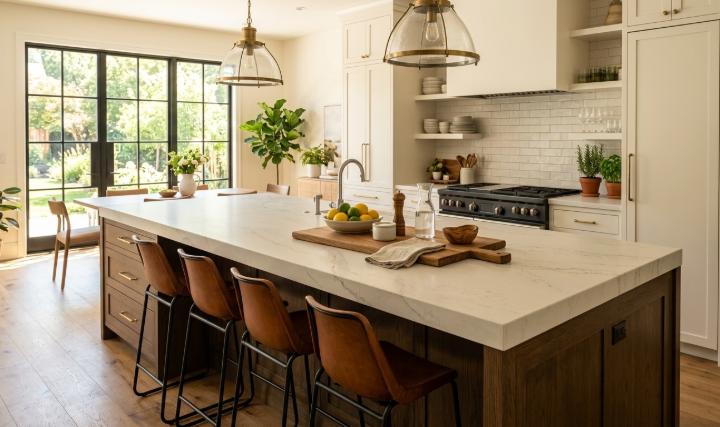
A bold, book-matched slab across a kitchen island creates a focal point that anchors the entire room. Engineered products with thick white and gold veining on a charcoal base are a popular choice right now. Pairing a leathered finish with matte cabinetry adds depth without overwhelming the space.
Oversized island countertops also benefit from the large-format sizes available in engineered lines. A single unbroken surface from 126 inches up means fewer seams and a cleaner overall look. This is where engineered surfaces genuinely outshine smaller-format tile.
Soft, Spa-Like Bathroom Vanities
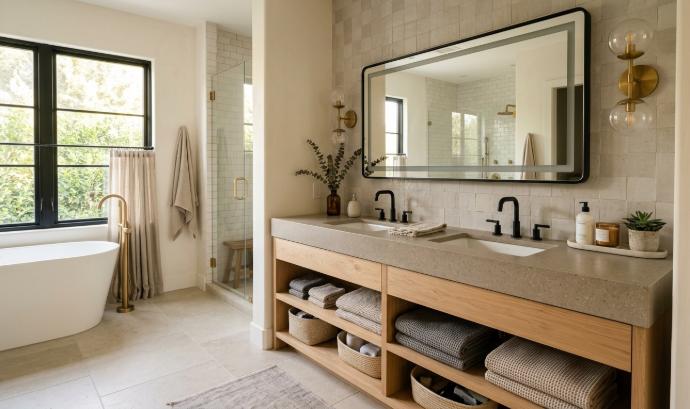
For bathroom vanities, soft neutrals like warm cream, greige, and dusty sage are trending strongly. A honed finish on an engineered slab mimics the tactile quality of limestone without the porosity concerns that come with real limestone in a wet environment.
Wall-to-counter matching, where the vanity top and the accent wall use the same slab pattern, creates a cohesive spa-like atmosphere. This technique works particularly well in primary bathrooms where the goal is visual calm. Following proper stone care guidelines keeps both surfaces looking pristine for years.
Feature Walls and Fireplace Surrounds
Beyond horizontal surfaces, engineered slabs have moved onto vertical planes. Fireplace surrounds clad in a dramatic book-matched slab add a sculptural quality that paint or tile simply cannot replicate. Living room feature walls finished in a soft, cloud-like pattern soften modern interiors without looking overdone.
For those curious about surface trends before committing, checking out the industry events calendar is a great way to preview upcoming design directions and new product releases.
How to Choose the Right Engineered Slab: A Step-by-Step Approach
Finding the ideal surface does not need to feel overwhelming. A structured approach helps narrow your choices quickly.
Step 1: Define the end use. Identify whether the slab will serve as a countertop, island top, vanity surface, or wall cladding. Each application has different durability and finish requirements.
Step 2: Set a finish priority. Polished surfaces reflect light beautifully but show fingerprints more readily. Honed and leathered finishes are more forgiving in high-traffic kitchens and family bathrooms.
Step 3: Pull physical samples. Digital images rarely capture the true depth of a slab. Request full-sized samples and hold them against your cabinetry, flooring, and wall colors in your actual lighting conditions.
Step 4: Confirm slab size and quantity. Measure your countertops and island carefully, then add 10 to 15 percent for cuts and waste. Confirm that your supplier can source matching slabs from the same batch.
Step 5: Review maintenance requirements. Most engineered surfaces need only mild soap and water for routine cleaning. For households that also have natural stone surfaces, reading a trusted resource on cleaning granite countertops helps set realistic expectations across different materials.
Explore Engineered and Natural Stone Slabs at Nova Tile and Stone
Finding a knowledgeable supplier makes the entire selection process smoother. The team at our complete surface destination brings deep product knowledge, an extensive in-stock selection, and the ability to guide both homeowners and trade professionals through every step of the process.
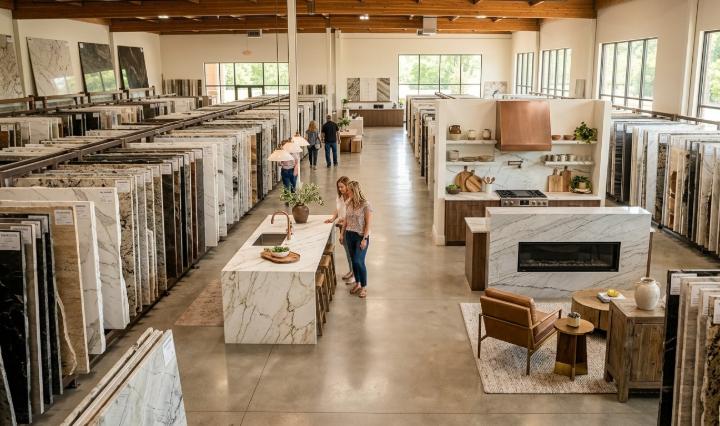
The engineered and natural slab collection covers a wide range of styles, from minimalist white quartz to richly veined quartzite-look surfaces. Every slab is available to view in person, which matters enormously when committing to a major surface purchase.
For design and trade professionals, the trade account program offers streamlined ordering, project pricing, and dedicated support. It is built for designers, contractors, and builders who source materials regularly and value a reliable supply partner.
Local showrooms are located in three convenient Northern Nevada and California markets. Browse the full selection at the Reno showroom, explore options at the Minden location, Fernley Site, or visit the Sacramento store to see slabs in person before making a decision. You can also shop locally stocked materials to find surfaces available for quick pickup or delivery.
Bring your project dimensions, inspiration photos, and any finish questions. The team is ready to help you find the right surface with confidence.
Conclusion
Engineered slabs have matured into a sophisticated product category that holds its own against any surface on the market. They deliver the visual drama of natural stone slabs without the inconsistency, fragility, or intensive sealing schedules that some quarried materials require.
From a sweeping kitchen island to a serene bathroom vanity, the right engineered surface elevates the entire room. Consistency, durability, and an ever-widening palette of colors and finishes make them a smart choice for any project scale.
If you are ready to explore options in person or request samples, start by browsing the full collection and connecting with a surface specialist who can guide you to the best material for your specific goals.
Frequently Asked Questions
How do engineered slabs differ from natural stone slabs?
Engineered slabs are manufactured by compressing crushed quartz or other minerals with resins and pigments. Natural stone slabs are quarried directly from the earth. Engineered surfaces offer consistent patterning and a non-porous finish, while quarried materials provide unique variation and a fully mineral composition.
Are engineered slabs a good choice for kitchen countertops?
Yes. Engineered surfaces are among the most popular choices for kitchen countertops because they resist staining, scratching, and moisture. Their non-porous surface also makes them highly hygienic in food preparation areas.
Can I use an engineered slab on a bathroom vanity?
Absolutely. Engineered slabs perform exceptionally well on bathroom vanities because they resist moisture and are easy to clean. A honed or matte finish is especially popular in bathrooms for its understated, spa-like appearance.
Do engineered slabs require sealing?
Most engineered surfaces are non-porous by nature and do not require regular sealing, unlike many quarried stones. Always confirm the manufacturer's specific care instructions for the product you select.
How do I find the right slab thickness for my kitchen island?
For kitchen islands and countertops, the standard thickness is 3 centimeters (approximately 1.25 inches), which provides strength and a substantial visual presence. Thinner 2-centimeter slabs are sometimes used for vertical applications or when weight is a concern.