Why Dolomite Belongs Beyond the Kitchen
Dolomite is a naturally occurring sedimentary stone that works exceptionally well for living room feature walls, fireplace surrounds, and entertainment backdrops, not just countertops. It forms through a geological process called dolomitization, producing a surface that is denser than marble, resistant to everyday wear, and visually alive in ways that engineered materials cannot match. Its crystalline composition interacts with both natural and artificial light throughout the day, shifting shadows across its veining and creating a depth that anchors an entire room.
For living spaces specifically, dolomite offers something rare among natural stones: a neutral, light-forward palette that suits nearly every interior design direction, from contemporary to transitional to organic-modern. Varieties like Super White, Galata Bianco, Fantasy Brown, and Arabescus White each bring a distinct character to vertical surfaces, whether that means luminous calm, warm movement, or bold geological drama. The key difference between dolomite and most alternatives is that no two slabs are identical, meaning a full-wall installation becomes a one-of-a-kind architectural element rather than a repeatable finish.
Natural stone is no longer reserved for countertops alone. When placed on a feature wall, it does not just fill a surface. It anchors a room, gives it presence, and provides a backdrop that no paint color or wallpaper can quite match. Browsing our live slab inventory is the best starting point for understanding the full range of available varieties before visiting in person.
According to This Old House, natural stone remains one of the most enduring and value-adding surface choices in residential design, a reflection of both its material longevity and its visual staying power.
Super White: The Feature Wall That Does the Work for You
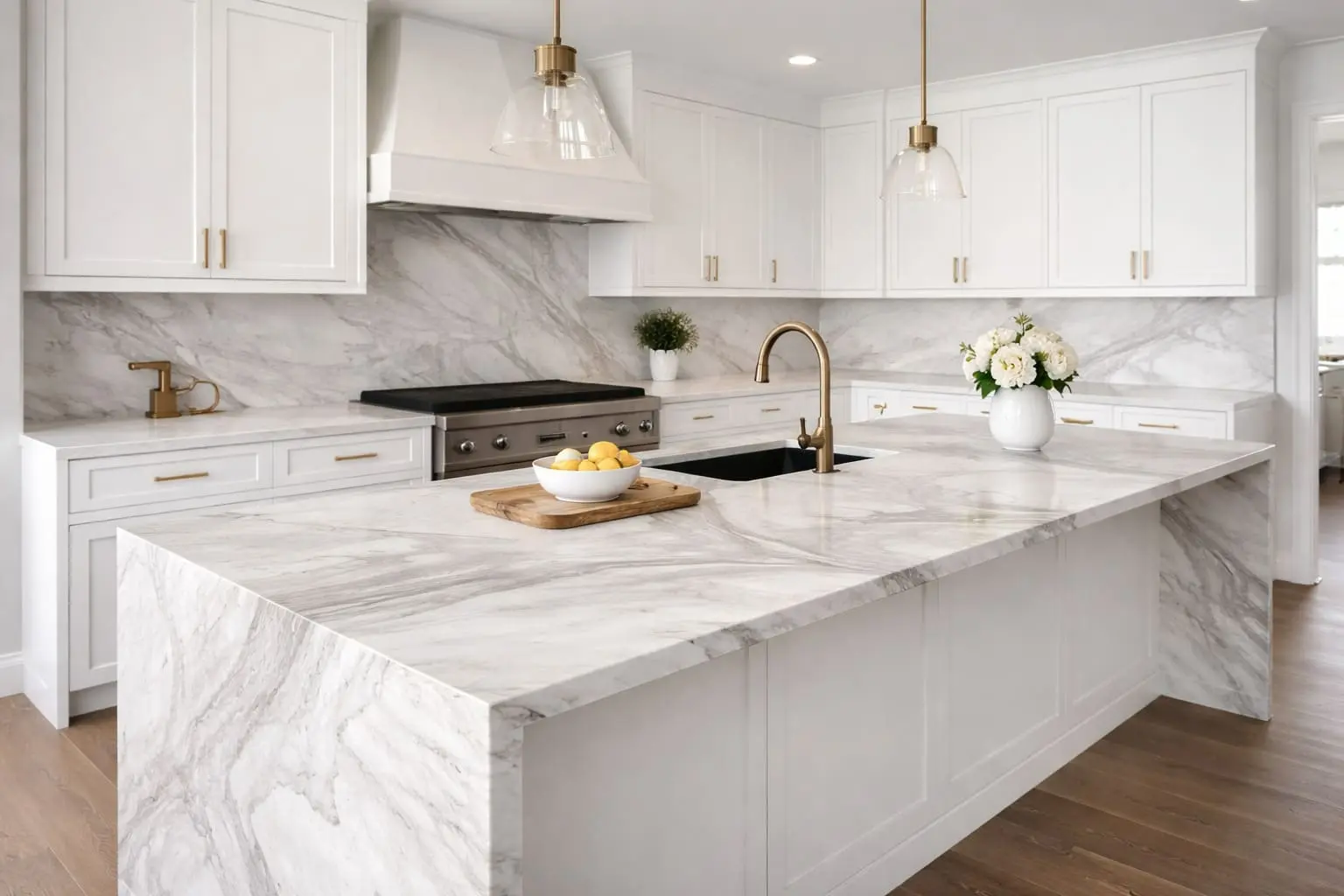
Super White is among the most requested dolomite varieties for living space applications. Its appeal is almost deceptively simple: a brilliant white background with only the faintest gray veining, creating a surface that reads as luminous and contemporary without demanding attention.
That restraint is exactly what makes it so effective on feature walls. In open-plan living areas where the stone competes visually with furniture, flooring, and art, Super White holds its ground without overwhelming the space. It acts as a visual exhale rather than an exclamation point, which is precisely the tone that sophisticated living rooms require.
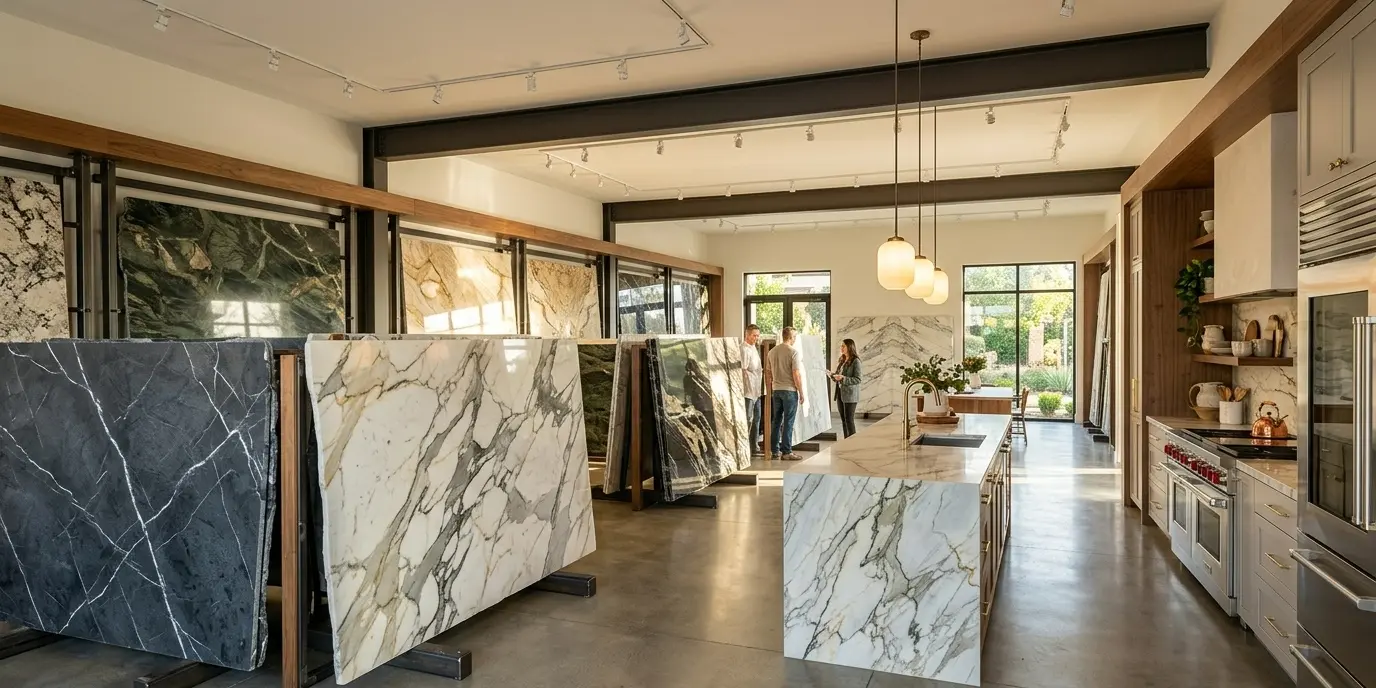
Its reflective quality in a polished finish amplifies natural light, making rooms feel more expansive. In spaces that receive strong afternoon sun, the slab practically glows. A honed finish, by contrast, softens it considerably, lending a quieter, matte elegance that suits Scandinavian and organic-modern interiors particularly well. Both finishes are available to view as full slabs at our Sacramento showroom, where the difference between each surface treatment becomes immediately clear in person.
For fireplace surrounds specifically, Super White provides a crisp, gallery-like frame around the firebox, one that reads as refined whether the fire is lit or not.
Fantasy Brown: Warmth and Drama for Bolder Interiors
Not every living space calls for cool minimalism. Fantasy Brown brings something entirely different to the conversation: warmth. Quarried from the Aravalli range in Rajasthan, India, one of the oldest mountain formations on Earth, it carries linear movement in beige, taupe, and soft brown tones across a creamy white ground. The veining flows with a directional confidence that reads as bold without being aggressive.
On a feature wall, Fantasy Brown introduces an organic richness that pairs naturally with warm timber tones, terracotta, and earthy upholstery. It is particularly striking behind a television or as the spine of a built-in shelving wall, where its warm movement gives the eye something to explore. Its geological character means no two slabs are identical, and a full-wall installation using matched bookmarked slabs creates a symmetrical, almost mural-like effect that becomes the defining element of the room.
Because it is technically one of the harder stones in the dolomite family, it holds up well in high-traffic areas where a feature wall might also serve as a sitting ledge, hearth edge, or built-in bench surface. This variety is available to view in person at our Reno showroom, among other locations.
Galata Bianco: Quiet Sophistication for Every Design Direction
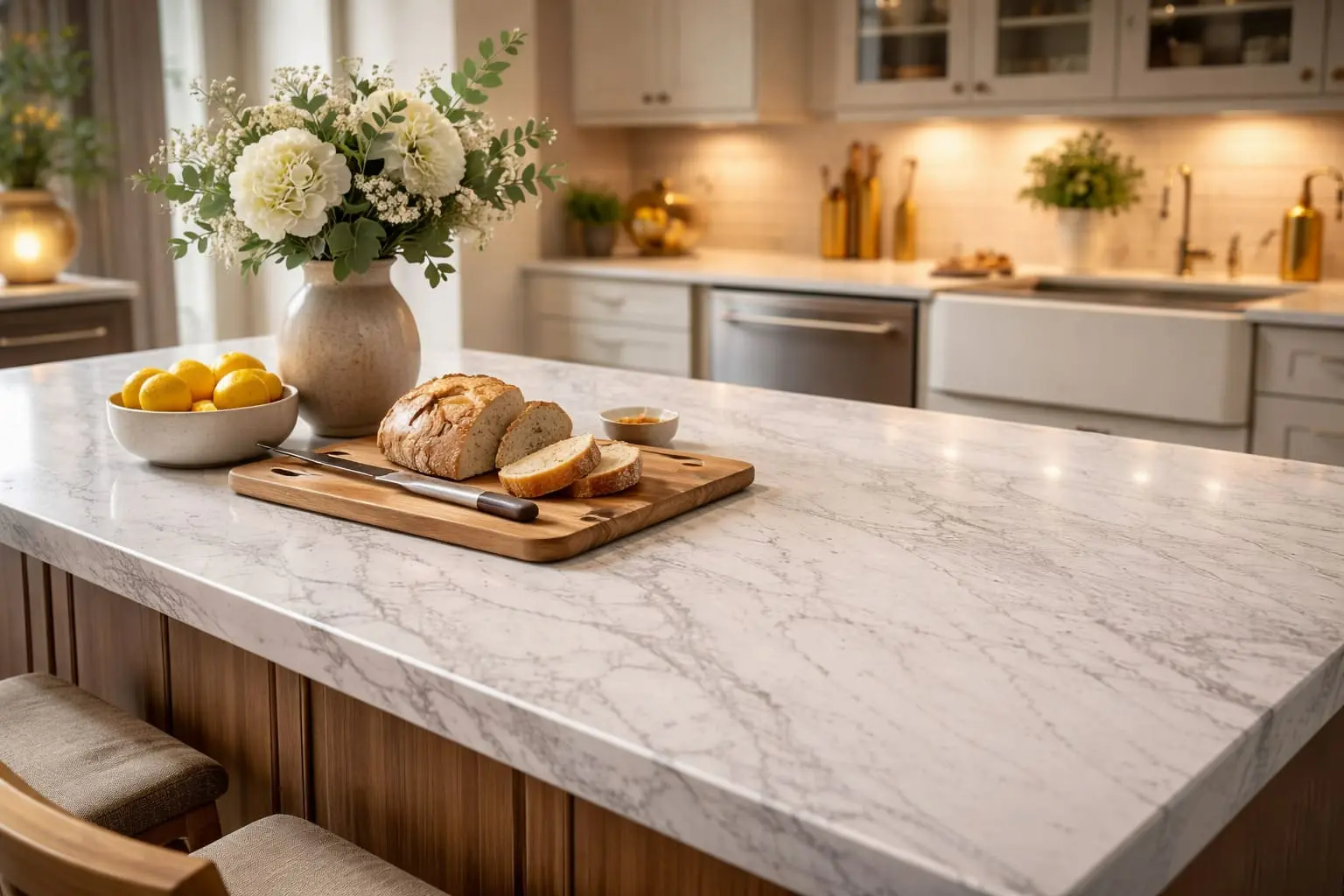
Galata Bianco occupies a particular sweet spot in the dolomite palette. Its pristine white ground carries soft, restrained gray veining that reads as sophisticated without leaning into drama. It is the stone that works quietly alongside almost any design direction, whether contemporary, transitional, coastal, or classic.
For living spaces where cohesion matters, Galata Bianco brings a unifying visual calm. It pairs seamlessly with warm wood tones, concrete accents, linen textiles, and cool gray upholstery without ever clashing. As a fireplace surround or TV backdrop, it provides a refined, gallery-quality surface that makes everything placed in front of it look intentional.
Its broad versatility extends to finish selection as well. A polished Galata Bianco feature wall amplifies light and creates a sleek, hotel-like quality. A honed or leathered finish shifts the character toward something more grounded and tactile, lending the wall an almost architectural presence. Full slabs are available for comparison at our Minden showroom, where viewing the stone in real lighting conditions makes finish differences immediately visible. For anyone researching options independently, this guide to selecting the ideal stone finish from the Natural Stone Institute is a reliable reference on how each finish performs over time.
Arabescus White: Movement as the Main Event
For those who want the feature wall itself to function as art, Arabescus White is the answer. Quarried from Brazil's ancient Precambrian basins, it presents a luminous white background crossed by fluid, branching veins of stone gray and charcoal. The movement is generous, confident, and deeply organic. No two slabs carry the same pattern, which means every full-wall installation is entirely one of a kind.
The name itself draws from the arabesque tradition in design, a centuries-old visual language built on interlocking, flowing motifs derived from nature. The veining in this stone echoes that same logic: complexity in service of visual harmony. On a large vertical surface, the effect is genuinely arresting.
Arabescus White works best in living spaces where the design brief allows for a statement. Paired with low-profile furniture, muted textiles, and simple architectural details, it becomes the room's defining character. It is the stone that guests will notice first and remember longest. Our design team walks through slab selection, orientation, and finish options during a free consultation appointment, tailored specifically to the space being designed.
Choosing the Right Finish for a Living Space Application
Finish selection matters considerably more for vertical applications than it does for countertops. On a wall, lighting plays a different role. Natural and artificial light hits the surface at varying angles throughout the day, and the finish determines how the stone responds.
A polished finish maximizes reflectivity, amplifying the depth of veining and making the stone appear luminous from across the room. It suits contemporary and transitional living spaces where visual impact is the goal. A honed finish removes the gloss and creates a matte surface that feels more architectural and understated. It is forgiving with fingerprints and reads as more casual, which works well in family-centric living areas. A leathered finish adds a subtle texture to the stone's surface, catching light differently across its peaks and valleys, producing a look that is simultaneously refined and tactile.
Understanding how finishes behave over time is also worth considering before committing. The Natural Stone Institute offers practical guidance on long-term care across different finish types, which can inform the decision before any slab is selected. For a hands-on comparison, book a free design consultation and view actual samples in the lighting conditions that matter most.
Conclusion
Dolomite's appeal in living spaces comes down to something that cannot be manufactured: geological authenticity. Each slab carries millions of years of natural history in its veining, movement, and tone. Super White brings luminous calm. Fantasy Brown introduces organic warmth. Galata Bianco offers quiet versatility. Arabescus White delivers drama through movement. What they share is the ability to transform a wall from a background element into the room's most compelling feature. Nova Tile and Stone carries all four varieties, available to view as full slabs across our showroom locations, with design consultation support to guide every decision.
Frequently Asked Questions
Is dolomite a good material for living room feature walls?
Yes, dolomite is well suited for feature walls. Its crystalline structure allows light to interact with the surface throughout the day, creating a depth and warmth that painted walls and engineered surfaces cannot replicate. Its moderate hardness also makes it durable in vertical applications.
How is dolomite different from marble when used on walls?
Dolomite is denser and slightly more resistant to surface wear than traditional marble, due to its higher magnesium content. It carries a similar luminous aesthetic with natural veining, but offers improved resilience against etching from moisture and everyday environmental exposure.
Which dolomite varieties work best behind a fireplace?
Super White and Galata Bianco are particularly effective for fireplace surrounds. Their lighter backgrounds provide a clean, gallery-like frame that complements the warmth of a firebox. Fantasy Brown is a strong choice for interiors that call for a warmer, more organic tone around the hearth.
Can dolomite slabs be used for a TV wall or media backdrop?
Absolutely. Dolomite slabs work well as media wall surfaces because their natural veining adds visual interest without competing with the screen. A honed or leathered finish is often recommended for media walls since it reduces glare and reflection compared to a polished surface.
What is the best way to choose a dolomite slab for a living space?
Viewing full slabs in person is the most reliable way to make a confident choice. Digital images do not accurately represent scale, veining movement, or how a stone responds to specific lighting. A free design consultation at one of our showroom locations allows you to compare varieties, finishes, and orientations with expert guidance before committing.