Marble slabs are large-format natural stone surfaces quarried in single continuous pieces, valued for their uninterrupted veining, heat tolerance, and availability in polished, honed, leathered, and specialty finishes. They perform best in protected indoor environments specifically on floors, walls, and fireplace surrounds and are not engineered for outdoor use.
Choosing the right marble slab involves more than selecting a color. The finish type directly affects long-term maintenance, surface durability, and how the stone reads in different lighting conditions. Whether it belongs on a floor, a feature wall, or a fireplace surround depends on the specific finish, the room's function, and how much upkeep fits your lifestyle. If you are beginning to explore options, browsing the live slab inventory is a practical first step before making any decisions.
This guide covers every finish type available, the indoor applications marble is suited for, and the questions most buyers never think to ask until after a purchase.
What Is a Marble Slab, and How Does It Differ From Marble Tile?
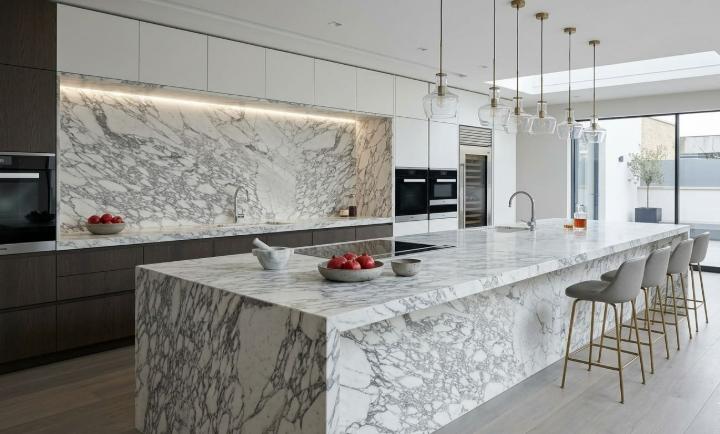
A marble slab is a large, uncut piece of natural stone quarried directly from the earth. Unlike marble tile, which is cut into uniform, repeating pieces, a slab preserves the full sweep of the stone's natural veining across one continuous surface. This makes each slab genuinely one of a kind no two pieces from the same quarry will look identical.
The distinction matters because the visual outcome of a slab application is fundamentally different from a tiled one. With a slab, veining flows uninterrupted, creating seamless visual movement across walls, floors, and architectural features. That continuity is something tile simply cannot replicate.
Marble itself is a metamorphic rock formed when limestone undergoes intense heat and pressure deep within the earth. This geological process produces the distinctive crystalline structure that gives marble its translucency and depth qualities that have made it a prestige material in architecture and interiors for thousands of years. According to the Natural Stone Institute, proper care and sealing are essential to preserving those qualities across the full lifespan of any natural stone surface.
What Finishes Are Available for Marble Slabs, and Does the Choice Actually Matter?
This is one of the most underasked questions in the entire slab-buying process. The finish on a marble slab is not purely aesthetic it directly affects maintenance requirements, tactile experience, and long-term performance in different environments.
Polished finish is the most recognized. It produces a high-gloss, mirror-like surface that amplifies the depth of veining and gives the stone its most dramatic visual presence. Polished marble is ideal for wall cladding, fireplace surrounds, and feature applications where visual impact is the priority. It does show fingerprints and water spots more readily, which is worth considering for heavily trafficked areas.
Honed finish, sometimes called a matte finish, has been mechanically ground smooth but not buffed to a shine. The result is a softer, more understated surface that reads as quieter and more contemporary in many design contexts. For a deeper look at how each option interacts with light and setting, this guide to selecting the ideal stone finish from Use Natural Stone breaks down the practical differences clearly.
Leathered finish involves passing the stone through diamond-tipped brushes after honing, which creates a subtly textured surface. This finish accentuates the stone's natural movement while offering a slightly more forgiving surface in terms of visible marks. It delivers a distinctly artisanal, tactile quality that has become increasingly sought after in modern interiors. Visiting one of our Reno or Sacramento showroom locations allows you to experience each finish in person before making a decision.
Specialty finishes include brushed, antiqued, and sandblasted treatments, each producing its own visual character and performance profile suited to specific design intentions.
No single finish is universally superior. The right choice depends on where the marble will be applied, what level of upkeep fits your lifestyle, and the overall aesthetic direction of your space.
Where Can Marble Slabs Be Used Indoors?
Understanding appropriate applications for marble is not just a matter of personal preference it is a matter of material science. Marble is a calcite-based stone, which makes it sensitive to certain cleaning agents and prolonged moisture exposure. These characteristics define where it performs well and where it encounters real limitations.
Indoor flooring is one of the most classic applications for marble slabs. When properly sealed, marble floors deliver a visual grandeur that is difficult to match with any other material. Entryways, formal living areas, master bathrooms, and hallways are among the most common residential uses. The stone's weight and hardness make it well-suited for high-foot-traffic zones, provided it receives appropriate periodic maintenance.
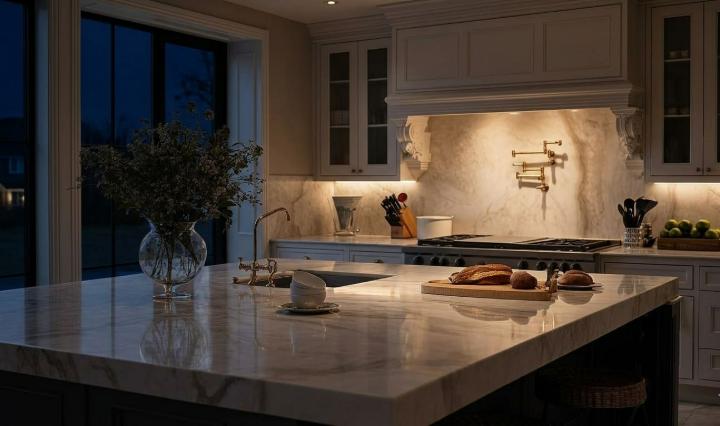
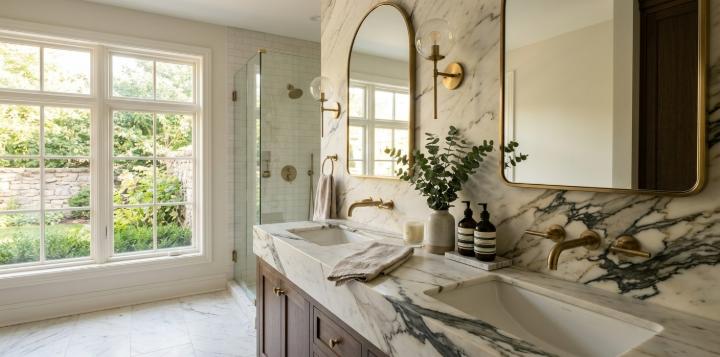
Wall cladding is where marble genuinely excels. Without the load-bearing and slip-resistance concerns of flooring applications, walls allow the stone's visual qualities to take full center stage. Feature walls, bathroom surrounds, shower enclosures, and backsplash areas all showcase the material beautifully. Our Minden and Fernley locations carry a curated range of natural stone options well-suited to wall applications if you want to experience real slab scale before committing.
Fireplace surrounds represent one of the most historically significant uses of marble in residential architecture. The material's heat tolerance and visual weight make it a natural fit for this setting. A marble fireplace surround anchors a room architecturally and gains subtle character over time. This is also where specialty and leathered finishes tend to perform particularly well, as the texture adds warmth and depth to an already commanding focal point.
It is worth noting clearly that marble slabs are strictly an indoor material. The stone is not engineered for exterior environments, and attempting to use it outdoors leads to accelerated surface deterioration and structural compromise. If an outdoor surface is part of your project, a different stone category would serve that application far better.
Why Does Each Marble Slab Look Different, Even From the Same Supplier?
Because marble is a natural product, variation is not a defect it is the defining characteristic. The veining, color gradation, and movement within each slab are determined by the specific mineral composition of that particular piece of stone, the orientation in which it was quarried, and the geological conditions of its formation over millions of years.
Even two slabs cut from the same block will carry visible differences in tone and veining intensity. According to Use Natural Stone, natural stone carries inherent environmental and material attributes tied directly to its origin characteristics that engineered surfaces simply cannot reproduce. If you are planning a large-format installation where visual consistency across multiple surfaces matters, viewing the physical pieces before purchase is essential rather than optional.
A slab quote request is available to begin that process remotely before visiting in person.
How Do You Approach Marble Slab Selection Without Getting Overwhelmed?
Selecting a marble slab involves balancing finish, application, visual scale, veining direction, and compatibility with surrounding materials often simultaneously. For someone navigating this for the first time, the number of variables can become paralyzing.
Working with a design professional simplifies that process considerably. Rather than guessing how a particular stone will read against existing flooring or architectural elements, you work through those decisions with someone who has seen the combinations play out across hundreds of real projects. Trade professionals and design industry clients can also explore our trade account program for access to dedicated resources and personalized service.
Book a free design consultation to get expert guidance before making any final decisions. Whether your project is a single fireplace wall or a full bathroom interior, a consultation ensures every choice is grounded in real knowledge rather than assumptions.
Conclusion
Marble remains one of the most enduring and visually compelling natural stone options for indoor applications. Its range of finishes polished, honed, leathered, and specialty means there is a version suited to nearly any design direction, from classically formal to quietly contemporary. Understanding where it performs well, where it has real limitations, and how to select the right slab for a specific application is what separates a satisfying project from a costly one.
Nova Tile and Stone carries a curated live slab inventory and offers free design consultations to help you make decisions grounded in genuine knowledge, not guesswork. Whether you are designing a showpiece fireplace wall or a serene bathroom interior, the right stone exists and knowing what to look for is the first step toward finding it.
Frequently Asked Questions
What is the difference between a polished and a honed marble finish, and which one shows surface wear more visibly over time?
Polished finishes are buffed to a high gloss that reflects light and amplifies veining, but they reveal surface scratches and etching more visibly than matte alternatives. Honed finishes have a softer, flat surface that is generally more forgiving in terms of visible wear, though etching can still occur with calcite-based stones since it affects the surface chemistry rather than just the sheen level.
If every marble slab is unique, how do fabricators match pieces for large-format wall or floor projects?
Fabricators typically book-match slabs, meaning they cut sequential pieces from the same block and open them like pages of a book so the veining mirrors itself across the seam. This technique requires purchasing slabs from the same bundle or lot and planning cuts carefully before fabrication begins. Viewing the actual pieces in person before confirming a purchase is the most reliable way to ensure visual continuity across a large surface.
Is leathered marble more resistant to staining than polished or honed marble, or does the texture simply make marks less visible?
The leathering process partially closes the stone's surface pores, which can offer marginal improvement in stain resistance compared to a fully open honed surface. However, the more accurate explanation is that the textured profile makes spills and marks less immediately visible, since the irregular surface scatters light differently than a flat one. Sealing remains important regardless of which finish you select.
Can marble be used for a fireplace surround, and which finish works best in that setting?
Yes, marble is one of the most historically established materials for fireplace surrounds due to its heat tolerance and visual weight. Both polished and leathered finishes work well in this application. Polished marble delivers a more formal, high-contrast look, while leathered marble brings a warmer, more textured quality that suits relaxed or contemporary interiors. The choice ultimately depends on the overall design direction of the room.
Why is marble considered strictly an indoor material when it is a natural stone that originates from the ground?
The indoor limitation comes down to marble's specific mineral composition. As a calcite-based material, it is susceptible to acid rain, freeze-thaw expansion, and prolonged moisture absorption in ways that harder silicate-based stones like granite or quartzite are not. Outdoor environments expose marble to combinations of these stressors simultaneously, which accelerates surface deterioration and can compromise the stone's structural integrity over time.