Titanium Granite has several notable disadvantages, including high porosity, demanding maintenance requirements, a steep price point, and bold patterning that limits design flexibility. It requires annual sealing and specific cleaning products to stay in good condition. These trade-offs make it a better fit for low-traffic applications than for busy family kitchens or heavily used countertops.
If you are considering this stone for your next project, this guide covers what the drawbacks actually look like in real life, how Titanium Granite compares to alternatives, and which spaces it suits best. By the end, you will have the information needed to decide with confidence.
Balancing Granite’s Beauty and Limitations
What Goes Into a Long-Term Stone Investment
Choosing a surface material for your countertops, kitchen island, or bathroom vanity is one of the highest-stakes design decisions in a home renovation. Natural stone adds character and lasting value, but only when it aligns with how the space is actually used.
Titanium Granite, sourced primarily from Brazil, falls into the exotic granite category. Its appearance comes from a complex mineral composition that also makes it more reactive to moisture, acids, and daily wear than many standard options.
Understanding a stone's limitations before installation prevents expensive regret down the road. Knowing what you are committing to is part of making a smart long-term investment.
Key Drawbacks Worth Knowing Before You Commit
- High porosity: More susceptible to staining from cooking oils, citrus, and wine than standard granites.
- Complex veining: Bold, irregular patterns make precise cuts and seam matching on countertops and kitchen islands significantly more difficult.
- Weight requirements: Thick exotic slabs require reinforced cabinetry and professional structural assessment before installation.
- Premium pricing: Titanium Granite costs considerably more per square foot than domestic granite varieties.
- Frequent sealing: Annual or semi-annual sealing is necessary to maintain stain resistance, especially on bathroom vanity surfaces and kitchen countertops.
- Limited design flexibility: Its dramatic pattern does not complement every interior style, particularly minimalist or Scandinavian-inspired spaces.
Design Challenges with Titanium Granite
Kitchen Island Challenges
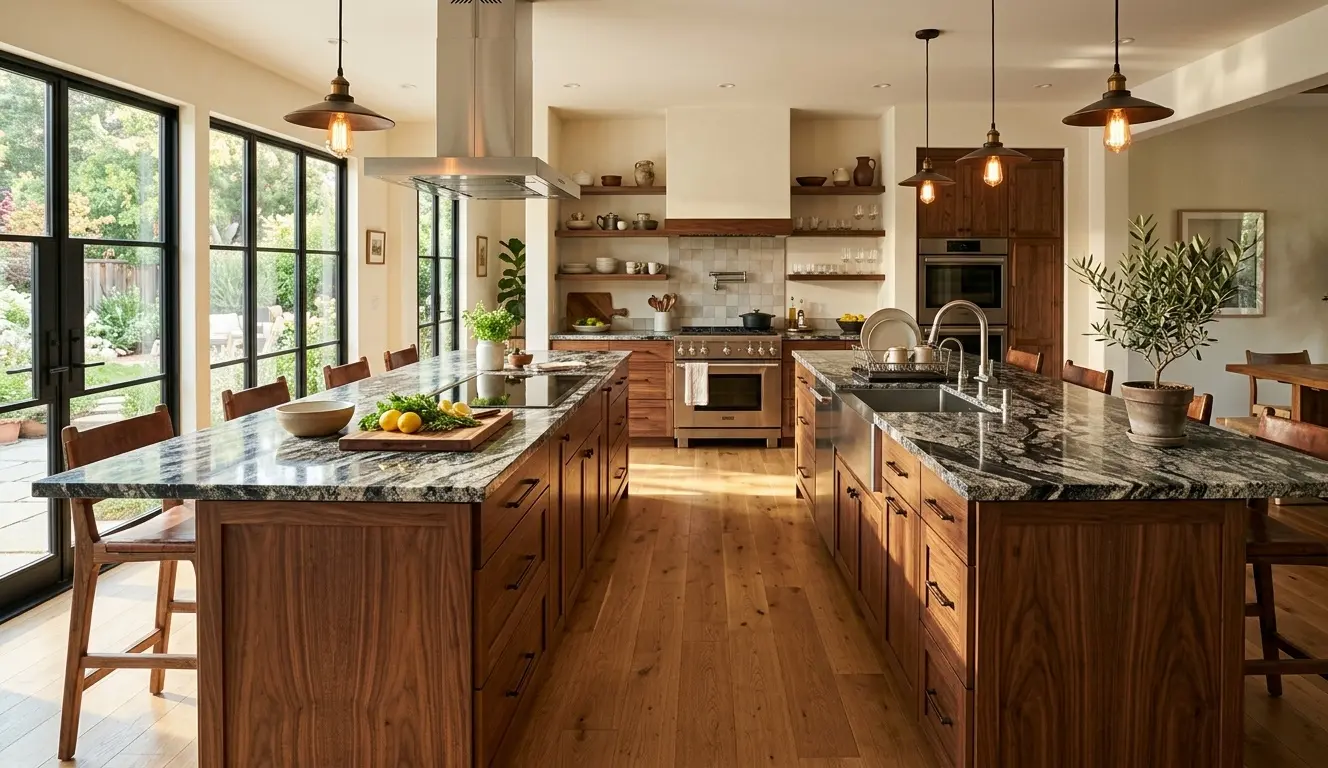
A kitchen island clad in Titanium Granite can look extraordinary in the right setting. However, the stone's dominant veining pattern can visually overwhelm smaller or more detail-heavy kitchens.
In open-plan spaces under 200 square feet, the metallic boldness often competes with cabinetry, tile, and fixtures rather than complementing them. Designers working with the International Surface Event community frequently caution against pairing high-pattern stones with busy backsplash designs.
From a functional standpoint, the kitchen island surface requires consistent upkeep. Daily exposure to cooking residue demands wiping down with only pH-neutral products and using cutting boards without exception.
Bathroom Vanity Surface Concerns
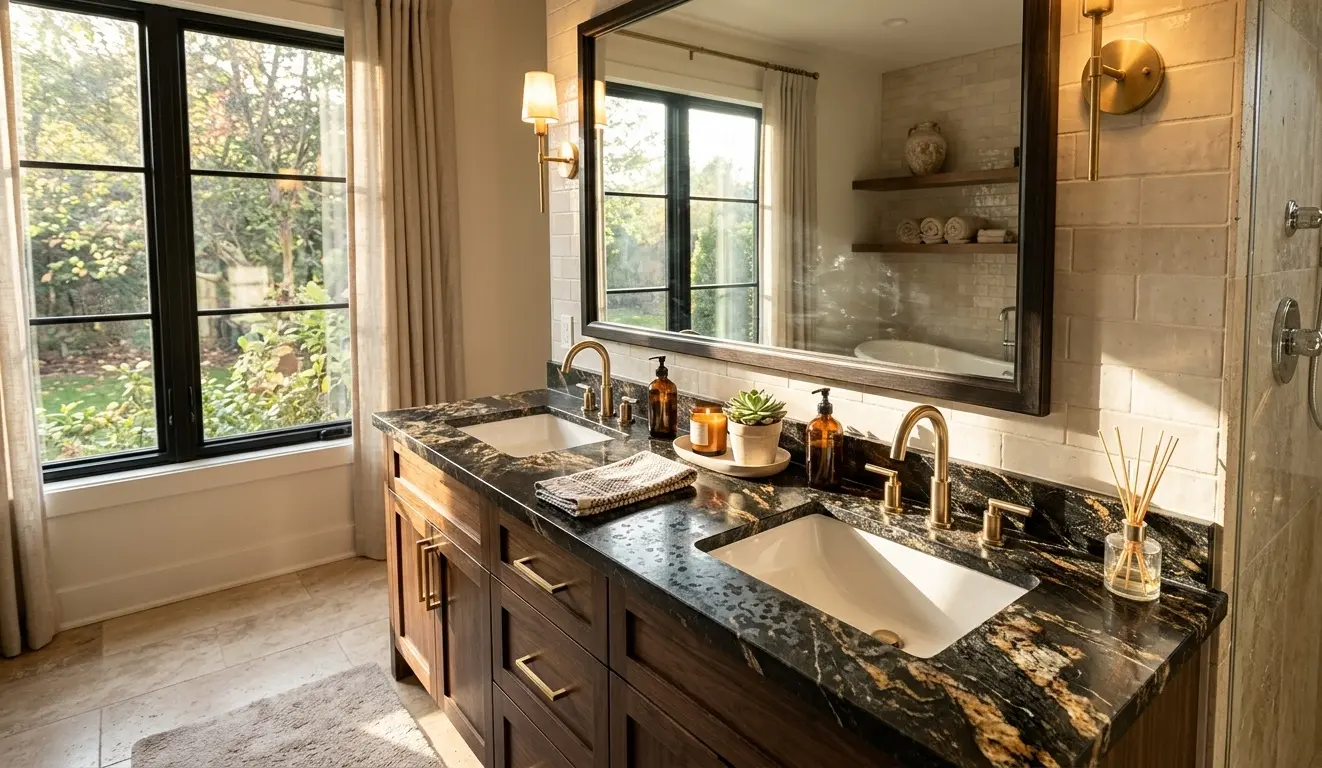
On a bathroom vanity, Titanium Granite's dark base reveals water spots and soap scum far more readily than lighter-toned stones. Routine cleaning becomes more frequent to maintain the surface's polished look.
High-humidity environments also accelerate moisture absorption through the stone's pores if the sealant is not maintained properly. This can affect the stone's coloring and surface texture over several years.
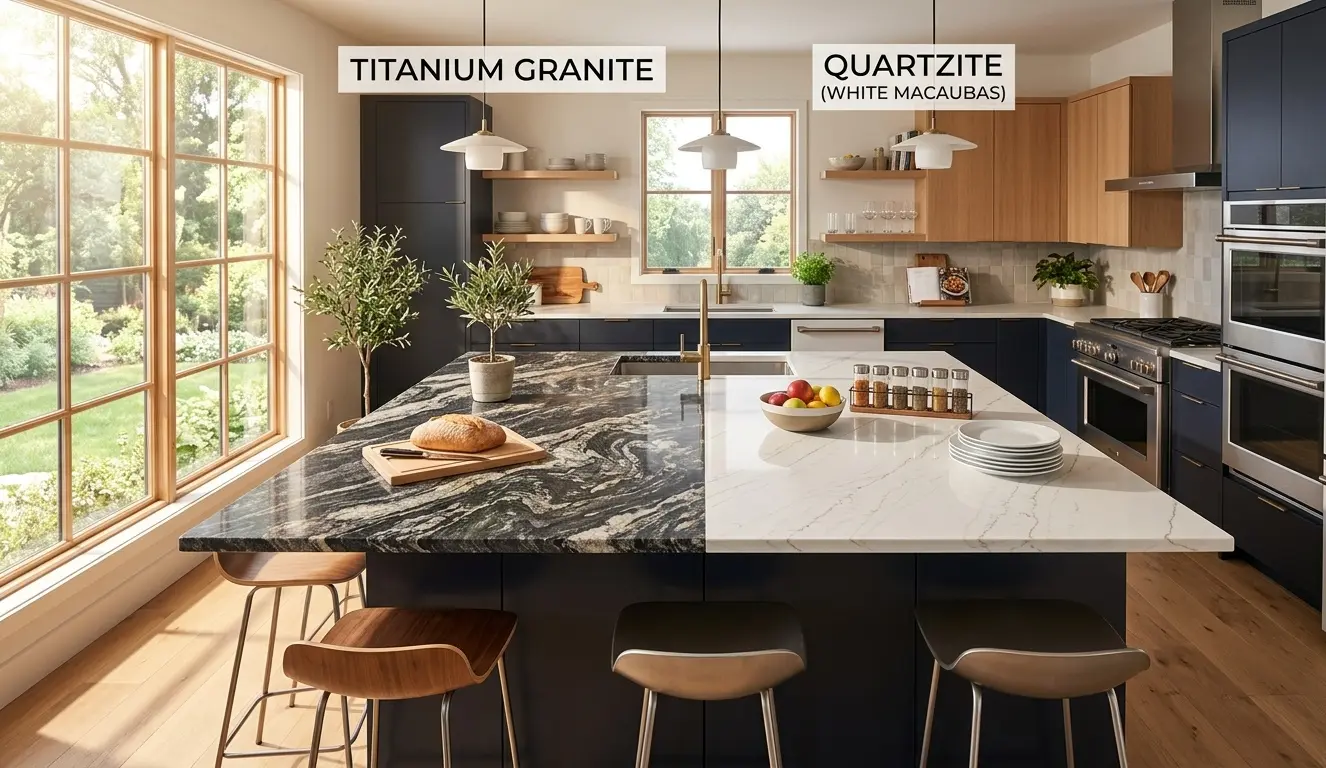
For spa-style bathrooms with heavy daily use, the maintenance commitment may outweigh the visual payoff. Quartzite or leathered-finish granite options often deliver a similar aesthetic with lower upkeep demands.
Countertops in High-Traffic Households
As a countertop surface in busy homes, Titanium Granite requires more care than many homeowners anticipate. While granite is widely regarded as durable, the stone is not impervious to surface scratching, particularly along veining lines where mineral density shifts.
Direct contact from hot cookware is still discouraged despite granite's general heat tolerance. Thermal shock along the veining can create hairline fractures that widen gradually over time.
Households with young children, frequent entertaining, or intense daily cooking activity may find a lower-maintenance natural stone slab delivers better long-term results without sacrificing the look of genuine stone. The Natural Stone Institute's health and environmental label guide is a useful reference when comparing stone types and their certified properties.
Titanium Granite Compared to Alternatives
Feature | Titanium Granite | Black Galaxy Granite | Quartzite | Engineered Quartz |
Porosity | High | Medium | Low to Medium | Very Low |
Maintenance Level | High | Medium | Medium | Low |
Price Per Sq Ft | $65 to $120+ | $45 to $80 | $70 to $130 | $50 to $100 |
Pattern Matching | Difficult | Moderate | Moderate | Easy |
Heat Resistance | Moderate | Moderate | Good | Moderate |
Sealing Required | Yes (annual) | Yes (every 2 years) | Yes (annual) | No |
Design Flexibility | Limited | Moderate | High | High |
Pros and Cons of Titanium Granite at a Glance
Pros:
- Visually dramatic and unlike any other stone
- Unique slab patterning with no two pieces alike
- Adds meaningful resale appeal to upscale homes
- Pairs beautifully with warm wood tones, brass, and matte black fixtures
- Holds up well under normal daily use when properly sealed
Cons:
- Requires annual professional sealing and specific cleaning products
- High porosity creates elevated staining risk in kitchen environments
- Bold veining pattern limits compatibility with many interior design styles
- Heavier than average granite, requiring structural cabinetry support
- Premium price point places it out of reach for many mid-range renovation budgets
Evaluating Titanium Granite for Your Project
Follow these steps before placing a final order:
- Assess how the space will be used daily. A low-traffic guest bathroom vanity is a far better candidate for Titanium Granite than a kitchen countertop that sees heavy daily cooking.
- Request a physical sample to view in your actual space. Titanium Granite shifts dramatically in tone and shimmer between natural daylight and artificial lighting. Viewing a sample on-site eliminates guesswork.
- Review the full slab before committing, not a sample chip. Exotic granite veining varies enormously across each slab. Approving the full piece prevents pattern surprises after installation.
- Confirm structural support with your contractor. Large-format exotic slabs are heavier than standard stone. Cabinetry and subfloor support may need reinforcement before installation begins.
- Calculate the full cost of ownership. Factor in annual sealing, pH-neutral cleaning supplies, and professional maintenance visits when comparing Titanium Granite's total cost against alternatives.
Health Factors in Stone Selection
One factor that has gained attention recently is the health profile of different stone types. Recent CDC research on engineered stone has raised awareness around silica exposure during fabrication of certain manufactured stone products.
Natural granite, including Titanium Granite, does not carry the same fabrication-related health concerns as engineered alternatives. This distinction is relevant for homeowners and trade professionals who want to make informed decisions about the materials used in their spaces.
For those prioritizing both aesthetics and health-conscious material selection, natural stone remains a well-regarded choice when sourced responsibly.
Choosing the Best Natural Stone Slab
Seeing a stone in person before deciding makes an enormous difference. The full slab collection at Nova Tile and Stone includes a range of exotic and classic granites, quartzites, and marbles, giving you real alternatives to compare against Titanium Granite before committing.
With showrooms in Northern Nevada and Northern California, you can view full slabs under real lighting conditions at the Fernley display center, Reno showroom, the Minden location, or the Sacramento showroom.
Trade professionals working on larger residential or commercial projects can apply for a trade account to access dedicated support and project resources. Homeowners who prefer discovering local options first can start with the shop local directory.
For personalized material guidance based on your specific project and lifestyle, connect with a stone specialist here.
Conclusion
Titanium Granite is a genuinely spectacular material. Its visual drama is hard to replicate, and in the right setting, it delivers a level of presence that few other natural stone slabs can match.
That said, its disadvantages are real, practical, and worth taking seriously before installation. High porosity, demanding maintenance, structural weight requirements, and significant cost make it a stone that rewards careful planning rather than impulsive selection.
The best outcome comes from matching the right stone to the right space and lifestyle. Whether that turns out to be Titanium Granite or a more forgiving alternative, the goal is a surface you will still love a decade from now.
Browse the full collection and get the guidance you need from experienced stone professionals at the complete slab gallery.
Frequently Asked Questions
Is Titanium Granite suitable for outdoor countertops?
No, Titanium Granite is not well suited for outdoor use. Its high porosity and sensitivity to extreme temperature changes make it prone to accelerated staining, surface cracking, and moisture damage when exposed to outdoor conditions over time.
How often does Titanium Granite need to be sealed?
Most fabricators and installers recommend sealing Titanium Granite at least once per year. In high-use areas such as kitchen countertops or bathroom vanities, sealing twice per year provides better long-term protection against staining and moisture absorption.
Can Titanium Granite work on a kitchen island?
Yes, but with careful planning. The stone's dramatic veining requires thoughtful design coordination to avoid visual clash with surrounding elements. It also demands consistent care to resist the oils and food acids that are common in kitchen environments.
What cleaning products are safe to use on Titanium Granite?
Only pH-neutral cleaners formulated specifically for natural stone should be used. Vinegar, bleach, citrus-based sprays, and abrasive scrubbing pads degrade the sealant layer and can permanently damage the stone surface over time.
Is Titanium Granite more expensive than standard granite?
Yes, significantly so. As an exotic Brazilian granite, Titanium Granite typically costs more per square foot than domestic granite. The premium reflects the stone's rarity, visual complexity, and the additional labor required to process and seam large-format exotic slabs.