The countertops that best hide crumbs and daily mess combine three qualities: a matte or textured finish, visible color movement or veining, and a mid-range tone. Leathered granite, honed quartzite, heavily veined marble, travertine, and patterned porcelain slabs all perform well under daily use because their surface variation absorbs visual attention and reduces the contrast between the stone and typical kitchen debris. Polished solid-tone surfaces in very dark or very light colors, including polished black granite, solid white marble, and uniform quartz, sit at the opposite end of the spectrum and show every fingerprint, water spot, and loose grain throughout the day.
The difference comes down to how light interacts with the surface. A high-polish finish reflects light in a way that amplifies anything sitting on top of it. Honed, leathered, and brushed finishes scatter light instead, which makes the same amount of debris far less visible. Color and pattern work the same way: a stone with prominent veining or tonal variation gives the eye competing visual information, while a uniform surface leaves nothing to compete with whatever lands on it. Understanding these three variables before choosing a material leads to a countertop that holds up to daily use without requiring constant attention.
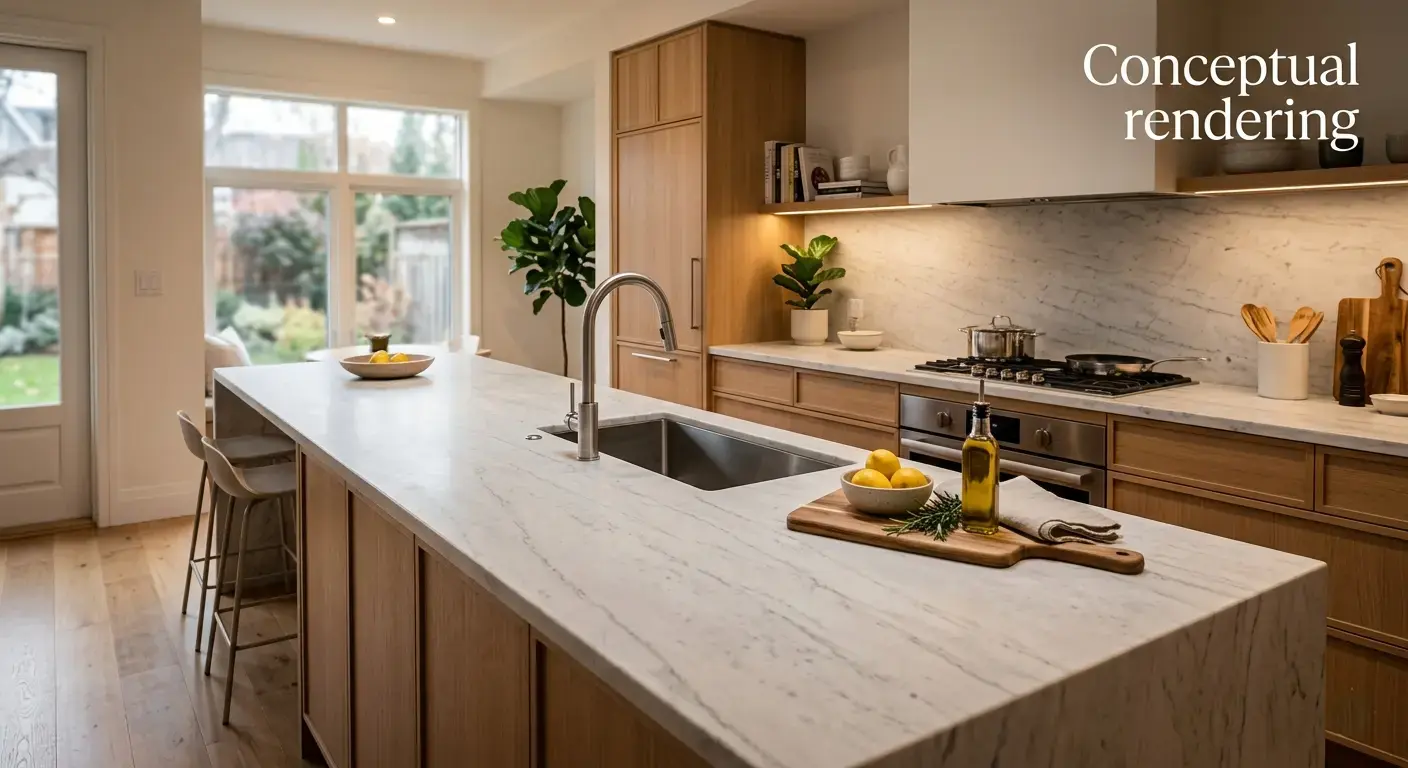
Why Some Surfaces Show More Than Others
The visibility of crumbs, dust, and daily mess on a countertop comes down to three factors: finish, color, and pattern. These work together, and understanding each one helps narrow the field before selecting a material.
Finish refers to the surface texture of the stone. A high-polish finish creates a mirror-like reflective surface that amplifies anything sitting on top of it. A water droplet, a crumb, or a smear of oil becomes immediately visible against a polished background. Honed, leathered, and brushed finishes scatter light rather than reflect it, which reduces the visual contrast between the surface and whatever lands on it.
Color determines how much contrast exists between the stone and typical household debris. Debris in a kitchen tends to be light-colored: flour, breadcrumbs, dried spices, dust. On a dark surface, that contrast is stark. On a surface with mid-range tonality or mixed color, the same debris blends more readily into the background.
Pattern and movement refer to the degree of visual variation across the surface of the stone. A stone with prominent veining, grain clusters, or tonal shifts distributes visual attention across the whole slab. Mess and crumbs disappear into that complexity. A solid, uniform stone gives the eye nothing else to focus on.
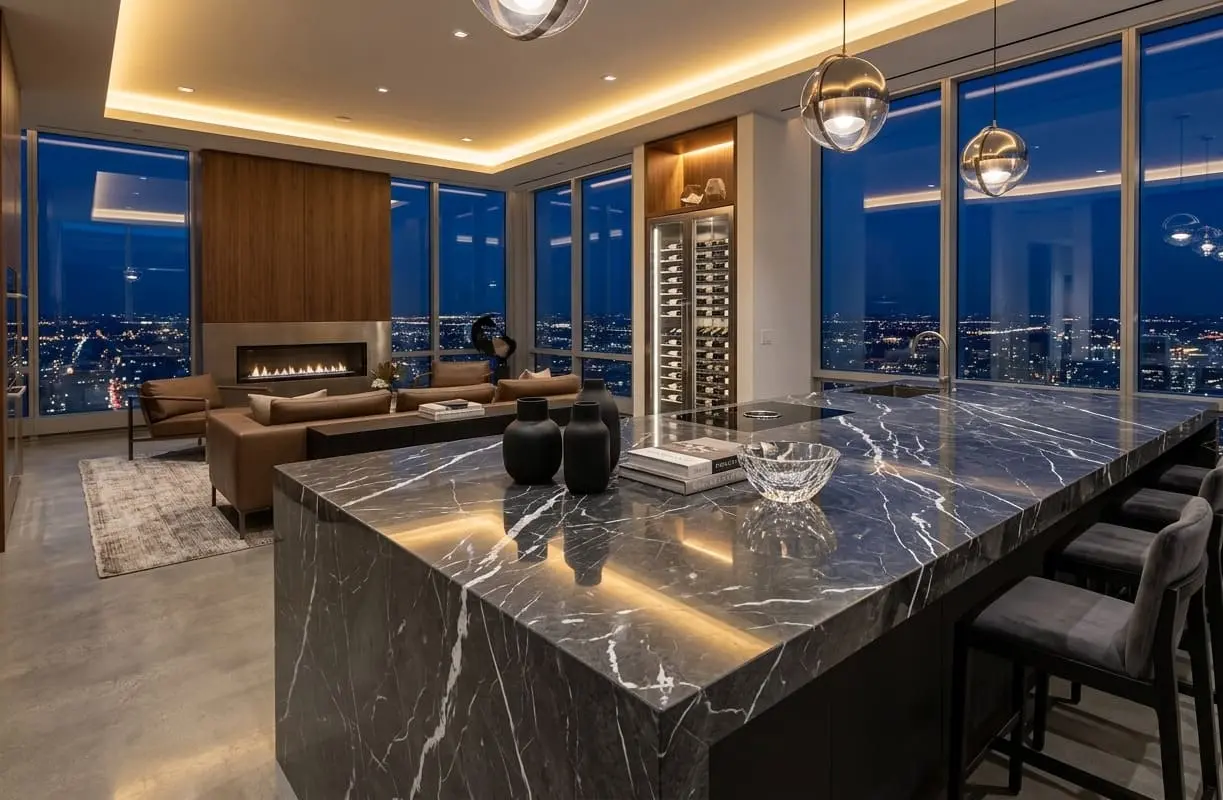
Materials That Perform Well in Busy Kitchens
Leathered Granite
Granite with a leathered finish is a forgiving surface for everyday use. The leathering process creates a low-sheen, matte-textured surface that resists fingerprints and scatters light in a way polished granite does not. The natural grain and color variation in most granite slabs add further camouflage for debris.
A leathered finish applied to a mid-toned granite with movement, golds, grays, blacks, and whites intermixed, performs better than a polished slab of the same stone in terms of showing daily mess. The texture also provides a slightly more tactile surface, which many households prefer for food preparation areas.
Honed Quartzite
Honed quartzite offers a matte surface with the density of a hard natural stone. The absence of a reflective polish means fingerprints and water spots do not register as sharply. Many quartzite slabs carry veining, tonal shifts, and grain patterns that break up the surface visually.
Quartzite in the white and pale gray range does show dust and crumbs more readily than darker or more complex-toned slabs. Opting for a quartzite with tonal range, golds, greens, taupes, or mixed veining on a gray base, improves its performance in daily use. Our natural stone slab collection includes quartzite across a range of tones and movement levels that can be viewed in person before committing.
Veined Marble
Marble with prominent, irregular veining hides mess more effectively than marble with sparse or delicate movement. The veining draws the eye and provides visual competition for whatever lands on the surface. This is one reason heavily veined Calacatta slabs tend to look more forgiving in working kitchens than pale, lightly veined options: the density of movement minimizes the visibility of daily debris.
Marble etches with acidic substances, which is worth factoring into any comparison with other stones. Fine Homebuilding's guide to natural stone countertops covers the etching behavior of calcareous stones in practical detail for homeowners. That said, in terms of mess concealment alone, a heavily veined marble performs better than most polished solid-tone surfaces.
Travertine
Travertine's warm, earthy tones and natural tonal variation make it a suitable countertop material for daily kitchens. The shifting creams, golds, browns, and tans across the same slab mean crumbs and debris blend into the surface rather than sitting visually on top of it. A filled and honed finish reduces surface pitting while maintaining the low-sheen appearance that does not amplify mess the way a polished surface does.
Patterned Porcelain Slabs
Porcelain is not a natural stone, but it earns a place here because of how patterned porcelain performs in daily use. A porcelain slab with a stone-look print, particularly those referencing heavily veined marble or complex granite movement, carries the same mess-concealment characteristics as the natural stone it references, with none of the etching or absorption concerns. The surface is non-porous and resistant to staining, and the visual complexity of the pattern works the same way it does in natural stone.
What to Avoid If Mess Visibility Is a Priority
Certain combinations of finish, color, and pattern consistently underperform in daily kitchens.
High-polish black granite or black marble shows every fingerprint, dust particle, and water spot. The dark background and reflective surface create high contrast with virtually any type of debris. Many homeowners who choose polished black surfaces find themselves wiping multiple times a day to maintain the appearance they expected.
Solid white or very pale polished slabs face the same problem from the other direction. Breadcrumbs, dust, and spills on a white polished surface register immediately. This Old House's stone countertop material breakdown notes that solid-color surfaces require more frequent cleaning to maintain their look compared to surfaces with natural movement and variation.
Solid-tone polished quartz mirrors the same issue. The manufacturing consistency that makes quartz appealing also eliminates the visual variation that helps natural stone conceal mess. A polished, uniform-color quartz slab is among the more demanding surfaces in terms of visible daily accumulation.
This does not mean any of these materials are a poor overall choice. The tradeoff between visual complexity and perceived cleanliness is a personal one, and some households adapt to the wiping routine without issue.
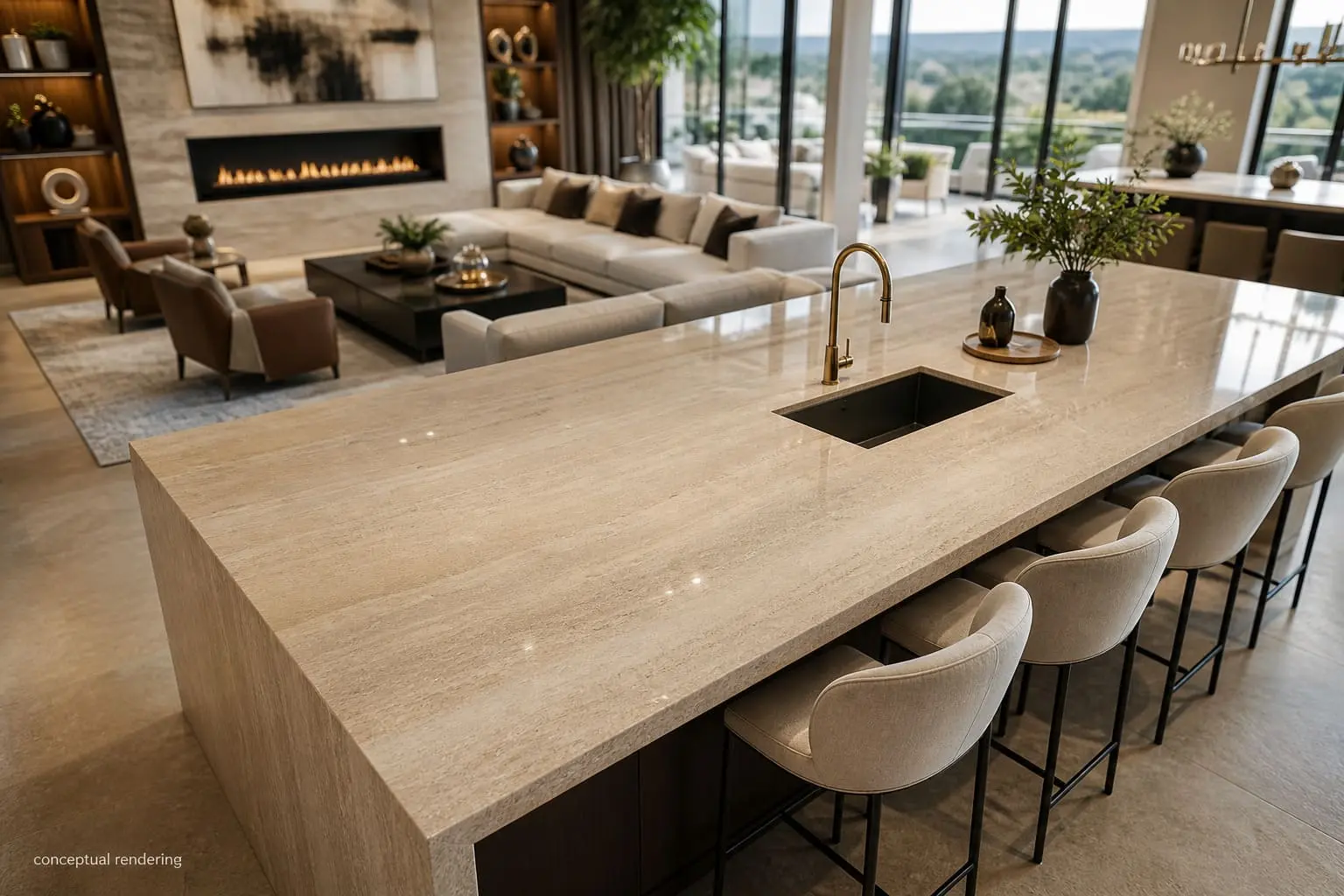
How Finish Affects Maintenance Beyond Appearance
Surface finish affects more than mess visibility. It also affects how liquids behave on the stone and how the surface responds to daily cleaning.
A polished surface compresses the pores of the stone during processing, which can improve liquid resistance. Honed and leathered surfaces may require sealing more often depending on the stone type, so understanding maintenance expectations before selecting a finish is worthwhile.
CDC/NIOSH research on countertop materials and surface safety highlights how non-porous or properly sealed surfaces support more effective sanitation in food preparation areas. A leathered or honed surface that has been properly sealed performs comparably to a polished surface in terms of liquid resistance. The primary practical difference for most households is appearance under daily use, not hygiene or durability.
The Color Sweet Spot
If mess concealment is the goal, the most consistently forgiving countertop colors fall in the mid-range: warm grays, taupes, greiges, golds, and mixed-tone stones. These colors sit between the extremes where debris creates the most visual contrast. They are close enough in tone to common kitchen debris that small accumulations do not register prominently.
This does not eliminate the importance of finish and pattern, but it provides a reliable baseline. A mid-toned stone with a leathered or honed finish and visible movement covers all three factors simultaneously. This is why many designers favor this combination for households with heavy daily kitchen use.
Reviewing options under real lighting conditions matters as well. The same slab can appear different under warm incandescent light versus cool daylight. Buying from a local stone showroom allows you to assess pattern, finish, and tone under natural and artificial light before making a final decision, which is difficult to replicate when shopping online or through samples alone.
Note: Some images on this page may be conceptual renderings created to illustrate design possibilities and may not depict actual installations.
Conclusion
For kitchens and bathrooms that see daily use, the best approach for minimizing visible mess combines a matte or textured finish with visible stone movement and a mid-range color palette. Leathered granite, honed quartzite with tonal variation, heavily veined marble, and patterned porcelain slabs all perform well across these criteria. Polished solid-tone surfaces in very dark or very light colors require more frequent cleaning to look consistently clean.
Viewing slabs in person makes a meaningful difference when evaluating how a stone will look under your home's specific lighting. We invite you to schedule a showroom appointment at our locations in Reno, Minden, Sacramento, and Fernley to compare finishes and patterns side by side. You can also request a slab quote to get the process started, or explore our full stone slab inventory online before your visit. Trade professionals and designers working on client projects are welcome to apply for a trade account for streamlined project support.
Frequently asked questions
Mid-toned colors with mixed variation, including warm grays, taupes, golds, and greiges, hide crumbs and daily debris most effectively. Very dark and very light solid colors create the highest contrast with typical household mess and require more frequent cleaning to maintain their appearance.
Yes. Leathered and honed finishes scatter light rather than reflecting it, which reduces the visibility of fingerprints and smudges. A polished surface amplifies these marks because of its high reflectivity.
Natural quartzite with visible veining and a honed finish typically conceals daily mess better than a solid-tone polished quartz. Quartz is non-porous and does not require sealing, which reduces maintenance in other ways. The right choice depends on which type of maintenance is the higher priority for the household.
Prominent veining genuinely reduces the perceived presence of crumbs and minor debris by drawing the eye across the surface and providing visual competition for whatever lands on the stone. It does not eliminate the need for regular cleaning, but it does reduce how often that cleaning feels urgent.
High-polish black granite, polished solid-white marble, and smooth solid-color quartz in dark or light tones are consistently the most demanding surfaces for maintaining a clean appearance. All three combine reflectivity with minimal visual variation, which maximizes the visibility of fingerprints, dust, and water spots.