The most common countertop regrets trace back to a single gap: choosing a surface based on how it looks rather than how it performs in daily use. Marble that etches after the first lemon squeeze, a polished finish that shows every water spot, a slab that looked perfect on a phone screen but read entirely differently once installed under kitchen lighting. These are the regrets homeowners describe most often.
Most countertop decisions that lead to regret share these patterns:
- Selecting material by appearance without considering maintenance requirements or daily habits
- Committing to a slab from a small sample rather than viewing the full stone in person
- Choosing a finish that conflicts with the household's actual cleaning routine
- Delaying or skipping sealing on porous stone during the first year of use
- Assuming granite, marble, and quartzite behave the same way because they look similar
- Planning for the kitchen without thinking through how stone will perform in other rooms
Understanding these patterns before selecting a slab is the most reliable way to avoid them.
Choosing a Material Based on How It Looks
The most reported regret is selecting stone for its appearance without connecting that choice to the household's actual cooking and cleaning habits.
Marble is the most cited example. Its white or gray surface with soft veining is associated with a refined appearance, and that draws significant buyer interest. What some homeowners discover afterward is that marble is a calcareous stone, meaning it reacts chemically with acids. Lemon juice, tomato, vinegar, wine, and even some cleaning products leave a dull mark on a polished marble surface. That mark is called an etch. It is not a stain; it is a surface change caused by a chemical reaction with the calcite in the stone.
A household that cooks frequently with acidic ingredients, or one where spills get wiped up when convenient rather than immediately, may find that marble's performance profile does not suit the kitchen. A household that primarily uses the island for serving or light prep may find marble works well for years.
Quartzite, granite, and sintered stone each carry different performance profiles that suit different use patterns. This Old House's overview of stone countertops outlines how surface hardness and porosity vary between stone types, which are factors worth understanding before selecting a material. Browsing our full slab collection alongside a design consultation allows those comparisons to happen in context rather than from a catalog.

Not Seeing the Full Slab Before Committing
The second most common regret is selecting stone from a small sample or a photograph without viewing the actual slab that will be installed.
Natural stone varies considerably within a single material category. Two slabs of the same quartzite can differ in veining density, background tone, and movement. A 4-inch sample shows one detail of the stone; it does not show how the veining distributes across nine or ten feet of countertop, where fissures fall, or how the stone reads under the lighting conditions of the actual room. What looks like a subtle white with delicate movement in a sample chip can read as noticeably busier once it covers the full counter surface.
Homeowners who select from samples or digital images often encounter a slab at installation that reads differently than expected. The solution is straightforward: view the actual slabs under consideration, in full, before committing. As a direct stone importer, our Reno showroom and Sacramento showroom both carry full-size slab inventory that can be evaluated in person, which allows buyers to see exactly what will be installed, including movement, variation, fill, and surface character.
Choosing a Finish That Works Against Daily Life
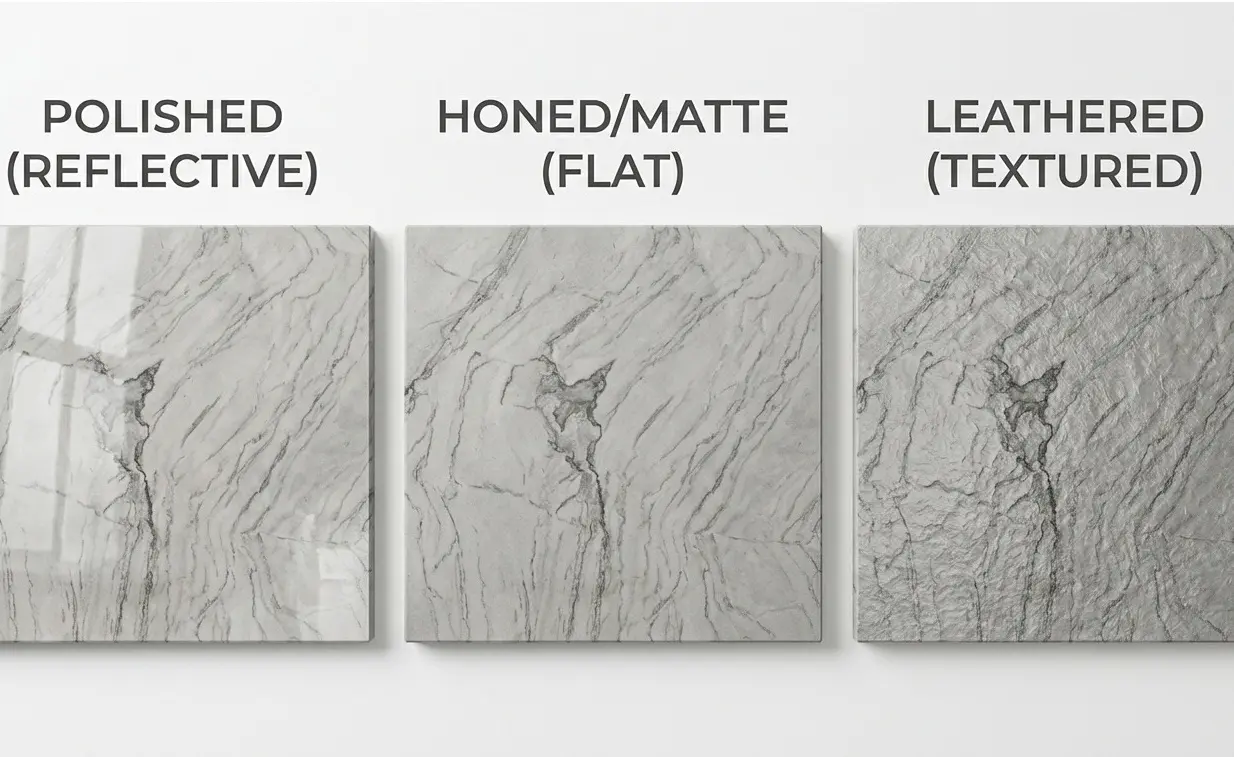
Finish selection is where many homeowners realize, after the fact, that they optimized for how the countertop looks in a photo rather than how it holds up through daily cleaning.
A high-gloss polished finish reflects the most light and produces the deepest color saturation in the stone. It also shows smudges, water spots, and fingerprints more readily than other finishes. In a household with children, frequent cooking, or hard water, a polished countertop may require daily wiping to maintain the appearance that made it appealing in the first place.
A honed finish produces a matte or low-luster surface that reads softer and conceals day-to-day marks more effectively. It is less dramatic in photographs but tends to perform more consistently in active kitchens. A leathered finish adds texture that further obscures prints and water marks, particularly on darker stones.
Fine Homebuilding's guide to natural stone countertops consistently notes that finish choice affects maintenance requirements as much as material choice does. Buyers who select a finish based on what looks best in design photography, rather than what matches their cleaning habits, often wish they had weighted those factors differently.
Skipping or Delaying Sealing
Sealing is a maintenance step that many homeowners understand in principle but underestimate in practice. Porous natural stones, including granite, marble, travertine, quartzite, and limestone, require sealing to slow liquid absorption at the surface. A new countertop that goes unsealed for the first several months is more susceptible to staining during that window than one that was sealed promptly after installation.
The practical effect is that oil from cooking, wine, coffee, or water with dissolved minerals can work into the stone's surface before a sealer is applied. Some stains from that early period can be treated; others, particularly from oil, leave permanent discoloration that no amount of cleaning will reverse.
The timing matters. Sealing promptly after installation, and repeating on the schedule appropriate for the stone type, is what maintains the surface condition that led a buyer to select that material. Homeowners who treat sealing as something to handle eventually often discover that a stain they thought was minor became permanent because the step was postponed.
Scheduling a free design consultation before installation gives buyers the opportunity to ask material-specific questions about sealing frequency and products, rather than after a problem has already occurred.
Assuming All Natural Stone Behaves the Same Way
A significant number of countertop regrets come from buyers who understood they were selecting natural stone but did not account for how different individual stone types actually behave.
Granite, quartzite, marble, travertine, dolomite, and limestone each have distinct porosity levels, hardness ratings, and chemical sensitivities. Granite rates 6 to 6.5 on the Mohs scale and is among the more forgiving natural stones for daily kitchen use when properly sealed. Quartzite rates at 7 or above and resists scratching and etching more effectively than marble. Marble, dolomite, and travertine are calcareous stones that all etch on contact with acid, though dolomite is harder and slightly more acid-resistant than marble. Limestone shares many of marble's sensitivities and is among the more delicate natural stone options for a high-use kitchen surface.
Buyers who select based on visual similarity, where a white veined stone looks like marble and is therefore assumed to perform like marble, sometimes end up with a material whose care requirements do not match their expectations. The reverse is also true: buyers who avoid marble entirely based on a maintenance concern sometimes do not realize that quartzite offers comparable visual character with greater acid resistance.
It is also worth noting that engineered stone products carry separate safety considerations that differ from natural stone. The CDC and NIOSH have documented the occupational silica exposure risks associated with fabricating engineered quartz, which is one practical distinction between natural and engineered options that buyers rarely encounter in typical showroom conversations.
Those interested in understanding how individual stone types compare can request a slab quote and discuss material-specific questions with our design team directly.
Planning for the Kitchen Without Thinking Through the Rest of the Space
A final pattern involves buyers who put careful thought into the kitchen countertop and then made faster decisions for the bathroom vanity, laundry room, or outdoor kitchen without applying the same evaluation process.
Marble that was carefully selected for a kitchen island can etch quickly in a bathroom where acidic products, including skin care acids, hair treatments, and citrus-based cleaners, come into regular contact with the surface. Granite or quartzite specified for an indoor kitchen may perform differently outdoors, where temperature cycling, UV exposure, and moisture create a different environment. Porcelain slab and sintered stone handle outdoor conditions and UV exposure without degrading the way some resin-based engineered products can.
Thinking through the performance requirements of each individual surface, rather than extending a single kitchen decision to every room, reduces the chance of a mismatch between the stone and the space. Our four showroom locations across Northern Nevada and Northern California are staffed with a commission-free design team available to work through those questions for every room, not just the primary kitchen. Design professionals sourcing stone across multiple projects can apply for a trade account for additional access and support.
Conclusion
Most countertop regrets are preventable. The decisions that generate them share a common thread: moving quickly past the questions that determine long-term performance. Choosing material by appearance alone, committing from a sample without seeing the full slab, selecting a finish for photographs rather than daily use, delaying sealing, and treating all stone as interchangeable are each avoidable with the right information at the right time.
Viewing slabs in person, understanding how each material behaves under the actual conditions of the room it is going into, and asking specific questions before purchase rather than after installation are the steps that lead to a result that holds up to the actual demands of the space. Our design team is available at each of our showroom locations for free consultations to work through those questions before any commitment is made.
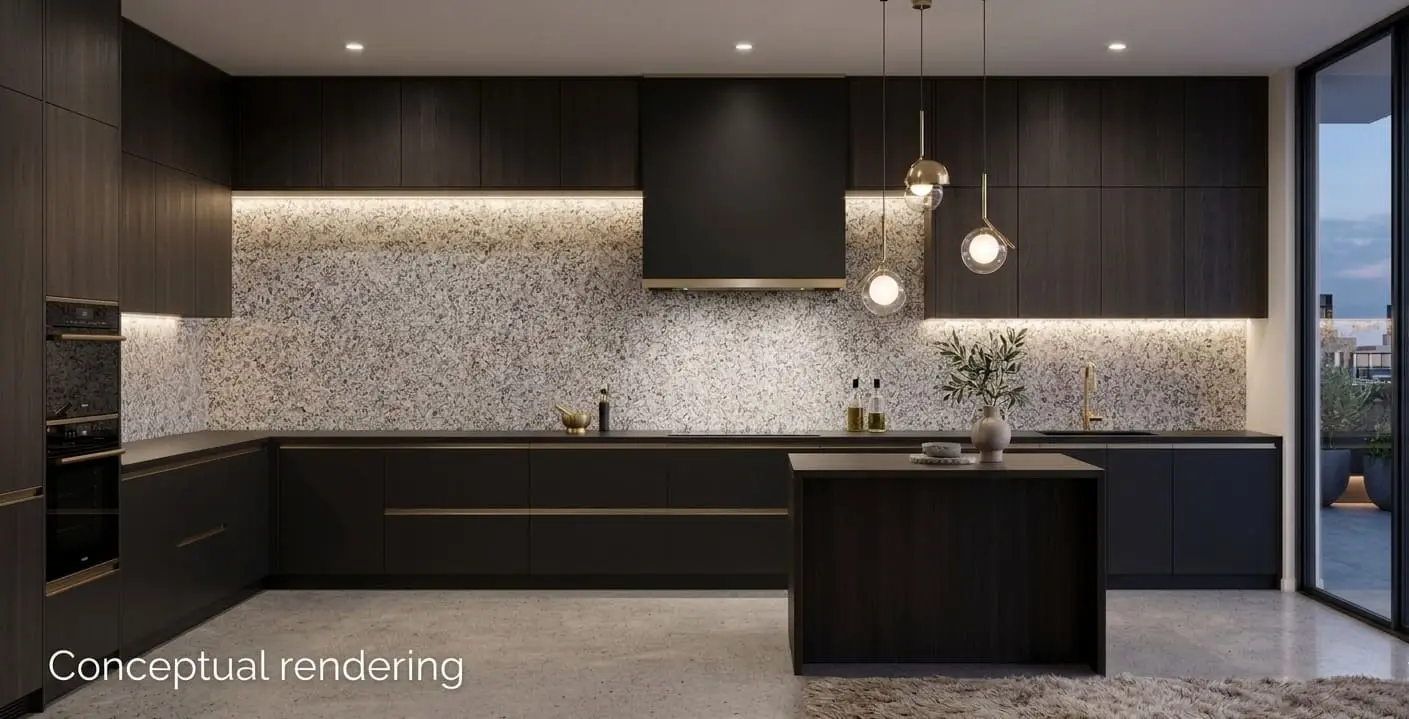
Note: Some images on this page may be conceptual renderings created to illustrate design possibilities and may not depict actual installations.
Frequently asked questions
Marble is not a universal poor choice for kitchens. Whether it works depends on how the kitchen is used. In households where the countertop serves primarily as a serving surface or light prep area, marble can perform acceptably with regular sealing and prompt cleanup of acidic spills. In kitchens where acidic foods are used frequently and spills are addressed on a delayed basis, marble's tendency to etch makes it a higher-maintenance option than quartzite or granite for that use pattern.
Stone care guidance consistently recommends sealing promptly after installation, before the countertop sees regular use. The specific timing and product depend on the stone type. Granite and quartzite generally require less frequent resealing than marble or travertine. Confirming the appropriate schedule with the stone supplier at the time of purchase establishes the right maintenance routine from the start rather than after a problem surfaces.
A polished finish has a high-gloss surface that reflects light strongly and deepens the stone's color. It shows smudges, water spots, and fingerprints more readily than other finishes. A honed finish has a matte or low-sheen surface that conceals day-to-day marks more effectively but reads the stone's color in a softer, less saturated way. Neither is better in absolute terms; the more useful question is which finish matches the household's actual cleaning habits.
Applying a small amount of water to the surface of the slab temporarily shows how the stone will read after sealing, since sealing deepens color in a way similar to moisture. Viewing the slab under different lighting conditions, including the type of lighting planned for the actual room, also reveals how the stone's color and movement will read once installed. A 4-inch sample cannot show either of these things accurately.
Yes. Outdoor conditions introduce temperature cycling, UV exposure, moisture penetration, and freeze-thaw cycles in colder climates. Granite and quartzite handle most outdoor conditions reliably when properly sealed and maintained. Marble, travertine, and limestone are more susceptible to surface degradation outdoors because of their porosity and calcareous composition. Porcelain slab and sintered stone are well-suited to outdoor applications because they are non-porous, UV-stable, and resistant to freeze-thaw damage.